Film

Lend me your ears | 22 February 2018

Audio description, or AD, as it is fondly called, is coming of age. Once consigned to the utility room of grey voices reading boring cues to inform blind people what was going on on stage or screen, AD is now a dynamic narrative form that is findinga presence in almost all the arts (from opera, theatre and film to art galleries and museums). It is so widespread and well done that many consider it an art form in itself. For the uninitiated, audio description simply provides a listener, through headphones or a TV speaker, with the essential details of the action and events in a film or play during a convenient pause. When done well, it does not intrude on an audience’s experience of the play, the acting or the director’s intention, but instead shapes and enhances it.

I liked Shape of Water well enough but Lady Bird is where it’s at

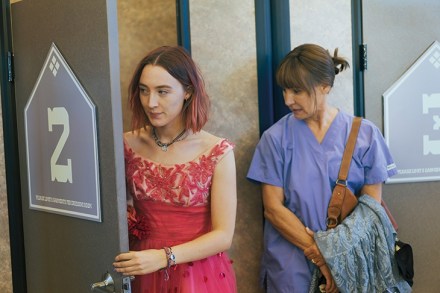
Lady Bird is a semi-autobiographical film written and directed by Greta Gerwig with a plot synopsis that need not detain us as it is basically only this: girl has a mum. (Or: girl has a mum, and sometimes they row and sometimes they don’t.) But thus far it has won near universal critical praise, two Golden Globes and five Oscar nominations, thereby proving there is mileage in girls and their mums, and box office in girls and their mums, and that girls and their mums can be more than mere afterthoughts. In this respect, Lady Bird may, in fact, be quite the rare bird. It’s set in Sacramento, California, in 2002, and follows a year in the life of 17-year-old Christine McPherson, who calls herself ‘Lady Bird’ because she is, you know, At That Age.

Relative values

Lady Bird is a semi-autobiographical film written and directed by Greta Gerwig with a plot synopsis that need not detain us as it is basically only this: girl has a mum. (Or: girl has a mum, and sometimes they row and sometimes they don’t.) But thus far it has won near universal critical praise, two Golden Globes and five Oscar nominations, thereby proving there is mileage in girls and their mums, and box office in girls and their mums, and that girls and their mums can be more than mere afterthoughts. In this respect, Lady Bird may, in fact, be quite the rare bird. It’s set in Sacramento, California, in 2002, and follows a year in the life of 17-year-old Christine McPherson, who calls herself ‘Lady Bird’ because she is, you know, At That Age.

Wonderfully fixating and wholly non-formulaic: Phantom Thread reviewed

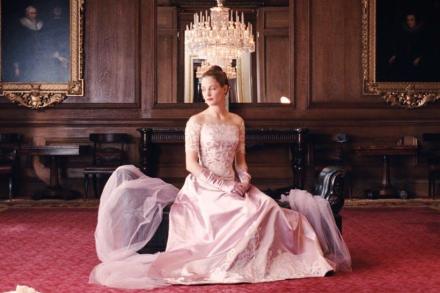
Paul Thomas Anderson’s Phantom Thread is a lush psychosexual drama starring Daniel Day-Lewis as a pampered, tyrannical, pernickety 1950s couturier whose life is disrupted when he falls for a waitress who, in the most unexpected way, proves his match. It is a wonderfully fixating film in every respect, and wholly non-formulaic. And it miraculously transforms an addition to a breakfast order — ‘…and sausages’ — into one of the sexiest things ever said. Ultimately, its meaning will be open to interpretation. I saw it as the rather timely story of a man who is finally forced to cut out his misogynist heart and see women as real people, but your interpretation may differ, which is fine, even though I’m bound to be right.

Power dressing

Paul Thomas Anderson’s Phantom Thread is a lush psychosexual drama starring Daniel Day-Lewis as a pampered, tyrannical, pernickety 1950s couturier whose life is disrupted when he falls for a waitress who, in the most unexpected way, proves his match. It is a wonderfully fixating film in every respect, and wholly non-formulaic. And it miraculously transforms an addition to a breakfast order — ‘…and sausages’ — into one of the sexiest things ever said. Ultimately, its meaning will be open to interpretation. I saw it as the rather timely story of a man who is finally forced to cut out his misogynist heart and see women as real people, but your interpretation may differ, which is fine, even though I’m bound to be right.

Downsizing throws away its brilliant premise

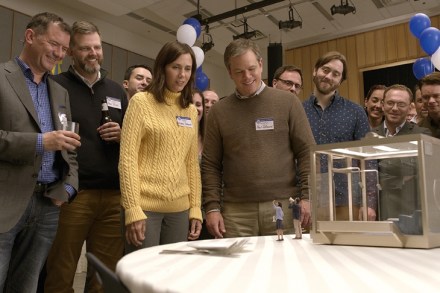
Downsizing is a film with the most brilliant premise. What if, to save the planet, we were all made tiny? What if we only took up a tiny amount of space and flew in tiny planes and produced tiny amounts of rubbish? And what if we could live in the sort of mansions that would cost millions if they were regular-sized? What if, what if, what if, what if… but most crucially: what if this film had run with the premise rather than throwing it away? Could it have avoided becoming just another dumb ‘white saviour’ movie? And this, alas, is the ‘what if’ that must preoccupy us today. This is a film by Alexander Payne, otherwise known for Sideways and Nebraska and About Schmidt, so there may just be no explaining it.

Small talk | 25 January 2018

Downsizing is a film with the most brilliant premise. What if, to save the planet, we were all made tiny? What if we only took up a tiny amount of space and flew in tiny planes and produced tiny amounts of rubbish? And what if we could live in the sort of mansions that would cost millions if they were regular-sized? What if, what if, what if, what if… but most crucially: what if this film had run with the premise rather than throwing it away? Could it have avoided becoming just another dumb ‘white saviour’ movie? And this, alas, is the ‘what if’ that must preoccupy us today. This is a film by Alexander Payne, otherwise known for Sideways and Nebraska and About Schmidt, so there may just be no explaining it.

You just can’t argue against Hanks and Streep: The Post reviewed

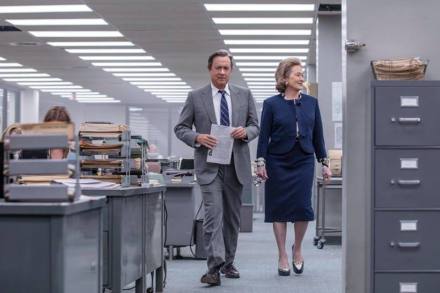
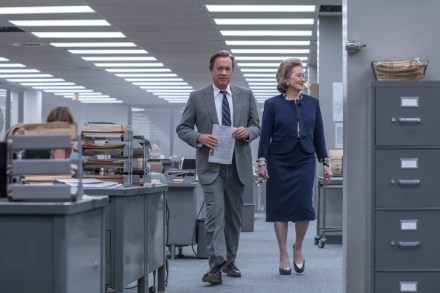
Steven Spielberg’s The Post, which dramatizes the Washington Post’s publication of the Pentagon Papers in 1971, doesn’t exactly push at the frontiers of storytelling. It’s told straight and in a familiar way. Here are the journalists furtively working through top-secret government papers in a smoke-choked room for the public good. (There were no empty pizza boxes in this instance, but there could have been, if you get my drift.) Here’s the government trying to stop them. Here’s the newspaper rolling off the press, and everyone clapping. And so on. But it does star Tom Hanks and Meryl Streep, engaged in a kind of dance as the paper’s editor and proprietor, and you just can’t argue against Tom Hanks and Meryl Streep.

A woman of substance | 18 January 2018

Steven Spielberg’s The Post, which dramatizes the Washington Post’s publication of the Pentagon Papers in 1971, doesn’t exactly push at the frontiers of storytelling. It’s told straight and in a familiar way. Here are the journalists furtively working through top-secret government papers in a smoke-choked room for the public good. (There were no empty pizza boxes in this instance, but there could have been, if you get my drift.) Here’s the government trying to stop them. Here’s the newspaper rolling off the press, and everyone clapping. And so on. But it does star Tom Hanks and Meryl Streep, engaged in a kind of dance as the paper’s editor and proprietor, and you just can’t argue against Tom Hanks and Meryl Streep.

Three Billboards is a hoot and a blast, which I never thought I’d say about a rape movie

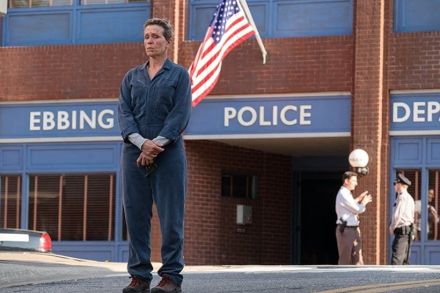
Three Billboards Outside Ebbing, Missouri does, indeed, feature three billboards outside Ebbing, Missouri. They have been placed at the roadside on the outskirts of town by Mildred Hayes (Frances McDormand), a middle-aged woman whose teenage daughter had been raped and murdered seven months earlier. The billboards read: ‘Raped While Dying’; ‘And Still No Arrests’; ‘How Come, Chief Willoughby?’ Mildred is grieving, in pain and a ball of fury. But not your regular, everyday ball of fury. She is a ball of fury of the most magnificent, unstoppable kind. If only she could go after every rapist from now on. I’d certainly sleep better in my bed.

A tough act to follow

Gary Oldman has joined a long list of actors who have portrayed Winston Churchill — no fewer than 35 of them in movies and 28 on television. He is one of the best three. ‘I knew I didn’t look like him,’ Oldman has said. ‘I thought that with some work I could approximate the voice. The challenge in part was the physicality, because you’re playing someone whose silhouette is so iconic.’ We all have our own mind’s-eye view of what Churchill should look and sound like, and his personality was so strong and sui generis that it is almost impossible for an actor to impose himself on the role. He is therefore almost always left with either mere impersonation or caricature. Oldman avoided this in Darkest Hour through research.

All the rage | 11 January 2018

Three Billboards Outside Ebbing, Missouri does, indeed, feature three billboards outside Ebbing, Missouri. They have been placed at the roadside on the outskirts of town by Mildred Hayes (Frances McDormand), a middle-aged woman whose teenage daughter had been raped and murdered seven months earlier. The billboards read: ‘Raped While Dying’; ‘And Still No Arrests’; ‘How Come, Chief Willoughby?’ Mildred is grieving, in pain and a ball of fury. But not your regular, everyday ball of fury. She is a ball of fury of the most magnificent, unstoppable kind. If only she could go after every rapist from now on. I’d certainly sleep better in my bed.

Indulgent rather than stinging satire: Brad’s Status reviewed

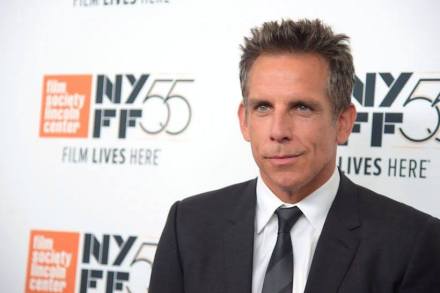
Brad’s Status is a midlife crisis film starring Ben Stiller as a nearly 50-year-old man whose status anxiety is through the roof, poor thing. My heart bleeds and all that. I’ll tell you what Brad’s status should be: face well and truly slapped. The film is written and directed by Mike White (Beatriz at Dinner; Enlightened) and in some quarters it has been renamed Mike’s White Privilege, which is fair — no one else gets a look in — but as it’s intended as a satire of white male privilege you can’t exactly blame it for being white, male and privileged. However, while some moments will resonate (who hasn’t ever felt envy, or does not hope for shitty lives behind the shiny Facebook updates?

Stiller instinct

Brad’s Status is a midlife crisis film starring Ben Stiller as a nearly 50-year-old man whose status anxiety is through the roof, poor thing. My heart bleeds and all that. I’ll tell you what Brad’s status should be: face well and truly slapped. The film is written and directed by Mike White (Beatriz at Dinner; Enlightened) and in some quarters it has been renamed Mike’s White Privilege, which is fair — no one else gets a look in — but as it’s intended as a satire of white male privilege you can’t exactly blame it for being white, male and privileged. However, while some moments will resonate (who hasn’t ever felt envy, or does not hope for shitty lives behind the shiny Facebook updates?

If this is Aaron Sorkin’s riposte to those who criticise his portrayal of women, God help us

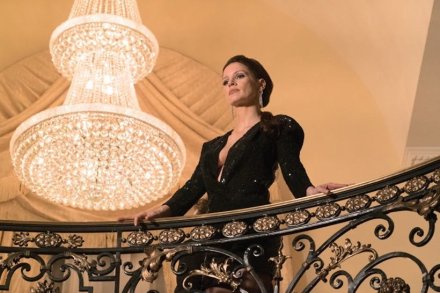
Molly’s Game marks the directorial debut of Hollywood’s most celebrated screenwriter, Aaron Sorkin, and is based on his adaptation of the memoir by Molly Bloom. Nope, me neither, but she’s the one-time Olympic skier who, at the age of 26, started a high-stakes poker game for ‘the richest, the most powerful men in the world’ and ended up with the FBI in her face. Poor Molly, we’re meant to think, when the FBI ends up in her face, but I was delighted. Bang her up! This has been posited as the antidote to all those male-driven, big money Wall Street films, with Sorkin even declaring Ms Bloom a ‘feminist icon’. Well (she says, haughtily), we will see about that.

Bad feminist

Molly’s Game marks the directorial debut of Hollywood’s most celebrated screenwriter, Aaron Sorkin, and is based on his adaptation of the memoir by Molly Bloom. Nope, me neither, but she’s the one-time Olympic skier who, at the age of 26, started a high-stakes poker game for ‘the richest, the most powerful men in the world’ and ended up with the FBI in her face. Poor Molly, we’re meant to think, when the FBI ends up in her face, but I was delighted. Bang her up! This has been posited as the antidote to all those male-driven, big money Wall Street films, with Sorkin even declaring Ms Bloom a ‘feminist icon’. Well (she says, haughtily), we will see about that.

Oh, what a circus

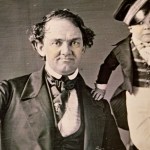
‘There’s a sucker born every minute.’ That was the P.T. Barnum battle cry. It has come to have a ring of contempt, but no one loved a sucker more than Barnum. Entertain them, he said. Thrill them, shock them. Make ’em laugh, make ’em cry. Give ’em the old razzle-dazzle. And if, in the course of the evening, you extract from them a penny, a shilling, a dollar… Well, have you not given them a story to tell their friends tomorrow? His critics called him a scoundrel, a humbug, a con man. To the Times he was ‘the most adventurous and least scrupulous of showmen… an apotheosis of notoriety’. His defence? What he did wasn’t cheating or swindling: it was show business.

Bah, humbug!, Tiny Tim

Here we go again. Partridges in pear trees. Lovely big Christmas turkey. The Queen’s speech. And then, at some point during the Yuletide season, some version or other of Dickens’s ghost story A Christmas Carol. This year’s glut of Scrooge stories includes the Old Vic’s major production starring Rhys Ifans (reviewed by Lloyd Evans in last week’s Spectator) and Michael Rosen’s retelling of the tale, Bah! Humbug! There is a new film, The Man Who Invented Christmas, featuring Christopher Plummer as Scrooge and Dan Stevens, he of Downton Abbey fame, as Mr Dickens himself. It plots the months running up to the publication of A Christmas Carol in Yuletide 1843.

My favourite frum film of the year – thus far: Menashe reviewed

Menashe is a drama set amid Brooklyn’s ultra-orthodox Hasidic community. It is performed entirely in the Yiddish language. It is peopled exclusively by Hasidic non-actors. (Real-life grocer Menashe Lustig plays the title character.) It is small and specific, admittedly, but it also tells a universal story about a father’s struggle to hold on to the son he loves, and it tells this story tenderly, thoughtfully, beautifully. It may even be my favourite frum film of the year. Thus far. (Still a few weeks to go.) This marks the feature debut of director Joshua Z Weinstein (no relation), who made documentaries previously, and who wrote this with Alex Lipschultz and Musa Syeed.

Drama queen | 7 December 2017

If cinema is propaganda, Elizabeth II can be grateful to it. Film is a conservative art form, and almost nothing has attempted to thwart or mock her. (The Daily Star once printed that Princess Margaret would appear in Crossroads, but Crossroads was not cinema, and it was not true. Instead the award for tabloid lie of the year was named the Princess Margaret Award.) I could not find an art film with the Queen weeping under a table in her nightgown, although she did appear in The Naked Gun: From the Files of Police Squad! (1988), and was mounted by Leslie Nielsen. She also appeared in the disaster film 2012 (2009), attempting to flee a tsunami in an ark built by China, with the dogs. This is less preposterous than the Leslie Nielsen scene. She would not go to China to die. But that is it.