Film

The ties that bound us

Only Neil MacGregor could do it — take us in a single thread from a blackened copper coin, about the size of a 10p piece, dating from Rome in about 200 AD, to a packed music hall in London during the first world war. In his new 30-part series for Radio 4, Living with the Gods, the former director of the British Museum looks at the ways in which societies come together through shared rituals and beliefs and how these rituals are developed and used to make sense of our place in a universe beyond human comprehension. One side of the coin shows a fire burning within the Temple of Vesta, dedicated to the Roman goddess of fire, and surrounded by the Vestal Virgins, whose job it was to keep the flames alight, to protect the ‘hearth’, or the focus of Rome’s power.

Salon Strauss

An opera without singers, a Strauss orchestra of just 16, and an early music ensemble playing Mahler: welcome to the Oxford Lieder Festival, where familiar repertoire is getting a reboot this year thanks to some brilliantly ambitious programming. When it comes to classical music, we’re used to living in a bifurcated world. On the one hand, you have the contemporary ensembles: the orchestras, choirs and quartets performing pretty much everything from Mozart onwards. And on the other the early music groups, whose territory is everything that’s left — Bach, Byrd, Hildegard of Bingen. It’s only fairly recently, and thanks to groups such as the Orchestra of the Age of Enlightenment, that this crude, artificial divide has been challenged.

Comedy of terrors

Armando Iannucci’s The Death of Stalin is nearly two hours of men in bad suits bickering, but if you have to sit through nearly two hours of men in bad suits bickering you would want it to be written (and directed) by Iannucci. So there’s that, but it’s still not up there with his previous film, In the Loop. It’s funny but not as funny, misfires in places, and by the end you are rather thinking: come on, one of you seize power, so we can all just get out of here. On this outing, Iannucci has substituted Whitehall and White House backbiting (The Thick of It, Veep) for Russia in 1953, the sudden death of Stalin, and the fierce scramble to succeed him.

Gathering storm

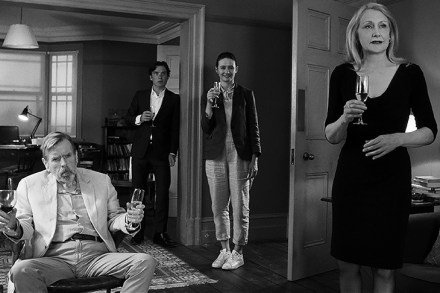
Sally Potter’s The Party, which unfolds in real time during a politician’s soirée to celebrate her promotion, is just 71 minutes long, but it certainly packs a punch. Actually, make that two. Two punches (at least). And there’s a gun, cocaine, a smashed window, throwing up, toxic revelations (of course) and a tray of incinerated vol-au-vents. It is less than half the length of, say, Blade Runner 2049, but three times as dramatic, and maybe 676 times as entertaining, plus it features a stellar cast who put the work in and don’t discover stuff by simply staring at it really, really hard.

Chances are you will wish you were dead: Blade Runner 2049 reviewed

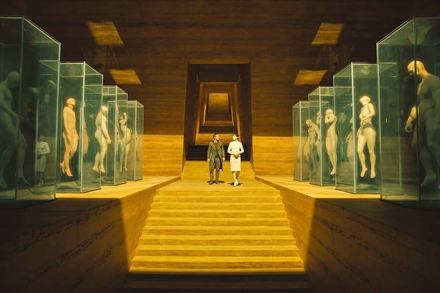
Ridley Scott’s original Blade Runner first came out in cinemas 35 years ago, which I was going to say probably makes it older than some readers, although this being The Spectator, perhaps not. It wasn’t successful in its day, but has since become a beloved classic (rightly), whereas this sequel, Blade Runner 2049, will likely do great box office today, but no one will give a fig tomorrow, once all the silly hype has died away. This is Blade Runner as a dull mainstream blockbuster populated by men who are the epitome of masculine cool and women who are needlessly sexualised fembots.

Back to the future | 5 October 2017

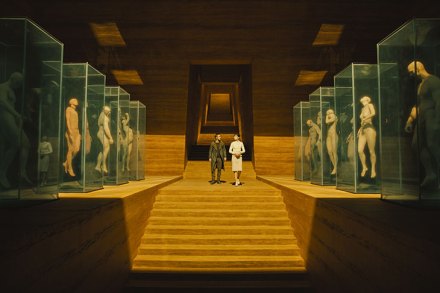
Ridley Scott’s original Blade Runner first came out in cinemas 35 years ago, which I was going to say probably makes it older than some readers, although this being The Spectator, perhaps not. It wasn’t successful in its day, but has since become a beloved classic (rightly), whereas this sequel, Blade Runner 2049, will likely do great box office today, but no one will give a fig tomorrow, once all the silly hype has died away. This is Blade Runner as a dull mainstream blockbuster populated by men who are the epitome of masculine cool and women who are needlessly sexualised fembots.

Unhappy days

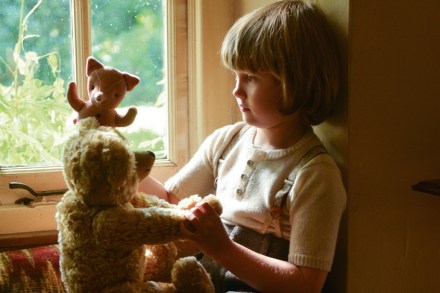
Scriptwriters love to feast on the lives of children’s authors. The themes tend not to vary: they may have brought happiness to millions of children but their stories — sob — were fertilised by unhappiness. Saving Mr Banks: Mary Poppins author was a bossy shrew because her alcoholic father died young. Miss Potter: Peter Rabbit creator never found love. Finding Neverland: Peter Pan playwright cheered up grieving family. Enid (made for BBC Four): Miss Blyton was a monster traumatised by her upbringing. And so it will presumably go on.

It gets us from A to B but doesn’t dazzle: Borg vs McEnroe reviewed

Borg vs McEnroe is a dramatised account of one of the greatest tennis rivalries of all time — between Bjorn Borg and John McEnroe (the clue was always in the title) — that doesn’t hit nearly as hard as it should. It does the job. It gets us from A to B. But it doesn’t dazzle. It doesn’t have the dramatic smarts to lend either surprising tension or excitement to otherwise familiar events, or shed any new light on them. It’s more the pt-pt-pt-pt of a stolid baseline rally and now, you will be thankful to hear, that’s it with the tennis puns. (I only had two anyhow.) The film stars Sverrir Gudnason as Borg and Shia LaBeouf as McEnroe and it all plays out in the lead-up to their most famous showdown.

No balls

Borg vs McEnroe is a dramatised account of one of the greatest tennis rivalries of all time — between Bjorn Borg and John McEnroe (the clue was always in the title) — that doesn’t hit nearly as hard as it should. It does the job. It gets us from A to B. But it doesn’t dazzle. It doesn’t have the dramatic smarts to lend either surprising tension or excitement to otherwise familiar events, or shed any new light on them. It’s more the pt-pt-pt-pt of a stolid baseline rally and now, you will be thankful to hear, that’s it with the tennis puns. (I only had two anyhow.) The film stars Sverrir Gudnason as Borg and Shia LaBeouf as McEnroe and it all plays out in the lead-up to their most famous showdown.

Is Darren Aronofsky taking the piss? Mother! reviewed

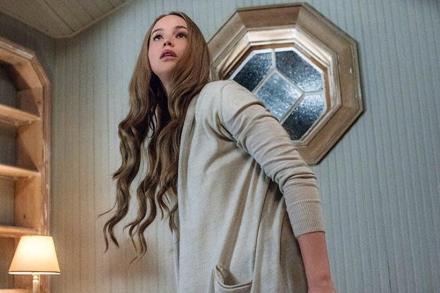
The film-maker Darren Aronofsky says he wrote Mother! in five days as if in a ‘fever dream’ and, as a general rule, what happens in a fever dream should stay in the fever dream, as the content will be plainly nuts. This is plainly nuts. This is even plainly nuts with an exclamation mark. Plainly nuts! However, it’s never plainly dull, so it does have that going for it. I think. Described as a psychological horror thriller, the set-up has a poet and his younger wife living in a magnificent, isolated house in the countryside that she is doing up. She is Mother (Jennifer Lawrence) and he is Him (Javier Bardem). She is in thrall to Him, and exists only to serve Him, while he is suffering from writer’s block and is distant.

Art of darkness | 14 September 2017

Stephen King, 69, has sold more than 350 million books, and tries not to apologise for being working-class, or imaginative, or rich. The snobbery has ebbed a little, though; in 2003 he won the National Book Foundation’s Medal for Distinguished Contribution to American Letters, and now the BFI is screening a series of adaptations of his novels, which show how versatile he is. Why can’t you write stories like Rita Hayworth and Shawshank Redemption, a woman asked him once. I did write it, he told her, but she did not believe him. King has published 59 novels, but he is a recovering addict and can’t remember writing them all. Most of Cujo (1981), a story about a rabid dog and adultery, is news to him.

High life | 14 September 2017

I’m in Venice for the film festival that just ended and, as an American humorist once wired his paper: ‘Streets full of water, stop. Send funds, stop.’ What is there to say about Venice that hasn’t already been said or written by better men or women — Thomas Mann and Jan Morris to mention just two? Yes, Venice evokes higher thoughts, but not this time. I was thinking of Byron as I chugged past the Palazzo Mocenigo where he lived, when I spotted a gondola with five Chinese women on board, all fiercely concentrating on their mobiles. ‘Stop that and look at the buildings, girls,’ I yelled at them. They completely ignored me and continued texting, or whatever they do nowadays, even on a gondola in the midst of Venetian splendour.

Nut job

The film-maker Darren Aronofsky says he wrote Mother! in five days as if in a ‘fever dream’ and, as a general rule, what happens in a fever dream should stay in the fever dream, as the content will be plainly nuts. This is plainly nuts. This is even plainly nuts with an exclamation mark. Plainly nuts! However, it’s never plainly dull, so it does have that going for it. I think. Described as a psychological horror thriller, the set-up has a poet and his younger wife living in a magnificent, isolated house in the countryside that she is doing up. She is Mother (Jennifer Lawrence) and he is Him (Javier Bardem). She is in thrall to Him, and exists only to serve Him, while he is suffering from writer’s block and is distant.

Cheaply mainstream and exploitative: Wind River reviewed

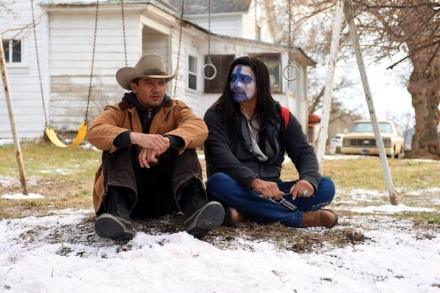
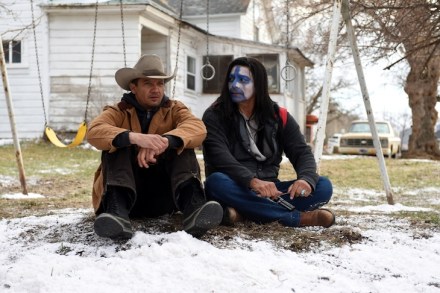
The starting point for Taylor Sheridan’s crime-thriller Wind River is explicitly stated at the end when the following words come up on screen: ‘While missing person statistics are compiled for every other demographic [in the US], none exist for Native American women.’ A shocking fact that has to be worthy of a film, although whether this film is worthy of that fact, and isn’t just another genre melodrama featuring an American White Man coming to the rescue, has to be up for question. Also, it contains a brutal rape scene, just so you know. (I didn’t know. But wish I had, as I’d have likely steered clear.

Silent films

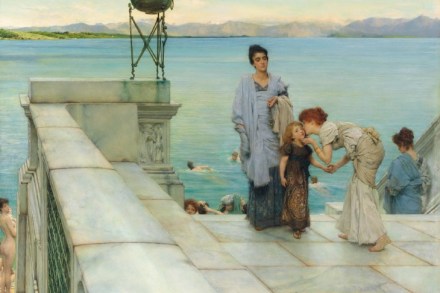
On 15 September 1888 Vincent van Gogh was intrigued to read an account of an up-to-date artist’s house in the literary supplement of Le Figaro. This described a purple house in the middle of a garden, the paths of which were made of yellow sand. The walls were glass bricks ‘in the shape of purple eggs’. Such aesthetic dwellings were all the rage; Van Gogh dreamed of having one himself in Arles. But as one learns from an exhibition at Leighton House, it was another 19th-century Dutch artist, Lawrence Alma-Tadema, who actually inhabited two such establishments — one off Regent’s Park, the other in St John’s Wood. On paper, Van Gogh and Alma-Tadema have a great deal in common.

Male order | 7 September 2017

The starting point for Taylor Sheridan’s crime-thriller Wind River is explicitly stated at the end when the following words come up on screen: ‘While missing person statistics are compiled for every other demographic [in the US], none exist for Native American women.’ A shocking fact that has to be worthy of a film, although whether this film is worthy of that fact, and isn’t just another genre melodrama featuring an American White Man coming to the rescue, has to be up for question. Also, it contains a brutal rape scene, just so you know. (I didn’t know. But wish I had, as I’d have likely steered clear.

Difficult and disturbing: Una reviewed

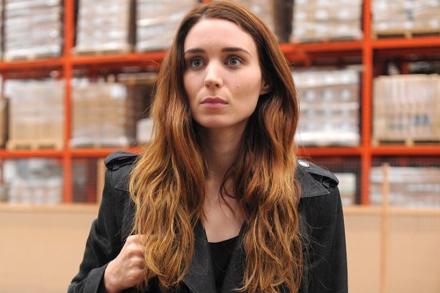
Una is a psychological drama about a woman who was abused by a man when she was 12, and who confronts him 15 years later, and it’s a hoot. I’m toying with you. Of course it isn’t. It’s disquieting. It’s disturbing. It’s difficult. It’s 90 minutes of uncomfortably shifting in your chair and wishing you were at the latest heist caper that doesn’t make sense. But it is also compelling, up to a point, and your responses will be so complicated that you won’t know where to start unpicking them. Or how. The film is based on the play Blackbird by the Scottish playwright David Harrower, which has won multiple awards and starred Jeff Daniels and Michelle Williams on Broadway.

Moor and more

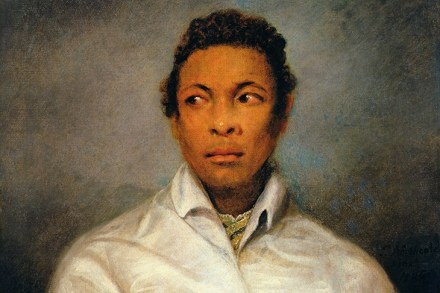
In 1824 an ambitious teenage actor fled to England from his native New York where he had been beaten up once too often. He built a career here, being billed as ‘a Most Extraordinary Novelty, a Man of Colour’. What audiences encountered, however, was not the expected comedy of a simpleton mangling the Bard. They got instead an actor of thrilling charisma and deep natural ability. Ira Aldridge soon became the first black actor to play Othello, taking over the part from the brandy-sodden genius Edmund Kean, who died mid-run due to what one obituary called his ‘vortex of dissipation’. Thanks to a slew of highly prejudiced reviews in London, Ira became a classic example of a tour de force who was forced to tour.

Moral maze

Una is a psychological drama about a woman who was abused by a man when she was 12, and who confronts him 15 years later, and it’s a hoot. I’m toying with you. Of course it isn’t. It’s disquieting. It’s disturbing. It’s difficult. It’s 90 minutes of uncomfortably shifting in your chair and wishing you were at the latest heist caper that doesn’t make sense. But it is also compelling, up to a point, and your responses will be so complicated that you won’t know where to start unpicking them. Or how. The film is based on the play Blackbird by the Scottish playwright David Harrower, which has won multiple awards and starred Jeff Daniels and Michelle Williams on Broadway.

Losing the plot | 24 August 2017

Steven Soderbergh’s Logan Lucky is a heist caper that, to be fair, does what it says on the can. There is a heist. It is a caper. It also features an all-star cast and is said to be ‘the perfect summer entertainment’, which may or may not wash, depending on whether you believe the enjoyment of films is seasonally variable, or an average film is an average film, whatever the weather. It’s USP is that it’s ‘a red-necked Oceans’ or ‘a hillbilly Oceans’ so, in other words, it’s a riff on Oceans. Soderbergh directed the Ocean’s franchise, so it is hardly a stretch for him. Or us, for that matter.