Film

The art of the incel

Let’s say you have a diagnosis of autism, depression or anxiety. You sleep too much or too little. You masturbate too often. You play computer games and don’t open the curtains. You have no money and you are often profoundly lonely and frequently bored. From this unedifying starting point, can you, let’s say, weightlift your way out of misery? Can you trick yourself into being sociable? Can you ultimately get beyond your fantasy that a woman will save you (she won’t) and learn to live with everyday misery? Alex Lee Moyer’s documentary TFW NO GF, internet-speak for ‘that feel(ing) when no girlfriend’, is the first attempt to make cinema out of incel subculture (and perhaps thereby also signalling its end).

Six geopolitical thrillers to watch this weekend

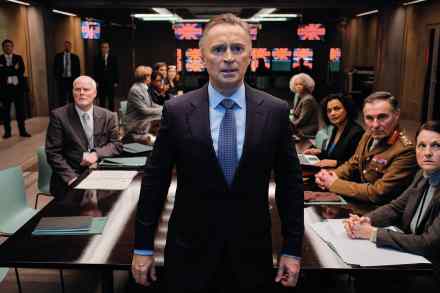
We live in a strange time. Forbidden to travel beyond our national borders for fear of infection and quarantine, we are nevertheless all too aware that we are connected to the wider world in all manner of ways. You might even call it chaos theory in action; a man eats a bat in a Chinese market, and a few months later we are all locked up in our homes, terrified to resume our daily lives. It is this sense of paranoia and interconnectedness that some extremely able filmmakers have tapped into over the years, as their pictures have combined a globe-hopping sweep along with scenes of palm-sweating tension and mystery.

Why, Woody, why? A Rainy Day in New York reviewed

A Rainy Day in New York is Woody Allen’s 49th film and it’s not been without its troubles. When accusations of sexual abuse made by his adopted daughter, Dylan Farrow, resurfaced, Amazon Studios ditched it. Then its star, Timothée Chalamet, apologised for being in it and donated his earnings to charity. We may never know the truth about the allegations and I wouldn’t wish to speculate as I’m a coward at heart and don’t want to end up on the wrong side of history. I can only put it like this: whereas I once idolised Allen — ‘Don’t worry. We can walk to the kerb!’ is something I still say when someone parks badly — the decisions he’s now making are definitely landing on the wrong side of creepy.

Top of my must-watch mustn’t-watch: Cats revisited

At the outset of lockdown I gave you my list of top mustn’t-watch films — that is, the ones that aren’t worth the bother — with the rider that when Cats is released digitally it will, however, likely be a must-watch mustn’t-watch. ‘I absolutely must watch this mustn’t-watch,’ you may even have said to yourself, after reading some of the wonderfully terrible reviews. (The Daily Telegraph gave it zero stars. Variety said it was one of those ‘once-in-a-blue-moon embarrassments’.) And it is as hoped.

I have never cared more about the price of milk in Iceland: The County reviewed

You may be asking yourself: have I reached that point in lockdown where I’m watching Icelandic dramas about the price of milk? Yes, you have, is the short answer. But let me qualify that with: if you are going to watch Icelandic dramas about the price of milk, The County is a good choice. And surprisingly involving. Or, to put it another way: I have never cared more about the price of milk in Iceland and it may be I’ll never care as much about the price of milk in Iceland again. Although you never know.

The best Macbeths to watch online

The world’s greatest playwright ought to be dynamite at the movies. But it’s notoriously hard to turn a profit from a Shakespearean adaptation because film-goers want to be entertained, not anointed with the chrism of high art. Macbeth is one of the texts that frequently attracts directors. Justin Kurzel’s 2015 version (Amazon Prime) didn’t triumph at the box office despite two fetching performances from Bamburgh Castle in Northumberland and the snow-wreathed mountains of Skye. The trailer is a marvel. Two exhilarating minutes of virile swordplay, ravishing scenery and dramatic cathedral interiors. The film itself is a cold, muddy slog. Michael Fassbender plays the thane as a gruff Celtic robo-hunk married to a skinny, nun-like beauty, Marion Cotillard.

Why does anyone still rate Vertigo and its creepy, wonky plot?

Here’s something that may interest you. Or not. (Could go either way.) I was looking over Sight & Sound’s ‘100 Greatest Films of All Time’, which has Alfred Hitchcock’s Vertigo (1958) at number one, having knocked Citizen Kane from the top spot in 2012. (That film always did need a more exciting reveal; would it have helped if Rosebud had turned out to be a massive fireball or dinosaur egg?) But back to Vertigo, which is now the best film ever made. Really? That worried away at me. Who rates this film and why? The storytelling isn’t up to much. It drags and drags. (The first half is a dull schlep around San Francisco as we follow the world’s most obvious stalker.) It’s riddled with plot holes. It’s creepy, but not in a good way.

Who can still make a Sunday joint last a week?

Sunday lunch was always roast beef and, in the traditional way, the Yorkshire pudding was served first with gravy, supposedly because if you were full of cooked batter you wanted less meat. Monday saw cold meat, jacket potatoes and pickles, while the beef bone went into the pot with lentils, pearl barley, carrots and onions and bubbled on the hob for days, the basis of every dinner until Friday’s fish and Saturday’s sausages and mash, before Sunday came round again. That is what everybody had and, like all housewives, my mother made the most of every morsel. Throughout and after the war, waste was a crime. I hate cooking and am bad at it for all I learned, by watching, about roasting the potatoes in the hot fat round the meat, and I always helped beat the batter.

Six superhero films with a highbrow edge

Even as we experience a momentary hiatus from the onslaught of superhero films, it is hard not to feel that the whole genre has been unnecessarily debased. There is nothing especially wrong with the vast majority of Marvel films, but they are the cinematic equivalent of a visit to Byron or Nando’s; enjoyable while it lasts, good enough not to feel guilty afterwards but formulaic and unadventurous in the extreme. The aversion to risk-taking might make financial sense, to the tune of billions, but artistically it is often disappointing. No wonder Martin Scorsese dismissed them as ‘theme park rides, not cinema’. Which is why, on the occasions that a filmmaker does move outside the confines of the genre, the results are often hugely stimulating.

Riveting – and disgusting: BFI’s ‘Dogs v Cats’ and ‘Eating In’ collections reviewed

This week I’d like to point you in the direction of the British Film Institute and its free online archive collections, which are properly free. There is no signing up for one of those ‘free trials’ which means that, somewhere down the line, you’ll discover you’ve been paying £4.99 a month for something you didn’t want. And it’s certainly excellent value for the money you don’t pay, as there are 65 of these collections, grouped under various headings — ‘Football on Film’, ‘Black Britain on Film’ — although I plumped for ‘Eating In’, because it’s all any of us do now, and ‘Cats v Dogs’, as if that were even much of a competition…dogs!

Not merely funny but somehow also joyous: Sky One’s Brassic reviewed

Danny Brocklehurst, the scriptwriter for Sky One’s Brassic, used to work for Shameless in its glory days — although if you didn’t know that already you could probably guess. For a start, the central characters are another close-knit group of ducking-and-diving working-class northerners not overburdened with a social conscience. But there’s also the fact that, no matter what they get up to, they’re clearly supposed to be lovable — coupled with the rather more mysterious fact that they are. However dark the storylines theoretically become, the programme presents them with such an infectious swagger, and such a thorough blurring of realism and wild imagination, that the result is not merely funny but somehow joyous.

10 short thrillers that are worth a watch

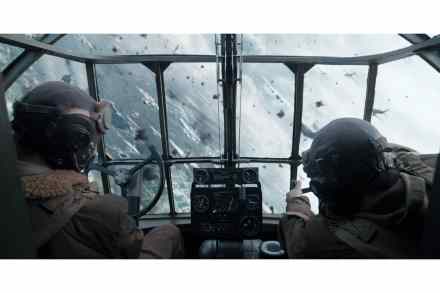
As the lockdown grinds on, how about taking a look at these widely available, relatively low-budget and overlooked thrillers, all featuring twists in the lead characters story arc – played by actors who normally essay more ‘vanilla’-type roles. They’re all pretty watchable and generally don’t tend to overstay their welcome, ideal post 10.30pm fodder. Here we go then, in order of release: Brick (2005) https://www.youtube.com/watch?v=4Zfw8__A7ps Director Rian Johnson (Looper/Last Jedi/Knives Out) went onto bigger, but not necessarily better things after Brick, his 2005 debut picture.

The importance of sadism in writing a great screenplay

How do you tell a great story? According to Craig Mazin, you have to be a sadist. ‘As a writer, you are not the New Testament God who turns water into wine,’ Mazin chuckles on his long-running podcast Scriptnotes. ‘You are the Old Testament God who tortures Job because, I don’t know, it seems like fun.’ Mazin wrote HBO’s horrifying, incandescent miniseries Chernobyl, and so knows of what he speaks. In the episode of this podcast titled ‘How to Write a Movie’, he describes how screenwriters build plot out of suffering. He outlines a scenario, making the stakes higher each time. Suppose our main character is a single father desperate to protect his child. Not good enough.

Too much photocopying but stick with it: The Assistant reviewed

First, the latest digital film release: The Assistant, starring Julia Garner in a slowly, slowly, catchy, catchy tale that won’t grab you from the off — I kept thinking: is anything actually going to happen? — but you must stick with it, you must. This is a film of quiet, cumulative power, which has much to say about serial sexual predators in the Harvey Weinstein mould, and how they get away with it. Or did. (Am hoping, praying, we can use the past tense now.) Garner plays Jane, who works for a Hollywood movie mogul, and events take place over the course of a single day. She gets into the office early. She flicks on the lights. She cleans down the couch. She gulps a bowl of Froot Loops. She photocopies a script. Something will happen now, surely.

From Middlemarch to Mickey Mouse: a short history of The Spectator’s books and arts pages

The old masters: how well they understood. John Betjeman’s architecture column ran for just over three years in the mid-1950s. Yet during that short run he experienced the moment that comes, sooner or later, to every regular writer in The Spectator’s arts pages. ‘It is maddening the way people corner one and make one discuss politics at the moment,’ he wrote on 23 November 1956, clearly as bored of the Suez crisis as the rest of us were, until recently, by Brexit: Because I write in this paper, people assume that I share its Editor’s views about Suez… But I don’t know what the views of this paper about Suez are, because I never read the political stuff in front.

How The Spectator discovered Helen Mirren

One of the first jobs I ever did for The Spectator was to find out if professional wrestlers fixed the outcome of their fights in advance. This was 1965. The editor who wanted to know was Iain Macleod, a future chancellor of the exchequer filling in time while his party was out of office by dabbling in journalism. He turned out to be an addict of the professional wrestling screened on Saturday afternoon TV. In spite of the spinal disease that had immobilised his back and neck, he mimed what he meant by throttling himself without getting up from his chair in an Indian deathlock. His deputy editor, his political editor and I watched this unnerving performance in horrified silence. ‘Wouldn’t it be better if we sent a man?’ asked the deputy editor after a long pause.

The future will not follow any of the already imagined Hollywood movie scripts

We often hear that what we are going through is a real life case of what we used to see in Hollywood dystopias. So what kind of movie are we now watching? When I got the message from many US friends that gun stores sold out their stock even faster than pharmacies, I tried to imagine the reasoning of the buyers: they probably imagined themselves as a group of people safely isolated in their well-stocked house and defending it with guns against a hungry infected mob, like the movies about the attack of the living dead. (One can also imagine a less chaotic version of this scenario: elites will survive in their secluded areas, as in Roland Emmerich’s 2012 where a couple of thousand selected survive – with the admission price of $1 billion per person.

The best comedies to watch on Netflix

At the moment, what everyone needs is a good laugh. This doesn’t necessarily mean that the funniest comedies have to exist in their own bubble; many of the best examples of the genre have held a mirror up to society, in all its complexity and absurdity. But then many also manage to divert and entertain on their own terms, too. Whether you’re into jet-black political satire, deceptively clever romantic comedies or broad farce, there’s something here for everyone. Even if humour remains the most personal of inclinations, these half-dozen masterpieces are endlessly, hilariously rewatchable. The Death of Stalin https://www.youtube.com/watch?

The perfect film for family viewing: Belleville Rendez-Vous revisited

The selection of a film for family viewing is a precise and delicate art, particularly with us all now confined to quarters in intergenerational lockdown. Should the film-picker misjudge the terrain on ‘scenes of a sexual nature’, the entire family will be condemned to sit, agonised, through the dreaded onset of rhythmic heavy breathing and beyond, until finally someone cracks and mumbles ‘this is a bit racy’ while reaching for the fast-forward button. On the other hand, some of the full-throttle kids’ films seem designed to test adult sanity to its limit.

Perfectly serviceable – at points even charming: Four Kids and It reviewed

This film contains flying children, time travel and a sand monster that lives under a beach — yet the most incredible thing of all is that a family get to go on holiday. They actually leave their house, drive down an actual motorway, rent an actual seaside cottage and go for actual walks, passing well within two metres of actual other people! And not once do Derbyshire police film them with a drone, then post intimidating footage of it on the internet. The movie’s producers couldn’t have known they’d be releasing their creation into a locked-down world, but now that they have, who’s to say more people won’t watch it at home than would have watched it at the cinema? We are literally a captive audience.