Fiction

Is Industry the Brideshead Revisited of our times?  

From our UK edition

At first glance, there are few similarities between Brideshead Revisited, Evelyn Waugh’s classic 1945 novel – later adapted into an equally classic ITV series – of prelapsarian bliss in Oxford and Industry, the BBC’s adrenaline-fuelled show that exposes the dark iniquity at the heart of the financial industry. The one is a languid examination of (discreetly portrayed) same-sex love and Catholic guilt, and the other is a profane, sexually charged and palpitation-inducing dive into hedonistic self-indulgence. Brideshead is plover’s eggs and Meursault; Industry class A drugs and group sex. They would seem as distinct from one another as chalk and (Comté) cheese.
The gentrification of British crime novels

From our UK edition

Eighty years ago this month, in February 1946, the left-wing Tribune magazine published George Orwell’s essay ‘The Decline of the English Murder’ in which the writer identified a certain class of crime as most appealing to the tabloid-reading British public – and contrasted the ‘cosiness’ of this type of early 20th-century domestic murder with the brutal sadism of killings committed in Britain during the second world war.  Two years previously, in 1944, while war still raged, in another essay entitled ‘Raffles and Miss Blandish’, Orwell specifically contrasted the ‘hard-boiled’ school of crime fiction with the gentlemanly Raffles stories of E.W. Hornung, featuring a well-mannered upper-crust jewel thief.

Lust for gold: White River Crossing, by Ian McGuire, reviewed

From our UK edition

Ian McGuire’s previous historical novels, The North Water (2010) and The Abstainer (2020), tightly plotted literary thrillers with Shakespearean bodycounts, embodied the Schopenhauerian creed that to be human is to suffer. His latest, White River Crossing, is no different. Canada, 1766. A pedlar appears at Prince of Wales Fort, a Hudson Bay Company trading post on the Churchill River, bearing a fistful of gold ore. The chief factor, Magnus Norton, dispatches his deputy, John Shaw, his nephew, Abel Walker, and Tom Hearn, first mate of the fort’s whaling sloop, on a 500-mile expedition to the Barren Grounds, deep in the subarctic tundra, to locate the source of the treasure. They’re guided by a native Indian chieftain, Datsanthi, and his family.

Musical bumps: Discord, by Jeremy Cooper, reviewed

From our UK edition

From skylarks and bumblebees to the changing seasons and the sea, composers have long drawn inspiration from the natural world. In Discord, Jeremy Cooper’s eighth novel, Rebekah Rosen goes a step further, seeking inspiration not in nature itself but in a wartime diary chronicling the annual crops on a Peckham allotment. She intends to use this natural code as the basis of a piece for saxophone and orchestra commissioned for the 2022 BBC Proms.  Her chosen soloist is Evie Bennett, a rising star on the international stage. Cooper’s narrative traces their complex – indeed, discordant – collaboration, through alternating points of view. Though both trained at the Royal College of Music, in other respects they are polar opposites.

Dark days in Kolkata: A Guardian and a Thief, by Megha Majumdar, reviewed

From our UK edition

In the Kolkata of Megha Majumdar’s gripping second novel, set over seven days in an unspecified ‘ruined year’, restaurants deliver meals to the rich under cover of darkness. Others in the pestilent, depleted city do what they must to feed their loved ones – storming ration shops, looting the pantries of the well-to-do, even battering old women for a fistful of green beans. A Guardian and a Thief follows Majumdar’s virtuosic debut, the political fiction A Burning. It opens a week before the flight that is meant to take a woman, known only as Ma (Bengali for ‘Mother’), along with her young daughter and widower father, from Kolkata to Michigan, where Ma’s husband, a research scientist, awaits them. In the meantime, the child needs to eat.

Sabotage in occupied France: The Shock of the Light, by Lori Inglis Hall, reviewed

From our UK edition

The courage of women dropped into Nazi-occupied Europe in order to work for Special Operations Executive (SOE), was immense. Trained as spies in Britain, they were tasked with sabotage and subversion of Nazi military rule and operated covertly with Resistance fighters and other British agents. It was a hugely risky job. Thirty-nine entered occupied France in this way, mostly by parachute. Imagining their experiences seems to be a rite of passage for many esteemed novelists – off the top of my head I can think of William Boyd, Sebastian Faulks, Simon Mawer and Kate Quinn. I have read and enjoyed their books, but there is often a sense of the protagonists being superhumanly lucky: beautiful, outspoken, brave, and able to glide through the espionage.

A poignant study of female attachment: Chosen Family, by Madeleine Gray, reviewed

From our UK edition

Madeleine Gray’s first novel, Green Dot (2023), was a witty account of a messy office affair, whose fans included Nigella Lawson and Gillian Anderson. Her follow-up, Chosen Family, is an altogether more expansive book. She has described it as the result of years of thinking obsessively about two things for a long time. First, why is it that every queer person I know (including me) has a story about having an intense friendship breakup in high school that years later they realise was probably their queer root? […] Two, why do more people not choose to have children with their platonic best friends? Surely raising a child with someone you trust implicitly and don’t have sex with makes more sense than the other way round?

A commentary on the grim present: Glyph, by Ali Smith, reviewed

From our UK edition

Glyph (whose sibling, Gliff, was published last year) is Ali Smith’s 14th novel and her fifth since 2016, when her ‘Seasonal Quartet’ saw the beginning of her project to use fiction to comment on contemporary events. It takes as its subject two sisters. Petra and Patricia (‘Patch’) negotiate their difficult childhood by retreating into a story world. Not that their escape is all unicorns and rainbows. The two stories they most often return to involve a horse blinded in the Great War and a man’s corpse flattened towards the end of the second world war. They call this flattened man ‘Glyph’: it’s ‘the sound he makes when he breathes out’. We soon skate from this grim past to the grim present.

In praise of Elizabeth Taylor (no, not that one)

From our UK edition

On 15 November 1975, Elizabeth Taylor died. No, not that Elizabeth Taylor – she had many more years, and many more husbands, to get through. I mean Elizabeth Taylor the author, whose 12 novels and four volumes of short stories so piercingly and hilariously chronicle the quietly desperate lives of middle-class women in and around the sleepy towns and villages of the Thames Valley in the middle part of the last century. Kingsley Amis thought her ‘one of the best English novelists born in this century’. Anita Brookner considered her ‘the Jane Austen of the 1950s and 60s’. Despite such accolades, Taylor never quite achieved the status she deserved. She was never a bestseller; she never won a prize. In fact, a faintly patronising air bedevilled her throughout her writing life.

A satirical masterpiece: Blinding, by Mircea Cartarescu, reviewed

From our UK edition

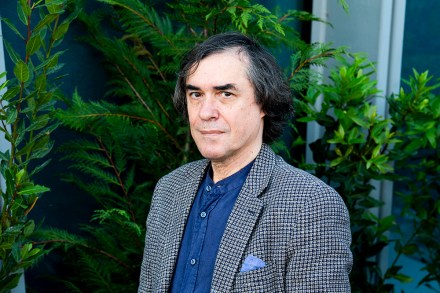
Before the 1989 revolution, Romania had seen nearly a century of polarisation – a fascist regime swiftly replaced by a communist one. In Blinding, Mircea Cartarescu’s first instalment of an ambitious, surrealist trilogy, that duality, along with other antagonisms central to existence, is represented by the motif of a butterfly. The novel was originally published in Romanian in 1996, and the title refers to the epiphany which, it’s suggested, can be achieved if life’s opposites are reconciled. We first meet the narrator, twentysomething Mircea, languishing in a squalid studio flat in Bucharest, his rapidly industrialising home city. He is writing his own ‘endless book’, his aim being absolute self-knowledge.

Time for a reckoning: Vigil, by George Saunders, reviewed

From our UK edition

George Saunders is at his most lively in the company of the dead. At ease with ghosts. In the 2022 Booker-winning Lincoln in the Bardo, Abraham Lincoln mourns his young son in a graveyard surrounded by a clamorous crowd of the newly deceased trying to be helpful. Grief, handled with sweet humour. But Saunders has not always been so gentle. His acclaimed first collection of stories, CivilWarLand in Bad Decline (1997), featured a landscape of grotesque theme parks populated by corpses, enslaved humans and ghosts. Even then, compassion edged in, rubbing shoulders with absurdist humour.  Saunders is a cradle Catholic, and the liturgy frequently surfaces in his stories; but his Catholicism has a humanist face, a vein of kindness running through his work. He is now a student of Buddhism.

A flying visit: Palaver, by Bryan Washington, reviewed

From our UK edition

I’ve never been to Tokyo, but sometimes I wonder: why bother with the plane ticket? The imagined Tokyo is more real than the actual city. For westerners, it is a place whose USP is its unreality: its irreducible strangeness, its intense Japaneseness. It’s a city where lonely souls go to bump against other lonely souls and everything is lost in translation. To spoil this fantasy with too much daylight would be to miss the point. On the surface, Bryan Washington’s Palaver isn’t in a hurry to push against these clichés. It follows an estranged mother and son who meet again in Japan many years after he has left the humidity and homophobia of Texas.

An intellectual farce: Rapture of the Deep, by Robert Irwin, reviewed

From our UK edition

If Robert Irwin had not existed, then Dan Brown, or better still Umberto Eco, would surely have had to invent him. In his Memoirs of a Dervish, the roller-blading, pinball-playing polymath reported: ‘It was in my first year in Oxford that I decided that I wanted to become a Muslim saint.’ Irwin, who died in 2024, first pursued that esoteric life goal in a Sufi monastery in Algeria. He returned to become not just a vastly erudite scholar of Arab Muslim culture but a madcap maverick of a novelist as well. As a writer, he loved paradox, surprise and reversal.

The serious business of games: Seven, by Joanna Kavenna, reviewed

From our UK edition

Joanna Kavenna is very serious about games. Her novels have a certain playful quality, even her debut Inglorious, where the humour and allusions are Mittel-european. More markedly ludic are her Lewis Carroll-esque fantasy about quantum physics, A Field Guide to Getting Lost and the Philip K. Dickish tech-dystopia of Zed. In Seven, however, it’s not just the style but the subject. As if to make clear that games are neither childish nor mere distractions, there is a pointed reference to Johan Huizinga’s study Homo Ludens¸ published on the eve of the second world war. The narrator here is working for a formidable philosopher in Oslo, whose current project is entitled ‘Thinking outside the Box about Thinking outside the Box’. (‘I’m serious,’ the narrator archly notes.

Bookshop blues: Service, by John Tottenham, reviewed

From our UK edition

A friendly admonition for the thwarted or struggling writer in your life: that tempting little job at the local bookshop might not be the best way to keep the show on the road until the Muse comes through. Would-be actors who take a front-of-house gig at the National Theatre aren’t constantly buttonholed by strangers raving about how brilliant Andrew Scott’s Hamlet was. Plus, of course, their more successful contemporaries will generally be elsewhere of an evening, doing shows of their own.

From riches to rags: The Effingers, by Gabriele Tergit, reviewed

From our UK edition

Sometimes the term ‘lost masterpiece’ proves to be little more than a publisher’s puff. At other times, however, a long-buried book that is dug up, dusted down and branded a classic is worthy of the accolade. That applies to Gabriele Tergit’s The Effingers. Originally published – and then promptly overlooked – in the author’s native Germany in 1951 and recently rediscovered and reappraised there, the novel, a vivid chronicle of German Jewish life over the course of 70 years, now appears in English for the first time. Opening in 1878, Tergit charts the progress of siblings Paul and Karl Effinger as they leave their provincial hometown in the south of Germany to make their fortunes in Berlin.

The last chapter: Departure(s), by Julian Barnes, reviewed

From our UK edition

Departure(s), whose publication co-incides with Julian Barnes’s 80th birthday, will be his last book, a thank you and goodbye to his readers. Barnes has blood cancer, but the condition is manageable and not terminal; when he dies, it will be with, and not of, the disease. Or rather, as he puts it: ‘I, in dying, shall have killed my cancer! Barnes 1, Cancer 0 – result!’ Otherwise he is in good nick and still master and commander of his narratives. He is bowing out because his body of work is complete: his 18 novels and two memoirs – or, depending on how Departure(s) is categorised, his 17 novels and three memoirs – form a perfect whole. It is a canny move to write your own final chapter, and Barnes is a canny writer who has always had the sense of an ending.

Coming of age in Melbourne: Landscape with Landscape, by Gerald Murnane, reviewed

From our UK edition

Gerald Murnane’s Landscape with Landscape opens with a splendidly disgruntled preface. The book is a collection of six longish stories and was originally published in 1985, when it was panned by a reviewer. ‘Some writers may claim not to be affected by reviews or even not to read them,’ he observes in his preface: ‘I make no such claim.’ And he explains how this brutal notice (‘I call to mind easily some of the nastiest passages’) led to poor sales and the disappearance of the collection, his fourth book. There is some comedy in this alongside the spiky pathos. Murnane is about as close to review-proof as any writer can get. Now 86, he is often mentioned as a likely contender for the Nobel Prize in Literature. He has high-minded admirers (J.M.

Odd man out: The Burning Origin, by Daniele Mencarelli, reviewed

From our UK edition

This terse, unsparing novel can be summed up thus: after nearly a decade’s absence, the successful designer Gabriele Bilancini returns home to suburban Rome, where he wrestles with an identity crisis. His family and friends – his intimates before he moved to Milan and raced up the social ladder – feel like shameful reminders of his proletarian origins, which he keeps hidden – in ‘the way you hide a sin’ –  from the Milanese élite he is anxious to fit in with. In Milan, where he works and lives with his girlfriend Camilla, the daughter of his mentor, the celebrity designer Franco Zardi, Gabriele dresses smartly, limits lunch to ‘a salad with full protein’ and purges his speech of any signs of his unsophisticated upbringing.