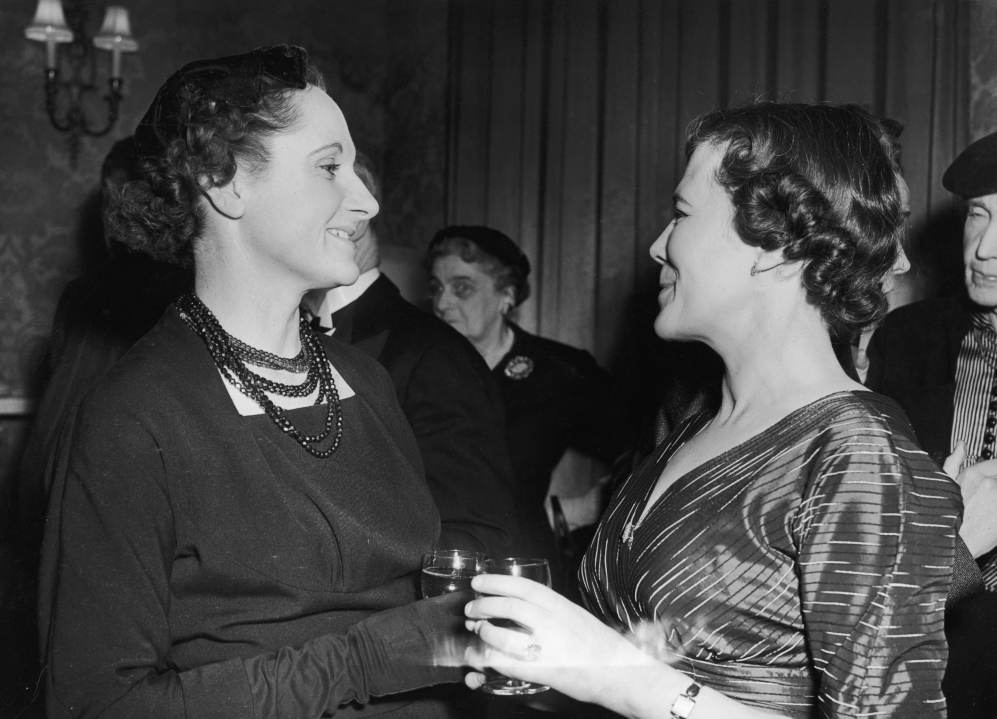
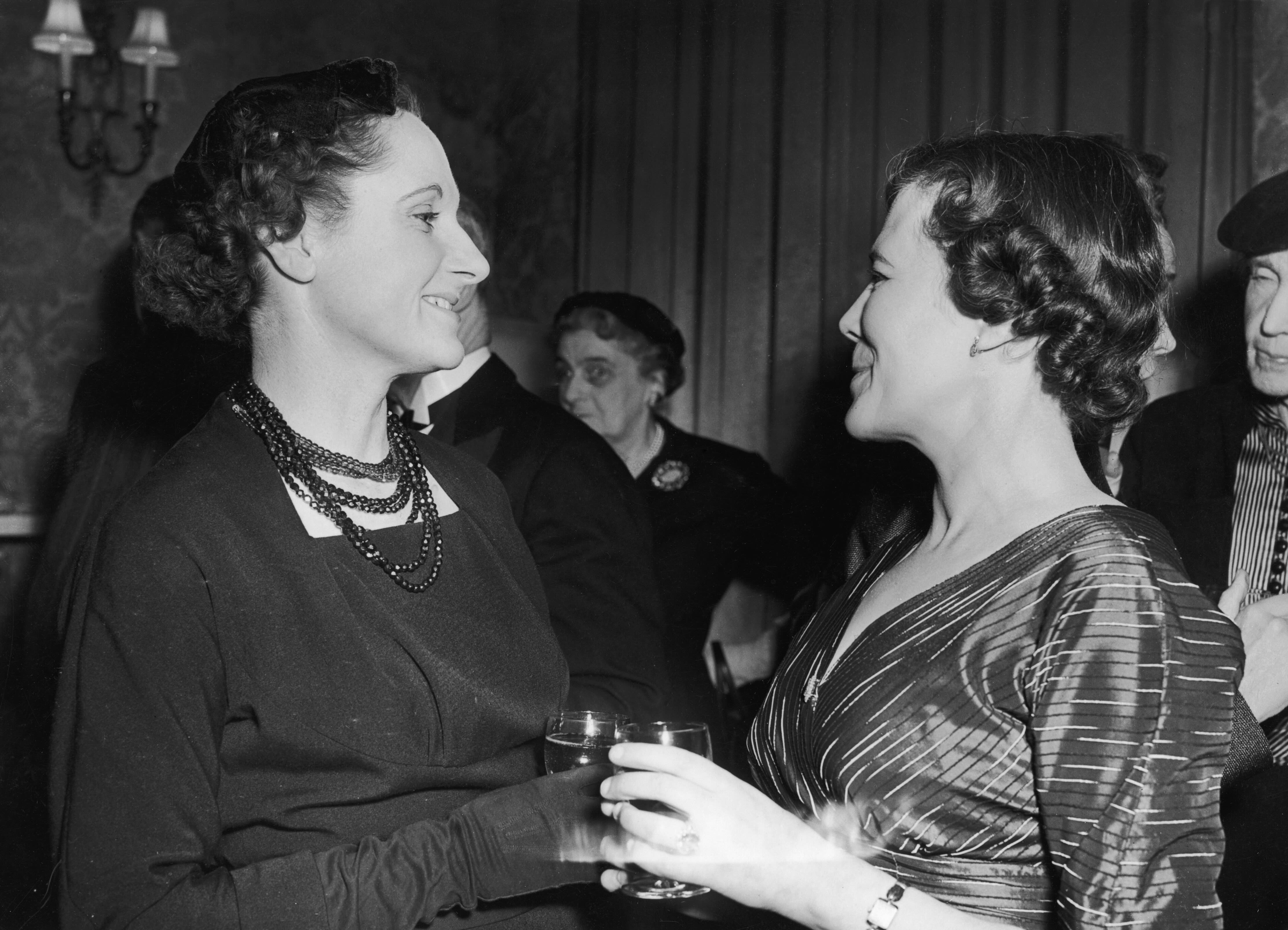
On 15 November 1975, Elizabeth Taylor died. No, not that Elizabeth Taylor – she had many more years, and many more husbands, to get through. I mean Elizabeth Taylor the author, whose 12 novels and four volumes of short stories so piercingly and hilariously chronicle the quietly desperate lives of middle-class women in and around the sleepy towns and villages of the Thames Valley in the middle part of the last century.
Kingsley Amis thought her ‘one of the best English novelists born in this century’. Anita Brookner considered her ‘the Jane Austen of the 1950s and 60s’. Despite such accolades, Taylor never quite achieved the status she deserved. She was never a bestseller; she never won a prize. In fact, a faintly patronising air bedevilled her throughout her writing life. (Saul Bellow, when judging the Booker Prize, for which she was long listed, derided her work as redolent of ‘tinkling teacups’.) She was seen by some as too genteel, too privileged, too low stakes – a mere lending library novelist.
This year marks 50 years since Taylor’s final novel, Blaming, was published, almost a year after her death, in the autumn of 1976. Her star has since risen slightly – Angel (1957) was chosen as one of the 13 ‘Best Novels of Our Time’ in 1984; Robert McCrum included Mrs Palfrey at the Claremont (1971) on his list of the ‘100 Best Novels Written in English’ – but nowhere near the heights it should. It therefore seems a good time to give this perennially undervalued writer her very significant due.
Elizabeth ‘Betty’ Coles was born in Reading in 1912, the daughter of Oliver, an inspector for Sun Insurance, and Elsie, whose parents, of working-class stock, ran the local newsagents. Educated privately at Abbey School, she then worked as a governess before joining the Communist party of Great Britain. In her spare time she wrote.
Despite her bohemian inclinations and left-ish politics (she quickly became disillusioned with the Communist party, but apparently remained a Labour voter), Elizabeth soon settled down to a conventional middle-class life. In 1936 she married John Taylor, a sweet manufacturer, and in 1948 they moved to the Buckinghamshire village of Penn, where they remained. Nicola Beauman, in her biography The Other Elizabeth Taylor, expresses surprise that Elizabeth should have chosen this cosy and conservative life, and not, perhaps, ventured out into the world of the Earls Court bedsitter, there to write socially conscious fiction, as others did – ‘that she chose the gin and tonic and the Daily Telegraph is one of the great mysteries of her life’.
But it is perhaps lucky for us that she did. Her novels and short stories, beginning with At Mrs Lippincote’s (1945), are jewels of finely observed social comedy, where nothing very much happens except for the kinds of problems that everyone faces at one time or another – loss, loneliness, disappointment. They usually centre on the low-key troubles of an intelligent, sensitive woman, perhaps an artist or writer, but most likely a housewife. There are no twists or epiphanies, and little ‘plot’ to speak of. They are quiet and understated affairs, sharpened by an undercurrent of satire, with politics and the wider world intruding not at all. This was seemingly a conscious decision. ‘Sod it all’, she wrote to a friend. ‘I will write what I bloody will, and not worry whether or not it reflects the times’.
Taylor’s two most famous novels, Angel and Mrs Palfrey at the Claremont, both of which were made into films, are in many ways slight outliers but are still good places to start for those new to her oeuvre. For one thing, they are laugh-out-loud funny. Both novels will have you gleefully rereading entire passages for their sublime comedy, but they will also have you nodding along in sympathy and understanding.
She was seen by some as too genteel, too privileged, too low stakes – a mere lending library novelist
Of her other novels, everyone has their favourites (many consider 1951’s Brief Encounter-like A Game of Hide and Seek her best). My own are In a Summer Season (1961) and The Soul of Kindness (1964), which, as well as being wonderfully funny and penetratingly wise on all manner of subjects, also maintain a slightly intoxicating purity of mood and atmosphere throughout. Taylor said that she wrote ‘in scenes’, and her novels tend to unfurl organically, with her characters free to behave as people really do, not as plot or premise dictates.
Why then the uncertain reputation, the lack of formal recognition? To some extent, this was self-inflicted. Unlike her namesake, she was very much uninterested in fame and fortune. She avoided interviews and was shy and self-deprecating when suffering through them, telling one interviewer: ‘There is not very much to know about me. I have had a rather uneventful life, thank God.’ Added to this was her seeming unadventurousness: the very English middle-class milieu, the domestic settings, the often geriatric characters. She was never going to be fashionable. But she knew this, and didn’t mind.
Blaming, which Taylor finished after a serious operation and just before her death at the age of 63, is, understandably, retrospective and overshadowed by loss. It follows Amy Henderson as she comes to terms with the sudden death of her artist husband, Nick, while they are on holiday in Turkey. The central dilemma is the unwanted friendship that Amy develops with Martha, a dreary American writer obsessed with all things English who helped Amy in her time of need, and who now can’t be got rid of.
While it is perhaps not the best place to start when approaching Taylor’s fictional world for the first time, it is a somewhat fitting coda to a remarkable literary career, and, in its description of Martha, it offers a possibly wry acknowledgement of her own situation: ‘Her few books were handsomely printed, widely spaced on good paper, well-reviewed, and more or less unknown. Without fretting she waited to be discovered.’
So, please, look past the genteel surface and the self-effacing comments, and ignore those tinkling teacups, for there is a great deal of life and art to discover in the work of this other Elizabeth Taylor. Don’t keep her waiting any longer.





Comments