Fiction

Bizarre images: I Hear You’re Rich, by Diane Williams, reviewed

From our UK edition

‘What am I – I wonder, dear god – now best known for?’ It is a question asked at the end of ‘Gladly!’, one of the American author Diane Williams’s mercurial, light-footed short stories. The narrator in existential crisis has just bumped into a man she ‘once engaged with for years, amid scenes of nearly religious significance’; has found a discarded, brand new pair of ‘canvas All Star high tops’; and witnessed a boy picking up nuts that were ‘meant for squirrels’, and decided that in later life he will be renowned for either ‘gluttony’ or ‘enterprise’. The drama of these occurrences and the self-questioning take place over no more than two pages. The story, and the lives it tells, could be read in the time it takes to gulp some coffee.

Two sinister siblings: The Mountain Lion, by Jean Stafford, reviewed

From our UK edition

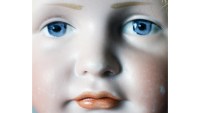
Many of the best literary children – think the creations of Henry James or Elizabeth Bowen – have something creepy about them. These are girls and boys who see through the hypocrisy of adults, and there’s going to be something unnerving about their precocity. Jean Stafford’s Mollie and Ralph took their place in a lineage with James’s Flora and Miles and Bowen’s Henrietta and Leopold when she flung them, bespectacled and prone to nosebleeds, into the world in 1946. Stafford was the first wife of Robert Lowell, and it’s the main thing most people know about her now – unsurprisingly. Lowell was a man who made his mark on his wives, and in Stafford’s case the marks were literal – he drunkenly drove her into a brick wall.

Games of love and jealousy: Ariane, by Claude Anet, reviewed

From our UK edition

‘The world might condemn me, but what’s the world? A gathering of fools and a pile of prejudices.’ Thus, with all the certainty and absolutism of youth, does the 17-year-old Ariane reflect on the prospect of selling herself. There would be an element of épater les bourgeois in this sentiment in almost any age, but to see it so freely expressed at the dawn of the last century comes as something of a surprise. Written in Russia while its French author chronicled the immediate aftermath of the Bolshevik revolution, Claude Anet’s Ariane is a striking, if now largely forgotten, account of a young woman’s pursuit of self-realisation in a world of rapidly changing social mores.

A cherry orchard, three sisters and a summer romance: Tom Lake, by Ann Patchett, reviewed

From our UK edition

Two plays guide the reader through Tom Lake, Ann Patchett’s ninth novel: Thornton Wilder’s Our Town, the story of ordinary lives in a small New Hampshire community in the early years of the 20th century, which, with its radically stripped-back staging, sets time and place in the context of all time and place, and enjoins its audience to ponder what is truly valuable in human life; and Anton Chekhov’s The Cherry Orchard, the story of the battle for an estate that throbs with conflict, violence and, ultimately, destruction. Patchett’s mind is on the twin forces of preservation and entropy: our desperate attempts to cling to the local and the familiar as the wider world threatens and besieges us; our need to both depart and return, to embrace and exclude.

Terrorists you might know or love: Brotherless Night, by V.V. Ganeshananthan, reviewed

From our UK edition

Brotherless Night is the second novel by V.V. Ganeshananthan, an American writer of Sri Lankan Tamil descent, whose debut, Love Marriage, was longlisted for the Women’s Prize for Fiction in 2008. Here, as in her previous book, a female narrator unpicks the lives of a Sri Lankan family torn apart by civil war. Sashi’s reason for studying medicine, and her oft-repeated mantra, is: ‘First do no harm’ The prologue, set in New York in 2009, explodes with its opening sentence: ‘I recently sent a letter to a terrorist I used to know.’ But the bulk of the novel, set in 1980s Sri Lanka, is a mesmerising portrait of time and place in which the narrator gradually reveals who this terrorist is, and explores why ‘that word, terrorist, is too simple for the history we have lived.

The finger of suspicion: Ordinary Human Failings, by Megan Nolan, reviewed

From our UK edition

A toddler has gone missing on a council estate in London. Tom, a tabloid journalist, gets the whiff of a story that she may have been killed by another child, Lucy Green, the daughter of a young Irishwoman, Carmel. But Carmel is sunk in the misery of her first and only love affair in Waterford, which left her pregnant. She has never bonded with her daughter, seeing her as ‘a tiny, rabid, black-haired demon from hell’ and has remained obsessed by her erotic passion for her ex. Tom is equally obsessed by his need to get the big story that will make his name – even if it may not be true. Megan Nolan, one of the new wave of strikingly talented young Irish writers, has spun Ordinary Human Failings around suffering, responsibility and lies.

Mother trouble: Commitment, by Mona Simpson, reviewed

From our UK edition

There is more than one way to read the title of Mona Simpson’s seventh novel Commitment, a multigenerational family saga set mainly in California in the 1970s and 1980s. There is the ‘hospital commitment’ Diane Aziz, a single mother of three teenage children, needs after sinking into a deep depression shortly after her eldest, Walter, starts at UC Berkeley. Then there is the commitment Diane’s children show to their mother – and to one another, as they struggle through life, love and loyalty to each other while hoping Diane will one day leave her hospital compound.

Tales of the unexpected: The Complete Short Stories, by Patrick O’Brian, reviewed

From our UK edition

The publishers of this handsome volume hint at high adventure – and period adventure at that. In the blot left by an antique quill pen swirls a breaking wave. Ah, the high seas! And here we are again with Aubrey and Maturin picking weevils out of ship’s biscuits and foiling Napoleon’s naval plans. So I had better warn readers that this isn’t really representative. The first story in the collection, ‘The Return’, is about a man returning to childhood haunts and fishing for trout. The second, ‘The Last Pool’, is different in that this time the fish are salmon (although the protagonist starts out looking for trout).

Love in idleness: The Four Corners of the Heart, by Françoise Sagan, reviewed

From our UK edition

Do not be alarmed. You have not suffered a blow to the head. Françoise Sagan, the author of the 1954 phenomenon Bonjour Tristesse (published when she was 18; two million copies sold), is indeed no longer with us. She died in 2004, aged 69. Yet here is her brand new novel, recovered by her son Denis Westhoff from the mass – and presumably mess – of her papers. Perhaps better described as an unfinished story, there’s a romantic charm, innocence and otherworldliness to this book of a kind unlikely to be found in a contemporary novel. But it’s also an uncomfortable read in parts, no matter how ironic the text is supposed to be.

An old man remembers: The Librarianist, by Patrick deWitt, reviewed

From our UK edition

It’s a mark of how difficult Patrick deWittis to pigeonhole that I’m tempted to reach for reductive mash-ups to sell you his winning fifth novel. The lovechild of Elizabeth Strout and Wes Anderson? Katherine Heiny meets the Coen Brothers? It’s not quite any of that. On the surface, The Librarianist is his most conventional narrative yet (the Man Booker shortlisted The Sisters Brothers was an absurdist western; his other novels are similarly left field). A chance encounter leads the friendless, but ‘not unhappy per se’, retired librarian Bob Comet to volunteer at the Gambell-Reed Senior Center, where he forges new bonds and reflects on his past. But it’s odder and funnier than that suggests. For a start, the narrative arc is all over the place.

Scenes from domestic life: After the Funeral, by Tessa Hadley, reviewed

From our UK edition

The cover image of Tessa Hadley’s fourth short story collection is Gerhard Richter’s ‘Betty’ (1988), a portrait of the artist’s daughter facing away from the viewer. It’s an apt choice for Hadley’s work, which turns on the fundamental unknowability of human beings. The titular tale, about a widowed mother and her two daughters confronting reduced circumstances, is loosely inspired by Mavis Gallant’s story ‘1933’. Its climax, which pulls off the feat of being both shocking and inevitable, is a testament to Hadley’s skill as a storyteller. Some of the stories’ incidents are entirely internal: in ‘Cecilia Awakened’, a teenaged girl on a family holiday in Florence wakes up ‘inside the wrong skin’, suddenly aware of her parents’ shortcomings.

New trials for Frank Bascombe: Be Mine, by Richard Ford, reviewed

From our UK edition

Frank Bascombe, the narrator of Be Mine and several other novels by Richard Ford, is, as always, living a horribly tragic life. In previous books, his son dies, his wife leaves him, he can’t find love, he gets cancer and has radioactive devices implanted in his prostate. He fails as a writer, but finds success as an estate agent. There’s something vital and winning about the way he describes all this. He’s a great philosopher: he tries to accept the world as it is, and just grind on towards the grave. Now he’s 74. In a previous novel, Independence Day, he is 43, recently divorced and trying to bond with his surviving son, Paul. But everything goes wrong. Paul has a bad head injury, and Frank finds himself in a hospital, calling his ex-wife with the news.

Picture study: Second Self, by Chloë Ashby, reviewed

From our UK edition

Having established a name for herself as a talented art critic for the national press, Chloë Ashby employs her expertise with illuminating effect in her fiction. In her first novel, Wet Paint, she used the uncomfortable gaze of the barmaid in Manet’s ‘A Bar at the Folies-Bergère’ to explore how her protagonist sees and is seen. In her new novel, Second Self, the central painting is ‘View of Scheveningen Sands’ by Hendrick van Anthonissen, which again becomes an insightful parallel to the protagonist’s life. Cathy, 35, an art conservationist, is happily married to Noah, 11 years her senior, an academic and authority on international relations.

A visit from the devil: Russian Gothic, by Aleksandr Skorobogatov, reviewed

From our UK edition

Like light from faraway stars, fiction from outside the Anglosphere may take decades to reach English-language readers. This sinister, indeed sulphurous, novella by a Belarus-born author was first published in Russian in 1991, and won major awards. Ilona Yazhbin Chavasse’s English translation, as creepily compelling as the book deserves, appears long after the contemporary hook that Aleksandr Skorobogatov embeds in his tale has lost its topicality. Recent events, however, make this fable of obsession, madness and violence timelier than ever. It almost vindicates a belief in Russian history and literature as an epic recycling of eternal themes. In a dismal Russian town lives Nikolai, a drifter and drinker on a meagre government pension.

Spirit of place: Elsewhere, by Yan Ge, reviewed

From our UK edition

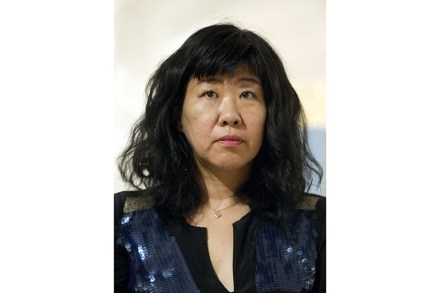
This collection of stories is so assured, and delivered with such aplomb, that it’s hard to believe it’s a debut – and, as it turns out, that’s because it isn’t. Although Elsewhere is Yan Ge’s first book written in English, she is a seasoned novelist in China, where she has been publishing fiction for more than 20 years. For the past decade, Ge has lived in Britain and Ireland, and the collection captures the spirit of both her birthplace and her adopted homes in a variety of registers. The stories set here have a whiff of autofiction to them, but transcend their origins with style and wit.

The trials of a Tokyo housewife: Mild Vertigo, by Mieko Kanai, reviewed

From our UK edition

Natsumi lives in a modern flat in Tokyo with her husband and two young sons, her life comfortable but circumscribed by the tedium of household chores. Washing dishes in the sink, she finds herself transfixed, gazing at the ‘rope of water’ falling from the tap, twisting like a snake: ‘There was something Sisyphean in the nature of the roster of simple domestic tasks... never an end in sight.’ Things are at once too easy and too much for her; the kitchen is so perfect she hesitates to spoil its pristine condition and ends up buying ready-cooked meals, her life shrunk to what seems stifling captivity.   She memorises the layout of the super-market and makes notes: ‘Fish Day specials: tuna or red snapper or yellow-tail or octopus sashimi.

A study of isolation: The Late Americans, by Brandon Taylor, reviewed

From our UK edition

The Late Americans, Brandon Taylor’s second novel, follows the lives of a group of friends living in Iowa City over the span of a year. Early on, Seamus, a poet completing his master’s degree, imagines an ‘indifferent God... squinting at them as they went about their lives on the circuits like little automata in an exhibit called The Late Americans’, and this is a fine description of the novel. Each character is the focus of a chapter, and we watch as Seamus, Fyodor, Ivan, Timo, Noah, Bea, Fatima and Daw’s lives overlap, in bars, seminar rooms and dance studios, while they negotiate their place in a world determined by their race, class and wealth.

Lorrie Moore’s latest novel is deeply troubling, but also consoling

From our UK edition

Sometimes a novel’s means are so strange, however compelling its final effect on the reader, that a straightforward account of it will be most helpful. I’ve read, or part-read, this novel three times now. On the first reading I gave up, shaking my head. On the second I got to the end, but thought it absurdly wilful, self-absorbed and idiosyncratic to the point of whimsy. The third reading – something, after all, must have drawn me back – exerted an appalling power, and I emerged shaken, troubled, but also consoled. Take your pick. This is a book that is going to divide people, and one that can look very different to the same reader in different lights. Finn visits the cemetery – and there is Lily.

A doomed affair: Kairos, by Jenny Erpenbeck, reviewed

From our UK edition

We all live with boundaries, but few of us feel that as keenly as Jenny Erpenbeck, who grew up in the Pankow district of East Berlin, a stone’s throw from the Wall. Now a leading novelist of a unified Germany, she explained several years ago that when the Wall came down in 1989 and the East German state collapsed (she was 22 at the time), a ‘border’ was created between two halves of her life. ‘Without this experience of transition, from one world to a very other one, I would probably never have started writing.’ It will never be like this again, thinks Hans.

Lorrie Moore explores the thin veil between life and death

Very few of us could evade accusations of pretension if we quoted Faulkner in everyday conversation. The characters conjured up in Lorrie Moore’s fiction are granted an exception, though not always solely by virtue of their earnestness. In her novel I Am Homeless If This Is Not My Home, which traces a journey toward a final burial in the American South, allusion to As I Lay Dying is particularly apt. Moore has made a name for herself as one of America’s masters of the short story, with her inimitable style on display ever since her first work of fiction, “Raspberries,” was published in 1977. In this, her first novel for fourteen years, she once again wields her wordplay playfully and powerfully, striking a balance between levity and gravity.

Moore