Fiction

Scenes from domestic life: After the Funeral, by Tessa Hadley, reviewed

From our UK edition

The cover image of Tessa Hadley’s fourth short story collection is Gerhard Richter’s ‘Betty’ (1988), a portrait of the artist’s daughter facing away from the viewer. It’s an apt choice for Hadley’s work, which turns on the fundamental unknowability of human beings. The titular tale, about a widowed mother and her two daughters confronting reduced circumstances, is loosely inspired by Mavis Gallant’s story ‘1933’. Its climax, which pulls off the feat of being both shocking and inevitable, is a testament to Hadley’s skill as a storyteller. Some of the stories’ incidents are entirely internal: in ‘Cecilia Awakened’, a teenaged girl on a family holiday in Florence wakes up ‘inside the wrong skin’, suddenly aware of her parents’ shortcomings.

New trials for Frank Bascombe: Be Mine, by Richard Ford, reviewed

From our UK edition

Frank Bascombe, the narrator of Be Mine and several other novels by Richard Ford, is, as always, living a horribly tragic life. In previous books, his son dies, his wife leaves him, he can’t find love, he gets cancer and has radioactive devices implanted in his prostate. He fails as a writer, but finds success as an estate agent. There’s something vital and winning about the way he describes all this. He’s a great philosopher: he tries to accept the world as it is, and just grind on towards the grave. Now he’s 74. In a previous novel, Independence Day, he is 43, recently divorced and trying to bond with his surviving son, Paul. But everything goes wrong. Paul has a bad head injury, and Frank finds himself in a hospital, calling his ex-wife with the news.

Picture study: Second Self, by Chloë Ashby, reviewed

From our UK edition

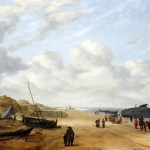
Having established a name for herself as a talented art critic for the national press, Chloë Ashby employs her expertise with illuminating effect in her fiction. In her first novel, Wet Paint, she used the uncomfortable gaze of the barmaid in Manet’s ‘A Bar at the Folies-Bergère’ to explore how her protagonist sees and is seen. In her new novel, Second Self, the central painting is ‘View of Scheveningen Sands’ by Hendrick van Anthonissen, which again becomes an insightful parallel to the protagonist’s life. Cathy, 35, an art conservationist, is happily married to Noah, 11 years her senior, an academic and authority on international relations.

A visit from the devil: Russian Gothic, by Aleksandr Skorobogatov, reviewed

From our UK edition

Like light from faraway stars, fiction from outside the Anglosphere may take decades to reach English-language readers. This sinister, indeed sulphurous, novella by a Belarus-born author was first published in Russian in 1991, and won major awards. Ilona Yazhbin Chavasse’s English translation, as creepily compelling as the book deserves, appears long after the contemporary hook that Aleksandr Skorobogatov embeds in his tale has lost its topicality. Recent events, however, make this fable of obsession, madness and violence timelier than ever. It almost vindicates a belief in Russian history and literature as an epic recycling of eternal themes. In a dismal Russian town lives Nikolai, a drifter and drinker on a meagre government pension.

Spirit of place: Elsewhere, by Yan Ge, reviewed

From our UK edition

This collection of stories is so assured, and delivered with such aplomb, that it’s hard to believe it’s a debut – and, as it turns out, that’s because it isn’t. Although Elsewhere is Yan Ge’s first book written in English, she is a seasoned novelist in China, where she has been publishing fiction for more than 20 years. For the past decade, Ge has lived in Britain and Ireland, and the collection captures the spirit of both her birthplace and her adopted homes in a variety of registers. The stories set here have a whiff of autofiction to them, but transcend their origins with style and wit.

The trials of a Tokyo housewife: Mild Vertigo, by Mieko Kanai, reviewed

From our UK edition

Natsumi lives in a modern flat in Tokyo with her husband and two young sons, her life comfortable but circumscribed by the tedium of household chores. Washing dishes in the sink, she finds herself transfixed, gazing at the ‘rope of water’ falling from the tap, twisting like a snake: ‘There was something Sisyphean in the nature of the roster of simple domestic tasks... never an end in sight.’ Things are at once too easy and too much for her; the kitchen is so perfect she hesitates to spoil its pristine condition and ends up buying ready-cooked meals, her life shrunk to what seems stifling captivity.   She memorises the layout of the super-market and makes notes: ‘Fish Day specials: tuna or red snapper or yellow-tail or octopus sashimi.

A study of isolation: The Late Americans, by Brandon Taylor, reviewed

From our UK edition

The Late Americans, Brandon Taylor’s second novel, follows the lives of a group of friends living in Iowa City over the span of a year. Early on, Seamus, a poet completing his master’s degree, imagines an ‘indifferent God... squinting at them as they went about their lives on the circuits like little automata in an exhibit called The Late Americans’, and this is a fine description of the novel. Each character is the focus of a chapter, and we watch as Seamus, Fyodor, Ivan, Timo, Noah, Bea, Fatima and Daw’s lives overlap, in bars, seminar rooms and dance studios, while they negotiate their place in a world determined by their race, class and wealth.

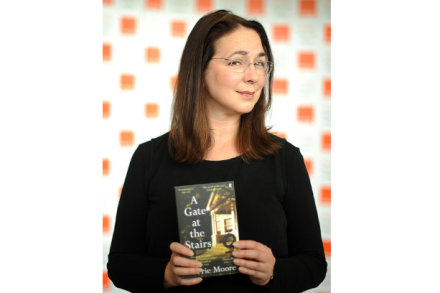
Lorrie Moore’s latest novel is deeply troubling, but also consoling

From our UK edition

Sometimes a novel’s means are so strange, however compelling its final effect on the reader, that a straightforward account of it will be most helpful. I’ve read, or part-read, this novel three times now. On the first reading I gave up, shaking my head. On the second I got to the end, but thought it absurdly wilful, self-absorbed and idiosyncratic to the point of whimsy. The third reading – something, after all, must have drawn me back – exerted an appalling power, and I emerged shaken, troubled, but also consoled. Take your pick. This is a book that is going to divide people, and one that can look very different to the same reader in different lights. Finn visits the cemetery – and there is Lily.

A doomed affair: Kairos, by Jenny Erpenbeck, reviewed

From our UK edition

We all live with boundaries, but few of us feel that as keenly as Jenny Erpenbeck, who grew up in the Pankow district of East Berlin, a stone’s throw from the Wall. Now a leading novelist of a unified Germany, she explained several years ago that when the Wall came down in 1989 and the East German state collapsed (she was 22 at the time), a ‘border’ was created between two halves of her life. ‘Without this experience of transition, from one world to a very other one, I would probably never have started writing.’ It will never be like this again, thinks Hans.

Lorrie Moore explores the thin veil between life and death

Very few of us could evade accusations of pretension if we quoted Faulkner in everyday conversation. The characters conjured up in Lorrie Moore’s fiction are granted an exception, though not always solely by virtue of their earnestness. In her novel I Am Homeless If This Is Not My Home, which traces a journey toward a final burial in the American South, allusion to As I Lay Dying is particularly apt. Moore has made a name for herself as one of America’s masters of the short story, with her inimitable style on display ever since her first work of fiction, “Raspberries,” was published in 1977. In this, her first novel for fourteen years, she once again wields her wordplay playfully and powerfully, striking a balance between levity and gravity.

Moore

Divine revelations: I, Julian, by Claire Gilbert, reviewed

From our UK edition

Claire Gilbert considers Julian of Norwich to be the mother of English literature, and believes she should stand alongside Chaucer. What seems indisputable is that Julian was the author of the first work written in English by a woman. This rather wonderful fictional autobiography was published to coincide with the 650th anniversary of Julian first experiencing, in May 1373, the series of 16 visions she wrote about in Revelations of Divine Love. It comes garlanded with praise from, among others, Jeremy Irons and Rowan Williams, the former Archbishop of Canterbury.

Turmoil in Tuscany: The Three Graces, by Amanda Craig, reviewed

From our UK edition

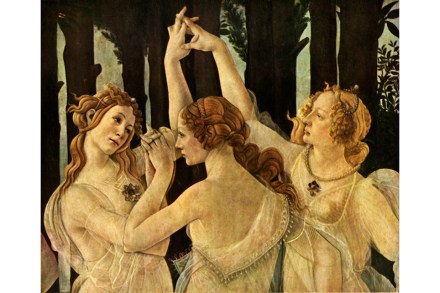
The title of Amanda Craig’s enjoyable and provocative ninth novel might conjure the dancing trio in Botticelli’s ‘Primavera’ (which we visit in the book, set in Tuscany); but the three graces here are Ruth, Diana and Marta, elderly expat friends who meet for weekly gossips over coffee, ‘united by age, exile, the love of dogs and their disinclination to discuss their infirmities’. The women may be less beautiful than Botticelli’s, but they are certainly more formidable. By the end of the first chapter they’ve already smashed a car window to rescue an overheating dog.

Voice recognition: Big Swiss, by Jen Beagin, reviewed

From our UK edition

When Flavia, 28, starts seeing a sex therapist called Om – a name that is as ‘on-the-nose’ as everything in Hudson, NY, the college town without a college where Jen Beagin sets Big Swiss – she is upfront about her ground rules.  Having been brutally attacked a few years earlier, she says to Om: Can we stop using the word ‘trauma’? Trauma people are almost as unbearable to me as Trump people. If you try suggesting that they let go of their suffering, their victimhood, they act all traumatised. It’s like, yes, what happened to you is shitty, I’m not denying that, but why do you keep rolling around in your own shit?

The perfect holiday read: The Bee Sting, by Paul Murray, reviewed

From our UK edition

Hello, summer! This is it. If you have been waiting for your big holiday read, finally here it is: an immersive, brilliantly structured, beautifully written mega-tome that is as laugh-out-loud funny as it is deeply disturbing. It is never a good idea to begin a review (or indeed to end one) with a round of applause unless you want to sound like a complete pushover or a total patsy, but full credit where it’s due: Paul Murray, the undisputed reigning champion of epic Irish tragicomedy, has done it again. He did it first with An Evening of Long Goodbyes (2003), which read as if a young, Irish P.G. Wodehouse were frantically rewriting A Confederacy of Dunces.

A deadly game of chance: The Story of a Forest, by Linda Grant, reviewed

From our UK edition

‘Like a child in a fairy tale’, 14-year old Mina Mendel walks into a Latvian forest one day in 1913. With her basket and shawl, she looks like Little Red Riding Hood, but the wolves she meets – Bolsheviks, ‘agents of the coming revolution’ – are anything but mythical. Linda Grant begins her sweeping, ambitious ninth novel The Story of the Forest with this accidental encounter. From Latvia to Liverpool – and Soho to World’s End – she tells the story of one Jewish family in the 20th century as they live through plots to overthrow the tsar, the trenches of of the Great War, the racism of Liverpudlian suburbs and the horrors of the second world war It is a novel of chances: of lives changed by the ring of a phone, a meeting in a street, or the march of global history.

The dark side of racing: Kick the Latch, by Kathryn Scanlan, reviewed

From our UK edition

Kathryn Scanlan’s second novel Kick the Latch is adapted from the transcript of an interview with a family friend in her native Iowa. Its narrator, Sonia, looks back on her years as a racetrack hand in a series of vignettes. She recounts run-ins with violent men, a freak accident that put her in a coma, and interactions with assorted rural eccentrics, such as Bicycle Jenny, a notoriously pongy gardener who owns 70 chihuahuas, and Johnny Block, who keeps a pet crow and ‘some ferrets’. Animals ran amok on the trailer parks where she lived: ‘As soon as you stepped out your door the goose would come and – bam! – she’d nail you in the back of the leg... When I woke up, a goat was sat next to me, chewing on my sleeve.

Double trouble: August Blue, by Deborah Levy, reviewed

From our UK edition

The narrator-protagonist of Deborah Levy’s August Blue, an elite-level concert pianist called Elsa, is going through a difficult time. She recently walked off stage after messing up a Rachmaninoff recital in Vienna. More worryingly, she has just dyed her hair blue. At a market stall in Athens, she becomes entranced by a pair of novelty mechanical horses, but they’re snapped up by another customer with whom she becomes fixated. Elsa keeps noticing ‘the horse woman’ out and about, and starts to think of her as ‘a sort of psychic double’. She is deeply impressed when she sees her smoking a large cigar: ‘It was a poke at life. A provocation. She had attitude and confidence.

Unholy row: The Choice, by Michael Arditti, reviewed

From our UK edition

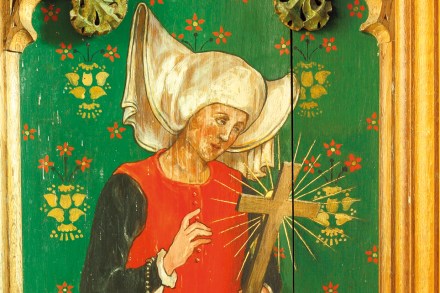
Michael Arditti’s 13th novel The Choice is full of tough moral conundrums. The central dilemma facing Clarissa Phipps, the rector of St Peter’s Church in Tapley, Cheshire, is particularly knotty. Should she remove the church’s panels depicting a troublingly sensuous Eden, painted by the degenerate artist Seward Wemlock in the 1980s, or leave them to stand? Can, in short, an artist’s life ever be disassociated from their work? This is a hot potato, one with which Arditti grapples using endless reserves of theological nuance. By juxtaposing Clarissa’s choice with others she has to make in her life (and the original choices made by Adam and Eve in eating the forbidden fruit), he amplifies the moral complexities behind our hardest decisions.

What the Royal Society of Chemistry gets wrong about free speech

From our UK edition

Why has the Royal Society of Chemistry published a 37 page opinion piece entitled 'Academic free speech or right-wing grievance?' in their new journal Digital Discovery? Digital Discovery publishes 'theoretical and experimental research at the intersection of chemistry, materials science and biotechnology' focusing on 'the development and application of machine learning'. So it is a little surprising for them to publish a piece that 'argues that those who wish to have an honest debate about the limits around freedom of speech need to engage that conversation in a manner that avoids resonance with the language of White (heterosexual, cisgender male) supremacy, lest their arguments provide intellectual cover to those who would attack historically marginalised communities'.

Literary charades: The Writing School, by Miranda France, reviewed

From our UK edition

A recent YouGov survey found that 60 per cent of Britons dream of being writers, compared with 31 per cent who dream of being film stars. Although the chances of success, or even subsistence, are equally remote in both professions, aspirant authors flock to the country’s ever-proliferating creative writing courses. Miranda France’s splendid third book, blending fact and fiction, is set on one such course: a week-long residency in a rural retreat house, which bears more than a passing resemblance to the Arvon Foundation at which France has taught. The unnamed narrator, a Spanish translator and travel writer with two novels to her name, leads an eclectic group of 12 students, in tandem with Tom, a poet, who, having been likened to Ted Hughes, is doing his best to act the part.