Family

Who let the dog out?

Caroline and I are just back from a weekend break in Scotland and, nice though it was, I hadn’t realised how difficult travelling anywhere is at the moment. We had originally planned to drive, but the fuel crisis put paid to that, so we had to book a last-minute flight. EasyJet from Luton to Edinburgh was £475.92 for the two of us — ye gods! — and three days in the mid-stay car park was a whopping £128. To cap it all, the bus that takes you from the car park to the airport wasn’t running — Covid, obviously — so we had to walk about half a mile carrying our luggage. We stayed with some friends in the Highlands for a couple of days and I went stalking — but needless to say I buggered that up.

antiracist baby children

Biden’s tax credit won’t convince women to have more kids

From our US edition

President Biden’s proposed federal budget includes a permanent expansion of the child tax credit that would cost $556 billion by 2025. Putting between $250 and $300 in the pockets of almost every American family every month sounds like a dream come true, both for those eager to alleviate child poverty and for pro-natalists. The latter group, though, should temper its enthusiasm. As my colleague Matt Purple argued in the American Conservative earlier this year, sending checks to parents would probably put a huge dent in child poverty. It might even be worth doing for that reason. But as country after country has learned, it won’t necessarily bring births back above replacement rate. For that, we’ll need a change in culture.

The rise of the secular godparent

I always knew that I didn’t want children, but also always knew that I wanted godchildren. Lots of them. One of the less-discussed aspects of the decline of the church in our secular age is the fact that this precious relationship, more than a millennium old, is increasingly scarce. Previously godparents were there to ensure a child’s spiritual development, as well as to have in reserve some handy grown-ups should something awful befall the parents. All this is still important, but the role has shifted. Its primary benefit now is to provide a wonderful extrafamilial link that spans the generations, creating an instant and enduring bond between a child and the wider world.

I took my wife to a Millwall match – and it didn’t go well

The fighting started just as Caroline turned right on to the Uxbridge Road after emerging from QPR’s stadium on Loftus Road. About 25 football fans began punching and kicking each other in the middle of the road, forcing the pedestrians on the crowded pavement to surge backwards to avoid being caught up in the mêlée. Caroline suddenly found herself pinned against a shop window along with two of our sons, barely able to move. I was still on Loftus Road with our third son, struggling to re-attach the wheel of his bicycle, which he’d left locked up outside the stadium. I glanced up when I heard the commotion and saw police running towards the Uxbridge Road, batons held aloft. ‘Oh God,’ I thought. ‘I hope Caroline’s not caught up in that.

Why I gave up writing fiction

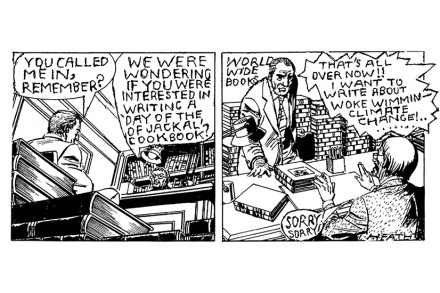
When, three years ago, I announced my retirement from writing fiction, the only thing that surprised me was the surprise it generated. I had long come to the somewhat un-arty view that writing was a job like any other (well, almost) and that nudging 80 was a good time to step back and consider a senescence involving only serious decisions like which claret to choose. No need to rabbit on and on. Apart from the lengthening shadows, there was a very practical reason. The stuff I used to write involved the unlovely side of life with some unlovely places and people. The search for authenticity required travel to find and observe them. I never felt I could trust online research to get it right. I had to go and see for myself.

The sorry state of the modern apology

I think I would like to apologise for this article in case someone who reads it takes offence. I will not mean the apology, of course — it will simply be an attempt to get me out of the mess occasioned by own words. It will not get me out of the mess, however, but make things worse, because an apology is an admission of guilt. This is Type One of the Modern Apology — meaningless and counter-productive, usually something enforced by employers or party bosses, people in charge. A desperate attempt to save one’s skin which always, always, does the reverse. It is usually accompanied by a painful explanation, along the lines of: ‘I deeply apologise for any offence I may have caused.

A tribute to my father

From our US edition

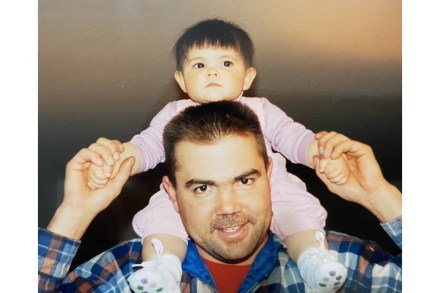
This essay is adapted from a speech I gave on July 18, 2021, at a memorial for my father, Philip M. Athey, who passed away at the age of 59.  I’d like to tell you all a little about my dad. My dad was the hardest working, most honest and most loyal man I knew. He would do anything for his family. By the time I was four or five he was already teaching me how to play tee-ball, hook a worm, shoot a bow and turn a screw — righty tighty lefty loose-y! Some of my favorite memories with my dad are from when we would go hunting and fishing. I remember him showing me how to place my feet when walking in the woods so I didn’t spook the deer, or how to cast my pole so the bait would land perfectly under an old dock.

phil athey
father dad

Critical father theory

From our US edition

Throughout the 1970s and 1980s, my stepfather worked as an auto mechanic in Upstate New York, at a ‘youth camp’ nestled in a pine forest. The bucolic sobriquet was a euphemism; this ‘camp’ was a medium-security pre-prison of sorts for boys 14-17, mostly from New York City, sent up following precocious encounters with the law. These youthful offenders were not the worst of the worst. Boys implicated in rape, murder or similarly terrifying offenses were assigned elsewhere, to compounds with barbed wire and armed guards. As it happened, campers liked to hang around the garage, and over the years, some who showed diligence and aptitude with tools were taken under my stepfather’s wing.

children

My role in our demographic disaster

From our US edition

When you come from a family of a certain size — in my case, one with eight children — you often get asked: ‘How many kids do you want?’ Innocent on its face, this question is carefully phrased in terms of my personal preferences, and I’m happy to answer: I’ll take what I can get! It’s an easier question every year, because biology has largely made the decision for me. My mother had four kids by the time she was my age, and as of this writing I don’t even have a boyfriend. Childlessness at 30 has its inadvertent blessings, of course: I get lots of rest and exercise; I spend my disposable income on haircare and loungewear and coffee, and the most stress I regularly endure is over WiFi connectivity.

Football’s never coming home

I failed a moral test last weekend. A friend offered me a free ticket to the Euro 2020 final and I accepted, knowing my 13-year-old son Charlie would be bitterly disappointed. I had told him I’d try to get two tickets so I could take him, but all my efforts had come to nought and we were resigned to watching it at home. When I broke the news that I’d be going but not taking him, he looked heartbroken, as I knew he would be. I spent hours trying to justify it to myself afterwards. Surely, if he’d been offered a ticket by a friend, he would have taken it? Opportunities to see England play in the final of an international tournament only come along once every 55 years. How could I turn it down?

My battle to be top dog

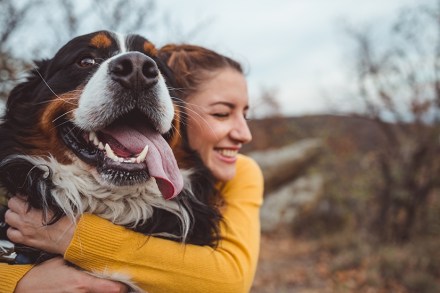
Even a small dog can be quite high maintenance. No, I’m not talking about Mali, our one-year-old cavapoochon, but Bertie, a six-month-old cavapoo. Bertie is Mali’s best friend and — I regret to say — almost constant companion. The reason they spend so much time together is because his owner, a close friend of Caroline’s, drops him off on her way to work and picks him up on her way home. They both think it’s a perfect arrangement because the two dogs can keep each other company, gambolling away all day in our garden, while they get on with their busy lives. But Muggins here, whose office is located at the bottom of said garden, is the one left carrying the can. Quite often, that can is full of poo.

How to fight with your family

From our US edition

Like many families, mine is home to a diverse array of political orientations, ranging on an ideological spectrum from Calvin Coolidge to somewhere around Attila the Hun. In 2021, this means arguments can get quite heated. Should the government subsidize young families? Should tech companies be regulated? Should America reconsider its support for Israel? Should you, personally, get the vaccine? The first half-year of the Biden administration has already given even broadly right-of-center communities plenty to in-fight about. My left-leaning friends who have also spent more time with their families during the pandemic report a similar phenomenon: their good boomer liberal parents are skeptical about critical race theory, for instance, or are suddenly nervous about the national debt.

family

Son of a gun

From our US edition

In his late-middle age, my father cultivated more of the interests of the old neighborhood. His kitchen overflowed with pasta makers and deli slicers. His prep table was taken over by a home wine-making operation; we ate our meals beside a glass carboy as it bubbled up fermented gas. And scattered about the living room, tucked in the bookcases and stashed behind the coffee table, he positioned an array of locked cases and bags containing a growing collection of rifles, pistols and shotguns. The acquisitions that came to fill our Upper West Side apartment mainly came from the shops around Little Italy. Home winemaking was once common among Italian Americans. So too was a well-developed sense for gun culture.

gun

Becoming a father

From our US edition

They say immersion journalism is dead, but I just might have proven them wrong. The night before I wrote this column, I took on a most unfamiliar role, one my wife has been playing for the past two months: waking up in the night to take care of our baby son. We recently started bottle-feeding him, which allowed me to overcome my, er, biological inabilities in this department. This won’t be so bad, I thought around 5 a.m., as I sat in the dark while he cooed and sucked down formula. Cut to an hour later as I lay in bed, my mind churning through the latest NFL trades. While my wife can fall asleep at the drop of a hat, I have a giant spinning turbine of an overactive imagination.

fatherhood parenting father

Hugs vs the hug-nots: where do you stand?

On Monday, the Prime Minister says, we can hug again. Personally, I never stopped, but then I’ve been corrupted by southerners, foreigners, posh boys and gorgeous homosexuals. In luvvie land (aka London and Twitter), there’s this perception that everyone is desperate to rush into one another’s arms because they’ve desisted for so long. In many places outside the M25, that idea is so nuts it’s comical. In Norfolk, where I was raised, most people meet with a nod and a grunt, and it is the height of good manners not to ‘look at anyone funny’ (in other words, we don’t make eye contact with strangers). If any outsider tries to offer a hug next week, they’ll likely get clobbered.

The worrying rise of ‘rent-a-womb’

From our US edition

In April 2020, at the start of the COVID-19 crisis, New York governor Andrew Cuomo approved a much needed state budget. Buried in this 400-page document was a provision to legalize commercial surrogacy. Passed without the opportunity for legislative hearings or public debates, the law came into effect in February 2021. Critics claim that Cuomo is unleashing an exploitative multi-billion-dollar industry that preys on the vulnerabilities of women. While surrogates are usually from poorer backgrounds and, in many states, are more likely to be of color and in particular black, the implanted eggs are selected from mainly white women up to the age of 25, usually highly educated and screened for any hereditary illness.

surrogacy

Water, water everywhere: Touring the Land of the Dead, by Maki Kashimada, reviewed

Maki Kashimada won the 2012 Akutagawa Prize for Touring the Land of the Dead, the strange, unsettling novella that makes up half of this volume. It is translated here for the first time from the Japanese into English by Haydn Trowell, alongside Kashimada’s ‘Ninety-nine Kisses’, a short story based on Jun’ichiro Tanizaki’s classic novel about four unmarried women, The Makioka Sisters. In Japan, Kashimada has become known for her avant-garde, nonconformist style. These two offerings are exemplary pieces. In Touring the Land of the Dead, a woman called Natsuko returns to a hotel she went to as a child with her mother and brother; now she is with her disabled husband, who suffers from seizures.

Dear Mary: How can I stop my sister-in-law pinching food off my plate?

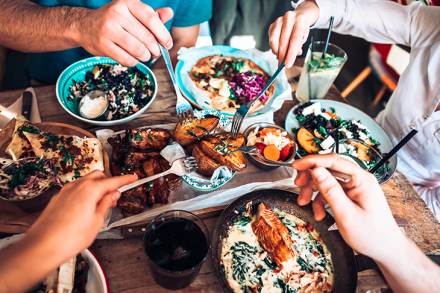
Q. Since the relaxation of lockdown, my brother and his wife have started coming to our garden for takeaway meals. My sister-in-law always says she isn’t going to eat at all, so we mustn’t order anything for her. But when the food arrives, she gets a fork and enthusiastically begins picking off everyone else’s plate. Sometimes she just uses her fingers. I do like her very much but, as they married just before Covid, I feel I don’t know her well enough yet to comment or to suggest she orders something for herself. I am always left feeling slightly hungry and a bit irritable, as the whole time I am anxiously anticipating what she will help herself to next. My brother clearly doesn’t mind and my husband, who has perfect manners, pretends he doesn’t.

The false narrative of white vs BAME

Almost 20 years ago, Michael Howard spoke about the ‘British dream’: that immigrant families like his could come to this country and find every door open for their children. The same was true for Priti Patel’s parents, both refugees from Idi Amin’s Uganda. Dominic Raab, the Foreign Secretary, has spoken movingly about his father, who was a refugee from the Nazis. Our islands are and have always been a beacon of light for those fleeing darkness, or simply seeking a better life for their families. Over the years, our country’s reputation has drawn millions of people who have settled here in search of the British dream. They have faced headwinds of racism and bigotry, as migrants and their families invariably do.

The false narrative of BAME vs white

Almost 20 years ago, Michael Howard spoke about the ‘British dream’: that immigrant families like his could come to this country and find every door open for their children. The same was true for Priti Patel’s parents, both refugees from Idi Amin’s Uganda. Dominic Raab, the Foreign Secretary, has spoken movingly about his father, who was a refugee from the Nazis. Our islands are and have always been a beacon of light for those fleeing darkness, or simply seeking a better life for their families. Over the years, our country’s reputation has drawn millions of people who have settled here in search of the British dream. They have faced headwinds of racism and bigotry, as migrants and their families invariably do.