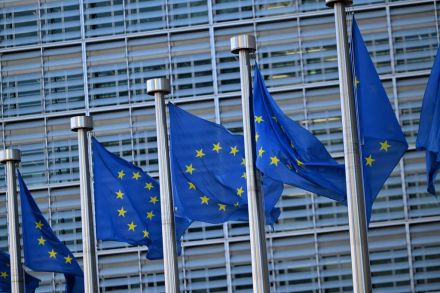
European union

After decades of waiting, China goes on the diplomatic offensive

China has been an epicenter of diplomacy over the last month and American officials can’t help but take notice of the shift. Statesmen flying to China, hat in hand, to sign business deals with Chinese firms or enlist Chinese diplomats to assist in solving international disputes gives the foreign policy graybeards ulcers. The general rule seems to be: what’s good for China is bad for the United States. There’s no question that China’s Xi Jinping has had a good few weeks. After being occupied with a nationwide Covid-19 disaster that lasted for three years, Xi, a man whose entire legacy depends on China transforming into a superpower on par with or perhaps even surpassing the US, isn’t wasting any time before injecting his country back into the diplomatic arena.

syria peace

Macron’s China controversy is a big nothingburger

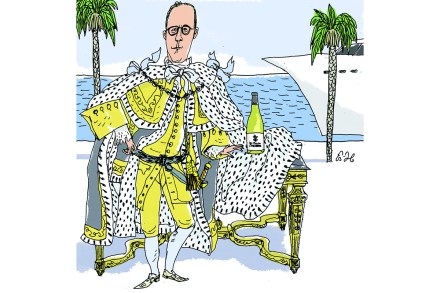
French president Emmanuel Macron, the self-appointed leader of Europe, is having a not so great week. His multi-day visit to China and successive meetings with Xi Jinping were high on pomp but low on deliverables. But it was during the plane ride back to Paris, when he gabbed with journalists, that he got into trouble. Seated aboard France’s version of Air Force One, Macron presented himself as a leader with an independent streak who believes Europe can't follow the United States like docile little ducklings. His interview wasn’t remarkable, yet foreign policy commentators and politicians are hung up on his remarks about China and Taiwan.

emmanuel macron

Washington’s dirtiest war at last goes silent

Something strange, but miraculous, is happening in Yemen right now: no bombs are falling from the sky. According to the Yemen Data Project, an independent group keeping track of the violence in the Arab world’s poorest country, there hasn’t been a single Saudi coalition airstrike over the last week. This is the first time since Yemen’s civil-turned-proxy war began that an airstrike hasn’t been recorded, an unprecedented and welcome development for the millions of Yemenis who have lost so much as their rich Saudi neighbors seek to drive the Houthi-led rebel movement to the negotiating table.

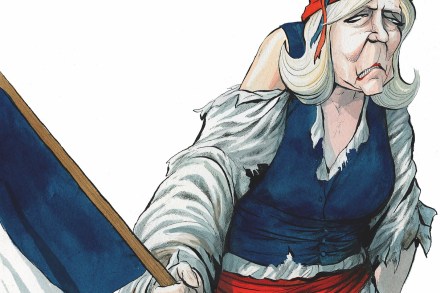
Marine Le Pen takes on the king of Europe

Last Sunday marked the beginning of the French presidential vote; the runoff election will take place on April 24, and incumbent president Emmanuel Macron winning again is no sure thing. If she plays her cards right, challenger Marine Le Pen has a legitimate shot at becoming the next president of France. Macron emerged victorious in the first round with 27 percent of the vote, followed by Le Pen with 23 percent. For the nationalist Le Pen, it is the second time she has qualified for the runoff, and thus the second time she is running against Macron. In 2017, she lost to Macron 66 percent to 33 percent, crushing once again the ambitions of her National Rally party. This year, however, will be a much closer call.

Turkey’s heavy price for pressuring the Russians

If you enjoyed the weeks-long intra-NATO spat about whether to send heavy tanks to Ukraine, then you’re going to love the ongoing kerfuffle about whether Sweden and Finland should be admitted into the transatlantic alliance. Whereas Germany was the lone holdout in the first instance, Turkey is the obstacle in the second — and going by the fiery words of Turkish President Recep Tayyip Erdogan, the squabble won’t end soon. Erdogan, in the midst of his toughest election campaign in two decades, has been using his veto over Sweden's and Finland’s NATO memberships to press both countries on one of his top priorities: cracking down on the Kurdistan Workers’ Party, a group Turkey, the US, and the European Union all label a terrorist organization.

greece

How long can Europe’s support for Ukraine last?

Can Ukraine sustain a war effort that is proceeding far better than most military analysts ever expected? Part of that answer, of course, depends on the extent to which the Ukrainian army can keep their troops in the field equipped, supplied, and motivated. That challenge comes as the Russian military increasingly relies on so-called “kamikaze drones” to strike deep into Ukrainian territory (on October 17, a Russian drone attack killed four people in Kyiv during the morning rush hour). But another factor that will determine success or failure is whether Europe remains onboard — or, more to the point, whether Europe’s support to Kyiv will continue as the war enters a dreary, unforgiving winter.

Dutch farmers touch off a worldwide revolt

Why are farmers around the world standing in solidarity with a tiny country in northwestern Europe? What’s going on here? Starting in June, 40,000 Dutch farmers took their tractors to the streets to protest their government’s proposal to slash nitrogen emissions. For some farmers, this plan will mean culling 95 percent of their livestock. For others, it will mean going out of business altogether, hoping to sell their land to make ends meet — with the Dutch government as the only buyer. I’m as green as the next guy, but there is a thin line between regulation and tyranny.

Dutch farmers are fighting for freedom

Dutch farmers have had enough of government overreach. And they’re taking to the streets as only farmers can. The government of the Netherlands, in order to fight climate change, recently proposed a 50 percent cut in ammonia and nitrous oxide emissions by 2030 — which will disproportionately impact the agricultural industry. Small farms are thus faced with two choices: shutter entirely or face poverty after culling their livestock. The Dutch government is not sympathetic to these concerns. In their words, “The honest message...is that not all farmers can continue their business.

Russia is sidestepping American oil sanctions

When the European Union finally made the decision to ban 90 percent of Russia’s crude oil imports by the end of the year, the bureaucrats in Brussels were jubilant. The EU’s adoption of oil sanctions was thought be a big blow to Russian President Vladimir Putin, who depends on the revenue generated by his country's oil exports to fund his war in Ukraine. It doesn’t take a genius to figure out why European officials were so thrilled. The EU imported 2.2 million barrels per day of Russian crude last year, amounting to tens of billions of dollars in profits for the Kremlin every month.

The failure of Marine Le Pen

Following her second-round loss to Emmanuel Macron in France’s presidential elections last month (it was her third loss on the national stage), Marine Le Pen has announced her candidacy for the National Assembly. She hopes to win Pas-de-Calais’ eleventh constituency in June — a seat she won in 2017 — to oppose Macron’s policies in the French parliament, along with her National Rally (RN) colleagues. But she is unlikely to have much leverage. In the last parliamentary elections, the National Rally (then the National Front) won eight seats out of 577. The latest poll by Harris Interactive has them winning 65 to 95 seats this year, compared to 338 to 378 seats for Macron’s re-branded Renaissance party, which would give Macron an absolute majority.

Emmanuel Macron’s fleeting win

In France’s presidential runoff vote on Sunday, incumbent Emmanuel Macron defeated nationalist contender Marine Le Pen. This makes the center-left Macron the first president since 2002 to get a second term, though he is also one of the least popular politicians in French history. Compared to 2017, Macron dropped by more than seven percentage points from 66 percent to just 58 percent. In turn, contender Marine Le Pen upped her score from 34 percent to 41.5 percent. Meanwhile, the abstention rate is the highest it’s been in more than 50 years, at 28 percent, higher than in the runoff vote compared to the first round. This explains why Macron lost a lot of the lead he had five years ago, and why Le Pen’s National Rally party registered its strongest support to date.

Hungary’s Orbán remains a thorn in everyone’s side

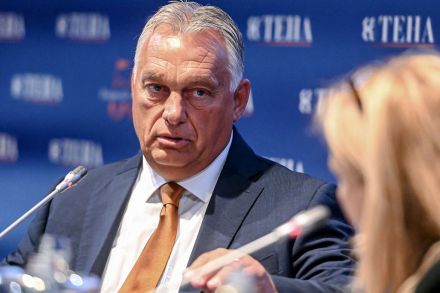
Viktor Orbán has just won another election. The Hungarian prime minister has secured a hefty majority in his country’s legislative elections, and in his victory speech, Orbán revealed once again that he is a thorn: in the side of Europe most obviously but, if need be, in the side of all. I’ll leave for others the discussion of Hungarian democracy — whether Orbán has so manipulated national life that his continued electoral successes are unimpressive, even fraudulent. But Orbán, in his own mind, thought an “overwhelming force” ranged against him. “We never had so many opponents,” Orbán said.

Souvlaki with graffiti

I’m drawn to sketchiness but even by my sketchy-drawn standards, the state of Athens is deflating. The cradle of Western civilization now appears to be the graffiti capital of the Western world. The luridly colored scrawls are everywhere; Greek grannies air their carpets over balconies marred by multicolored tags and swirls. The Parthenon temple still looks mighty grand atop the ancient Acropolis citadel, but down in the modern city a lot of people look hard-up and downtrodden: lined faces, permanent frowns, hastened aging, disheveled clothes. Wandering through central Athens, I passed two shuttered shops set back from the street. About twenty homeless people lounged in the alcove, amicably passing round substances to smoke and ingest.

Athens

Did the realists underestimate Putin?

Liberal internationalists, neoconservatives and NeverTrumpers are having the time of their lives these days, ridiculing anyone on the political right who has ever said a good thing about Vladimir Putin. Those “Putin groupies” as a Wall Street Journal columnist described them, include former Italian prime minister Silvio Berlusconi, far-right French presidential candidate Marine Le Pen, Hungarian prime minister Viktor Orbán and, of course, Trump himself. Trump described Putin as a “genius” and said he was a better president than Barack Obama — and he isn’t the only American president to compliment the Russian leader. President George W. Bush said about Putin, “I looked the man in the eye. I found him to be very straightforward and trustworthy.

putin

Ukraine won’t join the European Union any time soon 

In the wake of Russia’s aggression in Ukraine, President Volodymyr Zelensky has renewed his country’s wish to join the European Union. This week, the European Parliament approved Ukraine’s application to join the EU with an overwhelming majority. But Ukraine will not join the European Union this year, and possibly not even in the next five years to come. The reasons for that lie within the structure of the EU. The closening ties between Brussels and Kyiv had been the reason for Ukraine’s revolution back in 2014. Then Ukrainian president Viktor Yanukovych had rejected the EU-Ukraine association agreement, which tied both partners closer together, politically and economically.

european union

Pro-Ukraine citizens clash with authorities in Georgia

Tbilisi, Georgia After one week of fighting, Russia's invasion of Ukraine has already caused far-reaching geopolitical consequences, most of which point to gross miscalculation from the Kremlin. Following an arguably hesitant start, the Western world has united to provide Ukraine with lethal and non-lethal aid, as well as economic and humanitarian support. In addition, despite Putin ostensibly launching his war to prevent Ukraine from becoming a NATO member and curtail the alliance's easterly expansion, Kyiv's relations with the West have ironically become closer. Both Sweden and Finland appear to be closer than ever to considering joining NATO.

georgia

Putin is making the EU great again

The Europeans have been jolted awake from their deep Pax Americana slumber, when the continent was largely content to eat the spoils of economic prosperity and allow the United States to do the heavy lifting on all things security. And we have Vladimir Putin to thank for it. Russia’s nearly week-long invasion of Ukraine has shocked the conscience of many who believed Europe would never return to the dark days of large-scale land warfare.

The stakes for Europe are even higher than in 1938

Any analysis of the Ukraine situation risks lagging behind the news. As of the time this article was published, Russia had conquered the former Chernobyl nuclear power plant. Its forces are only about sixty miles away from Ukraine’s capital, Kyiv, which has already experienced shelling. Russians have also attempted to capture Antonov International Airport, just fifteen minutes away from the capital’s ring road. Meanwhile, European leaders are resorting to the usual responses: “concerned,” “strongly condemning." There is even a Twitter account mocking the EU’s approach to all major crises, called “Is EU Concerned?” The response to the invasion of Ukraine is not spared from similar mockery. Here in Europe, it feels like 1938 all over again.

Europe: the little kids’ table at the Ukraine talks

While American and Russian officials are yelling at one another in the UN Security Council chamber, another international actor has found itself at the little kids’ table: Europe. It's possible the phrase “little kids’ table” is too harsh. To be fair, French president Emmanuel Macron is at least in direct communication with Russian president Vladimir Putin and urging his European colleagues to formulate a joint European negotiating position on the Ukraine question. France is also a chief mediator of the Normandy Format, which seeks to resolve the eight-year conflict in Ukraine’s Donbas region. But Macron is largely an outlier on his own continent.

The dictator behind Europe’s next migrant crisis

Belarus, the former Soviet satellite state, isn’t exactly a global heavyweight. Alexander Lukashenko, the country’s authoritarian president, is an international pariah who is better at concocting conspiracy theories than he is at running a country. At $60 billion, the Belarusian economy is about the size of Rhode Island’s. Other than petroleum, cheese and dump trucks, Belarus doesn’t offer much in the way of exports. A once promising information technology sector is now gutted, as Lukashenko’s crackdown on dissent forces highly educated talent to flee the country for the Baltics. Lukashenko, however, is smarter than he looks.

lukashenko