European union

Why EU farmers would object to a South American trade deal

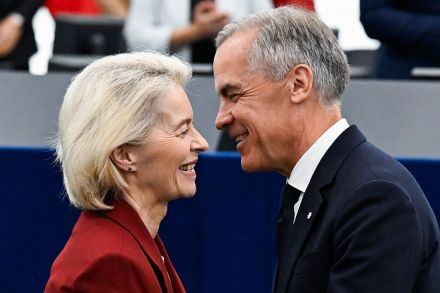
It was a weekend of mixed emotions for the European Union. There was the news from Donald Trump that he will impose a 10 percent tariff on eight European countries in retaliation for their opposition to his plans to take control of Greenland. But on a brighter note, the EU finally signed the Mercosur trade agreement with several South American countries. The European Commission hailed it as the creation of ‘a free-trade zone of roughly 700 million people’, one which they promise will save EU companies more than €4 billion a year in customs duties. Ursula von der Leyen, the Commission president, said: ‘We choose fair trade over tariffs, we chose a productive long-term partnership over isolation.

America’s free-speech war on the EU

If I were a bookie, I would be making odds now about when the European Union will finally unravel and die. Unless there is an imminent and drastic course correction, the blessed event cannot be far off.  I might need a Doomsday Clock akin to the one publicized by the Bulletin of the Atomic Scientists. Their clock hovers near midnight, which signifies nuclear Armageddon, the minute hand pushed closer or farther away from the blast depending on minatory world events. My clock would measure the EU’s proximity to implosion. Its recent decision to fine Elon Musk and his company X €120 million for “non-compliance with transparency obligations” has me nudging the minute hand closer to midnight. “Non-compliance with transparency obligations.” What do you reckon that means?

Did the Democrats kill Roomba?

Allow me to add an additional downer note to this grimmest of news days: iRobot, the company that manufactures Roombas, has declared bankruptcy. iRobot said it will continue to update and provide technical support for the devices, so there will be no “bricking.” They will continue to function, just like ghosts continue to haunt the homes in which they once lived. But there’s definitely a brick in the hearts today of the customers who’ve loved their robot vacuums since the 1990s, not to mention the cats who loved to ride them, the dogs that loved to chase them around the house, and the people who loved to watch videos of animals doing those things. In many ways, the world has passed by the Roomba.

Roomba

Poland’s Nawrocki heralds a more mature populism

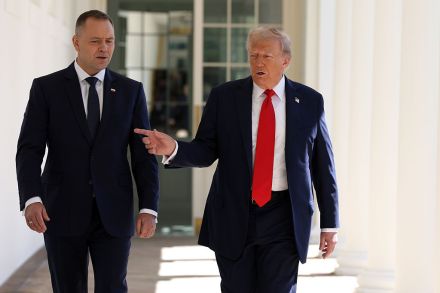
Yesterday, September 3, President Trump welcomed Karol Nawrocki, the newly inaugurated president of Poland to the White House. It was a stirring occasion, replete with a surprise military fly-over of F-16 and F-35 fighter jets flying in “missing man” formation to honor  Major Maciej “Slab” Krakowian, the Polish pilot who died in a crash in Radom, Poland, last Thursday.  Nawrocki, who narrowly won the presidency in June, is often described as “the Polish Trump.” It’s an accurate epithet. Nawrocki is as much a “Poland First” president as Trump is an “America First” president. The 42-year-old historian (Nawrocki holds a PhD in history) supports a list of policy initiatives that could have come right out of the MAGA playbook.

Nawrocki Trump

Does Trump’s handshake deal with the EU put America first?

What’s really at stake in these trade deals? That is what we are slowly discovering as Donald Trump’s handshakes with America’s trading partners are turned into specific and detailed agreements. Today we are getting the details of one of the biggest deals struck so far: a trade agreement with the famously protectionist European Union, which agreed in principle to a deal back in July, with the caveat on both the US and EU side that taxes on key sectors were still up for discussion. Those discussions, it seems, have produced some details. Despite early threats that America would impose tariffs of 250 percent and 100 percent on EU imports of pharmaceuticals and semiconductors respectively, the headline duties for both have been reduced to 15 percent.

Donald Trump (Getty) eu

How justified is climate-change alarmism?

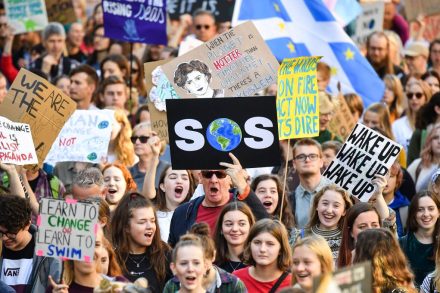
For decades, the picture of Earth’s future – as laid out by journalists and climate scientists alike – has been bleak. By 2070 we will see famine, economic collapse, a sun that cooks us, melted icecaps, flooding, extreme hurricanes and ever-present tropical storms. "Vast swathes" of the planet will be inhospitable for human life. And Greta Thunberg, in her late sixties, will wear a gas mask as she sits on the steps of Swedish Parliament with a cardboard sign declaring, "I told you so." Advocates have poured gasoline on the climate-alarmism fire earnestly, backed by reports declaring, "There really is no serious scientific debate remaining about climate change.

Global Climate Strike on September 20, 2019 in Edinburgh, Scotland (Getty)

Trump goes tilting at windmills

Donald Trump hates windmills. He’s ranted against them consistently over the last decade. They’re as constant a member of his mental rogues’ gallery as "Gavin Newscum" or "George Slopodapolous." And never is the President’s windmill-hatred more fervent than when he visits Europe, which has been the windmill center of the world since the age of the Quixote. Immediately upon stepping on the tarmac at Glasgow Airport yesterday, Trump said, “Stop the windmills! They’re ruining your countries. I really mean it. It’s so sad. You fly over and you see these windmills all over the place. Ruining your beautiful fields and valleys and killing your birds. If they’re stuck in your oceans, they’re ruining your oceans.” But Trump wasn’t done on this topic.

Wind Turbine

Did Trump win the US-EU trade negotiations?

Trump has got almost everything he wanted in the trade deal between the United States and the European Union. Goods imported into the US from the EU will now be subject to tariffs of 15 percent - half the rate that Trump had threatened but far higher than existed prior to "Liberation Day" on April 2.  What has Ursula von der Leyen got in return? Nothing at all, other than the punitive tariffs being dropped. She has agreed to lowering tariffs on imports from the EU, in some cases to zero. She has also agreed to the EU buying more products from the US, including liquefied natural gas (LNG), making a mockery of the EU's net zero policy.

How Giorgia Meloni became Donald Trump’s EU whisperer

Henry Kissinger once complained: “Who do I call when I want to speak to Europe?” Today the answer would be Giorgia Meloni, Italy’s first female Prime Minister, who has emerged as the most important leader in the European Union. No Italian leader has filled this unofficial role before: it is usually reserved for the heads of the bloc’s two largest economies, Germany and France. Yet Meloni has capitalized on the weakness of their leadership. French President Emmanuel Macron may delude himself that he is Napoleon or Jupiter, but in reality he is the deeply unpopular head of a lame-duck government. To borrow a phrase from Donald Trump, he doesn’t “have the cards.” Meanwhile, Germany’s Chancellor, Friedrich Merz, heads up a flimsy coalition.

Meloni

The real battle for Europe

Donald Trump hates Europe – that suspicion had grown so widespread by mid-April that J.D. Vance was moved to declare in an interview: “I love Europe.” Even its people, he claims. Of course, Americans have taken sides in European rivalries from the outset: Thomas Jefferson was a France man after the French Revolution, while John Adams preferred England. FDR preferred Pétain, while Eisenhower preferred de Gaulle. But hate Europe outright? The idea is absurd. Though our ancestors are not 100 percent European, our country is. You can imagine President Trump calling for a Wienerschnitzel and a tub of mayonnaise more easily than you can imagine him calling for a bowl of hủ tiều nam vang and a bottle of nưởc mắm.

Europe

How much hope did Trump offer Meloni?

In early March Donald Trump said Elon Musk was doing “an amazing job.” Last week he said Governor Gretchen Whitmer of Michigan was doing an “excellent job.” On Thursday it was the turn of Italian prime minister Giorgia Meloni during her meeting at the White House. Trump declared that she was “doing a fantastic job.”  What Trump found so fantastic was never specified, but he tossed a variety of bouquets in Meloni’s direction. Not least was his vow that “there will be a trade deal, 100 percent” with the European Union. It was qualified, however, by Trump’s claim that he’s in no rush to strike a deal with Ursula “the West no longer exists as we knew it no longer exists” von der Leyen, the president of the European Commission.

meloni

Trump’s war on Europe should not surprise anyone

Has there been a more cataclysmic year for US-Europe relations than 2025? It began with J.D. Vance’s “sermon” to EU leaders at the Munich Security Conference last month, in which he berated Western Europe for its policies on immigration and free speech. This year has also seen the growing threat of NATO falling apart after 76 years of peace in Western Europe, with the White House seemingly tilting toward Russia and Trump demanding that alliance members such as Germany, France, and the U.K. dramatically increase their defense spending. This week, as the Trump administration imposes tariffs on Europe and Europe retaliates, there are even signs of a full-scale trade war.

Europe

Why I am confident the Champagne tariff will not last long

I have to begin this column with a glass of Pol Roger cuvée Winston Churchill. It’s fancy stuff, and — according to some — it’s a bit early in the day to be quaffing Champagne.  “How early is too early?” I’ve often wondered that. The jury is out but most of the best authorities say that any time before actually awakening is too early.   Why the shampoo (as David Niven was wont to denominate the beverage)?  It seemed like the appropriate expedient in response to a bulletin I received from a Trump-skeptical friend. It came in over the headline, “Trump’s first mistake.

palm beach wine champagne

What does Putin want from America?

If I had a penny for every time I have been told that Russian president Vladimir Putin only wants respect. Or that he is only interested in eastern Ukraine. Or that if Kyiv is only denied NATO membership, then he will call off the tanks. Well, in the last seven days President Donald Trump has given Putin all this and more. And, though it is still early days, so far the war is showing no sign of slowing. And what has the man who wrote The Art of the Deal asked for in exchange for all this diplomatic largesse? Absolutely nothing. In fact, the only substantive demand Trump has made so far is of the Ukrainians. Last week Washington sent Treasury secretary Scott Bessent to Kyiv with an extraordinary demand.

Putin

The Europe of American imaginations no longer exists

Since the United Kingdom left the European Union five years ago, the pair have been in battle to prove who has performed better. But the real story of the past five years is not a stagnant UK falling behind a buoyant EU, but of Britain and Europe being trapped in the same cycle of relative decline. It’s America that has quietly raced ahead of Europe this century. Following the pandemic it has become impossible to ignore the gulf in economic vitality between the US and Europe, the former growing by 16.3 percent per capita since 2008. There are very good reasons for America’s success, or rather, Europe’s decline. The EU and the UK increasingly treat their industries as pieces of heritage which must be preserved against disruptors and foreign competition.

Europe

A ‘Trump tornado’ is about to hit Europe

There is a wind of change blowing through the West. It emanates from Washington DC, where President Donald Trump continues to dash off executive orders; more than fifty by the end of last week, the highest number in a president’s first 100 days in four decades. The liberal mainstream media is rattled. The New York Times magazine ran a piece at the weekend in which it described Trump as "the leading light of a spate of illiberal leaders and parties flourishing in democracies around the world." The paper namechecked some of them: Poland, Holland, India, France, Germany, Italy, Brazil, Hungary and Russia. What unites and motivates these "illiberal" parties is their opposition to what the NYT called "liberal creep," which they regard as a civilizational threat.

Trump

The end of the Orbán era

Over the headline “Peace Mission,” a recent cover from the conservative Hungarian periodical Mandiner shows an awkwardly photoshopped Viktor Orbán mediating between a bemused-looking Vladimir Putin and a grim Volodymyr Zelensky. Behind Orbán, a map of the world connects Kyiv, Moscow, Beijing, Washington and Budapest. One of these capitals, as they say, is not like the others. Even before Ukraine’s Kursk offensive, the chances of Orbán’s July trips to Kyiv and Moscow producing a peace settlement were slim. The Mandiner cover, however, is a revealing window into the mindset of Orbán’s conservative fans. The idea of a Hungarian prime minister mediating between squabbling great powers is both attractive and plausible to many of Orbán’s fervent supporters.

Orbán

Meloni and her lieutenants plan their takeover of Europe

Cosenza, Italy On a dreary afternoon in May, hundreds of well-dressed Italians crowded into a regal government building in Cosenza, aptly named The Provincial Palace of the Hall of Mirrors. It was a campaign event for Fratelli D’Italia, Italy’s ruling political party. The supporters listened attentively for more than two hours. The mood was triumphant and the politicians spoke as if victory was inevitable. They spoke about a plan for when, not if, the right assumed greater power in Europe.  “This confidence is due to the fact that we, as Italy, have acquired centrality in a very important way,” said Giovanni Donzelli, the party’s national organization manager.  “This centrality is all thanks to the great work done by our leader Giorgia Meloni.

Meloni

Poland and Hungary learn different lessons from history

For decades, the European Union was dominated by a combination of French élan and German economic clout. By the late 2010s, a conservative Budapest-Warsaw alliance seemed poised to challenge this arrangement. The ideological firepower was supplied by Hungarian prime minister Viktor Orbán, who emerged as an unlikely spokesman for the international right, while Poland’s booming economy and large population lent the partnership some much needed heft. The Polish elections in mid-October not only marked the end of the Law and Justice party’s near-decade of conservative rule; they offered another blow to a Polish-Hungarian relationship already fraying over the war in Ukraine.

poland

‘We must defend our territory’: on the frontline of Europe’s migrant woes

Lampedusa, Italy The motorcade carrying Italy’s prime minister is being held up by a wild-eyed pirate. With a bushy black beard, sun-blasted face, tattooed forearms and a single earring, he stands in front of the convoy of a dozen police cars, extending a flattened palm. Blue lights flash, engines idle and somewhere behind blacked-out windows sit Giorgia Meloni, the prime minister, and her important guest, Ursula von der Leyen, president of the European Commission. The pirate is Giacomo Sferlazzo, leader of the protests that began on the island of Lampedusa after around 100 small boats carrying migrants arrived there on a single day in September. Really he’s a local musician, professional puppeteer and, as he describes himself, a Marxist-Leninist follower of Antonio Gramsci.

lampedusa