Europe

The unavoidable cruelty of necessary cuts

Even though the SDSR promises that it “will be used by units returning from Germany or retained for other purposes,” the loss of RAF Kinloss will still be a body blow to Moray. For years, it has sustained hundreds of airforce families in Elgin, Forres and Nairn – mine amongst them. And I can picture the bakeries, shops and other small businesses that will be hit by losing so many clientele. About 6,000 jobs depend on the RAF up there: not just Kinloss but Lossiemouth, 15 miles away, whose future also looks bleak. Jet fuel for the Tornados in Lossie is sent via Inverness harbour, so it would mean job

Time for a new approach to the EU

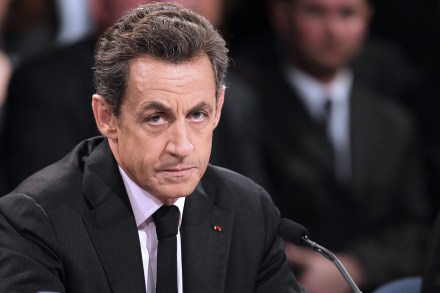
All eyes are on the spending review, but yesterday another potentially huge challenge landed in the Coalition’s in-tray: the prospect of a new EU treaty.   In the small town of Deauville in Lower Normandy, French President Nicolas Sarkozy and German Chancellor Angela Merkel struck another of those ‘Franco-German compromises’ that tend to set the EU agenda, and have too often left the UK on the back foot. Yesterday’s compromise will see Sarkozy backing German calls for a new EU Treaty to introduce new a mechanism that would enable countries within the euro area, such as Greece, to default.   And Merkel means business. Under the current eurozone bail-out packages,

Labour’s economic credibility goes on tour to Brussels

Bill Cash’s amendment to the EU budget bill may not have been the victory that the signatories to Douglas Carswell’s more incendiary effort hoped for, but it is significant. It is exactly in line with government policy that seeks to cap the EU budget and search for cuts. As Treasury Minister Justine Greening put it in the debate last night: ‘I will not hide from the House the Government’s frustration that some of our partners – and those in EU institutions – do not seem to understand how bizarre it is, when national budgets are under such extraordinary pressure, that the EU should be immune from that.’ The EU Commission

Tories defying the profligate European Union

Anyone who thought the new intake of Tory MPs were a bunch of automatons should take a look at the House of Commons order paper today. MPs have been asked to sign away 60 percent more of British taxpayers’ money to Brussels, in defiance of British public opinion. For years, they have done so without qualms. But the Conservatives, who were so rightly outraged at the way Labour whipped through the Lisbon Treaty, are challenging this. In an age of austerity, when we’re cutting child benefit and asking if Britain can afford to be a world-class military power, why should MPs sign off a 60 percent increase in the amount

From the archives: Entering the ERM

It’s twenty years, to the day, since the UK joined the European Exchange Rate Mechanism – a decision that would, of course, culminate in our withdrawal on Black Wednesday, 16 September, 1992. Subsequent years of strong growth placed those events in a fresh context, but here’s The Spectator’s take from 1990: The dangers of stageism, The Spectator, 13 October 1990 Give the European federalists and inch, and they will take a kilometre. Commenting on Britain’s entry into the Exchange Rate Mechanism of the EMS, Sir Leon Brittan claimed that ‘Britain has begun an inevitable move towards joining a full European Monetary System, including a single currency’. And the Guardian, which

A hard-headed case of <em>déjà vu</em>

It was as if we’d been transported back a week – here was William Hague talking about ‘hard-headed foreign policy’, the very phrase that David Miliband had used before he swanned-off into the wilderness in a floral shirt. The details of the two speeches had much in common – an emphasis on free trade, a promise to garner new strategic and economic partnerships in South America and the Near East, balance in the Israeli and Palestinian dispute, global solutions to climate change and a promise to export human rights. Hague differed in not mentioning liberal interventionism and laying historical and partisan claim to free trade, arguing that the European Commission’s

14.5 vs 13.5

A great effort from the Americans today but when it came to the final match you knew Europe could rely upon that tough little Ulsterman, Graeme McDowell. Not a chance he was going to let Hunter Mahan get a grip on their match.  Great drama, mind you and pleasing too that every member of the side contributed points. Quality stuff all round. Even UKIP voters can like Europe today…

Vince walks the line on Europe

Vince Cable was on best behaviour at the European Parliament yesterday afternoon. The twinkle of opposition was back, and he assured his audience that they would not be receiving one of those dour Hibernian lectures of blesséd memory. He had come, he said, merely to explain the coalition’s government’s European business policy.     Europe is a point of contention within the coalition, but one that is exaggerated. The coalition agreement is quite detailed on European policy, particularly on competences. Naturally, economic policy is more fluid, but the government, essentially, seeks further growth in the single market and closer economic co-operation to counter competition from the developing world. Cable danced those

Boles’ immigration revolution

Nick Boles’ Which Way’s Up? is gaining a quiet cult following in Westminster, and John Redwood has unearthed Boles’ radical approach to immigration. Boles dissents from the view that happiness in Sweden’s utopia rests on pay equality; he observes that it is a homogenous society that has controlled mass immigration. He writes: ‘We will not be able to sustain a social contract in which schooling and healthcare are provided to all citizens free of charge and are funded by taxation if we continue to allow, every year, hundreds of thousands of people from around the world to join the queues at A and E and send their children to British

Low taxes work

I ration my writing about Sweden. As CoffeeHousers know, I can extol its virtues with room-emptying conviction. But it’s now a few days since its election, and as far as I can tell no English publication has told the extraordinary story of its conservative victory – and the economic turnaround driven by the largest tax cuts in Swedish history. It is now the fastest-growing economy in the West. I tell the story in the political column of this week’s magazine (subscribers, click here), but I will summarise it for CoffeeHousers here. Normally, conservatives are elected in Sweden as a kind of light relief, to punctuate decades of leftist rule. They’re

Ashton's latest ruse

I’ve obtained this list of Baroness Ashton’s proposed recommendations for the next wave of EU diplomatic appointments. CoffeeHousers’ will notice there are no Brits on it. DELEGATION Nomination proposed Nationality CHINE, Pekin Markus EDERER DEU JAPON, Tokyo Hans Dietmar SCHWEISGUT AUT AFRIQUE DU SUD, Pretoria Roeland VAN DE GEER NLD BRESIL, Brasilia Readvertised ETAS-UNIS (Deputy) Readvertised AFGHANISTAN, Kabul Vygaudas USACKAS LIT ALBANIE, Tirana Ettore SEQUI ITA ARGENTINE, Buenos Aires Alfonso DIEZ TORRES ESP ARYM, Skopje Peter SORENSEN DNK BANGLADESH, Dhaka William HANNA IRL IRAQ, Bagdad Readvertised JORDANIE, Amman Joanna WRONECKA POL OUGANDA, Kampala Roberto RIDOLFI ITA SENEGAL, Dakar Dominique DELLICOUR BEL ANGOLA, Luanda Javier PUYOL PINUELA ESP BOTSWANA, Gaborone Gerard

Finessing the coalition’s EU referendum lock

The Coalition Government’s proposal for a ‘referendum lock’ on future transfers of powers to the EU has already been branded “worthless” by some Tory backbenchers . It’s easy to share their frustration at the Coalition’s lack of interest in EU reform so far. After all, the Government has chosen to opt in to the European Investigation Order; signed up for new EU financial supervisors; and chosen not to challenge the UK’s participation in the eurozone bailout (making British taxpayers potentially liable for up to £8 billion in loans to eurozone governments). However, the referendum lock is still significant. New crises, situations and politicians’ egos will always drive the need for

The coalition’s inept EU referendum lock

At least this government is honest. ‘There will be,’ Europe Minister David Lidington says, ‘no referendum on the transfer of competence or power from the UK to the EU during this Parliament’. The government will ensure that there are no more EU power transfer treaties; but, as Douglas Carswell, Tim Montgomerie, and Bill Cash all note, the Lisbon Treaty is self-ratifying. The EU has already picked the coalition’s lock and garnered new powers for itself – notably the extension of the EU arrest warrant. The EU could be an economic superblock with the muscle to influence the globe strategically and culturally. But its current political operation is unnecessary and deplorably

Battling for the budget rebate

A plain speaking man, Janusz Lewandowksi. This week, the EU Budget Commissioner said, not without a clear note of pleasure, that ‘the rebate for Britain has lost its original justification.’ The EU veers between incompetence and arrogance. Baroness Ashton embodies the former, Lewandowski the latter. His statement encapsulated why a majority of Britons want out of this club into which they have never been allowed to enter. Put simply, it was hectoring and counter-factual. Mrs Thatcher negotiated the rebate to balance Britain’s net contribution, which was excessive owing to Germany and France’s disproportionate profit from the Common Agricultural Policy (the most glorious misnomer). At the time, the EU was run

In or out?

You’ve got to hand it to Dan Hannan – he knows how to make a splash. His latest initiative is a cross-party campaign for an “in or out” referendum on Britain’s EU membership. You can find details in his article for the Telegraph today or, indeed, on the campaign’s actual website. But the basic argument runs thus: with the AV vote next year, referendums are now hardwired into the political mainstream – so why not give us a vote on one of the biggest questions of national sovereignty that we face today? And if you agree with him on that, you can sign up here. Hannan is, of course, making

A question of judgement

Up until today, the Hague-Myers story was confined to scurrilous rumour on Guido’s blog and the occasional cautious article in the Telegraph or the Mail; the rest of the media were uninterested. But, as James notes, Hague’s two extraordinarily frank statements, particularly yesterday’s impassioned denial to ‘set the record straight’, have forced the issue into the mainstream political debate. The personal always becomes political. What of William Hague’s judgement? John Redwood condemns Hague’s ‘poor judgement’ in personal matters before going on to cast aspersions on his policy judgements, particularly those relating to the EU. Iain Martin discusses Hague’s supposedly pro-Arabist sympathies: ‘Is Israel getting a fair hearing?’ he asks. Iain

Britannia ruled the waves

As Pete wrote this morning, the plan to share aircraft carriers with France is controversial. It seems that concerns over sovereignty, job losses and differing strategic interests reduce to the one issue that no government has addressed: the protectionist system of defence procurement, which hampers the operational effectiveness of our armed forces. Typically forthright, Douglas Carswell identifies the problem: ‘Seems like protectionist defence procurement isn’t quite giving us sovereign capability the way we were promised, eh? Had we ordered much of the new carriers to be built overseas, we could have had them at a fraction of the £5 billion cost. But the asinine logic of the Defence Industrial Strategy

A totemic austerity measure

As austerity measures go, the plan to share aircraft carriers with France is totemic stuff. Not only could it save the Exchequer a heap of cash – by reducing the need for two replacement carriers – but it also says a lot about how our government wants to operate in the world: multilaterally, flexibly and, perhaps, with less emphasis on military force. Divvying up one’s navy with another country does not suggest a strident foreign policy. Indeed, future operations would have to be planned and conducted with the aid of phonecalls to Paris. Of course, this will likely be a controversial move. There are issues of national sovereignty at play

The task facing UKIP's next leader

That didn’t take long, did it? After only a year in charge of UKIP, Lord Pearson has quit the role even more abruptly than he took it. In his resignation statement, he confesses that he is “not much good” at party politics – and it is hard to disagree. A memorable low was his interview on the Campaign Show in which he was only dimly acquainted with his party’s own policy. But more damaging, to my mind, was the general erosion of UKIP’s identity: Pearson’s policy of campaigning for Eurosceptic candidates from other parties may have been magananimous, but it also made you wonder whether UKIP are more a party

Ambassador, you’re spoiling us

The European Union’s creeping barrage continues. Brussels has appointed the urbane looking Joao Vale de Almeida as ambassador to Washington; Vale de Almeida hopes that Henry Kissinger will call him if the old campaigner wants to talk to Europe. It is perverse that Britain is saving money by closing embassies and downscaling around the globe whilst also paying its share to install Senor Vale de Almeida in the swanky environs of the Beltway. In this era of devolution, cost-cutting decentralisation, the European Union is beginning to behave like a state, and an opulent one at that. In the past fortnight it has once again suggested that it should raise taxes.