Europe

Resisting an EU tax on financial services

The prospect of taxes being levied directly by the European Union is one of those stories that pops up on a fairly regular basis. It is never likely to actually happen as national governments won’t want to cede the power of the purse strings. But the great Hamish McRae makes a very good point about the taxes that the EU wants to levy in his Independent column: ‘The two areas the EU wants to put taxes on, banking and air traffic, would hit the UK particularly hard. Financial services are the UK’s largest export industry, with net exports (ie exports minus imports) of £33bn last year, more if you add

Is the United States Senate Broken?

In one sense, yes it is. The Senate may be the world’s most exasperating deliberative body. As with it’s Roman counterpart there’s a growing sense that the Senate has outlived its usefulness, that it can no longer function effectively and that there’s no reason to suppose anything will change for the better. In Washington folk connected to the House of Representatives point out that their enemy is the Senate, not the opposition party. That’s what happens when you have a Republic, not a Democracy. And, as George Packer’s excellent New Yorker article amply demonstrates, the Senate is a ridiculous, infuriating place filled with puffed-up mediocrities unfit to inhabit offices once

L’homme qui dit non

The study of history is a subversive calling. All countries make up a story that suits their idea of themselves. Authoritarians stamp out independent historical scholarship; extreme nationalists simply vilify those who try to tell the tale of what really happened. Charles de Gaulle stands at the heart of what France likes to think about itself; Winston Churchill plays a similar role on this side of the Channel. Even a Francophile like me concedes that there is a deal more fiction about the French story than the British. The distinguished historian Robert Gildea has helped to tear the covers of what he has called the ‘redeeming, unifying heroic story’ of

The immigration battle

Why is Vince Cable kicking off about immigration? Sure, to cause trouble – this is what he sees as his role. His ego can’t quite fit in that department. But the pledge to have immigration in the “tens of thousands” was not in the coalition agreement. At the time, David Cameron said this was an oversight and that it was still government policy. But as James said in his political column in the magazine, a great divide has emerged between policies in that bald coalition agreement and those mentioned verbally. The policies in the documents are now deemed sacrosanct, and things not in it – like the extraordinary pledge to

System failure aids another EU power-grab

David Cameron’s so-called “referendum lock” is supposed to ensure no more powers are handed to the EU. His thinking, bless him, is that if he just keeps a low profile and doesn’t sign any extra treaties then things won’t get worse. This fundamentally mistakes the way the EU works. As we say in the leader for this week’s magazine, ever-greater integration is hardwired into the system. An example we cite is the coming European Investigatory Order, which Theresa May has naively described to other ministers as a tidying up exercise (Jack Straw said the same about the EU constitution).  As we put it: “Another power grab is looming. Plans are

Europe rises from its slumber

Emblazoned across the Times is the headline: ‘Europe warns Obama: this relationship isn’t working.’ The piece is teeming with quotations from diplomats and representatives of major European governments, voicing their concern that post-Cold War America no longer offers Europe a privileged relationship. The goodwill that Europe offered Obama has entirely evaporated. Few diplomatic spats are ever one-sided, and the Americans are deeply frustrated with the European Union. A White House official condemned the EU’s ‘non-existent foreign policy apparatus’, and Richard Haass of the Council on Foreign Relations said: ‘Europe created these posts (EU President and EU Foreign Minister) to speak for the collective as a whole. But from the perspective

Mandelson strikes gold

Well, sort of. Today’s offerings in the Times are as disappointing as yesterday’s. Mandelson adds to the croaking New Labour chorus that there was no deal at Granita. Blair and Brown, barely on speaking on terms in the run up to the 2005 election, cut a deal in 2004 to ease the succession.  Later, Brown and Blair re-opened hostilities over the EU Presidency, but that was already known, or at least expected. Mandelson’s adoption of the terms of corruption has ceased to shock – New Labour’s personal history has long since been prejudiced by perpetual briefing and counter-briefing, and 24 hour news. However, hacks are pouring over the memoir, fresh

Gary McKinnon should convert to radical Islam

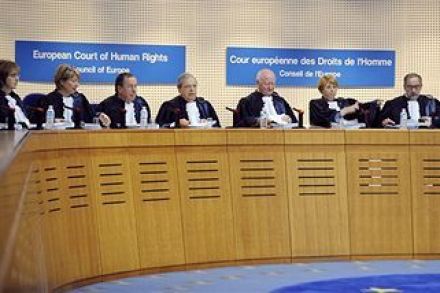
The European Court of Human Rights is an essential check on executive excess, but today it has perverted justice. It has halted Abu Hamza’s extradition to the US, where he was to be tried for colluding with al Qaeda. Its view was that Hamza would likely be subject to inhumane and degrading incarceration. In other words, the ECHR has decided that the US prison system is not compatible with the standards agreed by signatories to the European Convention on Human Rights. Fine. Except, of course, it has not. There is a pernicious double standard at work here. Gary McKinnon, the aspergers sufferer who hacked into the Pentagon’s computer systems, is

Cameron's intervention causes uproar

Iain Dale has news of fresh ruptures in the Tories’ controversial European grouping. Here are the details: This is an intriguing development. Perhaps the combination of being in government, the balance of the coalition and Cameron’s markedly improved relations with Merkel and Sarkozy (whose parties are aligned with the EPP) brings the need for fresh European alliances? Most of the controversy surrounding the CRG is unfounded but it certainly damaged Cameron at home and abroad. I’m told that the Tories have no intention of shifting allegiance, and that the original plan was for Kirkhope and Kaminski to share the chairmanship if possible. But even so, watch this space…

Hague is an administrative revolutionary, not the second Canning

For a man of such rhetorical talents, William Hague’s foreign policy speech was strikingly bland. His eloquence escaped him and he sounded like David Miliband – earnest, conscientious and often unintelligible. The similarity didn’t end there. Hague was very pleased with his observation that a multi-lateral world requires bi-lateral relationships; but even David Miliband had grasped that – who could forget his stable shin-dig in India? Hague’s speech was dominated by the expression ‘network world’ and he said that Britain’s diplomacy must address new strategic needs. In fact, Hague said very little that was new. Britain’s relationship with America would remain close; European alliances would rest on co-operation not coercion;

A new foreign policy?

An inventive article from Ben Brogan this morning, arguing that a new vigorously Tory foreign policy is emerging. I can be a little slow sometimes, but I haven’t noticed anything new or Tory about Britain’s foreign policy. Brogan records that the Prime Minister has let it be known that British troops will withdraw from Afghanistan by 2015. Cameron said nothing of the sort; he said he wanted British troops out of Afghanistan by 2015, something quite different. Contrary to expectations, relations with Europe are flourishing under the coalition, as pragmatic government has superseded bellicose opposition. William Hague hopes to influence the EU closely. In a speech today, he will attempt

If you were William Hague’s speechwriter what would you want him to say?

“The Foreign and Commonwealth Office requests the honour of your company at a major address by the Secretary of State for Foreign and Commonwealth Affairs, The Rt Hon William Hague MP,’Britain’s Foreign Policy in a networked world’.” Thus reads the invitation from the Foreign Office. If emails could be gold-embossed, this one probably would be. The speech on Thursday is the Foreign Secretary’s first major speech in London. Colleagues like Liam Fox and Andrew Mitchell have already kept their speech-writers busy, but until now the Foreign Secretary has only done the odd interview, and one address (in Sarajevo).  He did  however open the European Affairs debate in the House of

No more Turkish delight?

I’m sitting at the Ciragan Palace’s glass-filled halls on the banks of the Bosporus. I have joined the UN Security Council’s annual retreat, organised by the Turkish government, to give my view on what the UN did right and wrong in the Balkans from the break-up of Yugoslavia. The retreat is meant to continue the Council’s discussion on the overlap between peacekeeping, peacemaking and peace-building. No immediate action will follow the retreat, but the discussion may lead into a more concrete phase during Turkey’s presidency in September. Being here in Istanbul, however, has given me a chance to find an answer to the debate that has sprung up about Turkish government: is

Obama wants ‘global concert’ to delay cuts

G20 summits are usually turgid affairs, but this one has some (limited) potential. Relations between the White House and Britain and the White House and Europe have been frosty of late. Afghanistan, BP, the Falklands, Merkel and Sarkozy’s irritation at Obama’s personal and political aloofness, all of these have been contentious. Diplomatic tension has now developed an economic arm. The broadly centre right governments of Britain, France and Germany are committed to cutting public spending now. Each has introduced an austerity programme, and Cameron has made retrenchment is his international cause. Obama still stands for stimulus. The President said: ‘This weekend in Toronto, I hope we can build on this

Facebook is Popular, So When Can We Start Banning It?

For those of you not watching the football (England 1-0 up at the moment, incidentally, and so just one blunder from being plunged back into the slough of despond) consider this question, asked by the Irish Labour MEP Nessa Childers: There has been an explosion in the usage of this online social networking tool across Europe: unfortunately many people have crossed the line from social networking to social dysfunction. This is a real health issue and I am calling upon the Commission to take action. Visiting your Facebook page frequently actually causes what psychologists refer to as ‘intermittent reinforcement’. Notifications, messages and invitations reward you with an unpredictable high, much

The EU must face cuts too

This is a balancing act Budget. At every stage and on almost every topic there’s a bit of good news and a bit of bad news for taxpayers. Spending cuts are (finally) on the way, but at over £30 billion by 2014-15 they aren’t large enough, and there is plenty of dead wood that the Coalition intends to leave in place. Similarly, the rise in the income tax threshold is extremely welcome, but the VAT hike will hit the poorest hardest of all. And so it goes down the list of Government financial activities. Indeed, the theme the Government are keen to communicate is one of leaving no stone unturned,

All in all, a pretty good day for the government

I doubt David Cameron will have many better days in government than this. Considering the government cancelled a hospital project yesterday, today has passed as one long photo-op, free of incident. It began with Theresa May banning a radical Islamist cleric, Zakir Naik, displaying a resolve that eluded her immediate predecessors. The papers were full of Cameron’s ‘coup’ in Brussels yesterday; the only major news story that might have unnerved Cameron was the FT’s research into Tory immigration policy, which the FT calculates will hit growth and raise taxes. It was too esoteric to hit the TV screens, so too the cuts in arts funding. It must have been a

The audacity of hope

70 years ago today, Winston Churchill and Charles de Gaulle delivered two of the most important speeches of the 20th Century. Against the odds and common sense, both urged their respective nations to fight on against the tyranny of Nazi Germany. Today is a reminder that France is one of Britain’s oldest and closest allies, a point that the Times expresses this morning. Their words merit revisiting. Here is Churchill’s timeless address: ‘However matters may go in France or with the French Government or with another French Government, we in this island and in the British Empire will never lose our sense of comradeship with the French people. If we

The euro crisis is an opportunity for Cameron

Gerard Baker has written the cover piece for this week’s magazine and it’s a must read. In it, he explains why ‘closer fiscal union’, as Rompuy terms it, is not to Germany’s advantage: ‘Any attempted fiscal union might well yield to Germany the biggest single vote in how much to raise in taxes and how to spend it. But it could still be outvoted by an alliance of smaller countries. Such a set-up would become an institutionalised mechanism by which German taxes will be siphoned off permanently to weaker European states. The nightmare for Germans is that an unholy alliance of Spanish, Greeks, Italians and Portuguese will be able to

Cameron's European balancing act

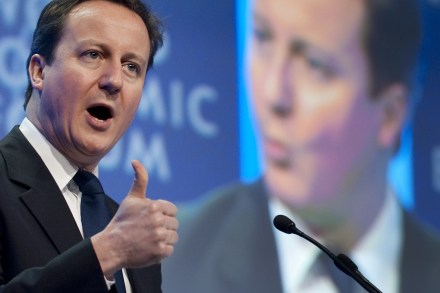
So David Cameron strides onto the European stage today, with his first EU summit since becoming Prime Minister. And early signs are that it’s going to be a peculiar day for him. As Ben Brogan writes in the Telegraph, Europe seems to be liking the (liberal-democratised) Tories more than they thought they would. Sarkozy is, apparently, “smitten” with our PM, while Angela Merkel “has come to admire his directness”. So after pitching himself against the Lisbon Treaty, and broadly selling himself as a eurosceptic over the past few years, Cameron now faces the prospect of cuddles over the coffee and croissants in Brussels. Like I say: peculiar. I suspect Cameron