Europe

Labour’s ‘for now’ policy on an EU referendum

The Tory spinners were in an exceptionally good mood after PMQs today. The general feeling was that Ed Miliband had messed up, and this wasn't helped by his aides having to clarify that when he told the Prime Minister that 'my position is no - we don't want an In/Out referendum', he actually meant that currently they don't want an In/Out referendum now. 'The position has not changed,' said one party source. 'We do not think that an In/Out referendum is a good idea. We will not do anything which damages the UK economy.' But they added that they were not ruling one out forever. And they were not ruling out a referendum commitment in the manifesto, either. So this is another 'for now' position, rather than a commitment of any sort.

Cameron’s EU referendum pledge makes winning the Battle for Britain more difficult

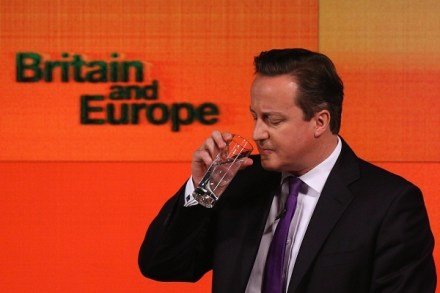
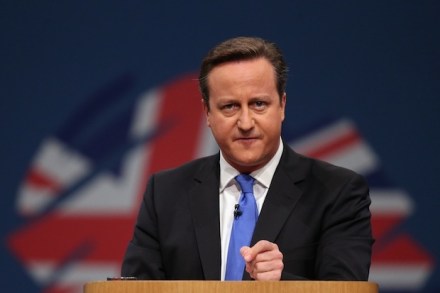
At the risk of seeming parochial, I'd suggest that David Cameron's long-awaited Europe speech and his endorsement of an In or Out referendum has implications and consequences for another referendum campaign closer to home. I suspect he has bought himself some time on the Europe question but this comes at a price. He has made winning the Battle for Britain - to be decided in 2014 - more difficult. The SNP should be very pleased today. Cameron has demolished a couple of core Unionist arguments. He can no longer credibly point to the unknown uncertainties of Scottish independence. Not when he has embraced, even made a point of celebrating, uncertainty regarding Britain's membership of the EU.

The Labour MPs who could make trouble for Ed Miliband on Europe

So the Prime Minister's speech is, as James hinted yesterday, going to be on Wednesday, and in London to avoid any further strikes of the Curse of Tutancameron's Europe speech. His official spokesman confirmed the date this morning. Thanks to briefed extracts and further briefings over the weekend, we now have a rough outline of what's going to be in it, which will mean it's impressive if anything the David Cameron says causes anyone in the audience to gasp with surprise. What is more exciting is what the response will be from the other benches in the Commons. Labour spokesmen on the broadcast rounds yesterday were squirming rather when asked about whether the party might offer a referendum too.

The Curse of Tutancameron’s Europe speech

David Cameron's Europe speech already had a Tutankhamun-style curse on it before events forced him to postpone it, with the much longer delay from its original date of mid-autumn causing a feeding frenzy in the media, in his own party, his coalition partners, and in the opposition. By the end of last week, it was difficult to find an opposition MP or columnist who hadn't written a whimsical piece imagining they were Cameron giving the speech (or indeed twisting readers into an even greater willing suspension of disbelief by imagining they were John Major talking to Cameron about the as-yet undelivered speech as David Miliband managed to do).

David Cameron’s delayed EU speech: extracts

By the time the Prime Minister cancelled his Europe speech yesterday evening, extracts had already been briefed to journalists. A new date has yet to be announced, but here are the extracts that have been released: Britain should play an active part in Europe: 'I want to speak to you today with urgency and frankness about the European Union and how it must change – both to deliver prosperity and to retain the support of its peoples. 'I come here as British Prime Minister with a positive vision for the future of the European Union. A future in which Britain wants, and should want, to play a committed and active part.' Now is the time for change: 'Why raise fundamental questions about the future of Europe when Europe is already in the midst of a deep crisis?

More helpful advice for David Cameron on Europe

By this stage in the run-up to his Europe speech, the Prime Minister must be tempted to sit in a darkened room with his fingers in his ears shouting loudly if anyone else tries to give him more advice on Britain's relationship with the EU. Today brings another wave of advice: some from friendly faces, most from foes. When Ed Miliband got to the point in his Today programme interview, after debating when it was that the Prime Minister might call a referendum, he outlined his central problem with the whole debate: 'Imagine an investor, thinking now, should I be investing in Britain, or Germany, or Denmark, or a whole range of other countries? I think if we put up a sign around Britain, saying 'we might be out of Europe within five years'.

Exclusive: David Cameron meets eurosceptic backbenchers ahead of speech

The Prime Minister met a group of Tory backbenchers in Downing Street this afternoon to discuss Friday's Europe speech. I have spoken to the group's ringleader, John Baron, who has stressed the confidential manner of the discussion, but has given Coffee House readers some exclusive details of what went on. John Baron, Peter Bone, Edward Leigh, Mark Reckless, Philip Davies and Steve Baker attended the meeting. They were representing the 100 Conservative backbenchers who had signed the original letter in June calling for legislation in this Parliament for a referendum in the next. The meeting, which had a good atmosphere, lasted 20-25 minutes, and Baron and colleagues reiterated to the Prime Minister the letter's two demands.

PMQs sketch: Cameron and Miliband’s merry slanders

It was written in the faces at PMQs today. Ed Miliband seemed relaxed and happy as he exploited Tory splits ahead of Cameron’s Euro-address on Friday. The PM looked irritable and resigned, like a long-distance hiker whose brand new Timberlands have started chafing just a few yards from his starting point. His conundrum is simple. Until he recommends carpet-bombing Brussels he’ll never placate the Euro-bashers. And his hope for renegotiation, even at its most conciliatory, will only inflame their escapological instincts. Miliband asked if Britain would still be an EU member in five years’ time. Cameron kept his crystal ball hidden. ‘The UK is better off in Europe,’ he said.

PMQs: Miliband mocks ‘divided’ Tories

After PMQs today, David Cameron must be wishing he could just get on and deliver his much-trailed Europe speech. Ed Miliband took advantage of all the speculation to mockingly question Cameron on the subject, asking him to comment on every bit of process. Cameron wouldn’t rule out this morning’s James Chapman scoop that Tory ministers will be allowed to campaign on different sides of the referendum question. This made it all too easy for Miliband to get away the line: ‘ it's the same old Tories, a divided party and a weak Prime Minister’. For Miliband, that was mission accomplished. Those close to Cameron are arguing that Miliband has now shut the door to Labour offering a referendum, putting Labour on the wrong side of public opinion.

Fresh Start’s EU powers threat could focus the mind

It is always an understatement to say that David Cameron can't possibly satisfy his party with his Europe speech this week: the reason being that there is no one unified position on the EU within the Conservatives, with different groups calling for different responses to Europe. Today the Fresh Start Group of Tory MPs publishes its 'Manifesto for Change' which will propose a list of powers that Britain should repatriate from Europe. Cameron has already made clear that he will be seeking a new relationship with the EU, and so the Fresh Start MPs will be hoping that he will pick up some of their ideas. For them, it is the renegotiation that is the crucial element of Cameron's speech.

Tory MPs warn Cameron of ‘mañana moment’ for EU speech

Number 10 has got quite the job to do over the next few days if it is to get backbenchers ready for David Cameron's EU speech on Friday. Tory MPs are now obviously in a high state of excitement, but their expectations will inevitably be disappointed to some degree. Some are already expressing fears about this, including the MP leading calls in parliament for a referendum. John Baron, who chairs the All-Party Parliamentary Group for an EU referendum, tells me that he is worried the 'mood music' in Europe isn't quite as positive about renegotiation as the Prime Minister might hope. He says: 'The chance of repatriating powers, I think they are slim: but I wish him well.

David Cameron’s Europe “Strategy” is Going to Fail – Spectator Blogs

This is unfortunate, not least because the Prime Minister is a greater realist than many of his erstwhile supporters. They, too often, seem to be another bunch of Bourbons. They helped destroy the last Conservative Prime Minister and they seem determined to help vanquish this one too. The country is not nearly so obsessed with Europe as the Conservative party thinks it is and, whatever the people's frustrations with Brussels and the European Union, I still think it unlikely the electorate is liable to be impressed with or by a party that spends quite so much time and energy on the European question. Not that the Prime Minister is helping. His forthcoming euro-speech has been so widely and lengthily trailed that it now has almost no chance of succeeding.

David Cameron continues with his ‘tantric’ European strategy

David Cameron told journalists before Christmas that he had a 'tantric' approach to his European policy speech: that it would be all the better when it eventually came. So today he decided to continue tantalising his party and the media by popping up on the Today programme a whole week before he's due to give the speech, and refusing to give details of what that speech will contain. It's an interesting strategy, as speaking so far before the speech won't help the Conservative party remain calm. The next week was always going to be a little frenzied in the run-up to the speech. But here's what we did learn from the Today interview: 1. The Prime Minister is in favour of Britain in Europe. He argued that 'Britain does have a European future', but that this future involves reform.

The Britain in Europe crowd were wrong then, so why should they be right now?

Ed Miliband’s speech to the Fabians is being rather over-shadowed today by Lord Heseltine’s attack on David Cameron’s EU policy; the political media like nothing more than a 'Tories split on Europe' story. I suspect, though, that Labour won’t mind this too much. Heseltine’s criticisms make the Tories look divided and allow Labour to claim that even Cameron’s own growth adviser thinks his Europe policy is wrong. Of course, there is nothing surprising about Heseltine’s criticisms: he is an ideological pro-European. He wanted Britain to join the euro, something that would have been a total disaster for this country, and even now believes that we will join the euro one-day.

Merkel ally’s referendum warning underlines Cameron’s precarious position

The major gamble that David Cameron is taking with his strategy on Europe is, as James explains in this week's magazine, that he's relying on signals from Angela Merkel that she is keen to help him with a renegotiation. She has certainly given a few of those in recent months. But today one of her colleagues in the Christian Democrat party undermined some of the confidence that has been building about Merkel's position. Gunther Krichbaum is the chair of the Bundestag's European Affairs Committee, and is leading a two-day cross-party delegation to Britain. He believes a renegotiation would open a 'Pandora's Box', and that Britain should tread carefully: 'There is certainly a risk that [a referendum] could paralyse efforts for a better Europe and deeper integration.

EU Shocker: The United States agrees with the British Government! – Spectator Blogs

Good grief. Are we supposed to be surprised that senior officials at the US State Department take the view that Britain should, all things considered, remain a member of the European Union? Of course not. Are, however, we supposed to be shocked by Foggy Bottom's impertinence in saying so? Apparently so. Of course, if the Obama administration were to say that it's in America's interests for Britain to leave the EU then I hazard many of those pretending - for surely it must only be a pretence? - to be outraged by this damned interference in our own affairs would instead welcome the Americans' intervention in the debate and use it as yet more evidence the EU is a busted flush and that the future lies in some grand Churchillian alliance of the English-speaking peoples. Well, fine.

What David Cameron plans to say in his Europe speech

David Cameron’s big Europe speech is now less than a fortnight away. It will be, I suspect, the most consequential speech of his premiership. When you look at the challenges involved, one can see why the speech has been delayed so many times. Cameron needs to say enough to reassure his party, which has never been more Eurosceptic than it is now. But he also needs to appeal to European leaders, whose consent he will need for any new deal. At the same time, he’s got to try and not create too much nervousness among business about where all this will end up. I understand that he intends to argue that Britain needs to remain inside the single market. But he will commit to a renegotiation of Britain’s terms of membership, starting after the next election.

In a preview of David Cameron’s 2013, Europe dominates his New Year interview

David Cameron’s New Year interview on Marr was dominated not by the economy but by Europe. In a sign of what the promise of a speech setting out his European strategy has started, Cameron was repeatedly asked about what powers he would like back. He didn’t give much away, repeatedly telling Andrew Marr he would have to wait for the speech later this month. But two interesting things did emerge. First, Cameron indicated that he wanted to toughen up the way that the free movement of people is applied. I presume this means that only those with work or a clear means of support could come here; Nick Boles and others have long argued that this is possible under the existing treaties. Second, Cameron indicated that the new terms-or-out referendum would take place within five years.

David Cameron needn’t fear renegotiating Britain’s relationship with the EU

Nick Clegg has made a not-so-startling intervention in the debate about Britain's relationship with Europe today, warning that Britain must avoid selling itself short in a renegotiation. His interview with the Guardian is a necessary piece of positioning ahead of David Cameron's Big Europe Speech in mid-January, and this kind of differentiation is something the Tories are more than happy for the Lib Dem leader to continue doing. So in some ways, Clegg warning Cameron not to overdo it on Europe isn't at all significant. But the Deputy Prime Minister makes an important observation in his interview about Britain's bargaining power.