Eu

Why we need migrants

From our UK edition

This is perhaps not the best moment in history to extol migrants from the developing world or Eastern Europe, but the fact remains that without them my life, and I suspect the life of many other people in the West, would be much poorer and more constricted than it is. A migrant is not just a migrant, of course. Indeed, to speak of migrants in general is to deny them agency or even characteristics of their own, to assume that they are just units and that their fate depends only on how the receiving country receives them and not at all on their own motives, efforts or attributes, including their cultural presuppositions. It takes two to integrate, after all. But I want to point to what seems to me a curious paradox.

George Osborne should have gone to the Foreign Office after the election

From our UK edition

Imagine how different politics would be now if George Osborne had moved to the Foreign Office after the election. He would have left the Treasury with his economic and political strategy vindicated by the election result and wouldn’t be involved in this deeply damaging row with Iain Duncan Smith. For Osborne to have a former leader, and one of the most respected figures among the party activists, attacking his whole approach to deficit reduction and his conception of fairness is politically disastrous, to put it mildly. The problem for Osborne is that with no fiscal wriggle room and his opponents on the Tory benches determined to cause him trouble at every opportunity, there is no sign of the pressure on him letting up.

Are Anders Breivik’s human rights really being contravened, or is it simply attention seeking?

From our UK edition

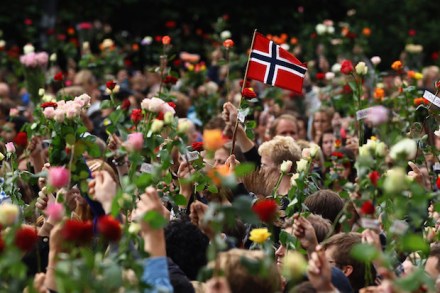
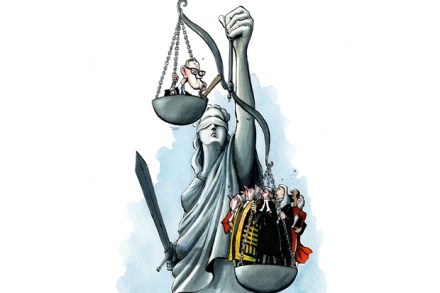
Anders Behring Breivik – the Norwegian extremist who killed 77 people in 2011 – has for the last few days been involved in a human rights trial in his prison in the south of Norway. Many would argue that, for a person in jail, he has a fairly cushy life – particularly given his crime. He is allowed to play video games, read newspapers and have access to a computer, and also has access to three cells, as well as an outside area. He has also been allowed to take university courses at the country’s main university, the University of Oslo, and took part in the prison’s Christmas gingerbread-baking competition. He is not, however, allowed to communicate with other prisoners, and his letters are all monitored and censored. So what more does he want?

Jo Johnson on the debate dividing the nation: ‘it’s brother against brother’

From our UK edition

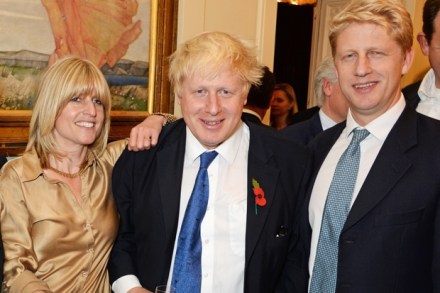
While Boris Johnson is firmly behind the Out campaign in the EU referendum, his father Stanley, sister Rachel and brother Jo are all backing Remain. So, has the difference in opinion led to any family conflict? Last night at a French embassy Jo -- the minister for science and universities --  appeared at first to hint at such problems. He gave a speech, which he began in French, on the great row now gripping the nation and tearing families apart: ‘Everybody must declare their position. Families are divided; brother against brother... I speak of course of the crucial debate for the French language; whether or not to abandon the circumflex.

The Amber express

From our UK edition

Amber Rudd isn’t a flashy politician; her office at the Department for Energy and Climate Change has almost no personal touches. She has a poster on the wall for the new Edinburgh tram (she was a student there). Her one concession to vanity is a framed ‘Minister of the Year’ award from this magazine: awarded for uprooting the legacy of the Liberal Democrat energy policy and being (in the words of the commendation) the ‘slayer of windmills’. It was, perhaps, an exaggeration: she hasn’t brought down any of Britain’s 5,215 onshore wind turbines. But she has been busy pruning back the green subsidies that her department had become used to doling out.

Desperate straits

From our UK edition

 Istanbul Shops in a rundown neighbourhood sell fake life jackets to refugees planning to brave the Aegean Sea. Last year, nearly 4,000 refugees died trying to make this journey. ‘But what am I to do?’ says Erkan, a shopkeeper, as he pushes me out of his shop. ‘I tell them they are fake but the poor souls continue to buy them. The genuine ones don’t sell so well.’ We’re in the suburb of Aksaray, the makeshift centre of the smuggling trade in the city. Here the language is Arabic and the restaurants are Syrian. A town square serves as a hub for migration brokers. This is where dreams are sold. Each night, hordes of Syrians fill the area, their lives on their backs, preparing for the dangerous journey ahead.

Vote for freedom!

From our UK edition

One of the most appealing arguments for Brexit is that it will make British citizens freer than they are now. The greatness of Great Britain lies, after all, in its long history of relative freedom. But now, so the proponents of Brexit like to claim, Britain is shackled by the tyranny of the EU, as though ‘Brussels’ were some alien dictatorship in which Britain plays no part. Columnists huff that Britain is now just a colony of this ‘foreign superpower’. That the EU exists as a superpower would come as news to most people in Brussels — and everywhere else. The European Union has no army and no joint foreign policy, and cannot be described as a state, federal or otherwise.

Cameron’s support for Turkey’s EU membership should worry us all

From our UK edition

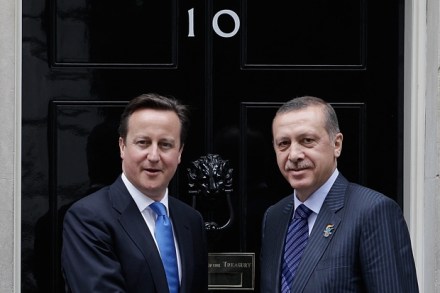
David Cameron this morning claimed that people who wish to leave the EU are 'taking a risk with people's jobs, taking a risk with families' finances.' Well then let us consider an even bigger risk that David Cameron is taking. In a visit to Turkey in 2010 our own Prime Minister announced that he would do everything he could to ensure Turkey entered the EU. Speaking as a guest of the country's Islamist Prime Minister, Recep Tayyip Erdogan, our own PM said, 'Turkey deserves its place at the top table of European politics - and that is what I will fight for.' Since then he has indeed been fighting to get Turkey into the EU.  This is despite Turkey doing everything it can to demonstrate that it has no place in the EU.

Is more multiculturalism really the cure for the EU’s problems?

From our UK edition

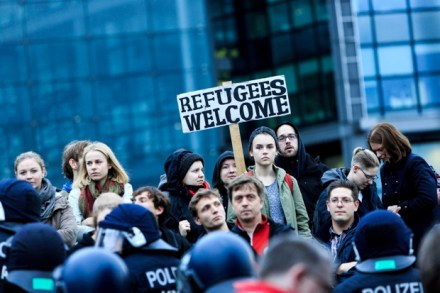
Germany is on its feet again; the country’s answer to Ukip, Alternative Für Deutschland, made huge gains at the polls, winning a presence in three state assemblies. The shadow of Auschwitz looms over all European politics on the subject of immigration and race, but obviously more so in Germany, and many people are worried. Their growth in popularity may have something to do with the chancellor’s decision to invite one million and counting people from the wider Middle East, in an gesture historians will probably see as the grandest act of folly of early 21st century history. Some people are worried that, along with FN, Ukip and Trump, AfD are extremists who represent a threat to the established order.

Even the Germans are starting to despair of their country’s migrant policy

From our UK edition

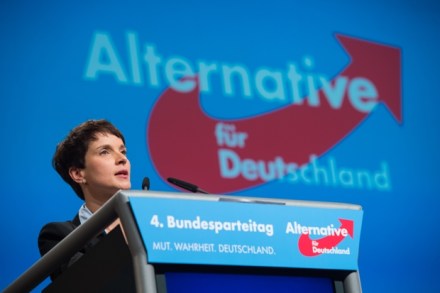
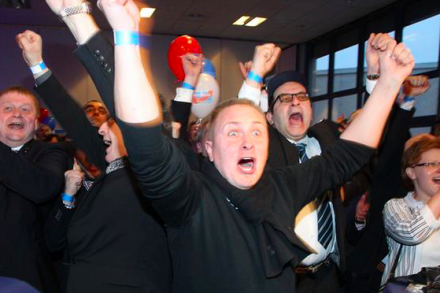
A rather impressive performance by Alternative für Deutschland (AfD) in Germany’s regional elections. Second in Saxony-Anhalt and double digit percentages in Baden-Württemberg and the Rhineland-Palatinate. Today’s papers have tended to conclude that despite AfD’s shock success, the elections were nonetheless a triumph, of sorts, for Angela Merkel’s policy towards migrants, if not for her party, the CDU. I can’t say that I see it like that. For a party which did not exist four years ago to take a quarter of the votes in one lander is a remarkable expression of dissatisfaction with the status quo. Add into that the fact AfD is held in some suspicion as being exclusively middle-class, if not Junker, in its make-up.

Don’t listen to Obama – real Americans want Brexit

From our UK edition

Because Americans love Britain, and because we are a presumptuous lot, we often advise the United Kingdom on its foreign policy. And not only the UK, but Europe. Successive US administrations have urged European nations to form a United States of Europe as an answer to the question attributed to Henry Kissinger: ‘Who do I call if I want to call Europe?’ The latest such unrequested advice was offered to your Prime Minister by no less a foreign-policy maven — see his successes in Libya, Middle East, China, Crimea — than Barack Obama. The outgoing president informed David Cameron that his administration wants to see ‘a strong United Kingdom in a strong European Union’.

Right-wing populists surge in Germany’s state elections

From our UK edition

Angela Merkel continues to reap the whirlwind. In this weekend's elections Alternative für Deutschland (AfD) has emerged as the fastest-growing political insurgent party since 1945. It has managed to enter all three state parliaments - with over 10pc of the vote in Baden-Württemberg, Rhineland-Palatinate and almost a quarter of the vote in Saxony-Anhalt, more than double the centre-left SPD. It focused its campaign as a protest against Merkel’s migrant policy, a policy that paid off. Its success is more than just another example of Europeans letting off steam.

Don’t expect Budget fireworks from George Osborne

From our UK edition

Don’t expect ‘fireworks’ from the Budget one of Osborne’s closest political allies told me this week. Ahead of the Budget on Wednesday the Chancellor finds himself hemmed in by the EU referendum, fraying Tory discipline and the worsening global economic situation, I say in my Sun column this week. A Budget four years out from a general election is normally when a government takes some risks. But I doubt Osborne will be doing much of that on Wednesday. First, he doesn’t want to do anything to make the EU referendum more difficult for the government to win—the intensity with which David Cameron is campaigning reveals how worried he is about losing it. Second, Cameron and Osborne know that they can’t rely on Tory MPs at the moment.

There are no easy answers to the EU question

From our UK edition

People — nice people, members of the public, concerned voters — keep coming up to me saying, ‘We want to hear the arguments about the EU referendum.’ It sounds a strange thing to want because, since the last years of Margaret Thatcher’s government, the arguments have rarely been out of the news for a week, and jolly boring they often are. But what such people go on to say is that they seek the objective facts and cannot get them from either side in the campaign. They would like some useful fact sheet which answers all their questions. Well, from time to time, papers like the Telegraph and the Times do contain short investigations of claims made about many of the issues involved, but the truth is that it isn’t easy.

Governor Cameron and the Brussels empire

From our UK edition

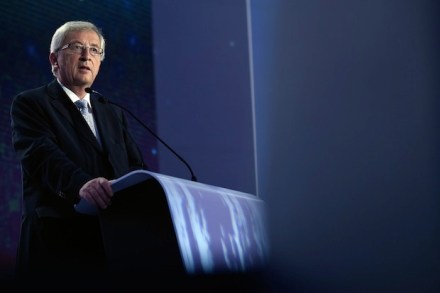
Jean-Claude Juncker, president of the EU Commission, made a typically brilliant intervention in the EU referendum debate by arguing that ‘Whoever does not believe in Europe, who doubts Europe, whoever despairs of Europe, should visit the military cemeteries in Europe.’ Cicero made just this point to his brother Quintus, who in 59 bc was about to embark on his third term as governor of Asia Minor (now western Turkey): ‘Asia ought to remember that, if she were not governed by us, she would hardly have been spared the disasters of external war or internal discord. But our government cannot be maintained without taxes, and Asia ought without resentment to pay over some of her wealth as the price of permanent peace and quiet.

Portrait of the week | 10 March 2016

From our UK edition

Home The Bank of England arranged for banks to be able to borrow as much money as they needed around the date of the EU referendum, lest there should be a bank run. After saying in a speech that Britain’s long-term prospects could be ‘brighter’ outside the EU, John Longworth was suspended as director-general of the British Chamber of Commerce, from which he then resigned so that he could speak freely. Four arrests followed the explosion of a bomb in Belfast, which wounded a prison officer working at Maghaberry Prison near Lisburn in Co. Antrim. The law against smoking in public buildings does not apply to prisons in England and Wales, the Appeal Court ruled. The Liberal Democrats called for the legal sale of marijuana through ‘cannabis social clubs’.

Turkey’s blackmail

From our UK edition

Looked at from the narrow perspective of how to deal with the lethal business of human trafficking across the Aegean, this week’s deal between the EU and Turkey shows some encouraging signs. Slowly, the EU seems to be realising that the surest way to stop migrants dying in unseaworthy boats is to adopt similar measures to those used by Tony Abbott the former Australian Prime Minister: turn back the boats, and deport those who land illegally. The Australians paid Malaysia to help handle the migrant problem. The EU is paying Turkey more than £4 billion over the next three years to contain 2.5 million refugees. The problem, however, is that Turkey is being offered more than money.

The Spectator’s notes | 10 March 2016

From our UK edition

Surely there is a difference between Mark Carney’s intervention in the Scottish referendum last year and in the EU one now. In the first, everyone wanted to know whether an independent Scotland could, as Alex Salmond asserted, keep the pound and even gain partial control over it. The best person to answer this question was the Governor of the Bank of England. So he answered it, and the answer — though somewhat more obliquely expressed — was no. For the vote on 23 June, there is nothing that Mr Carney can tell us which we definitely need to know and which only he can say. So when he spoke to the Treasury Committee of the House of Commons on Tuesday, his opinion was no better than that of any intelligent and well-connected person who deals with money.

High life | 10 March 2016

From our UK edition

   Athens I am walking around downtown Athens watching as thousands of migrants field pitches from smugglers offering alternative routes to Germany and Austria. I ask a friendly policeman 50 years younger than me why he doesn’t arrest the smugglers and throw away the key. ‘Others will take their place quicker than we put the handcuffs on them,’ he tells me. ‘And they pretend to be migrants the moment we approach.’ Smuggling people is big business, and most of the bad guys are Afghans, as far as I can tell. It is grim stuff, especially where children are concerned. Victoria Square is a tree-lined park where long ago my grandfather owned a large family house. The area is no longer chic, hence the influx of migrants and smugglers.