Eu

Want to leave the EU? You must be an oik like me

From our UK edition

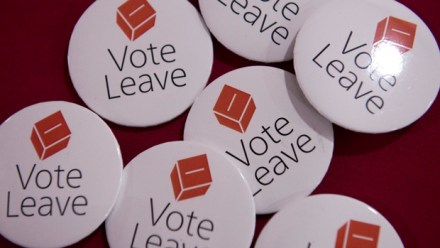
If you need to know how properly posh you are there’s a very simple test: are you pro- or anti-Brexit? Until the European referendum campaign got going, I thought it was a no--brainer which side all smart friends would take. They’d be for ‘out’, obviously, for a number of reasons: healthy suspicion of foreigners, ingrained national pride, unwillingness to be ruled by Germans having so recently won family DSOs defeating them, and so on. What I also factored in is that these people aren’t stupid. I’m not talking about Tim Nice-But-Dims here. I mean distinguished parliamentarians, captains of industry, City whiz-kids, high-level professionals: the kind of people who read the small print, sift the evidence and take a considered view.
Americans for Brexit

From our UK edition

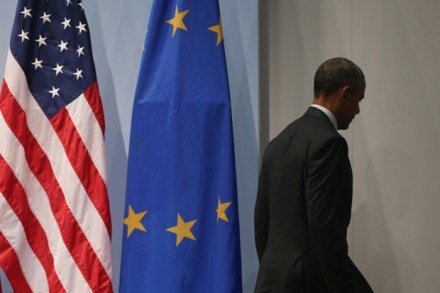
Because Americans love Britain, and because we are a presumptuous lot, we often advise the United Kingdom on its foreign policy. And not only the UK, but Europe. Successive US administrations have urged European nations to form a United States of Europe as an answer to the question attributed to Henry Kissinger: ‘Who do I call if I want to call Europe?’ The latest such unrequested advice was offered to your Prime Minister by no less a foreign-policy maven — see his successes in Libya, Middle East, China, Crimea — than Barack Obama. The outgoing president informed David Cameron that his administration wants to see ‘a strong United Kingdom in a strong European Union’.

How would Turkey’s EU membership stem the flow of migrants?

From our UK edition

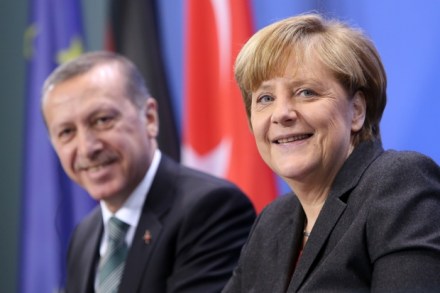
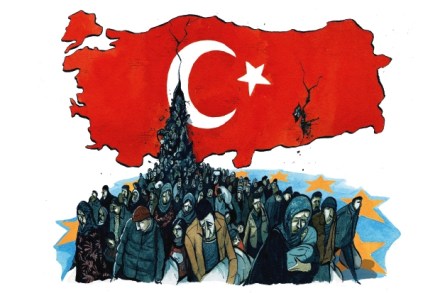
Stop me if I haven’t got this right. But as I understand it, as a result of the deal that the EU struck with Turkey earlier this week to get it to keep more migrants who’d otherwise end up in Greece and then Germany, the EU will now be expediting the process whereby Turkey becomes an EU member even though only three per cent of it is actually European. So…in order to stem a flow of migrants that could, at worst, amount to over a million people this year, we are admitting to the EU a country with a population of 75 million, any of whom would then have the right to live and work anywhere in the Union. It seems like an odd sort of cost-benefit calculation; I’d just bung them the cash, myself.

Andrew Marr accused of EU bias over Boris Johnson interview

From our UK edition

This week Nigel Farage revealed that he had been left 'worried' about Boris Johnson's ability to campaign for Brexit after his 'slightly shambolic' North London press conference. While the Ukip leader insists he has since come round to Johnson's involvement, Mr S wonders what he will make of the Mayor of London's turn on The Andrew Marr show. Johnson appeared on the BBC show to put forward the case for leaving the EU. However, what followed was a tense exchange between Johnson and Marr as each tried to set the interview agenda. With Boris keen to speak about the single market and sovereignty, he clashed with Marr when the presenter attempted to change topic: AM: Let's move on to tipper trucks just for a second.

Can Boris do as effective a job for Out as Cameron is doing for In?

From our UK edition

Pro-Brexit Tory Cabinet Minister would, I suspect, not be complaining about the government’s referendum campaign tactics if they didn’t fear that they were effective. Whatever you think about how he has done it, David Cameron has driven the risks of leaving the EU up the agenda this week. He has pushed the Out campaign onto the back foot. This is what makes Boris Johnson’s appearance on Marr tomorrow morning so important, I argue in my Sun column this week. Out need Boris to drive their agenda as successfully as Cameron is pushing IN’s. The interview is a big moment for Boris too.

Watch: Labour MEP stuck in lift in European parliament

From our UK edition

Brexit campaigners make the argument that the European Union just isn't working when it comes to Britain's interests. While some are yet to be convinced, it's safe to say that some parts of  the EU parliament just don't work full stop. Last night Paul Brannen, the Labour MEP, found himself stuck in a lift in parliament, in Brussels. When door of the lift opened, a steel wall appeared. After waiting for 20 minutes, Brannen decided the only thing to do was to film himself in case he didn't made it out of the lift alive: 'I'm somewhere between the 13th floor of parliament and the 3rd floor of parliament, and I've been here for about 20 minutes and they're currently trying to get me out.

When the EU is no longer able to bribe Turkey, the blackmail will begin

From our UK edition

As James Forsyth mentioned earlier this week, things could get much worse in Turkey. Indeed, they will. Europe’s hope that Turkey will continue to soak up migrants is at best naive; at worst, irresponsible. Europe desperately needs Turkey to serve as a migrant waiting room on its borders. In exchange, it has offered an acceleration of the EU admission process. In November, Turkey was promised visa-free travel to the Schengen zone by 2016. In December, after five years of standstill, negotiations concerning economic and monetary policies linked to Turkey’s EU membership were reopened. This entire deal rests on the peculiar idea that, if given the chance, Turkey would be a Europhile with the zeal of a convert.

People power then and now

From our UK edition

It does seem extraordinary that the increasingly puce-faced Mr Cameron offered us an ‘in-out’ referendum and is now telling us that ‘out’ would mean the end of the world as we know it. What on earth did he think he was doing? His reaction is to eviscerate MPs who support ‘out’, and intentionally deprive us who will actually make the decision of information enabling us to do so. People power is clearly not for him. One of the great virtues of 5th-century bc Athenian direct democracy was that those who made the policy decisions were citizens meeting weekly in Assembly. Parties did not exist. So there were no such things as party policies, party positions (Clause 4s and so on), or party members, let alone MPs.

High life | 3 March 2016

From our UK edition

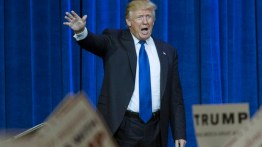
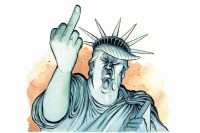
The rich are under attack nowadays, never more so than in America, where The Donald continues to trump his critics, amaze and surprise his fans, and drive his haters to paroxysms of sexual fantasy, with Trump as the main actor. National Review, where I got my start 40 years or so ago, devoted a whole issue to rubbishing Donald Trump. There were contributions from great conservatives, such as Thomas Sowell, and great clowns, like John Podhoretz. It was an issue that inadvertently looked in opposite directions while hating The Donald. William Kristol’s bit was in there — the one where he calls Trump vulgar. That he may be, but coming from a true vulgarian like Kristol, it’s a bit rich.

Long life | 3 March 2016

From our UK edition

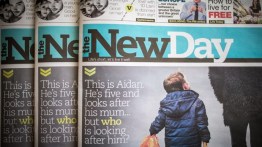
On Monday I went to the newsagent to buy the newspapers and picked up the first issue of a new one calling itself the New Day. This is the creation of the company that publishes the Daily Mirror, and it is, the publishers say, intended to appeal to people who have given up reading newspapers, people now so numerous that they are rapidly bringing the industry to its knees. The paper’s rather odd title is reminiscent of the carefree song ‘Many a New Day’ from Oklahoma!, and it is presumably intended to emphasise what the publishers call its ‘optimistic approach’. ‘We like to think we’re a modern, upbeat newspaper for modern, glass-half-full kind of people,’ writes its editor Alison Phillips in her introductory letter to readers.

Portrait of the week | 3 March 2016

From our UK edition

Home An official analysis by the Cabinet Office said that if Britain left the EU it would lead to a ‘decade of uncertainty’. Opponents of Britain remaining in the EU called the report a ‘dodgy dossier’. George Osborne, the Chancellor of the Exchequer, said that the economy would suffer a ‘profound economic shock’ if Britain left, echoing a communiqué of the G20 which referred to ‘the shock of a potential UK exit’. Boris Johnson revised his suggestion that a vote to leave could bring about a better deal from Brussels; ‘Out is out,’ he told the Times. Sir Jeremy Heywood, the Cabinet Secretary, declared that ministers opposing government policy on the referendum should not be shown government papers on the matter.

If the left doesn’t wake up soon, it could be responsible for Brexit

From our UK edition

It’s only been a week and a half since the starting gun was fired, yet for people outside of the Westminster bubble, the debate over the EU referendum is no doubt already beginning to tire. On the one hand we have the ‘outers’ banging on almost exclusively about sovereignty and immigration. And on the other side we hear the same economic mantra repeated over and over again. I’m a convinced ‘remainer’ and of course I know that these arguments matter enormously - but I fear that this debate over the future direction of our country could be lost to the ‘outers’ unless my side make a more visceral argument for Britain remaining a member of the EU. For a start that means remembering why the EU came about in the first place.

The Spectator podcast: Donald Trump’s angry America

From our UK edition

In this week's issue, Freddy Gray discusses Donald Trump's success on Super Tuesday. America has been the world's most benevolent superpower, Freddy says, but now its turning nasty. What does Trump's rise say about America? On the podcast, Freddy tells Isabel Hardman: 'It actually says something quite troubling about America. I think the rise of Trump suggests that America's can-do spirit and very positive outlook on the world is changing. I don't think it's isolationism so much as more a kind of nastiness, that Trump reflects. It's a result of the disappointment in Obama. Trump is a sort of bitter, anti-Obama.

Linked in

From our UK edition

What makes the World Service so different from the rest of the BBC? I asked Mary Hockaday, the controller of the English-language service. And how does it justify the additional £289 million funding (spread over the next five years) which the Treasury granted it at the end of last year? Will that money, which could after all otherwise go to welfare or the NHS, be well spent? ‘News is our core,’ says Hockaday. ‘It’s all about the now.’ Which sounds a bit Day Today. Anyway, isn’t this what BBC News and Radio 4 do already? It’s not just about presenting the news, Hockaday adds, but putting it in context. This last bit the World Service certainly does better than anyone else.

A conservative case for staying in

From our UK edition

I open a dusty binder and look at my yellowing Spectator articles from Poland, Germany and Russia in the dramatic 1980s. And here’s one from Brussels in 1986, suggesting that Britain was edging towards finding its role in the European Community. Ho ho. Back then, Charles Moore was the editor and I was the foreign editor of this magazine. He shared my passion for the liberation of eastern Europe, while becoming increasingly dissatisfied with the western European Community, but he let me make the case for it. Now, 30 years on, Charles and I stand on different sides of a historic national argument. This makes for a curious role reversal. I am a lifelong liberal (small ‘l’) but my argument for staying in the EU is fundamentally conservative (small ‘c’).

Of course the old Tory hatreds are back. That’s referendums for you

From our UK edition

Of course it’s vicious. It was always going to be. Sure, they’ve spent decades living peacefully side by side, but so did the Hutu and Tutsi. So did the Alawites and Sunnis, and so did every manner of former Yugoslavian. In politics, old hatreds do not die. They merely keep mum, so as to get selected and maybe become a junior minister. You will not find me dwelling upon the row in cabinet, this week, about whether pro-Brexit ministers are allowed to see government papers related to the EU referendum. Personally, I’d pay good money not to see government papers related to the EU referendum. I consider it a very real sign of sickness to want to. Although it was good to see Lord Mandelson weighing in, wasn’t it? Made me properly nostalgic.

Head of the IN campaign says wages will go up if we leave the EU

From our UK edition

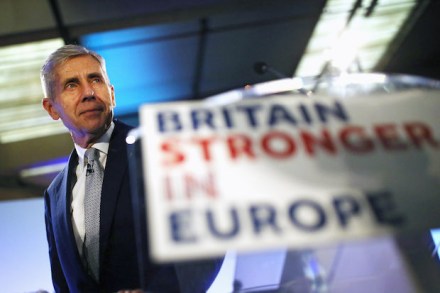
[audioplayer src="http://rss.acast.com/viewfrom22/donaldtrumpsangryamerica/media.mp3" title="James Forsyth, Fraser Nelson & Isabel Hardman discuss the opening skirmishes of the EU referendum campaign" startat=540] Listen [/audioplayer] Stuart Rose will have to be added to the long list of British businessmen who have struggled to make the transition to politics. Rose, the Chairman of Britain in Europe, didn’t get off to the best of starts in this campaign when he told The Times that ‘“Nothing is going to happen if we come out of Europe in the first five years, probably. There will be absolutely no change’ a quote that was seized upon by the Out campaign who said it disproved all the dire warnings about the immediate consequences of leaving.

Trade comes before trade agreements (but the ‘in’ campaign don’t think so)

From our UK edition

[audioplayer src="http://rss.acast.com/viewfrom22/donaldtrumpsangryamerica/media.mp3" title="James Forsyth, Fraser Nelson & Isabel Hardman discuss the opening skirmishes of the EU referendum campaign" startat=540] Listen [/audioplayer] The government, or at least David Cameron’s bit of it, seems to think that trade is something that takes place because of a trade agreement. The order is the other way round. People trade, and have done for several thousand years, because it is to their mutual advantage. After a bit, governments come along and try to direct and often impede it, but in the modern world of instant communications, ready transfers of money and container shipping, this has become blessedly difficult.

PMQs: Why won’t Corbyn address the Tory EU divide?

From our UK edition

David Cameron coasted through another PMQs today. Jeremy Corbyn asked about childcare but his questions were too long and unfocused to trouble the Prime Minister. It does seem odd that Corbyn doesn’t even dare approach the Tory split over the EU. He could surely have made something of IDS calling the government’s paper on the alternatives to EU membership a ‘dodgy dossier’? David Davis asked Cameron, after Bernard Jenkin failed to turn up, whether he would get the HMRC to publish its figures showing how many NI numbers issued to EU nationals are active. This would show whether the official immigration figures are significantly undercounting the number of EU migrants coming to Britain to work.