Eu

Brexit won’t mean more expensive flights for Brits. Here’s why.

From our UK edition

We’ve been warned that Brexit could spell the end of cheap travel. But is it really true that Britain voting out of Europe would hit holidaymakers in the pocket? Easyjet’s boss Dame Carolyn McCall said before that Brexit ‘wouldn’t be good for Britain’. And in a company prospectus, the airline warned this year that if Britain votes out in the EU referendum in June, then it could have a ‘material adverse effect’ on the budget airline. But does this hold up to scrutiny? Easyjet says that: ‘The outcome of this decision (in the referendum) could have a material adverse effect on easyJet’s financial condition and results of operations.’ Obviously for passengers, bad financial conditions for a company mean rising ticket prices.

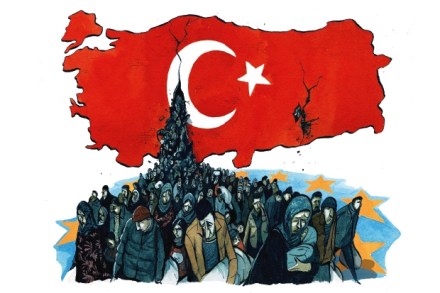
How the migrant crisis could get much worse

From our UK edition

Angela Merkel gave a defiant interview last night in which she defended her handling of the refugee crisis. She declared, ‘I have no Plan B’—worryingly, I suspect this is true. But how much worse the refugee crisis could become worse is made clear in leaked minutes of a meeting between the President of Turkey Recep Tayyip Erdogan and Donald Tusk and Jean-Claude Juncker. As Bloomberg columnist Marc Champion points out, Erdogan is determined to get far more out of the EU than the 3 billion Euros it is currently offering. He tells them that if the offer is for only 3 billion, the conversation might as well end there: "We can open the doors to Greece and Bulgaria anytime and we can put the refugees on buses.

Watch: Tom Watson jokes about Labour’s misery

From our UK edition

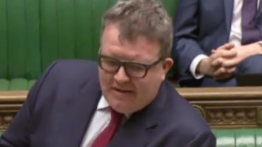
Although the Tories currently find their party divided over Europe, they can at least take heart that the opposition face greater internal conflict. In fact, rather than attack Matthew Hancock in the Commons today over the Cabinet's Brexit issues, Labour's deputy leader Tom Watson opted to make a joke about his own party's misery: 'Mr Speaker sadly I am not in the strongest of positions to lecture the poor minister on handling splits in his own party.' Watson did at least manage to find time to take a small jab at the Conservatives.

Dermot Murnaghan vs Anna Soubry: ‘are you sure you’re in government?’

From our UK edition

With the Sunday papers filled with stories suggesting David Cameron's party is in turmoil over the EU, Sky's Dermot Murnaghan decided to raise the issue with Anna Soubry during an appearance on his show. Alas he got more than he bargained for when the Minister for Small Business -- who is known not to mince her words -- proceeded to take Murnaghan to task over his 'seriously boring' line of questioning: DM: Are you saying 'oh dear it's all turning a bit nasty'? AS: No, I'm saying: 'oh dear this is so boring for ordinary viewers who are not interested in this media bubble, mainly centred in Westminster'.

Can Cameron and Boris keep a lid on it?

From our UK edition

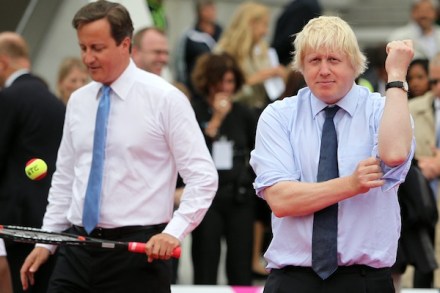
David Cameron’s slap down of Boris Johnson on Monday was one of the most brutal, and personal, that I’ve seen in six and a half years of reporting on parliament. But, as I report in my Sun column today, Number 10 are now keen to calm things down. Indeed, even some of Cameron’s closest allies now concede that the tone he took with Boris on Monday was a mistake. I’m told that Cameron and Boris have been in contact and are now exchanging, dread word, ‘bantery’ texts. One well-placed source is clear that the ‘PM’s tone will be much more emollient from now on’.

Why will no one in the cabinet admit to being a Europhile?

From our UK edition

One of the oddest features of the cabinet majority for staying in the EU is that almost no one in it admits to being a Europhile. How is it, then, that the very last-century ideas of Edward Heath, Ken Clarke, Michael Heseltine and Chris Patten can still exercise so much power over those who have so strongly and, in some cases, consistently criticised the EU in the past — Philip Hammond, Theresa May, Michael Fallon, Sajid Javid, Oliver Letwin, Liz Truss, Stephen Crabb, and, of course, David Cameron himself? Obviously one factor is that Tory MPs have found it convenient in recent years to adopt Eurosceptic protective colouring in their constituencies. But I think there is something deeper.

Michael Howard: why it’s time to leave the EU

From our UK edition

Michael Howard has said he believes Britain should leave the EU. The former Conservative leader said David Cameron's attempts to renegotiate had 'met with failure'. Here, in an extract from his article published in the Daily Telegraph, he says Britain is better off out of Europe: Europe’s leaders may spurn the possibility of a new round of negotiations. They – and others – will certainly deny any possibility of this kind between now and our vote. They want us to vote to remain. The Prime Minister says that the possibility of further negotiation is “for the birds”. We shall see. But if he’s right it will just mean that Europe’s leaders will have finally set their faces against the fundamental and far-reaching reform that he said he wanted.

Letters | 25 February 2016

From our UK edition

In defence of the heads Sir: It is fair for Ysenda Maxtone Graham to criticise heads who garner publicity but neglect the core business of good teaching, if such people exist (‘Big heads’, 20 February). However, targeting Anthony Seldon and Richard Cairns was a mistake. Although both may be what my wife calls ‘media tarts’, Seldon saved two schools which were in great financial difficulties by hugely increasing the number of applicants and Brighton College under Cairns has maintained its trajectory to the upper reaches of the league tables, becoming one of the largest independent schools in the country in the process. Both heads have been outstandingly successful, creating secure and dynamic schools. Both, incidentally, are great classroom teachers.

Barometer | 25 February 2016

From our UK edition

Vote no, vote often David Cameron scorned Boris Johnson’s idea that voting to leave the EU might result in further reforms followed by another referendum. History, though, would side with Boris. — In June 1992 Denmark rejected the Maastrict Treaty, with 50.7 per cent voting against in a referendum. Denmark was granted four opt-outs, including from the single currency, and held another referendum a year later. — Ireland rejected the Lisbon Treaty in a 2005 referendum, with 61.5 voting against. After several concessions, Irish voters approved it a year later. — An ‘out’ vote might serve British teams well at the European football championships. In the same month that Denmark voted no to Maastrict they also won the competition.

Portrait of the week | 25 February 2016

From our UK edition

Home David Cameron, having continued talks through the night in Brussels, announced that he had achieved a ‘special status’ for Britain in the European Union and would call a referendum on it for 23 June. One concession he had wrung was that, for seven years, Britain could decide to limit in-work benefits for EU migrants during their first four years in Britain. ‘I do not love Brussels; I love Britain,’ he said. The cabinet met next morning, and six members left by a back door to promote their support for the campaign to leave. The biggest beast among them was Michael Gove, and the others were Chris Grayling, Iain Duncan Smith, Theresa Villiers, John Whittingdale and Priti Patel.

Special status

From our UK edition

‘Special status?’ said my husband. ‘You mean like executioners, butchers and undertakers in Japan?’ I hadn’t suggested that, but had been thinking aloud about the phrase which, according to David Cameron, now describes Britain’s position in Europe: special status. My husband once went to Japan, which, he thinks, makes him an expert. He learnt about the ancient monkey performances given by people called Burakumin, a sort of untouchable. Apart from performing with monkeys, which was banned in the 20th century, they have been associated with unclean trades such as those he mentioned. Special, as I have remarked before, is slippery. The special relationship between Britain and America has at times been highly valued.

Vote ‘leave’ and stop the blurring of Britain

From our UK edition

I don’t remember the last European referendum being nearly as dramatic as the current one. In 1975, we were being asked about our membership of the Common Market, not the -European Union, so there was less at stake — at any rate, that’s what the inners -wanted us to believe. The battle was also much more one-sided. Then as now, the pro-European side included the Prime Minister and the leaders of the other two main parties, but there were fewer cabinet ministers on the other side and it was easier to -caricature the antis (Tony Benn, Enoch Powell) as extremists. In 1975, the national press was overwhelmingly in favour of staying in and the ‘yes’ campaign was able to outspend the ‘no’ campaign several times over, neither of which are true today.

Today in audio: Brexit, the BBC and Corbyn’s dress sense

From our UK edition

David Owen said it was time for Britain to leave the EU. Speaking this morning, the SDP founder said Brexit was a way of restructuring Europe in the way it needed to be. Owen went on to say there was no need for Britain leaving behind the EU to be a damaging process: Dame Janet Smith published her review into Jimmy Savile at the BBC. She said the management structure of the BBC was deeply referential. Janet Smith - whose report was criticised as an 'expensive whitewash' - said staff didn't speak out 'because they felt it was not their place': The BBC's Lord Hall said it was a 'grim period' of the corporation's history.

The European Parliament: a sword of Damocles hanging over Cameron

From our UK edition

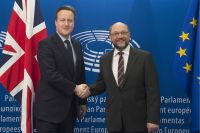
David Cameron had a tough time trying to convince his European counterparts at the European Council; but hopefully he will be up for seconds when he goes head-to-head with the European Parliament. He paid its Members a long overdue visit last week, but only met with a select few. He will have to do more than that if he wants to avoid more drama. There is nothing Members of the European Parliament hate more than being left out. Add to that being told what to do by a Member State government and you are serving them a very bitter cocktail. There is not an awful lot of respect as it is in Westminster for Brussels and its Parliament; but if ever there was a time to pretend, it is now.

Are there any useful parallels between the EU referendum and religious history?

From our UK edition

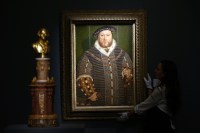
Niall Ferguson got me thinking about this in his Sunday Times piece, in which he rejected the allure of Brexit and declared himself an 'Anglosceptic'. He concluded: ‘In the days before empire, Henry VIII’s version of Brexit was to renounce Roman Catholicism and divorce Catherine of Aragon. A true sceptic in those days would have advised him to Bremain — and unite against the Turk.’ It’s an odd choice of illustration, because in that case Brexit did work, it paved the way for a stronger braver England, then Britain. It was the making of us. Tudor history is surely a precedent in the Brexiters’ favour. So can Boris dress up as Henry VIII, so to speak, and paint Brussels as Rome? In a sense he is doing exactly this, when he talks of sovereignty.

Lord Owen: ‘Now is the time to vote to leave the EU’

From our UK edition

The vision of a European Common Market was a good one when in 1962 membership was first envisaged for the UK. Nevertheless, we were rightly warned even then by the leader of the Labour Party, Hugh Gaitskell, that a federal Europe lurked in the background. As far back as 1971 Edward Heath’s White Paper on entry misleadingly promised ‘no erosion of essential sovereignty’. That was untrue then and is much more so today. European law does override British law and David Cameron has failed to achieve any Treaty amendment to change this. What we have contrived in the EU is the pretension that you can be partly a country and partly not a country.

Out on the farm

From our UK edition

If the Church of England was once the Tory party at prayer, then the nation’s shotgun-owning farmers were the party’s armed wing. I grew up on a farm in the Yorkshire Dales and must have been about 18 before I met someone who didn’t identify as TBC (True Blue Conservative). Ours was one of the safest Tory seats in the country, with the local MP being Leon Brittan and then William Hague. And Margaret Thatcher was considered a hero in our ‘community’ not because of the Falklands war or her defeat of Arthur Scargill but because she liked to greet the dawn by listening to Farming Today on Radio 4 (true). But the Brexit debate is leaving our True Blue farmers deeply conflicted. On the one hand, without EU subsidies, many of them would go out of business.

The City says it’s for staying in but I wonder what the big beasts think

From our UK edition

‘The City is in no doubt that staying in Europe is the only way ahead,’ declared Mark Boleat for the City of London Corporation. Likewise Chris Cummings of the lobby group TheCityUK praised David Cameron for delivering ‘a really special deal’. The official Square Mile is squarely for ‘remain’, confident that the Prime Minister has secured safeguards to let the UK keep control of a thriving financial sector in a multi--currency EU. But with all due respect, I wonder what the real players think. The economists Gerard Lyons and Ruth Lea are two other respected City voices, and they warn that those safeguards won’t be worth much as Paris, Frankfurt and Brussels pursue their long-term aim of grabbing financial activity from us.