Eu

Britain is selling less to Europe but the EU is still hugely important

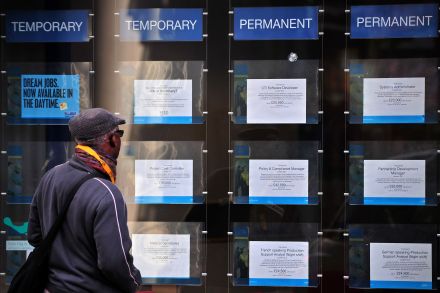
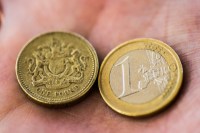
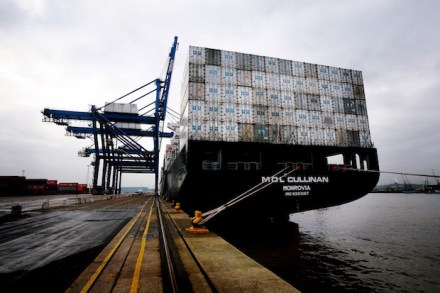
Britain’s trade deficit - the gap between what the UK imports and exports - is now at its biggest since the financial crash in 2008. The latest figures out today show that the difference between the two is now £13.3bn for the first four months of 2016. That’s a jump from £12.2bn at the end of 2015. So what do the figures actually mean? City analysts have described the trade deficit as ‘truly horrible’. The British Chambers of Commerce said the gap between imports and exports was ‘unacceptably large’. It’s not only those from the business world having their say on the latest figures though. As ever, these statistics are also being interpreted through the lens of the upcoming EU referendum.

IDS’s claim about Germany’s hidden EU renegotiation role is hugely damaging for ‘Remain’

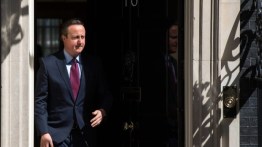
Yesterday, David Cameron was all talk of ensuring peace in our time and preventing world war three by staying in the EU. But today, as the EU debate rumbles on, he'll have come crashing back to earth after reading the front page of The Sun. The paper quotes Iain Duncan Smith as saying that Germany was secretly in control of David Cameron's EU renegotiation throughout. The former Work and Pensions secretary, who quit the cabinet in February, is set to add in a speech this morning that: “There was a spare chair for them - called the German Chair. They have had a de facto veto over everything.” IDS goes on to make a fairly explosive claim, suggesting that the 'red line' demand for an emergency brake was watered down following intervention from Berlin.

Today in audio: Boris vs Dave

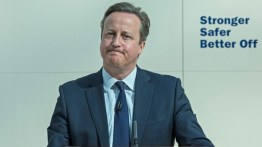
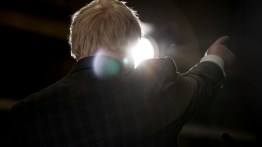
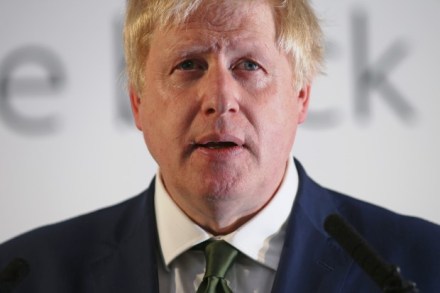
With the May elections over, the EU referendum campaign is now in full swing. David Cameron started the day warning that Brexit could put peace in Europe at risk. In his speech at the British Museum this morning, the PM also asked whether leaving the EU was a risk worth taking. Here's what he said: Boris hit back by making his case for voting out, saying that negotiating on behalf of the EU is like 'trying to ride a vast 28-man pantomime horse': He also sung 'Ode to Joy' in German: And Boris even appeared to forget the name of the city which, until a few days ago, he was the Mayor of: Whilst on the subject of the EU referendum, Tory MP Crispin Blunt said after careful consideration he was backing Brexit: But it wasn't all about the European Union.

Was Spain’s ‘new political era’ just a mirage?

More than four months on from Spain’s December general election, optimism has given way to fatigue and cynicism among the electorate. Coalition negotiations between leading parties have failed, and a repeat election will now be held in Spain on 26 June, a few days after Britain's EU referendum. But there is little enthusiasm for this second-take. Many Spaniards are now saying they will register disappointment with their politicians by abstaining. And what of the supposed new breed of Spanish politician represented by Albert Rivera, the leader of Ciudadanos (‘Citizens’) and Pablo Iglesias, leader of Podemos (‘We Can’)?

Does anybody actually think the EU guarantees ‘peace and stability’?

According to David Cameron this morning, if Britain votes to ‘Leave’ the EU on 23 June, the Germans will invade Belgium, the Russians will invade Crimea (again), and we’ll all have to spend the coming years re-learning the finer details of the Schleswig-Holstein question. The Prime Minister’s latest attempt to warn of apocalypse in the case of Brexit has one huge flaw.  In his latest scare-speech this morning he said: ‘Can we be so sure that peace and stability on our continent are assured beyond any shadow of doubt? Is that a risk worth taking? I would never be so rash as to make that assumption.’ Well nothing is ever assured.  But how could anybody still think that peace and stability in Europe are remotely assured by the EU?

David Cameron is now in full ‘Project Fear’ mode

David Cameron's speech this morning about the EU referendum will succeed in doing one thing: infuriating the hell out of Eurosceptics. The Prime Minister is set to warn that peace and stability could be at risk if Britain walks away from Europe. He'll also go on to say that the European Union has brought together countries previously 'at each others' throats for decades'. In the Project Fear brand, it's certainly a classic in the genre. But will it work? One of the interesting aspects of his line of argument is the appeal it is likely to have to younger people. Those under the age of 34 are generally much more in favour of remaining in Europe, with only a third (29 per cent) of those aged 18-34 backing Brexit, according to an Opinium poll.

Why the FT’s Martin Wolf is wrong about the EU

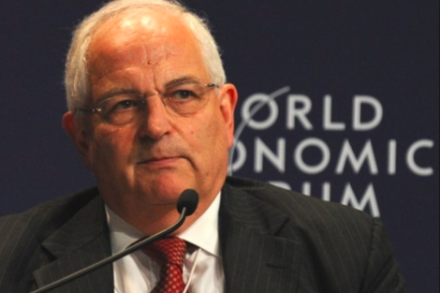
Last week, I wrote about the fevered state of mind of the Financial Times as British voters threaten to throw off their EU chains. Here is another example. Martin Wolf, usually the best columnist in the paper, wrote a column giving ten reasons to remain. He said: ‘Above all, those promoting departure ignore what the UK’s European partners think about the EU. Their political elites, particularly of Germany and France, regard the preservation of an integrated Europe as their highest national interests. They will want to make clear that departure carries a heavy price, which is likely to include attempts to drive euro-related financial markets out of London.’ Those who want to leave don’t ignore this at all!

The Spectator podcast: Erdogan’s Europe

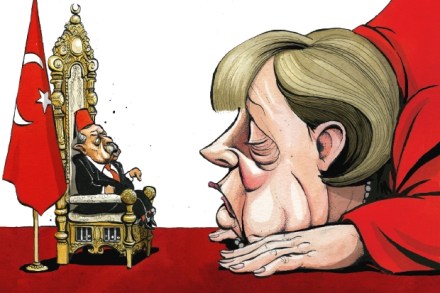
To subscribe to The Spectator’s weekly podcast, for free, visit the iTunes store or click here for our RSS feed. Alternatively, you can follow us on SoundCloud. Has Erdogan brought Europe to heel? In his Spectator cover piece, Douglas Murray argues that the Turkish President has used a mixture of intimidation, threats and blackmail to do just that and throw open the doors of Europe to Turkey. Douglas says Erdogan is a ‘wretched Islamist bully’ who has shown just how the EU works. But in pushing Europe around, is Erdogan now more powerful than Merkel, Juncker and Cameron? And how does the Turkish PM's resignation this week changed the country's relationship with the EU? Isabel Hardman speaks to Rem Korteweg, from the Centre for European Reform.

Letters | 5 May 2016

The EU gravy train Sir: Despite his splendid forename, your deputy editor Freddy Gray has a very tenuous grasp of human nature. Having accurately detected a simmering voter mutiny across much of Europe and the UK, he decrees that those heartily sick and tired of being constantly lied to and thus treated with contempt by the EU gravy-train-riding establishments must be either extreme right-wing or mad (‘A right mess’, 30 April). Actually, we are neither. Does he really believe it to be coincidental that 95 per cent of the UK establishment (there are still a few good ’uns in the mix) are screaming, desperate that their gravy train not be derailed by mere electors?

What does Davutoglu’s resignation mean for Turkey and the EU?

Ahmet Davutoglu’s resignation comes at a sensitive moment for the EU’s migration deal with Turkey. Why did the prime minister fall from the sultan’s favour, and what does it mean? Over the past few weeks Davutoglu appeared increasingly worried about the hollowing out of his position. He had every right to be frustrated. In late April his grip on the AK party was weakened, as party bosses decided to stop him from appointing provincial party executives. Davutoglu has been, of course, head of government and head of the ruling AK party in name only. The real chief sits in a 1000-room presidential palace overlooking Ankara.

Turkey’s triumph

Update: Since this article was published Ahmet Davutoglu has resigned as Turkey’s Prime Minister. Reports suggest this comes as a result of a rift with President Erdogan caused by the increasingly ‘Presidential’ nature of Turkey’s politics. Is Turkey part of Europe? For most of our civilisation’s history, to have even asked such a question would have been to invite derision. The Ottomans were kept out of Europe not by some early-onset prejudice, but by the armies of Europe having to beat back their repeated invasions. The question became slightly more plausible a century ago with the rise of Ataturk and the modern Turkish state (one of the only successful efforts to reconcile the Islamic religion with state power).

Let’s renew the EU

From the time of the French revolution, the Catholic Church has always encouraged relationships between nations that draw them together rather than divide them. It is for this reason that the Church has always been broadly supportive of the European Union, although with reservations. There will be many Catholics on both sides of the coming referendum. Many of us have concerns about recent developments in the EU, such as the official removal of the reference to the continent’s Christian history from the European Constitution a few years ago. The more general push towards secularisation troubles us, too. Recent popes have questioned the tendency to regard the goal of the EU as the optimisation of market forces.

Charles de Gaulle knew it: Britain does not belong in the EU

‘England in effect is insular, she is maritime, she is linked through her interactions, her markets and her supply lines to the most diverse and often the most distant countries; she pursues essentially industrial and commercial activities, and only slight agricultural ones. She has, in all her doings, very marked and very original habits and traditions.’ This classic Eurosceptic statement was made, as Daniel Hannan reminds us in his excellent book Why Vote Leave, by a great European, Charles de Gaulle. He was explaining why France was rejecting our attempt to join the EEC in 1963. The General understood what the European project was, and why Britain was not a natural part of it. More than 50 years on, is there much to add? This is an extract from Charles Moore's Notes.

Letters | 28 April 2016

Green reasons to stay in Sir: As Conservatives we are clear that the European Union has been central to improving the quality of the UK’s environment. European policy is not always perfect, but on environmental issues it has allowed us to move forward in leaps and bounds. The wealth of the environment on which our economy depends is not confined to national boundaries, which is why the EU has become such a vital forum for negotiating Britain’s interest in maintaining healthy seas, clean air, climate security and species protection. It is largely thanks to European agreements that we now have sewage-free beaches in Britain. Because of tough European vehicle standards, British car drivers spend less on fuel.

Diary – 28 April 2016

I’m a lucky man. My novel House of Cards transformed my life, yet I wrote it almost by accident nearly 30 years ago. It wasn’t intended to be anything other than a hobby but thanks to the limitless skills of Kevin Spacey and Robin Wright, backed by the reach of Netflix, it now spans the globe. We’re into our fourth season, preparing the fifth, but it never ceases to surprise. A little while ago during his official visit to Britain I was invited to meet President Xi of China. In order to mark the occasion I decided to give him an original and now rather rare hardback copy of the book. He looked at it perplexed. ‘What,’ he said, ‘you have House of Cards in this country, too?’ I played dirty the other night after dinner.

Watch: The Spectator’s Brexit debate

In the largest event in The Spectator’s 188-year history, 2,200 people packed into the Palladium this week to watch our debate chaired by Andrew Neil on whether Britain should leave the EU. Dan Hannan, Nigel Farage and Kate Hoey backed Brexit. Whilst Nick Clegg, Liz Kendall and Chuka Umunna argued that Britain was better off remaining a part of the European Union. Leave won the debate, which was sponsored by Rathbones, with a resounding number of the audience siding with Hannan, Farage and Hoey. But if you weren’t lucky enough to make it to the Spectator’s Brexit debate yourself, then you can make up your own mind by watching the full video, using the player above.

The unlikely oilman

Algy Cluff is the longest-serving oilman in the North Sea. He was one of the first to drill for oil there, in 1972, and at the last government handout of drilling licences, two years ago, there he was again, making a handsome gas discovery. Now 76, he’s also the least likely oilman you can imagine. Tall, rangy, dressed in Savile Row pinstripes; he is no J.R. Ewing. His diffident, patrician voice is so gentle that I have to turn my tape recorder up to transcribe this interview. Cluff’s Who’s Who entry lists membership of 11 clubs. But there is no clubman stuffiness about him. He’s full of wonderful anecdotes, many of them involving The Spectator, which he owned from 1981 to 1985, before he became chairman for 20 years.

Brexit Tories are feeling disrespected. How awful

There are moments when one wonders whether one is seeing and hearing the same things as others. For me such a moment occurred a fortnight ago when reading The Spectator’s weekly column by our political editor, James Forsyth. James is exceptionally well plugged in to the world of Westminster, but — beyond that — a person of cool and sensitive judgment, so I read what he writes with attention. He said this: ‘[The Prime Minister] is campaigning with no thought for the feelings of those in the party who disagree with him. It is one thing for a leader to disagree with close to half of his MPs and most of his activists, but quite another not to do it respectfully.’ And for the first time in my life I had literally no idea what James was on about.