Eu

A rotten windfall

It’s strange that, even now, the Brexit vote is routinely referred to as an expression of anger or frustration — as if the most easily baffled half of the population had voted in response to forces they could not understand. In fact, the result of the 23 June referendum seems to look wiser with every week that has passed. Of course, leaving has its risks. But 52 per cent of voters judged that a greater one lay in staying in a European Union that is changing all the time — and invariably for the worse.

Theresa May’s Brexit minefield

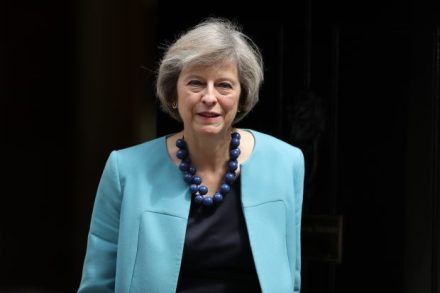
When David Cameron resigned, the Conservative Party Board pushed back the planned date for the election of a new leader until after the G20 summit had taken place. The official reason was to give the new Prime Minister time to read into the job and save him or her from having to fly off to meet world leaders directly after moving into Downing Street. More cynical members of the board, though, suspected Cameron had another motive: he wanted the chance to say a proper goodbye to Obama and Co. Thanks to Andrea Leadsom’s withdrawal from the leadership race, however, Theresa May now heads to the summit this weekend with almost two months in No. 10 under her belt. She will be a main focus of interest in Hangzhou, China.

Italian Notebook

 Lido di Dante, Ravenna When the earthquake struck in the dead of night at 3.36 a.m. — the Devil’s Hour — I was in front of my computer in what used to be the cow shed. This is the only time of day when my six boisterous children and their high-voltage Italian mother are not around. The insects, attracted by the light, are worse at night but they can be killed if necessary. As for the toads (we have biblical numbers that emerge from the underworld at night via the open glass doors), I quite like them. Even though there are three on the coat of arms of the Devil himself, I just sweep out with a broom any toad I notice hopping across the floor. The silence is so intense that I can hear the horse and the donkey munching hay in the stable 100 yards away.

Warrant for alarm

A concerted effort is under way to make sure that, when it comes to the European Arrest Warrant, Brexit does not mean Brexit. The Police Federation, for example, will hear no ill spoken of the system. And the same might be said of the Prime Minister, who as home secretary praised it to the skies. As she put it in October 2014, without the European Arrest Warrant, ‘British criminals would be able to hop on to the Eurostar or fly to Spain, safe in the knowledge we wouldn’t be able to get them back to prosecute them.’ Without it, the UK would become ‘a honeypot for all of Europe’s criminals on the run from justice’. The statistics appear to back her.

Theresa May shows she wants to be defined by more than just Brexit

Theresa May welcomed the Cabinet to Chequers with this address, just released by Number 10: 'Thank you very much for coming together today. It’s our first opportunity to meet since the summer recess, but also the first opportunity for us to meet since the fantastic success of the GB Team at the Olympics – absolutely great. And also the Paralympics will be starting very soon, so we wish our Paralympic athletes all the very best and success there as well. But obviously over the summer – over the last few weeks – quite a lot of work has been done. We’re going to be having an opportunity today to discuss this.

Theresa May’s great Brexit brainstorm starts today

Summer is over. Or at least as far as Theresa May is concerned it is, as the PM gathers her cabinet at Chequers today to talk business about Brexit. It's the most important gathering of her time in office so far and a chance to spell out an action plan for Britain's departure from the EU. She put a stop yesterday to talk of a second referendum and today she has repeated her pledge that there won't be an attempt to 'sort of stay in the EU by the back door'. But whilst those words are a reassurance of what won't happen, today's meeting is also a chance for the PM to thrash out what she hopes will happen over the weeks and months ahead. It's also an important opportunity for each cabinet minister to spell out the 'opportunities' of Brexit: this is the key to making Brexit a success.

Apple’s Irish tax bill is bad news for free-market liberals

So the European Commission has today released its much-delayed iTax. This time, it’s not an Apple innovation but a ruling ordering Ireland to claw back €13bn in back tax from Apple – a record penalty and one that the company and Ireland have both vowed to appeal. The Commission announced its decision in a typically terse ruling, in which they chuck rotten fruit at Ireland’s low corporate-tax environment. But whilst every one is talking about tax, this fracas between the EC and Ireland over Apple’s bill—what we here locally might call a ballyhoo—actually has less to do with one of the two inevitabilities of life, and much to do with the Commission's Competition Commissioner, Margrethe Vestager.

Who’s at the ‘back of the queue’ now, Obama?

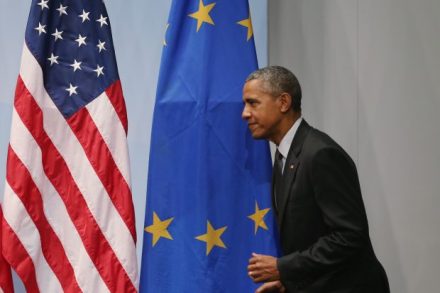
Wasn’t it one of the 'Remain' campaign’s big arguments that leaving the EU would deprive us of the ‘clout’ we enjoy in negotiating foreign trade agreements? I seem to remember someone even warning us that in the event of Brexit we would go ‘to the back of the queue’ for a trade agreement with the US. So much for being at the front of the queue. Today, the French minister for foreign trade, Matthias Fekl, demanded an end to talks with the US over the Transatlantic Trade and Investment Partnership (TTIP). It comes hot on the heels of claim yesterday by German deputy Chancellor Sigmar Gabriel that TTIP has failed. Yet again, the EU has proved hopeless in negotiating a trade deal with a major economy.

Britain hits back over French threat to scrap Calais ‘jungle’

It's no surprise that demands from French politicians to scrap the Le Touquet deal and shift the migrant 'jungle' from Calais to Dover has gone down badly in Britain. Today's front pages are full of talk of 'Le Stitch up'. And the Home Office has waded in to say these plans are a complete 'non starter'. This all sets the scene for a testy meeting for Amber Rudd as she crosses the Channel to meet her French counterpart, Bernard Cazeneuve, for talks today. Their meeting will be a private one but it isn't difficult to work out that Calais will be top of their agenda. What's difficult about finding a solution, however, is that all of this talk is something of a phoney war of words, at least for now.

Mark Carney’s referendum ‘uncertainty spike’ exposed as bluster

In the runup to the referendum, we heard repeated warnings that, whatever the outcome of the actual vote, the damage to the UK economy had been done. The Bank of England, whose governor has been accused of becoming something of a fellow traveller for Project Fear, warned in its Monetary Policy Committee meeting in March that: ‘There appears to be increased uncertainty surrounding the forthcoming referendum on UK membership of the European Union’. In April, the BoE was at it again, downgrading second-quarter growth from 0.5 per cent to 0.3 per cent. Warnings such as these risk of being self-fulfilling: if you talk about uncertainty, it’s hardly surprising that investors feel uncertain, creating a knock-on effect out of nowhere.

France’s burkini ban was an own goal for secularism

I’ve always hated the beach. The water? Great. The sunshine? Terrible. It starts with the hot trek across the sands to find a square of free ground – loaded up with factor 60, several books, a comedy floppy hat, two towels, three bottles of water and the rusty family parasol. Then there’s the bodily anxiety. Find me a woman who doesn’t fret about her body on the beach, and I’ll find you a liar. Just over a year ago, I wrote a post for The Spectator about my own fraught history with my body on the beach. I still don’t understand how it ever became acceptable to wear an itsy bitsy bikini around one’s dad. And even in a one-piece, if I don’t draw attention to my thickening waist, my mother will.

Barometer | 25 August 2016

Golden years How many Olympic events would Team GB have to win before we could earn back the gold reserves sold by Gordon Brown? — Olympic gold medals are in fact gold-plated silver and contain only 6g of gold. Between 1999 and 2002 Gordon Brown sold off 395 tons of gold — enough to mint 64.7m medals. Assuming the number of golds on offer at the summer Olympics remains 812, as at Rio, that would mean winning every event at 79,679 Olympiads, taking us to the games of ad 320736. — It would be a different story if, as last happened in 1912, the medals were solid gold. With 500g of gold in each medal, we could achieve the feat by ad 5848.

Today’s net migration figures show the huge task facing Theresa May

The good news for the Government is that net migration is down. The bad news? It's down by so little (a fall of 9,000 to a total of 327,000) that you won't hear anyone crowing about today's figures. That the 'tens of thousands' target made by the Government still hasn't been met is no surprise at all. And we can expect to see a continuation of the semantic shift from that Tory 'promise' down to a 'pledge'. So apart from telling us that, as far as net migration is concerned, it's business as usual, what do today's figures show us? For one, they make it clear that solving this issue won't be easy for the Prime Minister. Net migration from certain EU countries like Romania and Bulgaria is at a record high.

The Bank of Wonderland

What should we think about negative interest rates? What kind of Alice in Wonderland world are we living in when companies and households are paid to borrow and charged if they save? Seemingly crazy, negative interest rates are spreading nonetheless. Implemented by central banks in Europe, Japan and elsewhere, they now apply in countries accounting for a quarter of the global economy. Should we be worried? Could we see negative rates in Britain? Earlier this month, the Bank of England cut interest rates for the first time in seven years, from 0.5 per cent to a new record low of 0.25 per cent.

The Boris-bashers should be ashamed

Throughout this fractious summer, one thing has united all the warring pundits and politicians. Left, right; Leave, Remain, everyone at least agrees that it was crazy to leave the country in Boris’s hands. He’s not serious, they say, looking, as they make this pronouncement, jolly pleased with their own relative gravitas. They should instead be ashamed. The endless jeering at Boris isn’t justified — he was a decent mayor of London — and it is not in good faith. What purports to be considered criticism is almost always just sour grapes. Why the bitterness? More often than not, Boris-bashers — in Parliament or press — are his contemporaries. A lot of them went to Oxford with him and they measure their success against his. It makes them cross.

Brexit won’t finish the EU, insist Merkel, Hollande and Renzi

It's no surprise that Italy’s prime minister Matteo Renzi chose to host a press conference with Angela Merkel and Francois Hollande on an aircraft carrier; this was a piece of theatre designed to show the EU is fighting back. 'Many thought the EU was finished after Brexit,' said Renzi. Not so, he claimed. Instead, Britain's decision to leave the EU was the chance to 'write a future chapter' and 'relaunch the powerful ideas of unity and peace, freedom and dreams', the Italian PM insisted. All very well, you might think, but what does that mean? Defending the continent against the threat of Islamic terrorism was a key topic. Angela Merkel called for intelligence services across the continent to share more information to help fight extremism. So far, so sensible.

Revealed: the bureaucrat who advised Theresa May to use EU nationals as bargaining chips

The biggest puzzle of Theresa May’s premiership so far is why someone who pioneered laws against modern slavery and was so tough on stop-and-search should take such an extreme and heartless position on EU migrants. Her declaration – that she’d use them as bargaining chips in Brexit talks – struck many who would otherwise support her as bizarre and repugnant. The Times reveals today that this idea was dummed up, as you’d expect, by the Whitehall machine. Sir Ivan Rogers, Britain’s ambassador to the EU, advised all candidates for the Tory leadership to use Britain’s three million EU nationals as bargaining chips in Brexit talks because he thought it would be the only bargaining chip Britain had.

Out – and not proud

‘Many people are mourning,’ said Sam West on a BBC panel show discussing the response of the arts world to Brexit. According to West’s figures, ‘96 per cent of those polled were for Remain. Collaboration and connection are our bread and butter.’ The atmosphere of bitterness and anger was palpable at the Edinburgh Festival. I spent four days immersed in comedy shows and I heard only one pro-Brexit gag. The excellent Geoff Norcott said he was puzzled to meet Remainers who told him the result had been swung by ‘thick’ Leave voters. ‘Thick?’ he said. ‘The Remain campaign waited until after 23 June to stage their street protest.

Defending Brexit

One of the many incorrect predictions about this year’s referendum was that those who voted for Brexit would soon regret it. The theory was that these deluded souls only intended to lodge a protest vote, and would be overcome with buyers’ remorse as Britain fell headlong into a deep recession. Two months after the referendum, there is precious little regret. Polls suggest that just 5 per cent of those who backed Brexit wish they hadn’t; the same is true for those who voted Remain. However, the Remainers have moved quickly and effectively into post-campaign mode and have found a new vocabulary. Their new enemy is ‘hard Brexit’. They seize on every piece of bad economic news while rubbishing renegotiation prospects.