Eu

EU déjà vu: the emergency brake is back!

13 min listen

Charles Grant from the Centre for European Reform and Tim Shipman join James Heale to reflect on the rumours about Britain’s latest set of negotiations with the European Union. There are reports that the EU may be willing to accept some form of mechanism, that the UK could use, should Britain ever wish to temporarily halt the number of inbound students. Perhaps we could call such a mechanism an ’emergency brake’. Sound familiar? What does this tell us about the dynamics of the EU, how the UK-EU relationship works – and how inevitable was the result in 2016? Produced by Patrick Gibbons and Megan McElroy.

EU déjà vu: the emergency brake is back!

Brussels is making your perfumes worse

‘Heliotropin,’ said the Frenchman mournfully. I was midway through lunch in Mayfair with Benoit Brosseau, whose father, Jean-Charles, created the fragrance Ombre Rose, and who now leads the company of the same name. I had asked the question I always put to fragrance people, in the full knowledge it will make them either sad or furious: how do they cope with Ifra, the Brussels-based regulatory, or representative, body of the fragrance industry? One of the latest in the list of ingredients Ifra may be curbing is based on heliotrope, which not only gives a powdery aspect to scent, but conjures up the elusive smell of cherries. (If you know that

Is Labour sleepwalking back to the EU?

Two big topics on the agenda today as Keir Starmer has his pitch – again – on the cost of living. He told us towards the start of the year that every minute not spent tackling the cost of living was a minute wasted, so what has he been doing in all that time? Also today, ahead of her Mais Lecture this week, Rachel Reeves has been laying the groundwork for closer ties with the European Union. This does seem like a change of rhetoric from the Chancellor, who is openly suggesting that Brexit was a mistake. So what would closer ties look like? And is this the only lever

Revealed: Keir Starmer’s new plan to get closer to the EU

A Labour MP, reflecting on the problems the Prime Minister faces over the war in Iran, observed this week: ‘Keir got it right, but things keep going wrong.’ His point was that Starmer kept Britain out of the Israeli-American air strikes, a position popular both with the parliamentary Labour party and the electorate, yet the impact of that conflict has laid bare three serious problems at the heart of the British state. First, there has been a fracturing of relations between Starmer and Britain’s defence chief, Air Chief Marshal Sir Richard Knighton. Second is the vulnerability of the economy to energy price shocks. Third is Ed Miliband’s net-zero crusade, which

Justin Marozzi, Lisa Haseldine, William Atkinson & Toby Young

32 min listen

On this week’s Spectator Out Loud: Justin Marozzi analyses what Trump’s coup in Venezuela means for Iran; Lisa Haseldine asks why Britain isn’t expanding its military capabilities, as European allies do so; William Atkinson argues that the MET’s attack on freemasonry is unjustified; and, Toby Young explains why the chickenpox vaccine is a positive health measure. Produced and presented by Patrick Gibbons.

Brexit’s back – and so is Truss

16 min listen

There has been a flurry of UK-European activity across Britain this week, with the German state visit in London, the Norwegian Prime Minister signing a defence agreement in Scotland and the British-Irish council meeting in Wales today. Perhaps then it’s inevitable that speculation over closer ties between the UK and the EU has re-emerged. Could Labour seek to rejoin the Customs Union? Would this help or hinder Reform? And would the EU even stomach it? Plus – Liz Truss launches a new show today. Will she say anything new? James Heale and Charles Grant from the Centre for European Reform join Patrick Gibbons to discuss. Produced by Patrick Gibbons.

Migration, the customs union & a £40bn black hole?

14 min listen

There are reports that the OBR will downgrade Britain’s productivity growth forecasts, increasing the size of the black hole facing the Chancellor at the end of the month. This continues the spate of bad news for the Chancellor on the economy – but can we trust the figures? James Heale and Michael Simmons join Patrick Gibbons to talk about what this means ahead of the budget, whether anger over the money wasted on asylum hotels can be linked to the cost-of-living crisis and what Rachel Reeves is doing in Saudi Arabia this week. Plus: is a debate over the customs union really what Britain wants right now? Produced by Patrick

Obsolete message: Led By Donkeys in conversation, reviewed

The founding members of Led By Donkeys granted a public interview last Thursday at a theatre in Walthamstow. They were questioned by Guardian columnist Zoe Williams. Seated on squashy sofas, the four men looked like an ageing boyband who met at public school. James Sadri, suave and handsome, seems to be the boss. Ollie Knowles is the ebullient charmer. Ben Stewart, who scowls as he talks, is the grumpy technical wizard. And Will Rose, who says very little, seems to be the token northerner. The Donkeys specialise in harmless political pranks. Their approach is new but their content is stale. In their latest stunt, they projected a short film about Donald Trump and Jeffrey

Moldova has been saved from Russian influence, but at what cost?

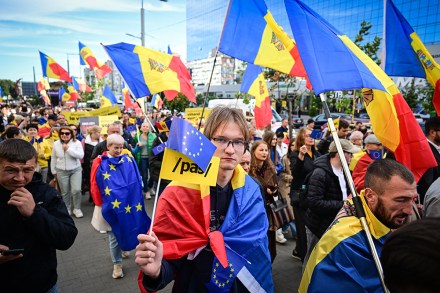
The European Union, guardian and champion of democracy, rightly takes a dim view when ruling parties ban their opponents, refuse to open polling stations in areas likely to vote against them, censor opposition news channels and allow a large staff of foreign election monitors to police social media in the run-up. If Serbia, say, or Georgia tried systematic election rigging of this kind, Brussels would be the first to call foul and disregard the result as illegitimate. But when it’s the EU that’s running the interference, as in Moldova this week, the rules are apparently quite different. This week the pro-EU party of Maia Sandu, Moldova’s President and a former

Labour goes on the Farage offensive

12 min listen

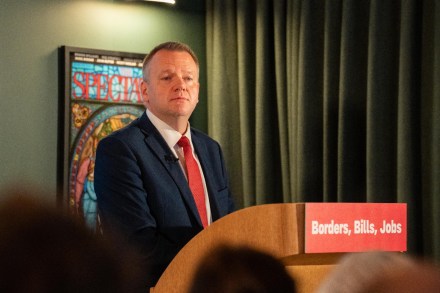
As James Heale writes online for the Spectator today, ‘two issues continue to plague the government’: how best to attack Nigel Farage. and how to frame an incrementalist approach to policy ‘when the national mood favours radical change’. Nick Thomas-Symonds, the Cabinet Office minister responsible for UK-EU relations, attempted to tackle both today as he came to the Spectator to set out Labour’s Europe strategy. Labour are pursuing ‘pragmatic alignment’ – what they argue is greater co-operation when beneficial to the British interest. But what does this mean? James joins Michael Simmons on the podcast to unpack the speech. And, on a day when Reform have claimed another defector (this

Michael Gove on Starmer vs the workers: why Labour needs to learn to love Brexit

20 min listen

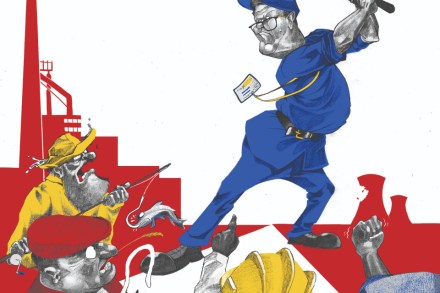
Spectator editor Michael Gove joins Natasha Feroze to talk about his cover article this week: ‘Starmer vs the workers’, the real Brexit betrayal. Michael puts forward his arguments for why Labour should learn to love Brexit, should take back control to protect British jobs and industries, and could use Brexit as an opportunity to harness AI and science & technology. Plus, has the UK-EU deal brought back ‘happy memories’ for the former prominent Brexiteer? Produced by Natasha Feroze and Patrick Gibbons.

What has reaction been to the UK-EU deal?

18 min listen

Fallout continues from yesterday’s summit and the announcement of a deal between the UK and EU – or is it fair to call it ‘fallout’ as, despite criticism over the deal from Nigel Farage and Kemi Badenoch, has the public got Brexit fatigue?  James Heale and Michael Simmons join Patrick Gibbons to talk about the reaction to the deal. Fisheries has taken up most discussion but Michael points out a lesser talked about commitment to energy policy. And, with the government keen to talk about it in tandem with recent deals with India and the US – and Gulf states soon, according to Rachel Reeves this morning – what’s the

EU-UK reset: ‘brexit betrayal’?

15 min listen

As EU leaders arrive in London for a summit hosted by Keir Starmer, there has been an announcement that the UK and EU have reached a deal. The UK has extended its agreement on EU fishing boats in British waters, while in return fewer checks on British food exports are expected. There have also been discussions about a defence pact, reduced tuition fees for EU students and access to electronic passport gates for British holiday-makers.  While we await further details, deputy political editor James Heale and director of the Centre for European Reform Charles Grant join Lucy Dunn to unpack what we know so far. Will the deal be an

Is Poland’s revival a mirage?

In 1988, when I was six months old, my British father and Polish mother took me to meet my family in Krakow. My parents brought an extra suitcase filled with disposable nappies because such luxuries weren’t sold on the other side of the Iron Curtain. At the time, there was only one shop in Krakow that sold foreign goods, but my father was pleased to discover that a gallon of whisky could be bought for only $8. He was a member of the House of Lords and, I’m told, we were trailed for our entire stay. Everywhere we went, a large Polski Fiat 125 driven by a suited man followed

Europe should listen to America’s uncomfortable truths

The response in Europe to J.D Vance’s speech at the Munich Security Conference last Friday was one of predictable outrage. Media outlets described it as a ‘rant’ or a ‘sermon’, and politicians and diplomats queued up to criticise the vice-president of America. Kaja Kallas, the EU’s High Representative for Foreign Affairs and Security Policy, accused the Trump administration of ‘try[ing] to pick a fight with us, and we don’t want to a pick a fight with our friends’. Apparently, there were ‘dry laughs’ from some of the audience when Vance talked about ‘shared’ values. European diplomats have laughed at Trump before, notably in 2018 at the UN General Assembly, when

Trump vs Europe

15 min listen

Trump’s tariff spree continues… After making good on his election promise to opt for another round of tariffs – a 25 per cent tax on imports from Canada and Mexico and a 10 per cent levy on Chinese goods – Trump has now turned his attention to Europe. In an interview with the BBC, the president said that while the UK would likely avoid tariffs, the EU might not be so lucky and described the trade relationship with Europe as an ‘atrocity’. This comes on the day that Keir Starmer is in Brussels and will likely be trying to smooth the road ahead of a post-Brexit ‘reset’. Can Labour continue to

Calin Georgescu has exposed the rotten European Union

To the great surprise of very few the European Court of Human Rights this week rejected an appeal by Calin Georgescu to overturn last month’s annulment of Romania’s presidential election. The Eurosceptic Georgescu had won the first round of November’s election, but days before the second round Romania’s Constitutional Court cancelled the result because of alleged Russian interference on social media. In its decision, the ECHR said that Georgescu’s appeal fell outside its jurisdiction. That was the bad news for Georgescu. The good news was the publication of a poll this week that puts him firmly in front to win the election when it is re-run in May. He is

The Irish laugh in the face of EU regulations

Our house was suddenly shrouded in a thick, grey mass of cloud and it felt like a sea fog had descended. The Irish could not give a damn for rules and regs and no one is going to tell them what they can set fire to To some extent it had, but the fog grew in density until it wasn’t feasible that this was coming off the sea. The builder boyfriend came in from the stable yard and reported an acrid smell in the rain. This is what happens when fog descends. People burn their most difficult and illegal waste when visibility is low. ‘It’s the plasticky dew,’ said the

Would Brexit voters really accept the return of freedom of movement?

19 min listen

New research this week suggested that a majority of Brexit voters would accept the return of freedom of movement in exchange for access to the EU single market. The poll, conducted by the European Council on Foreign Relations (ECFR), found that 54% of Brexit voters – and 68% of all respondents – would accept this. Facing their own changing domestic concerns, how close can the UK and EU governments really get? Could Defence hold the key for collaboration? And how much is this driven by a more volatile geopolitical landscape ahead of Trump’s return as US president? James Heale speaks to Anand Menon, director of the think-tank UK in a

Can the EU fend off the threat of Chinese electric cars?

30 min listen

The EU and China are in the foothills of a trade war. After a seven month investigation, the European Commission has announced tariffs of up to 38 per cent on electric cars from China, citing that they’ve found ‘subsidies in every part of the supply chain’. In retaliation, China has ramped up its own investigations into imports from the EU. This, of course, comes after the US has announced its own 100 per cent tariff on Chinese electric cars. Listeners will know that Chinese electric cars are becoming ever more competitive. In just three years, the value of the EU’s imports of Chinese EVs have surged tenfold – from $1.6