Ernest hemingway

The old man and the documentary

From our US edition

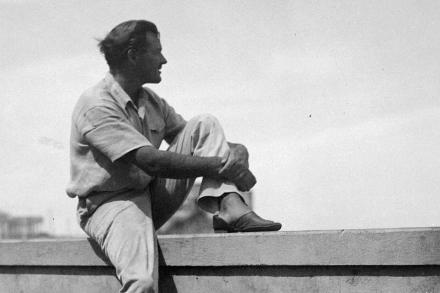
If I had been told that Ken Burns’s next PBS extravaganza would be a documentary film about a 20th-century American novelist and, even more improbably, had been asked to guess his (or more likely her) identity, my last choice might well have been Ernest Hemingway. This is partly because there seem to be so many more eligible Burns subjects (Richard Wright, Willa Cather, F. Scott Fitzgerald, Toni Morrison) but largely because Hemingway, man and novelist, seems especially uncongenial to the Burns sensibility: his fiction doesn’t tell us very much about America; he remains in bad odor in women’s studies departments; his Great White Hunter persona must surely spell a painful three episodes for ‘viewers like you’. First, the bad news.

hemingway

Remembering one of the last great Americans

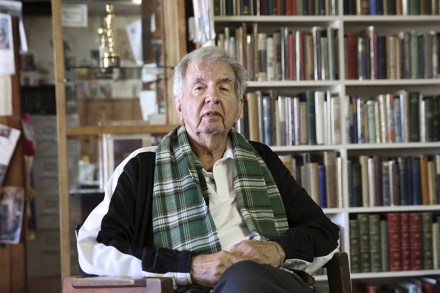
It takes a very good writer to produce prose that provokes an emotional response in a reader, even when it deals with events long past with which he or she has no connection. It also takes a good writer to subtly tip off the reader about a change in the character of the American people, one that has seen toughness replaced by weakness. Talleyrand once remarked that no one who had been born after the French Revolution could know how sweet life could be. Larry McMurtry wrote about life in small American towns in the 1950s and the great American West in the late 19th century, and his writing evokes feelings that those born after those dates can relate to. Most of his heroes, like those of Hemingway, were ultimately defeated.

Mother Nature is giving us her middle finger

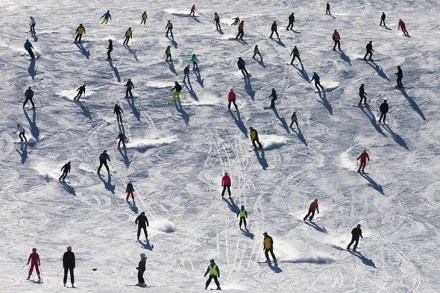
Gstaad I have never experienced such a long, continuous blizzard, and I’ve been coming here for 63 years. The ski lifts are closed, as are the hotels, and it’s been coming down for a week non-stop. My Portuguese handyman Fernando now lives on his snow plough, clearing the private road that leads to the house, as useless a task as trying to bail out the Titanic. By now I should be in London, enjoying my new rented house in Glebe Place. Instead I’m housebound and snowed in, a modern Prisoner of Zenda without the Ruritanian uniforms. My only worries are the possibility of an avalanche, and my son’s insistence that he ski every day. Nowadays, that boy simply ignores anything I say and drives away muttering about old people being scared.

The healing power of sweat

Laikipia In one of Kenya farmer Karen Blixen’s short stories, a character says: ‘I know of a cure for everything: salt water… Sweat, or tears, or the salt sea’. After two months on the Indian Ocean shore since Mum left us, I set off on the two-day drive back to the farm. At dawn in Tsavo I had breakfast watching a young leopard, and passed a herd of 400 buffalo, many elephant, kudu, giraffe and buck. In four hours on the back roads I saw just one car. I reached the Nairobi highway, overtook scores of juggernauts and then diverted along the track following the Selengei river, where Ernest Hemingway used to hunt, passing very few cars until I arrived in town towards evening.

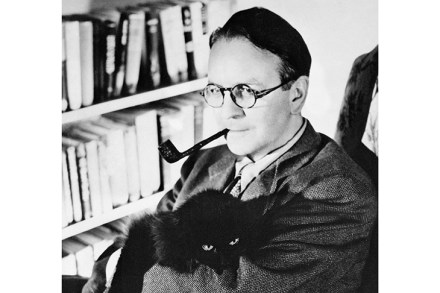
Raymond Chandler and his contrarian cat Taki

Gstaad That’s all we needed in a great year: copyright has expired on The Great Gatsby. Some Fitzgerald wannabe has already cashed in with a prequel, and I’m certain the worst is yet to come. I suppose that the insatiable hunger for fame and celebrity to impress a shallow and scatterbrained blonde across the water made Gatsby a very tragic hero. But he was not as tragic as Hemingway’s Jake Barnes, who had his you-know-what blown off in the war and could only flirt with Lady Brett from afar. Or Scott Fitzgerald’s other tragic hero, Dick Diver, whose talent wasted away while he amused his rich wife’s friends. At least the Gatsby prequel has, I am told, been written by a very good writer who can create atmosphere.

The fakery of Martha Gellhorn

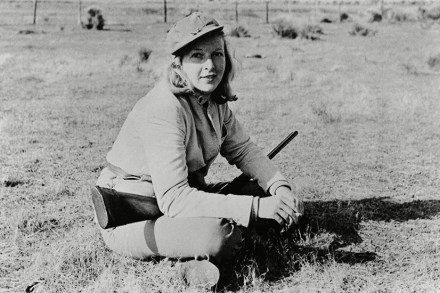
Gstaad Martha Gellhorn was a long-legged blonde American writer and journalist who became Papa Hemingway’s third and penultimate wife. She got her start when H.G. Wells, then nearly 70, fell for her rather badly, advised her on her writing, and paid her a small retainer to keep him up to date on American trends. She was 27 at the time. Wells had met Martha at the White House during the Franklin Roosevelt years before the war, Eleanor having been a friend of Martha’s mother, who was known around St Louis for having a mad crush on the First Lady. Yes, dear readers, sex existed even back then, but people didn’t tweet about it, they just did it.

How the International Brigades were ‘thrown into the heart of the fire’

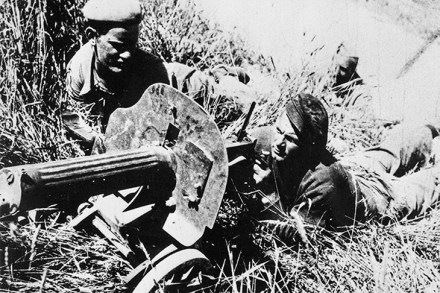
During the Spanish civil war of 1936 to 1939, 35,000 men and women from around the world volunteered to fight against the forces of General Franco and his supporters from Fascist Italy and Nazi Germany. When the volunteers were withdrawn in September 1938 after two years of bitter fighting, more than a fifth of them had been killed and very few emerged unscathed. Conflicts are by definition binary affairs, so it’s inevitable that bitterly contrasting views of the role of the International Brigades have existed ever since the civil war itself. For the volunteers and their supporters, their sacrifices were a ‘heroic example of democracy’s solidarity and universality’.

There’s no sign of apocalypse in East Finchley – yet

I was mansplaining to my wife earlier this week about why we ought to be very, very concerned by the coronavirus. It wasn’t the prospect of one person in 50 dying, I said — or not just that. It was more, I said sagely, the knock-on effects. You know, if everyone self-isolates, you’re only about two missed Ocado deliveries away from starvation, looting, cannibalism etc. ‘You’re always catastrophising,’ said my wife. ‘You were like this about Trump. And Brexit. I think it’s because you spend too much time reading the news.’ ‘But Trump is very bad,’ I said, because he is. ‘He could start a war.’ ‘He hasn’t started a war.