Ernest hemingway

‘A lost generation’: My Year in Paris with Gertrude Stein, by Deborah Levy, reviewed

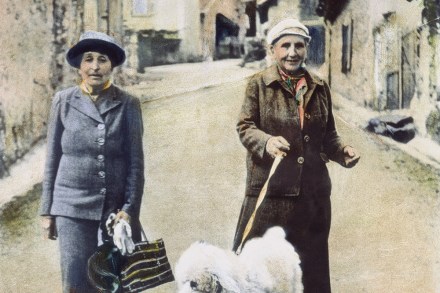
In a 2013 interview, Deborah Levy said: ‘Modernism is the soft typewriter of the womb that made me.’ But what made Modernism? My Year in Paris with Gertrude Stein is Levy’s attempt to answer the question. In this novel, an unnamed narrator from London moves to Paris to write an ‘essay’ on Stein, the American patron of the avant-garde. There she meets Eva, an enigmatic illustrator whose blue eyes make everyone go ‘Awww’, and Fanny, a fashionable finance consultant with a thriving sex life. As the three search for Eva’s missing cat (originally called It and renamed Bob by Fanny), the narrator chases after Stein’s many trails but struggles to bring her into focus.

Frederic Prokosch – the man who seemed to know everyone

One day Frederic Prokosch wrote a novel. He was 27 years old, living with his parents in New Haven, Connecticut, and desperate to be published. Leafing through an old atlas, he had visions of Lebanon and Syria, of the apricot trees of Damascus, the pilgrims travelling from Transcaucasia, and the Orontes River flowing among the rocks. His visions grew more vivid and the voices clearer: ‘I leaned forward in my chair and started to write as though mesmerised.’ The resultant book, The Asiatics, was an immediate success, praised by the likes of Thomas Mann, Albert Camus and André Gide. Others, however, were less sure. How could one write about Asia without ever having been there? Prokosch, it seemed, had quite the imagination.

The mystifying cult status of Gertrude Stein

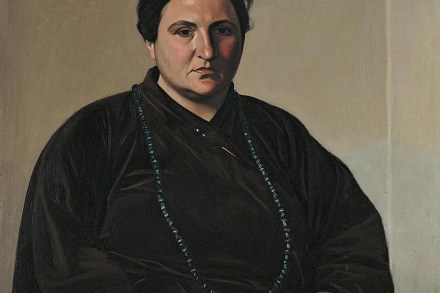
To most people, the salient qualities of Gertrude Stein are unreadability combined with monumental self-belief. This is the woman who once remarked that ‘the Jews have produced only three original geniuses – Christ, Spinoza and myself’. Of the reading aloud of her works, Harold Acton complained: ‘It was difficult not to fall into a trance.’ Even if you are as good a writer as Francesca Wade, it is still difficult to avoid the influence of what she herself calls Stein’s ‘haze of words’. So the first half of this impressively researched biography is cerebral rather than colourful.

Bimini the beautiful

From our US edition

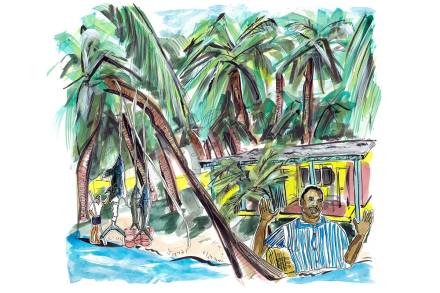
Give me a golf cart on an obscure small island and I am ecstatic. That’s how I felt on Christmas Eve rumbling around North Bimini, one of thirty inhabited islands in the Bahamas, with my wife and teenage sons on a balmy day full of benign clouds and serendipitous discoveries. I’m a traveler who is blessed and cursed with hyper-curiosity. Places with too much to see frustrate me because no matter how long I stay, I’m inevitably nagged by a sense that I missed something. I love cruises but port days are a particular tease because you’re always racing against the clock to get back to the ship. So for me, Bimini, with zero stop lights, no fast food and nearly as many golf carts as its 2,000 inhabitants is almost perfect.

bimini

Is Paris the world’s most bookish city?

From our US edition

After I ventured to New York in May 2024, bound for a discerning literary journey round the city’s bookshops, libraries and hotels, I received some lively and constructive feedback from Spectator readers. Many, thankfully, agreed with my arguments about its bookish charms, but a consistent theme in the comments I received was, “How can you claim that New York is the quintessential literary city? Have you forgotten Paris?” To which my reply was reasonably simple: “What about Oxford, London, Rome, Edinburgh, Dublin, Santiago or San Francisco?” All of them hugely distinguished citadels of the written word, both present and historic alike. Yet I felt uneasy at my response.

Paris

A sip of the Vieux Carré

From our US edition

It’s 1951 and the Hotel Monteleone burns bright, a gilded island of light and liquor adrift in the New Orleans dark. Inside, the air is thick with the sweet tang of cigar smoke and the murmurs of polished conversation. Over in the Swan Room, the trumpets blare, their brassy notes cutting through the gentle chatter, their absence filled with the lively, gravelly voice of Louis Prima. The crowd sways in rhythm, caught between the pulse of jazz and the flicker of chandelier light. Outside, the French Quarter is still alive.

Vieux Carré

The dauntless spirit of Richard Halliburton

From our US edition

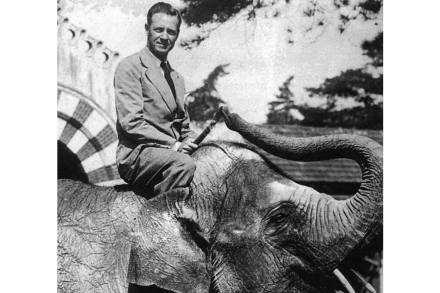
A sailor; a conqueror of the most treacherous mountain peaks; a man who wades defiantly under the stars of the Far East sky; a dashing writer who pursues his mark as a hunter on safari; an explorer who rides elephants through the Alps. This is not a collection of young men, newly emancipated by the end of the Great War and a new era of global empires. It is the nearly improbable life of one man, Richard Halliburton, whose swashbuckling existence was inspired by everyone from Daniel Defoe and Rupert Brooke to Odysseus. Halliburton was the self-proclaimed protagonist of his own heroic epic. He decided in the days before his graduation from Princeton in spring 1921 that he would forgo a life of tedious expectations and “let those who wish have their respectability.

Halliburton

Should we judge a work by the character of its creator?

‘Most of my heroes are monsters, unfortunately,’ Joni Mitchell once said, ‘and they are men.’ The singer-songwriter was able to detach the maker from the made. Should we do the same? Is it ethical? Even possible? These are the questions Claire Dederer deftly considers in Monsters, which puzzles through the problem of what we ought to do about great art by bad men. Ideally, nothing. Early on in her quest, Dederer longs for someone to invent an online calculator: The user would enter the name of an artist, whereupon the calculator would assess the heinousness of the crime versus the greatness of the art and spit out a verdict: you could or could not consume the work of this artist. Alas, said calculator has yet to be programmed, so it’s down to her to do the maths.

The death of the Western literary tradition

From our US edition

A regular reader of Le Figaro for some years, I have been noting the frequency with which the editors print articles relating to the Académie française, founded by Cardinal Richelieu in 1634 for the purpose of acting as the protector and patron of the French language, fixing its usage and giving it exact rules to make it competent to deal clearly and elegantly with the arts and sciences. It was decreed that the academy should consist of precisely forty members, and that upon the death of any one of them the candidate to replace him should pay court to the remaining thirty-nine to be selected to fill his numbered seat. The sitting forty were known as “les Immortels.

literary

Does Joe Biden have CTE from rugby?

From our US edition

President Biden is being an American tourist in Ireland this week. In comments to the Irish Parliament in Dublin today, the president touted the merits of rugby, a sport in which Ireland is currently the top-ranked side in the world, over the American brand of football. "I'd rather have my children playing rugby now for health reasons than I would have them playing football," the president said. "Fewer people get hurt playing rugby." Biden is a rugby enthusiast, having played while at college at Syracuse. He made a point of video-calling the Ireland men's team after their historic defeat of New Zealand in Chicago in 2021. (In the video, Biden's brother James is sporting an Ireland hat and coat.

joe biden rugby concussion

Did Ernest Hemingway have CTE?

From our US edition

It was July 2, 1961. Ernest Hemingway was three weeks shy of his sixty-second birthday. He had been living comfortably in a cabin in Ketchum, Idaho, with his fourth wife, Mary. He liked it there. He liked the hunting and fishing and the clean air. Still he had a plan. That morning he padded to the basement in his pajamas and bathrobe. He unlocked the gun closet. He selected a favorite shotgun, a double-barreled twelve-gauge. He put a shell in each barrel. He put the muzzle of the gun in his mouth. Why pull the trigger now, after so many years of defying death? Eight months earlier he had checked into the Mayo Clinic as “George Saviers,” the name of his elderly doctor in Ketchum.

hemingway

Ernest Hemingway’s Idaho playground

From our US edition

In Ketchum, Idaho, heart of the skiing mecca of Sun Valley, my wife and I found ourselves on Picabo Street — the avenue leading to the Warm Springs ski lodge, that is, not the 1998 Olympic gold medalist in the women’s supergiant slalom. We walked past a “private residence club” denominated The Hemingways, which called to mind the author’s complaint that Sun Valley boosters were using him for public relations purposes. “I love Idaho,” Hemingway wrote Peter Viertel in 1948, but “when they are having pictures painted of you and hung in real estate promotion offices it is past time to blow.

ketchum

Spain’s caminos come calling

From our US edition

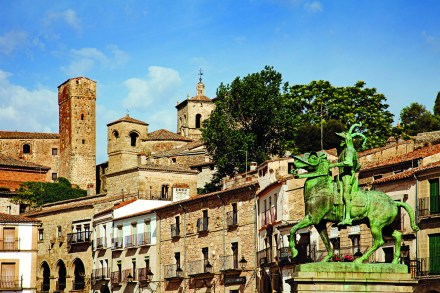
I haven’t come close to dying of thirst in Texas, where I live. In Spain’s little-known Extremadura, however, I found the odds increasing. Wandering through wide-open scrubland in hundred-degree temperatures, my only company was lots of Spanish bulls, unfazed by the blistering heat as I sweated my heart out. The population of Extremadura has been sparse since the Muslim occupation, but there are plenty of cattle. As I headed north from Seville on the Via de la Plata, the latest leg of my extended Camino de Santiago pilgrimage crisscrossing the Iberian Peninsula, Extremadura struck me as remarkably like Texas ranching country.

spain

Rupert Murdoch has nothing to fear from me

Harvard man Russell Seitz has sent me an extraordinary present as an object lesson in ‘what a magazine should be in case you start another one’. The paper has yellowed and is dog-eared, pages are falling out and the print is faint. But the Transatlantic Review, Vol. 1, No. 1, dated January 1924, is a joy to behold. Mind you, we were already almost 100 years old when Ford Madox Ford first edited TTR in Paris. And that’s what I told my friend Russell. Anyone who writes for or reads The Spectator is not likely to be impressed by other publications, but this does not include a posturing peacock from the BBC who recently spouted gibberish learned at university diversity courses at a Speccie reader.

In the footsteps of Hemingway

‘They were living at le Grau du Roi then and the hotel was on a canal that ran from the walled city of Aigues Mortes straight down to the sea.’ So begins Hemingway’s posthumously published transgender-themed novel The Garden of Eden. He began writing it in 1946 and kept at it intermittently through his long mental and physical decline. Yet it’s a marvellous novel, in parts as vivid as Hemingway’s miraculous early stuff, which, once read, susceptible people confuse with their own lived experience. In 1927 Hemingway and his second wife Pauline came to Grau-du-Roi on the Camargue coast for their honeymoon and the first three chapters of the novel are clearly based on that visit.

The ultimate human futility of sports

From our US edition

If it were true that civilization progresses inexorably according to the laws of some teleological principle, public — in modern times, professional and commercialized — sports would not have survived Classical Greece and the Roman Empire, thus sparing the modern world such obscene extravagances as the Super Bowl in the United States, the World Cup in Europe and the international Olympic Games. Mass man at play in his leisure hours is not a pleasant and encouraging sight in any circumstances, but gathered with his fellows in massive sports stadia one views him at his absolute worst.

sports

The books that made me who I am

Gstaad This is my last week in the Alps and I’m trying to get it all in – skiing, cross-country, kickboxing, even some nature walking along a stream. (I did my last downhill run with Geoffrey Moore, one that ended in a collision with a child at the bottom of the mountain, and I’m thinking of calling it quits on the downhill-skiing front.) The trouble with athletes is that we early on enact the destiny to which we are all subject, an early death. The death of sports talent is a subtle process. The eyes go first, then the step falters. Eventually you feel like an old man who is not in the same league as his opponent. I was lucky to get old late – in sport, that is.

For whom the bell tolls

From our US edition

Close your eyes and imagine you’re married to Ernest Hemingway. Now, imagine it twice as bad, and you’ll be approaching the life story of Mary Welsh Hemingway. Hemingway was married four times: to Hadley Richardson in 1921, to Pauline Pfeiffer in 1927, to Martha Gellhorn in 1940 and to Mary Welsh in 1946. In every swap, he divorced his current wife for her successor. Mary wrote her own memoir, How It Was, after Hemingway’s death in 1961. Now Timothy Christian has written a well-researched and intensely detailed look at the life of a fascinating woman who became the steward of Hemingway’s literary estate and reputation long before he died. Mary Welsh was born in 1908 and raised in rural Minnesota.

hemingway

Joan Didion got inside all of us

From our US edition

When asked what they knew about Joan Didion, a not insignificant number of people might mention her famous essay "Slouching Towards Bethlehem." It is the eponymous essay of Didion’s 1968 collection, the first non-fiction collection of her career. The essay ends with the oft-repeated description of Susan, a five-year-old in the Haight-Ashbury district of San Francisco. She wants a bicycle for Christmas, likes ice cream, Coca-Cola, and the beach — and gets high on acid. Didion describes the domestic setup, and her own discomfort: she "falter[s] at the key words" when asking her if she has other friends on drugs. Didion immortalized the scene of Sixties freedom gone wrong; there is no utopia here. Other Didion fans might be drawn to her essay "Goodbye to All That.

Thoughtful and impeccable: Ken Burns’s Hemingway reviewed

Ken Burns made his name in 1990 with The Civil War, the justly celebrated 11-and-a-half-hour documentary series that gave America’s proudly niche PBS channel the biggest ratings in its history. Since then, he’s tackled several other big American subjects like jazz, Prohibition and Vietnam; and all without ever changing his style. In contrast to, say, Adam Curtis (another ambitious film-maker whose methods have remained unchanged for 30 years), Burns’s documentaries take an almost defiantly considered approach, forgoing anything resembling self-regarding flashiness in favour of such old-school techniques as knowledgeable talking heads, careful chronology and straightforwardly appropriate visuals.