Equality

Did Plato invent women’s lib?

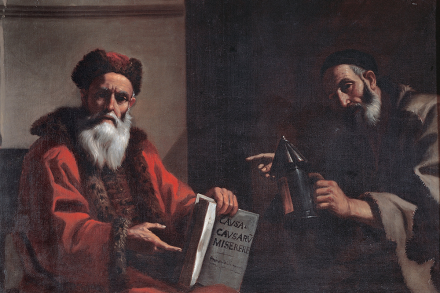
One could go on endlessly about what the ancients have done for us, but one of the most interesting things is that Plato could be said to have invented women’s lib, though it seems to have taken 2,500 years to catch on. Since most ancient states were at war much of the time, putting the male population especially at risk, women had to commit to the production line as soon as possible if the state were to survive. But Socrates, in Plato’s dialogue The Republic, portrays a utopia in which women shared the same status as men. The ruling class of this state are called Guardians and Plato likens them to dogs hunting and protecting the flock, an activity in which female dogs engage just as much as male dogs (though the males are stronger).

Culture wars, identity politics and free speech: Rod Liddle and Peter Tatchell in conversation

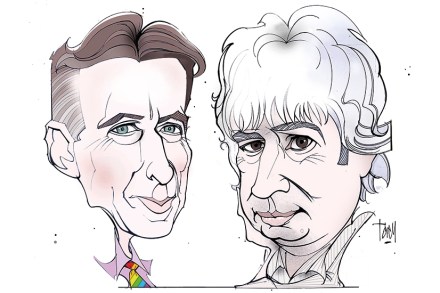
ROD LIDDLE: I am honoured to be speaking to you, Peter, on this anniversary of 50 years of causing havoc with the British establishment. You’re one of very few political heroes of mine. I know very few people in the country who are as committed to what they believe in as you. Now a film is being made about your life, isn’t it? It’s going to be on Netflix and it’s called Hating Peter Tatchell, which a lot of people have done over the years. How did that come about? PETER TATCHELL: The film maker, Chris Amos, approached me several years ago and said, ‘No one has ever made a film about you and about your 50-plus years of campaigning, I want to do it.’ So, I thought, well why not?

Hard-won gay rights will be easily lost

In the Palace of Westminster a fortnight ago, I spoke at a reception celebrating the 50th anniversary of the Tory gay rights movement now called LGBT+ Conservatives. And last weekend I read a book to be published on 9 October. It turns out that its author and I are saying the same thing. Professor Ronan McCrea has chosen the title The End of the Gay Rights Revolution: How Hubris and Overreach Threaten Gay Freedom. My speech bore no such title, but here’s more or less what I said. I began by recalling, for a young audience, the dismal beginnings of what was to prove a cultural revolution. ‘I will never forget the sniggers and winces at our then name: the Conservative Group for Homosexual Equality.

End of the rainbow: Pride’s fall can’t come soon enough

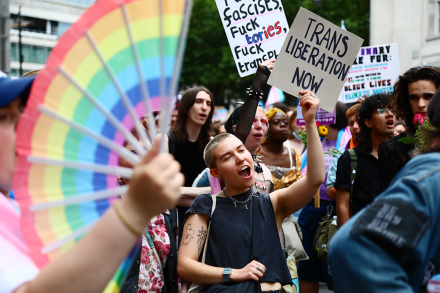
Is Pride flopping? This parti-coloured celebration of all things LGBTQIA+ started half a century ago as an afternoon’s little march for lesbians and gay men. Then it became a day, then a week, then a month, and now it spreads throughout the summer, accompanied by all manner of feast days and ‘visibility’ events. Its expansion coincided with the addition of all the letters after the first three. This is when it became a jamboree not only of boring homosexuality – very old hat – but just about anything else that its purveyors consider unconventional, ranging from wearing wigs to not fancying any kind of sex at all. Every peccadillo was deemed worthy of a flag and a float. But the wheels finally seem to be coming off the Pride clown car. What was mushrooming is now shrivelling.

The next front in the gender wars

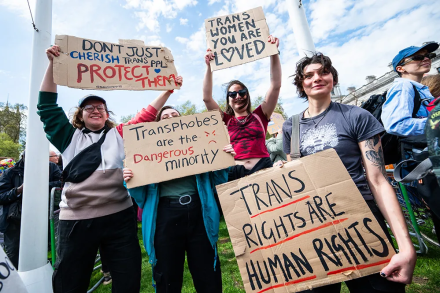
April’s Supreme Court judgment ought to have been the final nail in the coffin for transgender ideology. The belief that you can pick your gender, like you would a hat in the morning, seemed to have ended. The highest court unanimously confirmed that for the purposes of the Equality Act, sex is biological – immutable, material and not up for ideological reinterpretation. Yet if the past decade has taught us anything, it is that the gender industry doesn’t give up; it adapts. Numerous organisations, many taxpayer-funded, now exist for the sole purpose of pushing back against any resistance to trans orthodoxy. Defeat is merely a fundraising opportunity. The semantic contortions have already begun.

Will France’s school uniform experiment foster égalité?

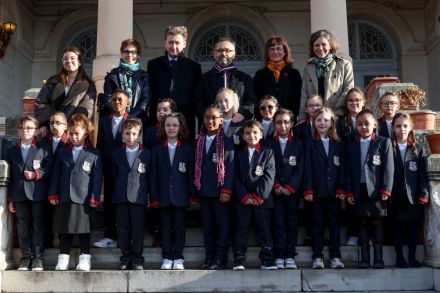
As the new school year begins in France, pupils across the country are putting on school uniforms for the first time in decades. In a pilot program spearheaded by the government, approximately one hundred schools across the country are testing whether uniforms can reduce bullying, improve classroom tranquillity, and foster equality. While some see uniforms as common sense, others – particularly on the political left –dismiss them as a superficial fix to deep-rooted social issues. The schools participating in the experiment are primarily located in right-leaning towns, where support for the initiative has been strongest, while more left-leaning areas are resisting uniforms. Brigitte Macron, herself a former schoolteacher, is said to be strongly in favour of uniforms.

Who will protect me?

Police are hunting a ‘hooded figure’ who sprayed ‘no whites’ on the wall of a primary school in Birmingham. The coppers presumably have racial hatred in mind, but there could be a much more innocent explanation for that which otherwise would be simply a case of vandalism – or even one of laudable graffiti art which may, one day, sell for millions of pounds to a rich idiot devoid of discernment. The school is located in the Alum Rock area of the city, a ward which consists almost entirely of ‘BAME’ people, according to a city council factsheet. So it may be that the hooded figure with the spray can was simply stating a fact, much as perhaps you are inclined to do when looking at television adverts or trailers for new BBC drama series.

Was there ever a time of equality in human society?

Origin stories have always helped humans gain a moral compass. Locked in a tight embrace, the Maori deities Rangi and Papa are separated by their enveloped children, creating the distant father sky and nurturing Mother Earth, bringing light to the world. Mayan gods fashion man from maize after destroying earlier clay and wood versions, who are seen to have no soul. Adam and Eve eat from the Tree of Life but illicitly also from the Tree of Knowledge. One of the more touted modern human origin stories, ostensibly based on evolutionary science, speaks of a natural inequality between violent and promiscuous men and caring and faithful women. Having evolved to produce more of their sort, aggressive, lustful males hunted for game and exchanged meat for sex with coy female partners.

The ‘professional liar’ at the heart of Prince Harry’s hacking claim

In the summer of 2019, Prince Harry and Meghan Markle were visiting their friends Elton John and David Furnish in the south of France when they were introduced to the barrister David Sherborne. This ‘chance’ meeting would be a massive coup for the man known as the ‘barrister to the stars’ (he represented Coleen Rooney in the Wagatha Christie trial and Johnny Depp against Amber Heard, among many others. Many years ago, he also acted for Harry’s mother, Princess Diana). The encounter led to Prince Harry becoming the star witness against three newspaper groups. ‘It was partially down to Elton and David,’ Harry later wrote in Spare.

Trump’s second act: he can still win, in spite of everything

Everyone knows F. Scott Fitzgerald’s famous line from the end of his unfinished novel The Last Tycoon: ‘There are no second acts in American lives.’ But Fitzgerald wasn’t talking about second chances. He meant that, unlike in a traditional play – where Act I presents a problem, Act II reveals the complications and Act III resolves it all – Americans want to skip Act II and go straight to the resolution. The more I think about it, the more I think the Joe Biden presidency is Act II – and Donald Trump is not the last tycoon. He’s Act III. He’s the next president. The campaign of lawfare against him has already begun to backfire Democratic strategists think otherwise.

I’m in trouble with the police

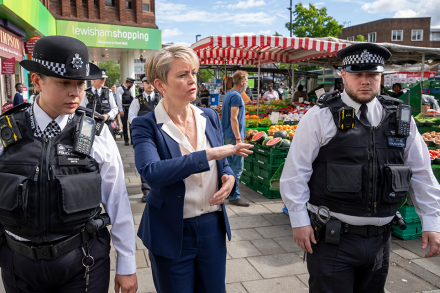
There is almost nothing I like more than a running battle. As my friend Julie Burchill also says, when a really good row comes along it gives you this warm, cosy feeling inside. So it was not with disappointment that I received a noteworthy response to my column of last week. For those who were sleeping on the job (or only read Rod’s column), I made some pertinent comments about community relations in the Leicestershire area. Community relations, you may recall, have essentially broken down, with Hindu and Muslim gangs facing off in the city and some of the surrounding area.

Rupa Huq and the politics of prejudice

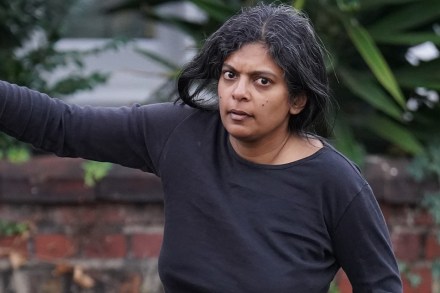
The Labour party’s contribution to the national debate this week has included the idea that someone can be ‘superficially’ black. Rupa Huq, a Labour MP, used this phrase to describe Chancellor Kwasi Kwarteng. ‘If you hear him on the Today programme,’ she said, ‘you wouldn’t know he’s black.’ It was a daft yet revealing comment. In her moment of unintended (and perhaps career-destroying) candour, Huq exposed a prejudice that remains pervasive in British politics. Any such suggestion is, of course, racist, and Labour could not deny it. Huq has been suspended. But she was articulating an attitude that has become widespread. She probably thought that her comments were uncontroversial for the audience at a Labour party conference debate.

The rise of the pluto-meritocracy

Meritocracy, a word coined by my father, gets a bad press these days. Two recent books — The Meritocracy Trap (2019) by Daniel Markovits and The Tyranny of Merit (2020) by Michael Sandel — hold it responsible for many of America’s ills, and in some settings saying you believe the most qualified person should get the job is classified as a ‘micro-aggression’ because it ignores the role that race plays in determining a person’s life chances. It’s one of those progressive doctrines that’s fallen out of favour. So kudos to Adrian Wooldridge, the political editor of the Economist, for producing a full-throated defence of the principle.

Selling the family home to pay for care is not an injustice

The sound of the well-off grumbling about their finances is always an unattractive one. But there is one gripe that has become particularly powerful, filling the airwaves and shaping public policy. This is the persistent, ever louder complaint from many households that they are required to sell the family home to pay the costs of care for a close relative. It is a practice widely seen as ‘a scandal’, where the state seizes private property because of its own failure to create a properly funded care system that meets the needs of the elderly. The flames of grievance are stoked by the press, pressure groups and politicians, who promote the belief that all social care should be free, or at least massively subsidised.

Letters: The veiled elitism of social mobility

Levelling up Sir: In making the case for social mobility, Lee Cain unwittingly endorses the classism he hopes to fight (‘Left behind’, 24 April). As the historian Christopher Lasch has argued, the canard of social mobility merely replaces ‘an aristocracy of wealth with an aristocracy of talent’. Far from being egalitarian, the concept is inherently elitist: it implies moving up, out or away from a class, town or profession condemned as undesirable. And by paying lip service to ‘meritocracy’ it becomes a self-serving justification for elites’ power and privilege — if they had the ‘ability and ambition’ to rise to the top, it must only be indolent dullards who are left behind.

Westminster and the truth about the class ceiling

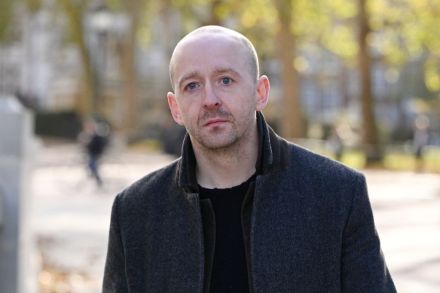
I come from the Lancastrian town of Ormskirk, which, though pretty, provided little in the way of opportunity or aspiration. No one in our family had been to university. I qualified for free school meals. Expectations for my future were low. But I was lucky. I had great mentors and ended up in Downing Street. I also worked for a Prime Minister who believes in social mobility and put ‘levelling up’ at the very centre of his premiership. This was the reason I came into politics too. Boris Johnson understands that the need for social mobility is now more urgent than ever, as we emerge from lockdown. While the food poverty debate raged last summer, and the government found itself losing a PR war with the footballer Marcus Rashford, I attended a cabinet meeting.

The problem with ‘role models’

Watching the funeral of the Duke of Edinburgh at the weekend — that Land Rover, that lack of eulogy — I felt an alien emotion steal over me. Shortly after the last blast of the bagpipes faded away, I realised what it was: I’d like to be like that. Amusingly, the only person this working-class radical feminist has ever felt this emotion towards was a reactionary prince. Somehow, the very incongruity made perfect sense; I can’t think of anything drearier than having a ‘role model’ who was in any way like me. There are quite a few modern phrases which annoy the heck out of me. ‘Reaching out’ should only be used by a member of the Four Tops, while ‘Going forward’ should only be used of cars.

The race report critics are guilty of gaslighting

The Sewell Report on race and ethnic disparities is courageous, thoughtful and measured. Its relative optimism has triggered a torrent of bile from those personally or professionally wedded to the idea that Britain is a systemically racist society. They accuse the report of disregarding what is fashionably called ‘lived experience’ — in other words, anecdotal evidence and subjective impression. Its use of carefully considered objective data, the critics allege, devalues the lived experience of ethnic minorities. Lived experience has validity, but — by definition — only for those who have lived it. It proves nothing beyond itself, and certainly nothing systemic.

An open letter to my golf club

Dear Mike, Thank you for asking me, along with all the other members, whether I would like to become part of the golf club’s new ‘Equality — Diversity — Inclusion (EDI) Working Group’. The short answer is I would rather spend a couple of hours in the mud, picking up old beer bottles and condoms out of the river which winds though the course, than sit on such a ‘working group’. It is difficult to describe -exactly why I think this venture is a bad idea but I will have a go. Let’s take the words of the title of the new committee. What kind of ‘equality’ is it going to work at? Obviously the club cannot attempt to make all members financially equal.

Confessions of a lifelong bitch

As I watched the Duchess of Sussex give her extended acceptance speech for Best Performance As A Victim — played as a cross between Bambi and Beth from Little Women — my overwhelming feeling was of disappointment. Readers may recall that I once wrote long and loopy love letters to her in this very magazine, embarrassing in their unctuousness — ‘Meghan Markle has rescued her prince!’ — but I went off her when her bid for secular sainthood started. The allegations of tiara tantrums brought me fresh hope. Could it be that behind that innocent face, all damp eyes and trembling lips, lurked a superannuated Mean Girl? She’d have made such a good one. And we bitches could use the recruits.