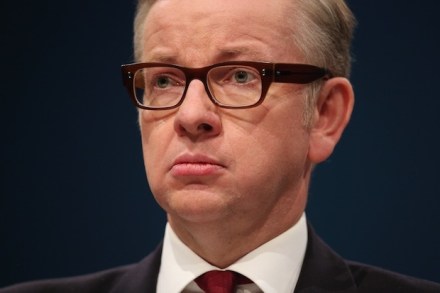
Michael Gove’s speech on improving schools – full text and audio
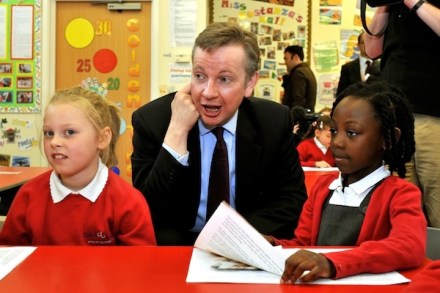
This morning Michael Gove gave a speech at the London Academy of Excellence on improving ‘bog standard’ state schools.
England did so deplorably in the Ashes in part because of an obsession with data, including minutely detailed plans on diet and exercise. Excessive bureaucracy can squeeze the lifeblood out of sport, the arts, and indeed education. Bureaucracy gone mad. Michael Gove, aided by Michael Wilshaw, has massively improved the standards of schooling in Britain. Their insistence on top quality teaching for all, and a will to smash the mediocre, lies at the heart of all they have achieved. They will go down in history as great education secretaries and chief inspectors respectively. But for all that, they do not sit comfortably in the same railway carriage as the principle of a liberal education. They are on a crusade, relentlessly driving our schools forward.
At the end of Coming Apart Charles Murray mentions, rather enigmatically, that our assumptions about society will soon be blown out of the water by new discoveries about human nature. I imagine he’s talking about genetic discoveries, in particular about the human brain. One of our current assumptions is meritocracy, and the idea that we can produce a fair society in which the most talented and energetic rise to the top. This is sometimes what people mean when they talk of the ‘American Dream’, a term that seems to be used more now that social mobility in that great country is fading and inequality rising. That is why The Son Also Rises, a study of social mobility by Gregory Clark, will surprise and also alarm some people.
If there was a coalition to keep the poor down in Britain, Fiona Millar would be its chairman. If a wicked emperor were to seize Britain and want to make sure the rich held all the best jobs, he’d set up a system where there was a direct link between wealth and quality of education. He’d smile with evil content at what Chris Cook has revealed as the ‘graph of doom’ which shows such a relationship in British state schools. So we have designed a system of near-perfect unfairness. And yet, the people who are supposedly against inequality ignore this problem completely – and instead focus their ire on those reforming these state schools.
As part of Ed Miliband’s modestly-titled plan to ‘rebuild the middle class’, shadow Education Secretary Tristram Hunt this week set out Labour’s new policy for raising standards of teaching. A Labour Government elected in 2015, he announced, would introduce a system of licensing for teachers, requiring them to ‘undertake regular professional development throughout their careers in order to keep their skills and knowledge up to date’. From the party that brought you a quality control regime that saw just 17 teachers struck off during 13 years in government, this latest wheeze, we are asked to believe, will help deliver ’a world class teacher in every classroom’.
This was supposed to be the year of strife, strikes, misery and more. Instead, to the surprise of Britain's politicians, things have instead gone badly right. I look at them in my Telegraph column today, and here are the top points:- 1. Crime plunges With the austerity and the unemployment, internal government reports predicted that Brits would respond by unleashing a crimewave. Instead, recorded crime has fallen to the lowest level in 25 years: [datawrapper chart="http://www.seapprojects.co.uk/charts/3571387552215.html"] 2. We're doing more with less People think public services are getting better, in spite of substantial cuts in local authority spending. The doomsayers were wrong - thanks to resourceful British public servants, more is being done with less. 3.
Education reform that actually works is one of the noblest, but most thankless, tasks in politics. Noble because it's necessary, thankless because it doesn't earn much in the way of an electoral dividend. Polling consistently suggests fewer than 15% of people consider education a top priority. This is understandable. If you do not have children you are, often, less interested in education than if you do. If your children attend a good school (or, at least, if you are satisfied with the school they attend) you may not care too much about the schools other kids have to attend.
We live by simple stories. X has a stroke. X recovers; or doesn’t. But we live inside more complicated stories. Recovering from a stroke is a long haul; I still have an almost useless left arm and walk like a wildly intoxicated sailor. In my mid-fifties, my stroke has been a special excursion ticket into old age — socks and toenails a bewildering distance away, walking sticks with minds of their own — that kind of thing. But here’s the odd bit. This is an old age whose effects (if you do the physio) lessen as the months pass. I’m living backwards — what a rare privilege! I am getting out again, walking, drawing and even shopping. But it still takes an hour to get dressed, and I still fall over.
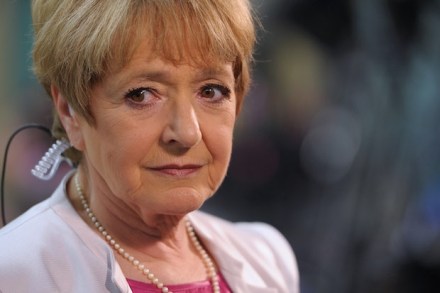
Today’s NAO report on free schools has recognised the ‘clear progress’ we have made opening 174 schools in three years with significantly lower costs than Labour’s school programmes. But, as Isabel Hardman, Toby Young and Policy Exchange’s Jonathan Simons have pointed out, instead of reading the report the BBC and PAC Chairwoman Margaret Hodge have chosen to ignore the facts. The BBC’s headline claims ‘free school costs budget trebled to £1.5bn, says report.’ But the NAO report states that ‘many new schools have been established quickly and at relatively low cost’. At £6.
The enemies of school reform have something of a champion in Finland’s Pasi Sahlberg. In a recent comment piece for the Guardian, he discusses his self-invented bogeyman, the ‘Global Education Reform Movement’ with the evil-sounding acronym ‘GERM’. GERM has failed, he says. In his story, choice, competition, and accountability have spread like a virus around the world, infecting education system after education system. But, according to Sahlberg, there’s no evidence the policies work! Only that they increase school segregation, which in turn may have a negative effect on equality in outcomes. He tries to quote the latest 2012 PISA survey to prove his point.
Another month, so it seems, another super-head rolls. Not that many would have noticed the latest. Greg Wallace’s resignation as executive head teacher of five schools in the east London borough of Hackney was drowned out by the hubbub surrounding the Revd Paul Flowers. Yet the departure of Wallace — much lamented by pupils and their parents, according to tributes in the local newspaper — deserves a closer look. For Wallace was not just any top teacher.
Michael Gove wants to blame Labour for today's PISA rankings, in which the UK has fallen five places to 26th, and Labour wants to blame Michael Gove. So in this spirit of mutual accusation, Gove and his opposite number Tristram Hunt, pitched up in the Commons asking one another to support their own plans for reform. Gove repeatedly appealed to the opposition to join him in supporting his various policies from more autonomy for head teachers to performance-related pay, closing his statement by appealing to Labour for a 'unified national commitment to excellence' in education. Hunt then responded by asking Gove if he would join Labour in supporting various policies cooked up by the Opposition front bench, such as qualified teachers and collaboration for free schools.
Like measuring water by the handful, calculating the success of the education system at a time of rampant grade inflation is an impossible task. If exam results go up every year how can we know if are our children are actually getting a better education or if exams are just getting easier? Part of the answer is international comparisons – which is why the OECD PISA rankings published today do actually matter. The last time they were published, in 2009, they showed that as a country we slipped to 25th in reading, 28th in maths and 16th in science. Yet at the same time domestic UK exam results were getting better. If you think that doesn’t add up, that’s because it doesn’t.
It looks like Boris has offended lots of people by suggesting that some folk are where they are because they’re not very bright, something Nick Clegg calls ‘unpleasant’ and ‘careless’. It’s also, as Clegg must know perfectly well, true, but as Rod Liddle writes this week there are certain things you just can’t talk about, not just despite being true but because they’re true. Rod cites what Dominic Grieve recently said about corruption, which was rude, offensive, insulting to the Pakistani community and of course totally true. Likewise when Richard Dawkins recently pointed out a fact about the relative success of the Muslim world vs Trinity College, Cambridge – that was offensive.
‘If I can’t see a factory from up here,’ I mutter to myself, throwing the car round an uphill bend of the B5032 south of Ashbourne, ‘I must be in the wrong county.’ But no, I’m not lost; there below me is a long pale slab of a building that announces itself as JCB World Headquarters — adding, on a giant polythene wrap, ‘Celebrating 1,000,000 Machines May 2013’. Equidistant between the Rolls-Royce aero-engine works at Derby and the potteries of Stoke-on-Trent, what I’m looking at is the beating heart of what’s left of industrial England. I’m here for lunch with the man whose fiefdom it is, the recently ennobled Lord Bamford.
The Department for Education is determined to show that it’ll deal quickly with any failing free school. This morning it has announced that the Al-Madinah free school in Derby will be taken over by Greenwood Dale Foundation Trust, a successful East Midlands academy chain. Meanwhile, the Discovery New School in Crawley, which has failed a second Oftsed inspection, has been given 10 days to sort itself out or be closed. Any innovation involves a certain amount of risk. But the fact that three quarters of free schools have been rated as good or outstanding under Ofsted’s new tougher inspection regime, suggests that the policy is generally succeeding.
I love The Spectator’s Parliamentarian of the Year Awards. On the face of it, they’re a great advertisement for just how broadminded and sophisticated the editors of this magazine are. We’re able to rise above the political fray and generously acknowledge MPs on both sides of the House, regardless of which party they belong to. But at the same time, it’s also a way of drawing attention to the fact that we Tories aren’t as parti pris as our lefty opponents. Unlike us, they’re far too bogged down in the petty bickering of daily politics to pay tribute to their enemies. And in this way we’re able to score a few cheap political points. Having said that, I was slightly taken aback when Tristram Hunt won ‘Newcomer of the Year’.
Sir John Major is, of course, correct. It is depressing, though perhaps not surprising, that the British upper-middle-classes - that is, those educated privately - still dominate what he termed the "upper echelons" of "every sphere of British influence". Depressing because no serious person can sensibly believe that talent is restricted to the minority of people educated in Britain's excellent private schools. But unsurprising because elites - I use the word dispassionately - have a natural tendency to do whatever it takes to maintain their elite status. Ed West is right about this. Still, Major's remarks were hardly, as has been claimed in some right-of-centre quarters, "an attack" on private education.
The blob strikes again. A video called Gove vs Reality is doing the rounds, taking pot shots at Michael Gove’s education policies, or ‘challenging his assumptions and the evidence he advances to support his approach’ as the producers put it. It’s had nearly 50,000 views so far, but is there any truth in it? With absurdly dramatic music, handpicked headlines and sound bites from the likes of Tom Watson, one might think that Michael Gove has been a complete disaster. Well, not surprisingly, there are a few untruths in the video: Gove has taken too many 'urgency pills' — shock, a minister who wants to get something done!
These days I find myself so drifting away from the bounds of acceptable opinion that I don’t even shout at Radio 4 for being biased, because I don’t even understand the basis of what the arguments are about. Take this morning’s schools feature (occasioned by Sir John Major's comments about the 'truly shocking' dominance of a privately educated elite in public life), in which Harry Mount argued in favour and Owen Jones against the motion that grammar schools lead to more social mobility than comprehensives.