Elizabeth Truss

The coalition has stabilised childcare costs – so why do headlines suggest they’re rising?

From our UK edition

You may have heard about the Family and Childcare Trust’s survey today, about the costs of childcare. You wouldn’t know it from the headlines but it actually found that in England, costs have fallen for the first time since the survey started 12 years ago. The figures in the report show that, after inflation, the cost of nurseries fell by two per cent, the cost of after-school clubs fell by five per cent, and the cost of a child-minder’s after-school pickup fell by a full 13 per cent. There is now mounting evidence that childcare costs have at last stabilised after more than a decade of rising prices. The health management consultancy, Laing & Buisson, say that fees for full day-care in nurseries have frozen for two successive years.
Ignore Margaret Hodge and the BBC – free schools are working

From our UK edition

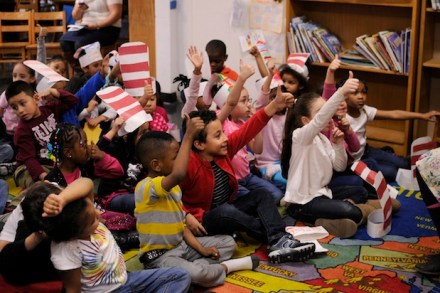
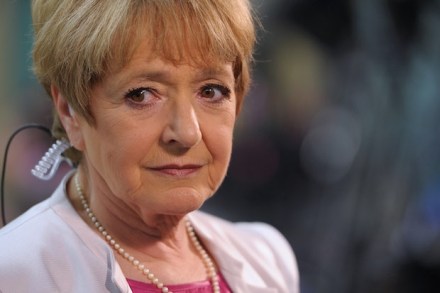
Today’s NAO report on free schools has recognised the ‘clear progress’ we have made opening 174 schools in three years with significantly lower costs than Labour’s school programmes. But, as Isabel Hardman, Toby Young and Policy Exchange’s Jonathan Simons have pointed out, instead of reading the report the BBC and PAC Chairwoman Margaret Hodge have chosen to ignore the facts. The BBC’s headline claims ‘free school costs budget trebled to £1.5bn, says report.’ But the NAO report states that ‘many new schools have been established quickly and at relatively low cost’. At £6.

Our plan to fix Labour’s toxic legacy on education standards

From our UK edition

The OECD released a report this week on education standards. It makes for grim reading: we’re bottom of the class. Those aged 16-24 in England came 22nd of 24 for literacy, and 21st for numeracy. We’re behind almost every other advanced nation in the world. What’s gone wrong? There’s a clue in the different scores by age. Young people who had pretty much their entire education under the last Labour government do worse than most older generations. The clear problem – is a decade of dumbing down led by Labour and supported wholeheartedly by the teaching unions. They made qualifications in cake decorating 'equivalent' to physics GCSE. They allowed calculators in primary maths tests.

Budget 2009: The waste myth

From our UK edition

Peter Gershon, David James and many others have scoured government for rare prey; wasted expenditure that no-one wants. And there are indeed signs that a culture of plenty, and a lack of cost control, has generated fat in Whitehall - the many new subdivisions of the Communities department testify to that. However, the unacknowledged truth is that the majority of government expenditure has taken place for a reason, however spurious, and there will be objections if it is taken away by what economists describe as the “losers”. In our new report “Back to Black”, Reform argues that politicians will have to go beyond waste to achieve necessary reductions; tackling programmes and entitlements in the major spending areas to achieve change.

Budget 2008: Arresting the fiscal flood

From our UK edition

The focus of the UK economic debate of recent weeks has been the credit crunch and the evolution of Northern Rock.  Now, however, the Government's plans for fiscal policy will take centre stage.  This week's Budget provides the Chancellor with an opportunity to set out a new approach for government spending, based on the notion of a long term sustainable public spending policy. If this opportunity is missed, it will leave the way clear for the Opposition parties. A new report published today by the independent think tank Reform argues that the programme of public spending increases begun in April 1999 has been unsuccessful.