Edinburgh

Internal affairs

From our UK edition

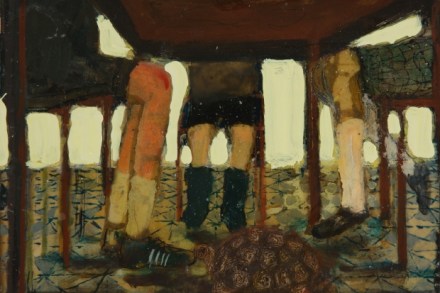
The ten vignettes that punctuate the white walls of the Ingleby Gallery invite us to step into the many-chambered mind of Andrew Cranston. These densely textured and patterned figurative scenes of obscure meaning enthrall, drawing the viewer into a peculiar realm of fantasy where tortoises crawl for ever and infants abandon their toys to stare out of viewless windows. Cranston’s painting is the kind that provokes extravagant responses from observers uncomfortable with art that refuses clearly to state its purpose. Read profiles of the artist and you will find much pontificating about ‘the despondent poetry of the creative process’, and so on. To my eyes, Cranston’s painting is about surface, colour and imagination.

The other glorious revolution

From our UK edition

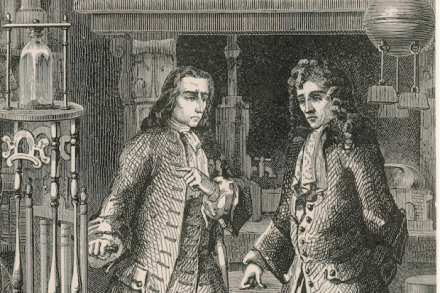
There was no science before 1572, the year that Tycho Brahe saw a new star in the night sky above him. To be sure, the Greeks had made efforts to present their knowledge of nature in a systematic fashion, but they lacked the tools — more specifically they lacked the ways of thinking — that have allowed investigators over the past 300 years to question the traditions that have preceded them, to probe the inner workings of nature, and in so doing to build increasingly informative accounts of the world that surrounds us. These ways of thinking were invented over the course of the 17th century: a period whose momentous significance for all that would come after amply justify naming it ‘the scientific revolution’.

Comic relief

From our UK edition

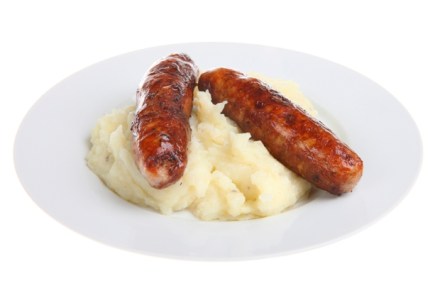
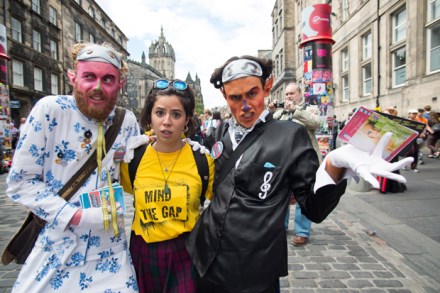
Mum’s, or to use its full title, Mum’s Great Comfort Food, is a restaurant in Edinburgh designed to soothe itinerant performance artists. For, in the fag days of August, as the Fringe dies — it will be reanimated next year by the blood of Citizen Puppet and Nicholas Parsons — assorted actors and comics and cabaret artists and mime artists and circus artists and ballet dancers and tap dancers and flute players and face painters and sketch performers and one-woman-show specialists (expiating rejection by standing in bins) and the guy who dresses up as Darth Vader are more ulcer than human being; and that is before we get to the clowns, who are in a special sub-section of desolation, even if Puddles Pity Party did get five stars.

Touchy-feely – not

From our UK edition

‘The eye is fatigued, perverted, shallow, its culture is degenerate, degraded and obsolete.’ Welcome to the Palpable Art Manifesto of Romanian sculptor Paul Neagu. Art must be accessible to all the senses, he argued, for ten fingers will explain more than two eyes and the tongue might tell yet more again. His Palpable Sculpture is the focus of an exhibition at the Henry Moore Institute that itself ‘ascends to the condition of a work of art’, according to the Scottish artist and gallerist Richard Demarco. His opinion carries weight, for it was he who brought Neagu out of Romania in 1969 to exhibit and teach in Edinburgh. A succession of little galleries lead the viewer through Neagu’s playful mind.

Diary – 27 August 2015

From our UK edition

There are many good reasons for being in Edinburgh in August, when the population doubles and nobody looks twice if you walk down the street in a sequinned basque with a man dressed as a leopard on a leash. One of those reasons is a certain kind of lunch — an assortment of natives augmented by visiting actors, writers, journalists and any other good talkers who happen to be passing. And so to the elegant New Town flat of journalist Katherine O’Donnell with campaigner and memoirist Paris Lees, actor Rebecca Root, novelist and journalist Ben McPherson and human geographer Jo Sharp. The first question is, of course, ‘What have you seen that’s good?’ Because that is the only question on everyone’s lips during the festival.

Northern lights | 20 August 2015

From our UK edition

In the clammy shadows of Cowgate I was leafleted by a chubby beauty wearing all-leather fetish gear. ‘Hi! Want to spend an hour with a prostitute for nothing?’ Yes, please. Her show The Coin-Operated Girl (Liquid Room Annexe, until 30 August), part of the free fringe, deals with the seven years she spent servicing sex-starved men in swish London hotels. One of the commonest fantasies was ‘GFE’, which has nothing to do with threesomes or gimp-masks. ‘The Girlfriend Experience’ means sex, kissing, cuddling, chatting, bickering and everything involved in a normal relationship.

Is Home Rule the only realistic alternative to independence for Scotland?

From our UK edition

'Is Home Rule the only realistic alternative to independence?' was the question posed at a Spectator debate, sponsored by Brewin Dolphin, in Edinburgh last week. In one sense the question is redundant since, no matter how much some nationalists claim otherwise, there is no reasonable or realistic scenario in which it is possible to envisage the United Kingdom government scrapping the Scottish parliament. Some measure of Home Rule, therefore, is indeed the only realistic alternative to independence? But what is Home Rule? As the panel agreed (not least since this has long been obvious) there is no agreed or even satisfactory definition of Home Rule. Is it, as the journalist Iain Macwhirter suggested, something similar to the parliament Ireland was promised in 1914?

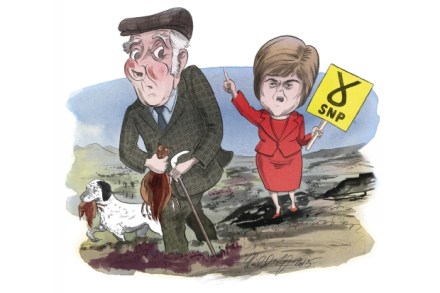
The SNP land grab

From our UK edition

Just under 100 years ago the headline in the Oban Times read ‘American family buy lodge and estate on the Isle of Jura’. They were my grandparents, who, although by then British, had both been born in America. They bought our lodge from the Campbells of Jura, who had had the misfortune to lose their heirs one terrible morning in the trenches of the first world war. My grandparents were initially regarded with suspicion by the locals. Yet after investing in the estate, improving the crofters’ cottages, reroofing them from turf to slate, they became well liked within the community. They spent summers on Jura, and occasionally visited in winter. So did my father, my uncles and now my family — brothers, sisters, children, grandchildren and cousins.

David Cameron needs to learn how to deal with nationalists

From our UK edition

David Cameron still has much to learn about dealing with nationalists. Theirs is a very different kind of politics – one where flags, language and choreography matters. Nicola Sturgeon is hawking a false premise: l’Ecosse c’est moi. That Scotland is her country, that David Cameron can visit (as he does today) in the same way he visits France or America. It matters to Sturgeon that the talks are presented as those between two heads of state (with the flags arranged in that way), that the premise of the talks is what more he can give her government (which she abbreviates to ‘Scotland’). And Cameron falls into her trap. The SNP won a great victory last week, but it’s no more a cry for independence than the referendum was.

Diary – 7 May 2015

From our UK edition

I am writing a play about Dr Johnson and his Dictionary. It will be performed in Scotland later this year. Five out of the great man’s six helpers were Scots (the only Englishman, V.J. Peyton, was considered a fool and a drunkard) and it’s timely to think of all those Scotsmen working away to consolidate the English language while their descendants try to define the general election. As a fully functioning Willie (‘Work in London, Live in Edinburgh’), I am startled by the zeal with which the SNP plans to take its revenge on Westminster after a decisive ‘no’ vote in the referendum.

Breaking: Politician spotted talking to a real voter

From our UK edition

I've just witnessed an extraordinary moment on the campaign trail in Edinburgh. No, it's not this, but a political party leader talking to a real voter. This is Ruth Davidson, Tory leader, talking to a random voter in Edinburgh. I know he was a random voter because I ran after him to check. You never know, after all. He wanted to ask Davidson some questions about migrants drowning in the Mediterranean. So he wandered up to her and asked them. And she answered. What's more, the answer seemed natural, he said. Well, this is strange. Strange, at least, for this campaign.

Scabrous lyricism

From our UK edition

Irvine Welsh, I think it’s safe to say, is not a writer who’s mellowing with age. His latest book sees the return of ‘Juice’ Terry Lawson from the novel Glue and the short story ‘I Am Miami’ — now an Edinburgh taxi-driver in his mid-forties but still, in the face of some competition, possibly the most priapic character Welsh has ever created. With a penis he understandably nicknames ‘Auld Faithful’ and an unshakeable faith in the power of porridge (‘Complex carbs: set ye up fir a day’s shaggin’), Terry begins his latest adventures by pulling a grieving relative at a funeral — and, on the way home afterwards, two young American tourists.

Devolution has given power to politicians, not people. Independence won’t change that

From our UK edition

Gordon Brown has spoken, and the unionist parties are in agreement: if there’s a ‘no’ vote then more powers will be given – we’re told – ‘to Scotland’. There’ll be another commission and another Scotland Act. This so-called Devo Max should have been offered six months ago; to offer it in the last few days of the campaign smacks of panic. By moving more towards Salmond’s territory, the unionists conceded the premise: that more powers to the Edinburgh political elite is somehow the same as more powers to ‘Scotland’. And who could be against more power to Scotland? Not a single party, it seems, is questioning the premise: that the more the MSPs get up to, the better for Scotland.

Mariinsky’s Les Troyens — a bad night for Berlioz and Edinburgh

From our UK edition

I wonder whether grand opéra really takes war as seriously as this year’s Edinburgh Festival wanted it to. These vast works, written to exploit and reflect the power, resources and tastes of mid-19th-century Paris, tended to favour history and its battles for the scenic opportunities they afforded rather than for the lessons they taught. It was the cross-cultural love stories in the foreground that were the dramatic focus; whatever the context, the obligatory ballet always had to be shoehorned in. Berlioz provided a work that ostensibly fitted the formula with his Troyens, fashioned from Virgil’s Aeneid during the 1850s, painstakingly, obsessively and with minimal reward. It was rejected by the Paris Opera and for many decades performed only in truncated, bisected versions.

Enough ‘themes’ at festivals

From our UK edition

One might have expected the streets of Edinburgh, especially at festival time, to bear some evidence of the political struggle currently engulfing our nation, but in fact there was none at all. Apparently, the arguments for and against independence have to be traded on the doorstep and not in the street, which, to those visitors who anticipated fireworks, almost amounted to a vacuum. However, it meant that the streets could be made over to the customary bewildering number of stand-ups, advertisements, students handing out leaflets (they come at you these days on roller-skates, pirouetting as they approach), and thespians of every type.

Andrew Marr’s diary: Seeing shadows of Syria in Limousin’s ghost village

From our UK edition

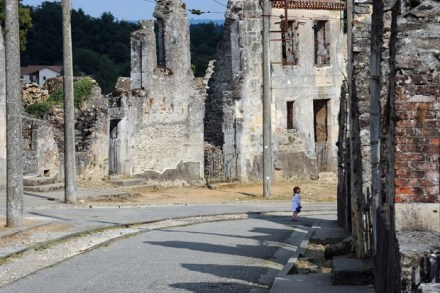
No, no, no, you don’t want a house abroad — the paperwork, the taxes, the piping, the cost of the pool. What you want are good, kind, generous friends with houses abroad. That’s what we’ve enjoyed this summer, meeting scores of interesting new people and being looked after by our best friends. We pay them back with wine, little presents and London hospitality. The only downside to ‘les vacances ligging’ is having to book extra seats home on Ryanair for our vastly swollen and moaning livers. The most striking thing we did in France was to visit Oradour-sur-Glane, the Limousin village where on 10 June 1944 a Panzer division of the SS massacred 642 men, women and children as a reprisal operation against the Resistance.

Cringe at the Fringe: are these really the ten funniest jokes from Edinburgh?

From our UK edition

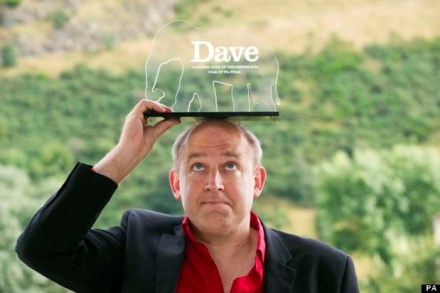
According to a poll, the funniest one-liner at this year’s Edinburgh Fringe was a joke about a vacuum cleaner: ‘I’ve decided to sell my hoover… well, it was just collecting dust’. Tim Vine, the man responsible for this curious bit of word play, said he was surprised to have won the coveted award. Presumably he hadn’t seen the rest of the top ten jokes, which ranged from cliché (‘I wanted to do a show about feminism. But my husband wouldn’t let me’) to stereotyping (‘Scotland had oil, but it’s running out thanks to all that deep frying’) and risky (‘Always leave them wanting more, my uncle used to say to me. Which is why he lost his job in disaster relief’).

The Matter of Scotland: Try, try and try again.

From our UK edition

PG Wodehouse, who was only the twentieth century's greatest English-language novelist, once remarked that there existed just two ways to write: "One is mine, making a sort of musical comedy without music and ignoring real life altogether; the other is going right deep down into life and not caring a damn." I feel something similar about theatre. I can - and do - enjoy a comedy or farce and, blimey, there's always room for laughter in this - or any other - world. But, in general, I prefer my theatre punishing and draining and liable to leave you exhausted and feeling like the marrow's been sucked from your bones. I don't go to the theatre to be entertained. I want to be appalled - and, yes, occasionally cheered - by humanity in all its many forms.

Alex Salmond has already lost — if the Edinburgh Festival is anything to go by

From our UK edition

Scotland’s on a knife-edge. Like all referendum-watchers at the Edinburgh Festival I grabbed a ticket for The Pitiless Storm, a drama about independence, which attracts big crowds every lunchtime at the Assembly Rooms. The play draws its inspiration from the passion and fury of Red Clydeside. David Hayman, an actor and lifelong leftie, plays a Glaswegian trade unionist who reflects on the troubles of Scottish socialism as the referendum approaches. Some of his rhetoric captures the best of the independence movement. ‘We’re not leaving the union, we’re joining the world.’ And he flavours his optimism with a dash of local irony.

An innocent graduate of Operation Yewtree, Jim Davidson, dazzles in Edinburgh

From our UK edition

Let’s start with a nightmare. Wendy Wason, an Edinburgh comedienne, travelled to LA last year accompanied by her husband, who promptly succumbed to a fainting fit. Wason called an ambulance, unaware she was in a hospital car park, and was handed an £8,000 bill to cover the 15-yard trip. By the time her husband had been cured, the invoice had risen fivefold. As comedy Wason’s show (at the Gilded Balloon) is wry, downbeat and hilarious. It also has a Wider Purpose. She believes that US-style healthcare is about to engulf Britain and she wants us to help her save the NHS. Always a dilemma, I find, when stand-ups dabble in politics. Is the comic promoting the cause, or the cause the comic?