Edinburgh

The French love affair with Scotland

France’s summer smash at the cinema is set to be a comedy called The Perfects. It opens next week with an all-star cast that includes Scottish actor Alan Cumming. The Perfects are a family of con-artists who flee France to escape the police and they end up in Scotland where madcap adventures in tartan ensue. It’s further proof that France can’t get enough of Bonnie Scotland. Films, television documentaries, newspaper features and even a puff piece earlier this month on the primetime lunchtime news about a visit to the most isolated pub in Scotland.  Billy Connolly once famously likened Scottish folk singers to ‘singing shortbread tins," churning out clichéd lyrics about mountains, heather and a Roamin' in the Gloamin.’ "Garbage!

scotland

The short, restless life of Robert Louis Stevenson

From our UK edition

The discriminating Argentinian novelist Jorge Luis Borges once revealed his fondness for ‘hourglasses, maps, 18th-century typography, etymologies, the taste of coffee, and the prose of Stevenson’ – a list that was quirky and eclectic, adjectives that neatly encapsulate Robert Louis Stevenson himself. The story has often been told – but it’s a good one – of how the wiry, velvet-jacketed Stevenson emerged from Edinburgh’s haute bourgeoisie to become a hugely successful writer, before ending his shortish, sickly life on the Pacific island of Samoa in 1894, a revered expatriate married to a wilful American woman a decade his senior.

Exploring Edinburgh, from Princes Street to Pitlochry

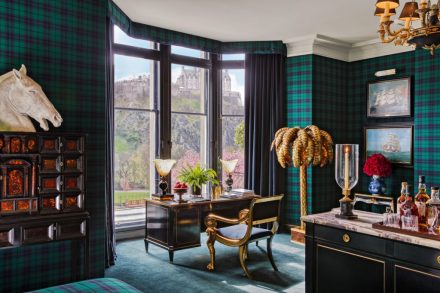
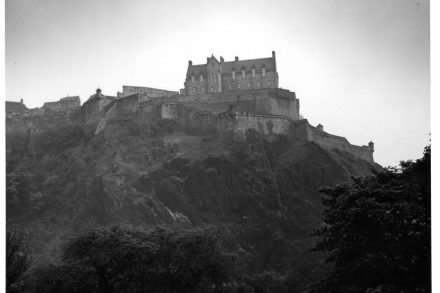
I’m blinking through floor-to-ceiling windows that perfectly frame a pristine view of Edinburgh Castle, standing magnificent against an improbably cloudless Scottish sky. The elegant writing desk in the Archibald Signature Suite at 100 Princes Street hotel has all the makings of an elevated “work-from-home” set up, but the scenery – and the collection of aged single malt I know to be upstairs – make concentration an uphill battle. This luxury townhouse right on, you guessed it, iconic Princes Street was made for luxuriating, not hunching over laptops. Ducking into the entrance on Princes Street feels exclusive, like knowing a secret.

pitlochry

Landscape designer Tom Stuart-Smith on mistakes, sand and weeds

From our UK edition

If you’re looking for an early example of Tom Stuart-Smith’s work, you’d have to go to a car park to find it. The now world-famous landscape designer started his career doing ‘awful supermarket projects’ where ‘landscape was perceived as just something they kind of had to do’. This was in the 1980s: today, if you want to see a Stuart-Smith landscape, you can go to St Paul’s Cathedral, where he has designed a public ‘reflection garden’, the walled garden at the Knepp Estate, or the Hepworth Gallery in Wakefield, where sculptures sit among naturalistic sweeps of grasses and perennials.

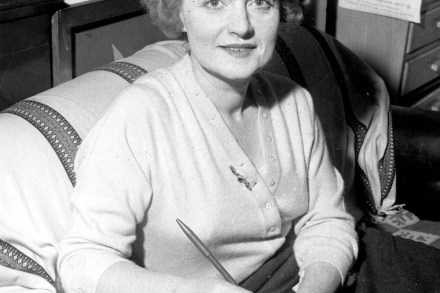
‘I secreted a venom which spurted out indiscriminately’ – Muriel Spark

From our UK edition

In 1995, Dame Muriel Spark, then one of Britain’s most distinguished living writers, was interviewed for a BBC documentary. During filming, the show’s editor commented that ‘her biographer must be the most depressed man in England’. Three years earlier, Spark had personally anointed Martin Stannard as the writer of what she intended to be the authorised version of her life, presenting him with the vast archive of documentation – spanning 50 years and 50 metres – gathered at her home in Arezzo. ‘Treat me as if I were dead,’ she instructed him. Stannard understood this to mean that he should proceed as a traditional historian; by the time his hag-ridden book was published 17 years later he had learned his mistake.

A journey through Edinburgh’s gothic past

When Guillermo del Toro’s new film adaptation of Frankenstein makes its bloody advent on Netflix later this year, the backdrop for 19th-century body snatching and resurrection may look familiar to many viewers. It was shot last year on Edinburgh’s Royal Mile and images from the set suggest that, as ever with del Toro, this will be a hallucinatory and haunting exercise in Gothic extravagance. If so, he has picked the perfect city on which to unleash Frankenstein’s monster. Edinburgh is a place that wears its long and often violent history like a velvet cloak.

Edinburgh

I love Edinburgh. I’m not sure it loves me

From our UK edition

This year I shall have lived in Edinburgh for a quarter of a century. I fell in love with the city on the 23 bus travelling from the New Town to the Old Town. There was so much architecture. Gothic and Georgian, medieval, baronial. So many turrets and finials, tollbooths and towers. I was drunk on the stuff. Add pomp – a Royal Mile, a castle, a palace. Then the libraries, art galleries, museums. And that’s before you get to bookshops and Edinburgh’s proud moniker, the first Unesco City of Literature. What other city has a railway station (Waverley) named after a novel or a high street (Princes Street) with shops on one side and gardens on the other? The 23 bus was taking me to the psychiatric hospital just beyond Morningside Edinburgh doesn’t love me.

Echoes of Tom Brown’s School Days: Rabbits, by Hugo Rifkind, reviewed

From our UK edition

The year is 1993 and 16-year-old Tommo has been moved from a day state school of 2,000 pupils in brown blazers that ‘when it rained… smelled of shit’ to Eskmount, an elite Scottish boarding school, where boys wear kilts and put their ‘cocks on your shoulder’ when you’re working in the library (easier in a kilt) and routinely hang ‘smaller kids in duvets... out the window’. The horseshoe effect in schooling terms: the more expensive, the more savage. Hugo Rifkind’s Rabbits opens with a bang: ‘When the shotgun went off under Johnnie Burchill’s brother’s chin, word had it, the top of his head came off like the top of a turnip lantern.’ It is reminiscent of Donna Tartt’s The Secret History.

The pleasure of reliving foreign travel through food

From our UK edition

The idea of the kitchen as a space for transformation and transportation is not a new one. Many writers have explored the room’s ability to offer both domesticity and alchemy at the same time – how it allows cooks to travel vicariously through the food they make. This is the subject of Cold Kitchen, Caroline Eden’s memoir of her time spent in her kitchen in Scotland and of her travels to Eastern European and Central Asian cities – and somehow she makes it fresh and compelling. She is an author and critic who has written extensively about the food and culture of the countries of the former Soviet Union. Black Sea, in which she explored Odessa, Istanbul and Trabzon, received a clutch of prizes, and Red Sands, about Central Asia, won the prestigious André Simon food book award.

Hogmanay in Edinburgh is a marvelous experience

The city of Edinburgh, Scotland’s capital, really comes into its own twice a year. Firstly is August, when its streets are thronged with revelers and amateur PR types (“four stars in the Scotsman!”) promoting their wares at the world-famous performing arts festival. And then the second comes at the end of the year, during the New Year’s Eve period of Hogmanay, which sees anyone claiming long-distant Scots ancestry taking part in the revels for a day or two, just as it seems anyone in Boston on St. Patrick’s Day suddenly remembers their long-lost Uncle Padraig or Great-Aunt Shelagh. In any case, Hogmanay in Edinburgh is a marvelous experience, freezing cold aside, and best experienced from the surroundings of somewhere comfortable.

hogmanay edinburgh

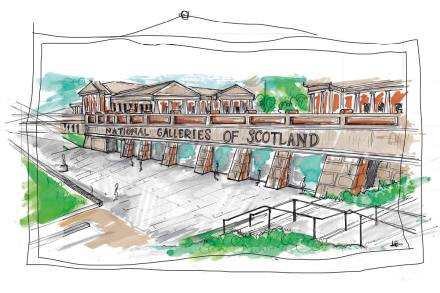
The bold new vision for Edinburgh’s National Galleries of Scotland

What do you generally think of when you hear the words “Scottish art”? There are the usual clichés of course, of large-scale landscape paintings depicting gorse and heather and startled-looking wildlife, or alternatively there are the portraits of various noblemen and worthies, many of whom have the well-fed hue that living high on the hog imbues. If you head to Edinburgh’s National Galleries of Scotland — often simply known as “the National” — and visit the traditional collection in the neoclassical building right in the center of the city, near the castle and major shopping streets, you won’t be disappointed by the eclectic selection of Old Masters and Scottish masterpieces alike.

national

The Witchery weaves Halloween magic in Edinburgh

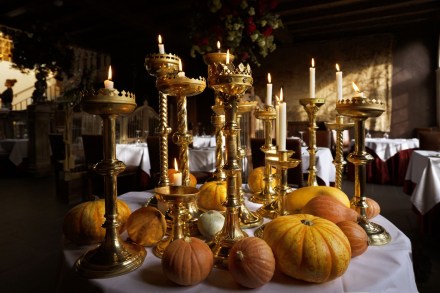
Halloween traditions might hail from All Hallows’ Eve, the Christian celebration preceding All Saints’ Day, but that has roots in Samhain — a Celtic pagan festival. Long before Westerners carved pumpkins come fall, the Scots were sticking knives into "neeps" (turnips). Disguised children ("guisers") warded off evil spirits on the streets of Scotland centuries before brats in Gryffindor scarves demanded Twinkies.  There could hardly be a better place to spend the spookiest time of the year than Edinburgh, with its reliably moody weather and litany of imposing buildings. Those seeking to be truly disturbed need simply research the capital’s very real history of witch hunts, public executions and plague.

witchery edinburgh

Dazzling – if you ignore the music: Beyoncé, at Murrayfield Stadium, reviewed

From our UK edition

Scheduling open-air concerts in mid-May in northern Europe is a triumph of hope over experience. I last spent time with Beyoncé – I’m sure she remembers it fondly and well – in 2016, in a football stadium in Sunderland on a damp, drizzly, early-summer English evening of the type that even strutting soul divas struggle to enliven. I don’t think it was merely the weather which left me underwhelmed by her brutalist attack, the sheer choreographed drill of the show, the lack of engagement, of spontaneity, of joy. By then, Beyoncé was no longer seeking to be regarded as a mere pop star. She had recently taken on the unearthly qualities of an alien presence, entirely unrelatable, tilting for something far more culturally significant than a spot in the charts.

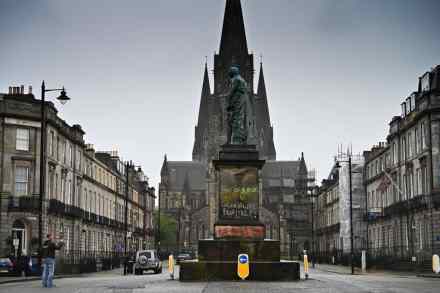
Edinburgh’s slavery review is strangely superficial

From our UK edition

A couple of days ago a colleague alerted me to the opening of an online public consultation regarding proposals made by the Edinburgh Slavery and Colonialism Legacy Review Group, a scheme launched by Edinburgh City Council in 2020 to look at ways the city can acknowledge its historical connections with slavery and colonialism in the wake of the Black Lives Matter protests. The public consultation will close in January, and aims to find ‘constructive ways’ that the people of Edinburgh can address the city’s involvement in the slave trade. The Review Group list numerous sites in Edinburgh with various, and for the most part undeniable, associations with the reprehensible history of slavery.

The death of the Edinburgh Fringe

From our UK edition

The Edinburgh Fringe has returned after last year’s cancellation but it’s hard to find evidence of the festival on the streets. The atmosphere is weird, unsettling, ghost-like. The defining feature of the city in August is the constant din of music, but as soon as I arrived at Waverley Station I noticed that the pulsing backbeat was missing. The bars that throb with disco and heavy metal have shut up shop. So have the pubs that host free comedy shows from noon till midnight. The insistent tom-tom rhythm has been supplanted by a void. Edinburgh is on mute. Before Covid, there were more than 3,500 shows to choose from. This year’s total of nearly 800 seems like a healthy bounce-back but very few of these productions will run for the full three weeks.

The SNP’s nonsensical Covid book ban

From our UK edition

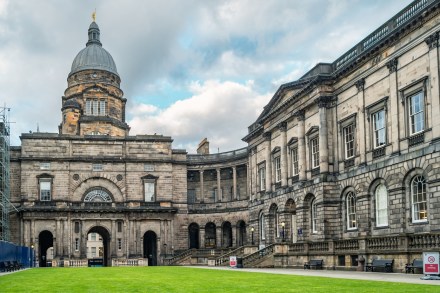
Why is the SNP banning books? On 5 January the Scottish government introduced a strict new lockdown in response to the spread of a more infectious strain of Covid-19. As a student at the University of Edinburgh, one particular restriction has baffled me ever since. Unlike in England, Wales or Northern Ireland, the Scottish government decided to ban students from reading, borrowing or even touching books in their university libraries. Even as fears rose over the rapidly spreading ‘Kent’ variant, it seemed that this policy lacked any scientific foundation. The Scottish government’s explanation for its book ban is baffling, and seems to be just copied and pasted advice from public websites and bluster over the importance of fighting Covid.

Did Radio 2 really need to give us four days of the Beatles to celebrate Abbey Road?

From our UK edition

This Changeling Self, Radio 4’s lead drama this week, clearly ought to have gone out in August. It’s set — and was recorded — at the Edinburgh Festival and would have been a gift to marketing. ‘I love the festival!’ coos She. ‘All these millions of conversations, listen, listen, oh and stories, lots of stories, the different ways of telling…!’ No one in the real world speaks like this. But it’s just about OK, because she isn’t quite real either. She is a Fairy Queen, come to Edinburgh to spirit away a young pianist named Tam, as in Tamlin, who is a bit wet but really rather nice. The story is a modern retelling by Linda Marshall Griffiths of an old Scottish ballad that couldn’t be better suited to radio.

Why are so many operas by women adaptations of films by men?

From our UK edition

Opera’s line of corpses — bloodied, battered, dumped in a bag — is a long one. Now it can add one more to the list: the broken, abused body of Bess McNeill. The heroine of Lars Von Trier’s uncompromising 1996 film is a curious creation. Striving against the restrictions of her austere, Presbyterian community on a remote Scottish island, she marries oil-worker and ‘outsider’ Jan. But when an accident on the rig leaves him paralysed, a promise to her husband and a bargain with God leads her into increasingly degrading and dangerous sexual encounters. Savant or innocent, saviour or sacrificial victim — Von Trier leaves it unclear.

Eye-frazzlers

From our UK edition

The old observatory on Edinburgh’s Calton Hill may be the most favourably positioned art venue in the world. Recently resurrected by a group called Collective, the space, with its panoramic views and Enlightenment history, is an ambitious and imaginative addition to Edinburgh’s art scene. In their Hillside gallery there’s a firing-range warning sign on the screen, a few seconds of stillness and silence, then a sudden machine-gun rattle. The sound is revealed to be a stick, dragged by a child along corrugated iron, and the juxtaposition is the strongest moment in Helen McCrorie’s portentously titled video work, ‘If play is neither inside nor outside, where is it?’ (until 6 October).

Does Sadiq Khan think Brexit means cancelling Christmas?

From our UK edition

‘I’ve heard he’s a great guy, this mayor,’ shouted Sadiq Khan to no one in particular as he arrived in the foyer of the Gilded Balloon at the Edinburgh Festival. He barged past me and headed for the auditorium. ‘Treat him gently, please. No heckling,’ he added, talking about himself. The audience moved into the sweltering venue where Khan answered questions from Iain Dale for 60 minutes. Some had been submitted in advance by the audience. ‘How confident are you of winning a second catastrophic term?’ That came from a disgruntled London voter. Khan looked a bit uncomfortable and muttered something about avoiding complacency. ‘It’s going to be very hard to win again.