Edinburgh

Instagram is ruining tourism. Could fandom save it?

It was shortly after noon on a Sunday in Edinburgh, and I was attempting to remedy my jet lag at the local BrewDog outpost with a pint of sour ale and a large helping of pizza. I’d flown in on the red-eye from New York to attend a conference, hadn’t had much sleep, and initially thought I was hallucinating when I saw that one of the few other patrons in the bar was a notably tipsy woman wearing wizard robes, waving a wand around as she talked to her drinking companions. They were, I noted, red and gold robes: Gryffindor. (Professor Minerva McGonagall, Gryffindor House’s notoriously strict faculty overseer, would be unlikely to approve of such drunken behavior in public.

fandom tourism

Memories, dreams, reflections | 23 May 2019

From our UK edition

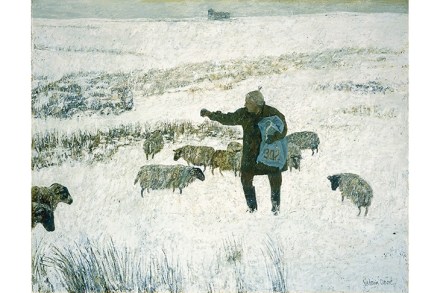
This mesmerising retrospective takes up three floors of the City Art Centre, moving in distinct stages from the reedy flanks of the Pentland Hills through fractured half-views of Venice and Scotland and into fresh, twilit forests. Mirrors and windows reflect and refract, rigid faces stare from the shadows, animals flit and bare branches twist. It’s 50 years of painting, and half a century of observing, finding, losing and remembering. Victoria Crowe, born in England but long since adopted by Scotland, is one of our more distinguished painters. She is a respected portraitist but it is her other work that dominates this show, and rightly so. We see the trajectories of an inner life expressed through these paintings.

Diary – 6 September 2018

From our UK edition

I begin my 87-day reading tour of the US, UK and Canada on a BA flight that will take me to Edinburgh for the book festival. I catch up on my Ab Fab and Peppa Pig and eat some back bacon. I land around 10 p.m. and take a walk through the city. I love Scotland! The young people seem so ebullient: ‘Feck this. Feck that. Feck you.’ I stumble around the old town and new town taking in the endless adverts for all the plays. Should this much art exist in any one city? I guess so. I mean, why not? Probably it’s OK. I wake up with a twofold mission in mind. Haggis and whisky. Look, I love haggis. It’s Scottish, but there’s something desperately Eastern European about it, something sultry, sickly and taboo.

Edinburgh Notebook

From our UK edition

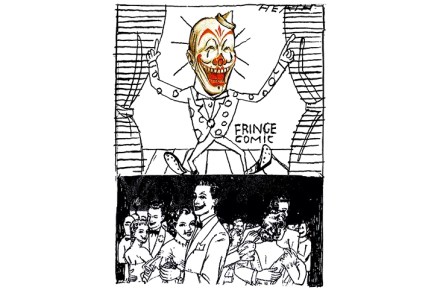
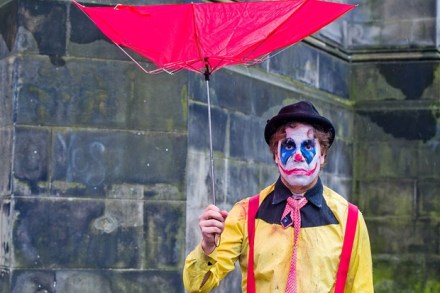
The brilliant Irish comedian Andrew Maxwell describes doing stand-up at the Edinburgh Fringe as ‘exams for clowns’, and even though I first appeared there in 1981 (when the Cambridge Footlights Revue featured Hugh Laurie, Stephen Fry, Emma Thompson and Tony Slattery), I felt an overwhelming surge of nervousness as I began my short run this year with the peerless mimic Jan Ravens (who herself had directed that illustrious 1981 cast). By the middle of the week, I’d finally managed to reach the zone that stand-up requires, being both relaxed and focused.

Diary – 16 August 2018

From our UK edition

Taking my new stand-up show Girl on Girl to the Edinburgh festival this year and playing at the prestigious venue the Gilded Balloon, was hand on heart the most stressful thing I have ever done — and I lived through the Ed Stone. My nerves were off the scale. Will anyone come to see the show? Will it be a massive disaster? Is this a very public and expensive cry for help? Why don’t I just go on a yoga retreat? These are all the things which swirl round your head seconds before you go on stage. Stand-up is one of the hardest things you can do. It’s just you — there’s no one to hide behind and you live or die by your wit, words and performance.

Northern lights | 16 August 2018

From our UK edition

The Rembrandt show at the National Galleries of Scotland (until 14 October) has a problem. A mighty haul of Rembrandt paintings and prints are arrayed against a backdrop that mines the historical impact of his work on British artists and collectors. This is interesting. The problem is that the Rembrandt works are so astounding that there’s a danger you won’t bother with the rest. You should, because here Reynolds and Raeburn and Ramsay and more, all inescapably influenced by Rembrandt, tell fascinating and sometimes complicated tales of artistic heredity and homage. There’s no disgrace in going only for the Rembrandts, though.

Outsider art

From our UK edition

The complexities of Schleswig-Holstein run deep. Here’s Emil Nolde, an artist born south of the German-Danish border and steeped in the marshy mysteries and primal romanticism of that landscape. In 1920, he sees his region, and himself, become Danish following a post-Versailles plebiscite. An already well-established German nationalist bent — pronounced despite, or perhaps because of, his shifting national identity and shaky grasp of the German language — is inflamed. He moves back across the new border before eventually joining the local branch of the Nazi party and writing a volume of autobiography entitled, Jahre der Kämpfe in which he rails against the Jewish dominance of the art world.

The joy of Edinburgh

From our UK edition

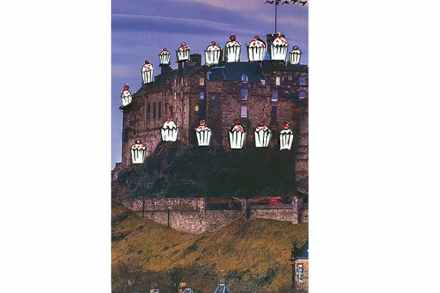
Edinburgh is a peach of a city, is it not? Last week, I walked up to the castle on a crisp and sunny morning. Crossing high above the railway line, I watched the trains slink out of Waverley station and snake along the valley floor, a giant Hornby set beneath my feet. The path to the castle is tarmacked and rough, but still slippery with morning frost, so I tread carefully as I follow the zigzag to stand under the castle walls at the top. A young man next to me breathes: ‘Awesome, man.’ Absolutely. And the more so when you think the volcanic plug on which the castle stands is riddled with passages dug to hold Napoleonic POWs. The view is awesome too. It always surprises me how frequently you glimpse the Firth of Forth from the city.

Winter Notebook | 13 December 2017

From our UK edition

Edinburgh is a peach of a city, is it not? Last week, I walked up to the castle on a crisp and sunny morning. Crossing high above the railway line, I watched the trains slink out of Waverley station and snake along the valley floor, a giant Hornby set beneath my feet. The path to the castle is tarmacked and rough, but still slippery with morning frost, so I tread carefully as I follow the zigzag to stand under the castle walls at the top. A young man next to me breathes: ‘Awesome, man.’ Absolutely. And the more so when you think the volcanic plug on which the castle stands is riddled with passages dug to hold Napoleonic POWs. The view is awesome too. It always surprises me how frequently you glimpse the Firth of Forth from the city.

How Sean Hughes (1965-2017) transformed comedy

From our UK edition

Not many people can say they’ve transformed an entire art form, but Sean Hughes, who died yesterday, aged 51, did just that. His one man show, A One Night Stand With Sean Hughes, changed our preconceptions of what stand-up comedy should be – not by being strident or political, but by rejecting trite one-liners and letting his imagination run riot. I was lucky enough to see this ground-breaking show on its first run at the Edinburgh Festival in 1990. I’ve never seen anything quite like it, before or since. In the summer of 1990, so-called alternative comedy was all the rage – but though the style of stand-up had shifted, the format had hardly altered. Traditional stand-up consisted of working class men in tuxedoes cracking lame jokes about the mother-in-law.

Notebook | 5 October 2017

From our UK edition

To Skibo Castle for a four-day wedding, a dream of super-luxury and great good fun. I was struck by how the American rich are saving the Highlands. Skibo is supported by a band of mega-wealthy Americans, some of whom have invested heavily in the nearest town of Dornoch, which is thriving as a result. They are following a great tradition: Andrew Carnegie, having made his fortune in the US, returned to Scotland and rebuilt Skibo. He also donated libraries and halls ‘big enough for dancing’ all over the world, many in Scotland. A great combo: reading and reeling.

London calling | 10 August 2017

From our UK edition

What is the Edinburgh Fringe? It’s a sabbatical, a pit stop, a pause-and-check-the-map opportunity for actors who don’t quite know where to go next. Alison Skilbeck has written a ‘serio-comic celebration’ of Shakespeare and her performance attracts a decent crowd for a show that starts at noon. She plays a fruity-voiced thesp, Artemis Turret, who delivers lectures about the Bard’s older females to groups of layabout pensioners gathered in a scout hut. It’s pure Joyce Grenfell. Good fun, too, but without much potential beyond the fringe. Dominic Holland’s show, Eclipsed, is about his life as a fallen comedy god. In the 1990s he was on telly all the time and he accepted the royal command to perform at Prince Charles’s 50th birthday party.

Classy and classic

From our UK edition

The Edinburgh International Festival began with a double helping of incest. Curiously, Greek — Mark-Anthony Turnage’s East End retelling of the Oedipus myth, which was greeted with universal acclaim at its premiere in 1988, and which has gone on to be one of British opera’s biggest export success stories — was tagged on the Festival website as being suitable for ‘risk takers’. Whereas Wagner’s Die Walküre — which ends its first act in ecstatic celebration of a sex act so transgressive that even in 2017 it can draw appalled gasps from an audience — was described as being ideal for ‘traditionalists’. Bizarre. Perhaps brothers and sisters sleep together all the time in Morningside; I couldn’t say.

Show up and show off

From our UK edition

The Edinburgh Festival was founded as a response to war. The inaugural event, held in 1947, was the brainchild of Rudolf Bing, the manager of Glyndebourne Opera, and Henry Harvey Wood, a British Council grandee. Both were convinced that a festival of music and theatre was needed to restore the artistic heritage of Europe after six years of devastation. Edinburgh recommended itself as the host city because of its cultural prestige, its picturesque location (to rival Salzburg), and its ample store of theatres and hotels that could accommodate hundreds of performers and thousands of visitors. That the Luftwaffe hadn’t flattened the city was a significant mark in its favour. The festival set out to ‘provide a platform for the flowering of the human spirit’.

The Spectator Podcast: Macron’s vanity fair

From our UK edition

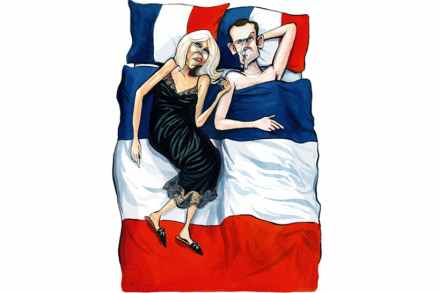
On this week’s episode we discuss whether Macron is losing his gloss, ask if the Brexit talks are heading in the right direction, and recommend how to get the best out of the Edinburgh festival. First, it’s been just over two months since Emmanuel Macron became President of France, and already cracks are starting to show. Swept into the Elysee Palace by a sea of young voters rejecting Marine Le Pen and the National Front, those same voters are beginning to turn on the centrist former banker who they reluctantly championed. So says Gavin Mortimer in this week’s magazine, where he laments the new President’s vanity, and he joins the podcast from Paris along with the political journalist, Marie Le Conte.

On the make

From our UK edition

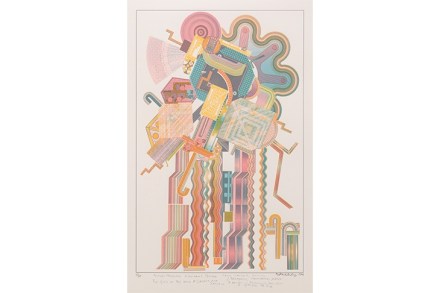
Rudolfo Paolozzi was a great maker. In the summer, he worked almost without stopping in the family’s ice-cream shop, making gallon after gallon of vanilla custard. In the slack winter months, when the shop made its money on cigarettes and sweets, he built radios from odds and sods. It was on one of these homemade radios that he heard Mussolini’s declaration, on 10 June 1940, that Italy, the country he had left for Scotland 20 years before, had entered the war. That night a mob attacked the ice-cream shop at 10 Albert Street, off Leith Walk in Edinburgh. The family lived above the shop and later, Rudolfo’s son Eduardo, then aged 16, would remember how it had been before and what the men had done.

Northern exposure | 11 August 2016

From our UK edition

As the festival grows, the good acts are harder to find and the prices keep rising to meet the throngs of showbiz refugees who surge north in the belief that the glory, this year, will be theirs. Arriving at my one-star hovel (no breakfast, no towels, shared bathroom), I was given a security key and a disc of see-through soap that I could have hidden beneath a tea-bag. The bill, payable in advance, was a third higher than last year. Glory in this city belongs to the landlord. Marcel Lucont’s Whine List is performed by a suave, self-adoring Frenchman who starts by asking if anyone in the crowd is new to his act. ‘Lucky bastards. What I would give to see myself for the first time.

First impressions | 21 July 2016

From our UK edition

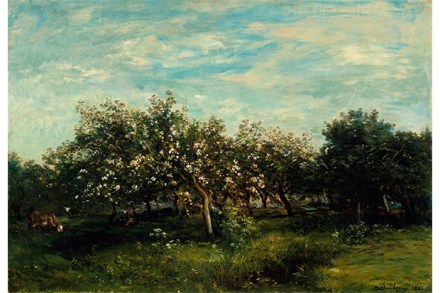
The last boat I saw in the galleries on the Mound was a canoe that the Scottish painter Jock McFadyen had been using to explore viewpoints around the waterways of London. Now another vessel has sailed in, a full-scale recreation of the studio boat built in 1857 by the French painter Charles-François Daubigny, from the bow of which he ushered in the movement that would come to be known as impressionism. Daubigny, a now sorely neglected artist, established an entirely novel approach to landscape painting that was to influence Monet, Pissarro and Cézanne and also, quite explicitly, Van Gogh. Inspiring Impressionism has an admirably clear narrative and it places Daubigny back where he belongs, at the fulcrum of modern painting.

Diary – 12 May 2016

From our UK edition

On Thursday morning I’m woken by day three of a tension headache firing tentacles up the back of my neck and the base of my skull then burrowing into the cortex beneath. I am drenched in sweat, with dread balled in my stomach. My back throbs thanks to the ire of a decade-old spine break that has never fully healed. I spit blood, mixed with toothpaste, into the sink. My skin has broken out into the kind of volcanic fury not seen since my teenage years and my nails are bitten down to stumps. I love election campaigns. But polling days are their own special torture. Scots will have had two referendums and two elections in 21 months, which means I’ve spent years on the road.

More blood and tears

From our UK edition

Irvine Welsh’s 1993 debut novel Train-spotting flicked a hearty V-sign in the face of alarm-clock Britain. ‘Ah choose no tae choose life,’ crows its giro-cheating antihero Mark Renton, proudly enslaved to heroin instead of mortgage repayments. But when Welsh revisited his native Leith for a 2012 prequel, Skagboys, he threw over this bourgeois-taunting amorality for blunter politics: Renton, it transpired, first turned to heroin for pain relief after police beat him up on a picket line during the 1984 miners’ strike. In Welsh’s latest novel, it’s the turn of Renton’s psychopathically violent frenemy, Francis Begbie, to get an origin story involving the abuse of state power. As a boy (we now see) Begbie struggled with dyslexia.