Edinburgh

Rhubarb has the loveliest, craziest dining room I have ever seen

From our UK edition

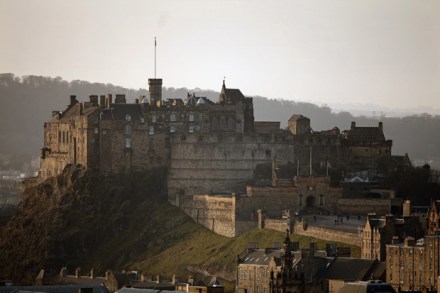
The Edinburgh Fringe Festival: the city is full of glassy-eyed narcissists eating haggis pizza off flyers that say Michael Gove: Prick. I saw the Grim Reaper in the Pleasance Courtyard, of all places. Even Death likes an audience these days, has a media strategy, an agent, a gimmick. But this is not a review of comics — mating habits and most likely mental illnesses or ‘conditions’, plus hats — disguised as a review of the food that comics eat. All comics are mad. You know this. They live on self-hatred and Smarties, when they can afford them. Instead, I go to Rhubarb. Rhubarb is the sister restaurant to the Witchery by the Castle on the Royal Mile.

The best of the Edinburgh Fringe

From our UK edition

Rain whimpers from Edinburgh’s skies. The sodden tourists look like aliens in their steamed-up ponchos as they scurry and rustle across the gleaming cobblestones. Performers touting for business chirrup their overtures with desperate gaiety. Thousands of them are here. Tens of thousands. Vanity’s refugees hunkering on the wrong side of fame and hoping to get through the ego-crisis alive. A familiar name forces its way through the anonymous wastes. Julie Burchill: Absolute Cult (Gilded Balloon) is a one-act play by Tim Fountain. We’re at home with the Queen of Spleen as she cracks open a litre of vodka. It’s mid-morning. ‘I’m a hideous parody of myself,’ she tinkles in her soft-core Cider With Rosie accent.

3,000 acts and no quality control – why the Edinburgh Fringe is the greatest (and patchiest) arts festival in the world

From our UK edition

And they’re off. The mighty caravan of romantic desperadoes, radical egoists, stadium wannabes, struggling superstars and vanity crackheads is on its way to Edinburgh. This year’s Fringe sponsor is Virgin Money, which must be some kind of in-joke because most performers spend August watching their life savings being ritually despoiled by landlords, press agents and venue owners. Five years back the Fringe was ready for a gastric band when it grew to more than 2,000 productions. This year it glides past the 3,000 mark and it seems determined to maintain its place as the most cluttered congregation of twits and pipe-dreamers on the planet.

I salute the wisdom of young Scots on independence (they’re voting No, by the way)

From our UK edition

It’s a constant theme of this column that today’s young need to stop whingeing about their prospects and get on with making their own future. But a quick north-of-the-border tour as official campaigning kicks off for the Scottish referendum persuades me that the pessimism of the generation about to enter the world of work is for once well justified — and may play a key role in averting the potential economic disaster of independence. When SNP leader Alex Salmond chose to give 16- and 17-year-olds a say in September’s poll, he must have presumed that teenage Scots — if they could be bothered to vote at all — would be swayed by the romantic nationalism and anti-English fire of the Yes campaign. Not so, it turns out.

Scots and English are the same people, with different accents. Why pretend otherwise?

From our UK edition

[audioplayer src="http://traffic.libsyn.com/spectator/TheViewFrom22_10_April_2014_v4.mp3" title="Fraser Nelson and Angus Robertson debate Scottish independence" startat=32] Listen [/audioplayer]Sometimes it is easy to understand why countries break up. Some founder on the rocks of their internal contradictions. Others are historical conveniences that have simply run their course. Czechoslovakia was an artificial construct, a country with two languages and cultures, which split soon after the Iron Curtain fell. The division of Cyprus in 1974 marked the end of the fraternity between the island’s Turks and Greeks. The partition of India was driven by trouble between its Hindus and Muslims.

It’s time that Scotland’s timid posh folk spoke out

From our UK edition

I took part in a documentary about Scottishness a few weeks ago, and it wasn’t bad at all. I mused, mainly, on my own border-hopping, fretful-about-independence Scottish-Britishness, and a decent number of people got in touch afterwards to say I’d been speaking for them, too. Others were more cross, but interestingly so. One thing about the whole experience bugs me, though. That was the way they had me sit in a swanky Scottish restaurant in Belgravia and made out like I belonged there. It’s not that you don’t get Scots in Belgravia. Most will probably own castles back in Scotland, too, though. When they move to Belgravia, they do so in a manner similar to the way that orthodox Jews move to Israel; to finally be among their own. This is not my world.

Being assaulted nearly put me on trial

From our UK edition

Way back in the late 1990s, I spent a lot of time in court. What happened, see, was that in the wee small hours of a drunken Edinburgh morning, my friend Jonny and I took a shortcut home through the disused railway tunnel that runs under Holyrood Park. I’d been through it many times, being enraptured with the magic of abandoned urban spaces and, perhaps more to the point, stupid, but never before had it contained a gang of pissed-up youths on a rampage. This time it did, and they put us in hospital. Various arrests followed pretty swiftly.

A girl, a train and a miniature pistol: how I met the Everly Brothers

From our UK edition

I was drifting in and out of sleep last week, listening to the news, when suddenly eight words — at first sounding no different from the general run — slammed into my senses. ‘Phil Everly of the Everly Brothers is dead.’ For the first time I knew how it felt when ‘the earth stood still’. One of the two brightest flames of my youth had been extinguished. I was friends with both Phil and Don Everly for some 45 years and it was, to be sure, a dazzling friendship. Beat this for its beginnings: it was 1960 and we met at midnight, boarding the Flying Scotsman at King’s Cross, surrounded by the thickly hissing steam from that great green engine. The sleeping car attendant, as neat as a pin in his starched white bum-freezer jacket, was standing by.

Rebus is good, but not as sharp as he once was

From our UK edition

Cig 1 Auld Reekie . . . Edinburgh . . . brewers’ town, stinking of beer, whisky, tweeness, gentility, hypocrisy, corruption . . . DS Rebus awoke with a start, his hand still clutching a can of lager. He’d been asleep in his chair, as usual. He rarely went to bed. Bed was for sober people. The phone was still ringing, so stumbling over LP sleeves, full ashtrays and empty bottles, he picked up the receiver, greasy from last night’s fry-up. ‘It’s Siobhan,’ his colleague DI Clarke announced herself. ‘A new case has popped up.’ Rebus massaged his brow with an Irn-Bru can and grunted. ‘An old case, I mean,’ Siobhan corrected herself. ‘Thirty years old.

Nobody takes a flight from London to Manchester. So why would we take HS2?

From our UK edition

From Edinburgh airport there are more than 45 flights a day to London. And, I imagine, the same number back. You can fly from Edinburgh to London Heathrow, -London Gatwick, London Luton, -London Stansted and London City — even to the optimistically named -London Southend. Glasgow offers a similar choice. I have often used these flights. I live about 25 minutes’ drive from Gatwick, so when I go to Edinburgh my -favourite plan is to take a morning train up and then fly or take the sleeper back. Since Manchester is bigger than Edinburgh, I had naively assumed that I would be able to do something similar for an upcoming trip there. I decided to fly from Gatwick and take the train back. ‘You can’t. There aren’t any flights from Gatwick to Manchester any more.

Andrew Marr’s diary: Holidays after a stroke, and what the Germans really think of us

From our UK edition

It’s been a strange summer. After a stroke, holidays are not what they used to be. We went to Juan-les-Pins for a week in a hotel. It seemed perfect because it had beaches for the family, and at nearby Antibes there is a great little Picasso museum for me to haunt. It has the best drawing of a goat ever made. My daughters and wife doggedly manhandled me across hot sand into and out of the water and I enjoyed that. But being surrounded by so many fit people running, cycling and swimming was a little dispiriting. Mind you, I’ve always been useless at holidays. I hate being too hot. I hate lying around on grit (rebranded as ‘sand’). I hate airports. I hate long car journeys. My idea of a good break involves a bracingly cold northern city and some good art galleries.

Kirsty Wark’s diary: On the Caledonian sleeper, the new Donna Tartt, and a week of Edinburgh shows

From our UK edition

There isn’t a Scottish politician in living memory who hasn’t been on the Caledonian Sleeper. I always imagined Donald Dewar folding himself up in his berth, he was so tall. He was notoriously sniffy about the company he kept in the bar and once recounted the horror he felt when — stuck in snow — he was forced to fraternise with practically the rest of the Labour front bench for 22 hours somewhere south of Carlisle. Journalists tend to be more comradely. The other night, I took the sleeper in tow with an old family friend, the BBC reporter Allan Little. Over Glenfiddich and cheese we exchanged scurrilous gossip and book recommendations before, just north of Watford, he made his long way back to the Edinburgh end of the train.

Back off, nimbyists, or fracking will benefit Beijing more than Balcombe

From our UK edition

The fracking debate has been brought to a new heat by David Cameron’s message to Home Counties nimbyists and eco-crusties that he wants ‘all parts of our nation’ to share the shale gas bounty, not just lucky northerners. But the argument is proceeding in almost total ignorance of how the controversial extraction technique works and how soon it’s likely to happen. So I asked one of Britain’s top energy executives this week whether shale is really the game-changer it’s fracked up to be. It certainly looks that way in the US, he said, because gas-based energy costs have been cut by two thirds, energy representing 10 per cent of all production costs.

‘On Glasgow and Edinburgh’, by Robert Crawford – review

From our UK edition

Glasgow and Edinburgh are so nearby that even in the 18th-century Adam Smith could breakfast in one city and be in the other for early-afternoon dinner. For all that, these two cities cherish a rivalry and have followed different paths. Edinburgh, a royal capital until 1603 and a seat of parliament until 1707, and again in recent years, home to a great university and medical school and nurse to writers from Walter Scott to Joanne Rowling, has made almost as much history as Jerusalem. Edinburgh peers down from Castle Hill as if over a newspaper on its toiling rival to the west, besmirched with tobacco and slavery and laden with locomotives, boilers, ships, Vanguard-class nuclear submarines and incessant rain.

Edinburgh Zoo and the great panda racket

From our UK edition

If you have nothing to do, are suffering from stress, and wish to be rendered comatose, I recommend that you get interested in the efforts being made by Edinburgh Zoo to mate its two giant pandas. The zoo has thoughtfully installed video cameras in the pandas’ enclosure so that we can constantly watch them online and marvel at their sloth. I had my laptop tuned to the ‘Panda Cam’ throughout the weekend and checked it from time to time to see what the pandas were up to. The answer was never anything at all except for sleeping or eating.

Planet London & Planet Edinburgh

From our UK edition

Sure, the Economist's cover story has received heaps of attention these past few days but it's not the most interesting or even the most important cover story published by a British political magazine last week. Though I would say this, Neil O'Brien's "Planet London" article for the Spectator is the piece the Scottish National Party should be more interested in. O'Brien makes a compelling case that London is now, more than ever, a place apart. Its triumph is both magnificent and dangerous. Magnificent because London is, in ways scarcely conceivable forty years ago, a global behemoth; dangerous because of the distorting effect this must have on British politics. In significant ways, O'Brien suggests, London has left the rest of the United Kingdom behind.

The Dumbest Council in Britain?

From our UK edition

Edinburgh council - presently best known for spending £700m on half a tram system (and the wrong half at that) - has mercifully moved on to more important business: congratulating the Occupy Edinburgh "movement" on whatever it is they are doing camping in St Andrews' Square beneath the disapproving (I'm sure) gaze of Henry Dundas, Viscount Melville. Never knowingly out-ninnied, however, the cooncil has decided to "recognise" the movement (for whatever this may be worth), passing a motion approving of its aims and sympathising with the campers and wishing them well. Given that financial services are a significant, even vital, part of Edinburgh's economy and the campers are expressly and especially hostile to financial services this could be considered an odd move by the council.

The East-West Divide

From our UK edition

Perhaps it is time for Glasgow to become a Charter City: More than a third of people in Glasgow North East have no school qualifications. A table published by the University and College Union (UCU) showed 35.3% of those of working age left school without passing a single examination. The result gives the area the lowest rating in the UK. Every Edinburgh constituency was placed in the top third for educational achievement. Every constituency in Glasgow was below the British average. No matter how many allowances you make for Glasgow's peculiar circumstances - post-industrialisation, redrawn city boundaries that exclude middle-class suburbs and so on - this is depressing stuff.