Ed miliband

Is Labour really wise to take on the Tories on the economy?

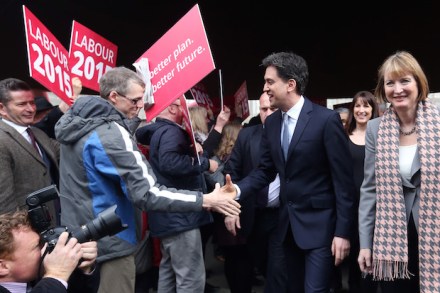
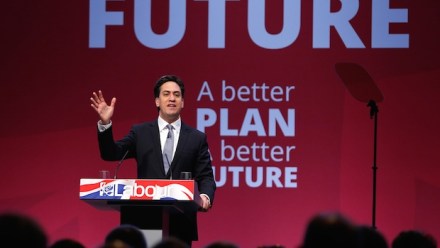
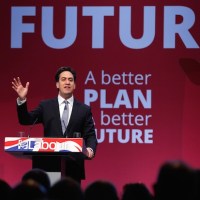
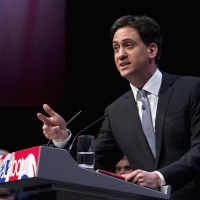
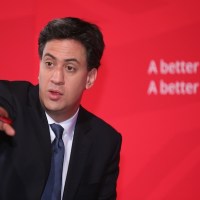
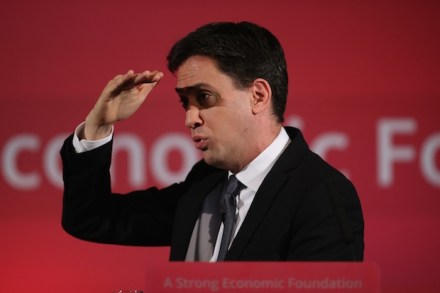
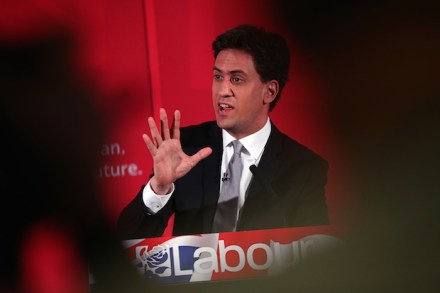
Ed Miliband gave a good, forceful, well-received speech at Labour’s manifesto launch this morning. It couldn’t have been anything else, given how close we are to polling day. There were some very well-delivered moments, particularly when it came to zero hours contracts and non-doms. The peroration was particularly energetic, with the Labour leader saying: ‘Over the last four and a half years, I have been tested. It is right that I have been. Tested for the privilege of leading this country. I am ready. Ready to put an end to the tired old idea that as long as we look after the rich and powerful we will all be OK. Ready to put into practice the truth that it is only when working people succeed, that Britain succeeds.

Campaign kick-off: 24 days to go

The third week of the campaign is going to be all about manifestos. Today, it’s Labour’s turn to launch its plan — while the Tories, Liberal Democrats, Ukip and Greens will take their turns in the coming days. But instead of the traditional strategy for government, folks in Westminster are describing the documents as ‘the opening salvo for coalition negotiations’. To help guide you through the melée of stories and spin, here is a summary of today’s main election stories. 1. The party of fiscal responsibility? There’s one big story to watch today: Labour’s manifesto. Many inhabitants of the Westminster bubble are currently en route to Manchester for the launch this morning.

Labour tries to confound expectations with tough-sounding manifesto front page

Labour’s manifesto launch today sees the party seeking to confound expectations. Even though the party would prefer to fight a comfortable election campaign on the NHS, the fact remains that no party has won when behind in the polls on both the ratings of its leader and on the economy. And so the first page of the party’s manifesto, which was released last night, says this: ‘Our manifesto begins with the Budget Responsibility Lock we offer the British people. It is the basis for all our plans in this manifesto because it is by securing our national finances that we are able to secure the family finances of the working people of Britain.’ That last in particular sounds like the kind of thing the Tories have been saying for a little while.

The Sun gets cold feet about Labour

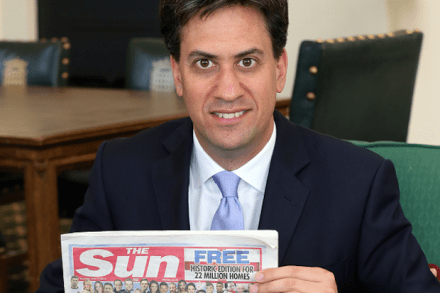
Earlier this month the Sun's election website ran a story about their plans to back Labour. In the online article, they teased that the paper was backing Labour, something which would come as a shock given that their owner Rupert Murdoch has an ongoing feud with Ed Miliband. IT'S OFFICIAL: We're first out of the traps... http://t.co/nmQZX3lzAJ #SunNation pic.twitter.com/Tr4oxLI8x5 — Tim Gatt (@TimGatt) April 2, 2015 However, upon further reading of the article it became clear that instead of backing Miliband in the general election, they were simply supporting a rather dashing mutt called Labour in a greyhound race.

Deficit? What deficit? Labour candidates ignore key issue

Ed Miliband famously forgot to mention the deficit in his 2014 conference speech, but you would have thought that at least some prospective Labour MPs consider it to be a crucial issue facing Britain. The country is, after all, spending £46bn a year on debt interest payments alone – the equivalent of the Defence, Home Office and Foreign Office budgets combined. But not so, according to new research presented at a briefing by Ipsos MORI this morning. The pollster interviewed new prospective parliamentary candidates from each of the four main parties - all standing in marginal or safe seats - and asked them to name their political priorities. Of the 29 Labour PPCs surveyed, not a single one brought up the £75bn budget deficit as a key issue facing Britain today.

Labour admit journalists ‘are people too’

Is Labour's war on the media finally over? After Mr S reported this week that journalists were jeered for asking questions at a Tony Blair event, relations between the party and the media appear to have warmed. As Ed Miliband and Ed Balls head north of the border to campaign with Jim Murphy, it fell to the Scottish leader to make peace with hacks. Opening up their press conference in Edinburgh to journalists' questions, Murphy declared they would let some 'people' ask questions too, once the pesky media had been dealt with: 'It's only journalists with their hand up at the moment, but they're people too.' A notable warming in relations, Mr S thanks Murphy for clearing that one up!

Just to confuse matters, the Tories have launched two very incongruous policies

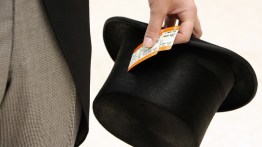
With every policy launch during an election campaign, it is worth asking why a party has chosen that policy and why it is launching it on that particular day. This is generally because answering those questions helps you work out what message a party is trying to send and whether they are on the defensive or offensive. But today it is worth asking this question simply because it would be nice to get an answer: why have the Tories launched two completely unconnected policies which don’t sound very Toryish on the same day? One of these policies is the freezing of rail fares, which begs the question, why did the Tories expend so much energy criticising Ed Miliband’s energy price freeze?

Is Ed Miliband really prepared to risk £8.27 billion on an election stunt?

It's a common assumption that non-doms pay little tax. It's certainly an assumption made by Ed Miliband, who has announced plans to scrap the non-dom status for long-term residents. 'There are 116,000 non-doms costing hundreds of millions of pounds to our country. It can no longer be justified and it makes Britain a tax haven for the few,' he said. But how does Miliband explain the £8.27 billion of income tax and NIC paid by non-doms in 2012-13? The average non-dom claiming the remittance basis pays £132,762 of income tax per annum, 25 times more than the average British tax payer. Whether Miliband likes to admit it or not, non-doms make a significant direct financial contribution to the country.

Portrait of the week | 9 April 2015

Home Tony Blair, the former prime minister, opposed a referendum on membership of the EU. In a speech at Sedgefield he said that, following the Scottish referendum, David Cameron, the Prime Minister, knew ‘the perilous fragility of public support for the sensible choice’. Opinion polls following a television debate by seven party leaders, which drew an audience of 7.7 million, were inconsistent. Nicola Sturgeon, the leader of the Scottish National Party, was held to have made a mark, while Leanne Wood, the leader of Plaid Cymru, and Natalie Bennett polled at between 2 and 5 per cent. Nigel Farage, the leader of Ukip, was seen to sweat profusely.

Podcast special: polls and personal attacks

With 28 days to go, is the momentum beginning to move towards Labour? In this View from 22 podcast special, Fraser Nelson, James Forsyth, Isabel Hardman and I discuss the latest polls and campaign developments. Five new polls have been released today, three of which show a Labour lead — should the Tories be worried? Have the two Scottish leaders' debates made any difference to the SNP's vote? And was Michael Fallon's attack on Ed Miliband premeditated?

Three new polls put Labour ahead

Three new polls out today have put Labour ahead of the Tories. At a time when the Conservatives are firing all guns at the opposition, Labour appear to be gaining some momentum. According to a new Survation/Daily Mirror poll, Labour is four points ahead on 35 per cent, compared to the Tories on 31 per cent, Ukip on 15, the Lib Dems on nine and the SNP and Greens both on four. Panelbase has conducted an online poll, which suggests Labour has a six-point lead at 37 per cent and the Conservatives are on 31 per cent. TNS has also released a poll which puts Labour ahead by three points on 33 per cent, compared to 30 per cent for the Tories.

Coffee Shots: More election yellow lines for Labour

Forget the red lines in this election, it's the yellow lines that Labour are having a daily struggle with. Yesterday it was there campaign bus, today it's Ed Miliband's motorcade. The vehicle was snapped flouting the law in Victoria this morning: [caption id="attachment_9069422" align="alignnone" width="510"] Photo: Chris Pollard[/caption] A gas guzzling Range Rover for his security detail? Whatever happened to the Energy and Climate Change Secretary who made a commitment, back in 2009, to cut our emissions by a third by 2020?

There’s no need for the Tories to descend into the gutter

You might be forgiven for expecting that a Defence Secretary giving a speech on defence during an election campaign would involve an announcement about his party’s defence policy. And Michael Fallon did ‘announce’ something today, which is that the Tories would commit to four nuclear submarines, updated missiles and warheads in a renewal of the Trident continuous at-sea nuclear deterrent. This was an announcement in the sense that the Defence Secretary said it in a speech with a party-branded board behind him, but it wasn’t a surprise.

Did Owen Jones once describe an ‘anti-Semitic trope’ as ‘eloquent’ during a book talk?

Today Owen Jones has criticised Michael Fallon for using the term 'stabbed in the back' to describe what he thinks Ed Miliband would do to Britain over Trident. The Guardian columnist has gone so far as to say that the phrase is 'anti-Semitic'. Michael Fallon’s “stabbed in the back” metaphor is deeply sinister. It is a classic anti-Semitic trope — Owen Jones (@OwenJones84) April 9, 2015 However, Mr S understands that Jones may not have always been so averse to the term. In 2011, Jones gave a Bookmarks Bookshop talk about his book  Chavs: The Demonization of the Working Class as part of the annual Trades Union Congress.

Podcast: what if Ed wins, the madness of Scottish politics and Catholic wars

Ed Miliband could still win the general election, but what would happen next? On the latest View from 22 podcast, The Telegraph’s Dan Hodges discusses this week's Spectator cover feature on what to expect from a Miliband premiership with George Eaton of the New Statesman. Would Miliband manage to take his lofty ideas about reshaping capitalism into No.10? Or would he be more pragmatic in power? Like his mentor Gordon Brown, could Miliband's indecisiveness turn out to be a fatal flaw? James Forsyth and Alex Massie also discuss the current madness of Scottish politics.

Ed dawn

[audioplayer src="http://rss.acast.com/viewfrom22/edcouldstillwin/media.mp3" title="Dan Hodges and George Eaton discuss what will happen if Ed wins" startat=40] Listen [/audioplayer]What if Ed Miliband wins? His victory is still seen, especially by those on the right, as a near-impossibility — an event so improbable as to defy the laws of political gravity. But then again, we’re three weeks away from the general election and still the Conservatives still haven’t managed to establish a convincing lead. He might yet defy the bookies. And what then? Imagine it’s the morning of Friday 8 May. Prime Minister Miliband has just crossed the threshold of Downing Street, the famous door swinging shut behind him. What happens next? One thing happens immediately.

Grand National Notebook

‘How’s your shoulder?’ someone asked recently, and it was only then I realised, for the first time in a while, that my shoulder felt good again. In last year’s Grand National — you might recall if you watched it on television — I had a heavy fall when going well on Long Run, the wonderful horse on whom I won the Gold Cup. I landed on my shoulder and had to hobble off the course. Those famously intimidating Grand National fences may have been made a bit more forgiving in recent years — thank God! — but they are still huge, and when you fall going over one it hurts. Not that I’m put off. The Grand National continues to excite me as much as any horse-racing romantic. The National crams every human emotion into about eight minutes.

Ruth Davidson, Scotland’s Iron Lady, could be just what the Tories need

Nicola Sturgeon has been described as a rock star politician. In Tuesday’s STV debate she looked like one who is suffering from second album syndrome. Having impressed a UK-wide audience in the seven-leader ITV debate last week, her reception at the Scottish version was far more muted, with some instant polls suggesting a narrow victory for Scottish Labour leader Jim Murphy. A dispassionate observer might place Sturgeon third, behind Murphy and an impressively plucky Ruth Davidson. It takes something to stand before a Scottish audience, where the Tory brand isn’t just toxic but radioactive, and earn applause for making the case to reintroduce prescription charges.