Economy

More bad economic news for the government

Presently, the waves of bad news are as relentless as biblical plagues. The latest trade figures show that Britain’s trade gap opened in December; the seasonally adjusted deficit stood at £9.2bn, a rise from £8.5bn in November. There are plenty of explanations as to why the export-led recovery failed to jump customs, despite the comparatively weak pound. The various acts of God couldn’t have helped and the continuing financial crisis on the continent will have further eroded demand.   However, the government will realise that these figures indict its growth strategy. As the ONS graph below indicates, the trade deficit is a persistent problem and one feared by the British Chambers of Commerce.

Osborne bests the Man With A Past

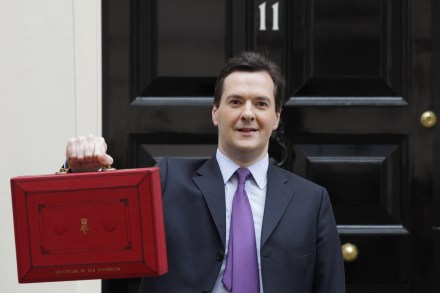
Balls is a bit like a vampire – he has bite, but he works best in the darkness. In the House of Commons, with those lights shining on him, his powers drain. George Osborne had the better of him in their brief exchanges at Treasury Questions. Balls led on the snow joke. But Osborne had pre-empted that earlier, when he first stood up. Balls teased him about going to Klosters in the winter, but these things only work in newspapers where you can run a picture of Osborne in ski gear. It leaves the House cold.   The key Osborne line was that Balls is “the man with a past” – and how. It was said with just the right touch of menace. And he had a fairly decent gag: that Eds Miliband and Balls both “know what's it's like to be people's second choice.

What has Osborne done today?

In October last year, Osborne announced a new levy on banks’ balance sheets. It was 0.05 percent for this calendar year, before rising to 0.075 percent from 2012 onwards. But, today, the Chancellor has announced that the ‘introductory’ rate has been abolished – so banks will be charged the 0.075 percent rate on all liabilities. Here's my nine-point Q&A, by way of delivering my take: 1) So, a retrospective tax? Not quite. He’s imposing a 0.05 per cent rate on balance sheets in January and February. But he’ll up the charge to 0.1 percent for March and April to compensate. It will go back to 0.075 percent in May. This is a move clearly intended to generate revenue, rather than change behaviour. 2) How much will he nab?

Irish to block EU integration

In continental lore, it is Britain that is often seen as the greatest impediment to EU integration. The government's EU Bill initially caused horror in the rest of Europe. Would Britain have to vote for each treaty change, even those needed to enlarge the Union? Before the text of the bill became clear, every self-respecting eurocrat spat the name 'Britain' over their lait russe. Even now, they are not best pleased. But in future it may not be Britain, but Ireland that will block any further EU integration. For Ireland is turning a lot more eurosceptic. The role of the euro in Ireland's decline remains a subject of debate. In eurosceptic circles, there is wilful ignorance of the role played by Ireland's politicians. Much better, it seems, to blame the euro alone.

Osborne quells some dissent with his latest ruse

This morning’s newspapers would have made grim reading for the government. The Department for Transport has been forced to reverse its helicopter privatisation plan, there are doubts that the baccalaureate will suit Michael Gove’s education reforms and diverse packs of hounds have converged on the Big Society fox – and this is a cruel bloodsport.  But, the master tactician has struck again. George Osborne’s sudden decision to raise an extra £800m through this year's banking levy has relieved some pressure from the government. This is a minor operation by the standards of Osborne’s previous political coups, but it diverts attention and illustrates that the government is making some progress in the arduous slog against the banks.

Osborne v Balls at Treasury questions

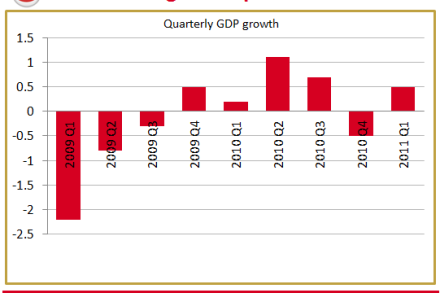
Tomorrow is the first Osborne Balls Treasury Questions clash. It should be a fiery encounter. There’s little love lost between the two men, they are both aggressive despatch box performers  and the two of them know that their clash over the economy is likely to be the major factor in determining the next election result. Balls has a fair amount of material to work with: the disappointing growth—or, more accurately, non-growth—figures for the final quarter of last year, the limited success of the national insurance holiday for new small companies and the failure to publish a growth plan.

King’s credibility is faltering

We at The Spectator have not had much company in criticising Mervyn King for the failure of his monetary policy. The Bank of England governor has a status like the Speaker used to: someone whose position must command respect, otherwise the system collapses. And yet there are Octopuses with a better track record in inflation forecasting. People have been repeating that the Bank’s independence is a great success for so long that it has become a truism. Why? We’ve just had a huge crash, the result of a credit bubble - fuelled by dangerously low lending rates. And the recipe for restoration? Even cheaper debt, with resurgent inflation. The British economic commentators agree with King that inflation is not a problem; 0.

Clegg stands up for deficit reduction

Cleggologists will mark down the Deputy PM's speech today as a typical effort. There was basically nothing in it that was new – but Clegg still put it across with more punch, and more persuasively, than most of his colleagues could manage. All of the slogans and pre-announced policies added up to something that sounded, fleetingly, like a plan for growth. Although we'll still have to wait for Vince Cable's review to see the outlines of that plan shaded in. Clegg's main point was straightforward enough: that the government has to, and will, go beyond deficit reduction to stoke the embers of the British economy. He then ranged across everything from the national infrastructure to – a theme of this week – endowing the British workforce with skills.

General Hague, attack

William Hague must be feeling that the incoming rounds are coming closer and closer. The Spectator, The Daily Telegraph and now The Times (£) have each allowed their pages to be used as Forward Operating Bases from which to launch attacks against the coalition's foreign policy. Even in the coalition's own ranks, dissatisfied foot-soldiers (and a even a few senior officers) think that General Hague has lost his appetite for the fight. Tories talk about a man whose defeat in 2001left a permanent wound, and how the Christopher Myers fiasco left another gash. The government's equivocal response to events in Egypt has provoked fresh criticism, while the army of eurosceptics, once Hague's Praetorian Guard, no longer trust their commander.

Forget Mandarin. Latin is the key to success

As promised, here is an extended version of an article from the skills supplement in this week’s issue of the Spectator. On the face of it, encouraging children to learn Latin doesn’t seem like the solution to our current skills crisis. Why waste valuable curriculum time on a dead language when children could be learning one that’s actually spoken? The prominence of Latin in public schools is a manifestation of the gentleman amateur tradition whereby esoteric subjects are preferred to anything that’s of any practical use. Surely, that’s one of the causes of the crisis in the first place?

Much more than a networking event

What's the point of Davos? This is a question seldom addressed in the reports filed from the five-day "World Economic Forum" which ended on Sunday. Many speeches are made, many issues debated, but it is not a place where decisions are taken. It is not a G20. Manifestos are not launched there. It exists to serve a very particular function: every year for a short period of time it becomes the temporary capital of the globalised world. Top business and political leaders, distinguished academics and journalists - all committed to improving the state of the world - flock there to meet each other, swap ideas and then go home. This year, I went along for my first visit - and I promised to file my own report for CoffeeHouse on what I made of it.

Council gorillas get on the buses

The cold war in Britain’s localities is warming up. Buried in the Telegraph and the Financial Times is the news that councils are cutting local bus services, and central government is being apportioned blame. An organisation called Better Transport has launched a campaign titled Save Our Buses. It claims that straitened councils have been forced to shed £34 million from the subsidised funding of local buses; 70 percent of routes have been affected so far.   This is a prime example of local government conniving to avoid responsibility for spending contractions. With adroit calculation, councils bastardise vital services to inconvenience those they represent.

Introducing Britain’s skills crisis

Did you know: Britain trails well behind other countries such as the US, Germany and Poland when it comes to educating its workforce? Did you know: the number of young people not in employment, education or training has risen by around 40 per cent over the last decade? Did you know ... oh, you get the idea. All the statistics, and more, are in the booklet on Britain's Skills Crisis that is included in this week's Spectator. For CoffeeHousers who don't buy the magazine (although you should, etc – purchasing options here), you can read the supplement for free via this snazzy, page-turning whatsit. We'll also put one or two of its articles up on Coffee House in due course.

Rooting out the cause of the crisis

David Frum is doing a great series on the Financial Crisis Inquiry Commission report. The report is, obviously, US-centric but its argument that the problem was not with the regulation but the regulators strikes me as highly important: “[W]e do not accept the view that regulators lacked the power to protect the financial system. They had ample power in many arenas and they chose not to use it. To give just three examples: the Securities and Exchange Commission could have required more capital and halted risky practices at the big investment banks. It did not. The Federal Reserve Bank of New York and other regulators could have clamped down on Citigroup’s excesses in the run-up to the crisis. They did not.

IFS say Labour’s policy would mean higher interest rates

From the start of the financial crisis, the Conservatives have argued that when a country¹s finances are in a mess, the best way to manage demand is through monetary activism and fiscal responsibility. Going into this crisis, Britain¹s finances were indeed in a mess. We had the biggest structural deficit among major developed economies (according to the IMF, OECD, oh, and Alistair Darling). To claim there was no structural deficit is to oppose the truth. The principles of monetary activism and fiscal responsibility underpin the approach to the recovery too. By dealing with the fiscal mess, we can keep interest rates lower for longer, and avoid the sorts of financial meltdown seen in Ireland and elsewhere.

Treading the road to recovery

It will have been a quiet morning in the Balls household. Fresh economic indicators suggest that the British economy is not in some cuts-induced recession but, instead, doing rather nicely, thank-you. As I said last week, economic health is assessed by all manner of indices – and the ONS (which is forever having to tear up its GDP forecasts) might just have boobed last week with its preliminary Q4 GDP figures. Today we have the Manufacturing PMI surging to heights not even reached in the early 1990s:   Now, this might be a flash in the pan, you say. But then consider corporate liquidity – that is, how much debt Britain’s companies have lurking on their balance sheets. The figures out today are not too bad either.

What are Osborne’s options?

One of the most eyecatching political reports of the weekend was squirrelled away on page 16 (£) of the Sunday Times. It's worth clipping out for the scrapbook, even now. In it, Marie Woolf reveals some of the fiscal sweeteners that Osborne might sprinkle into the Budget. There are two particularly noteworthy passages: i) Raising the personal allowance. "The income tax threshold is already set to increase by £1,000 to £7,457 from April 1. However, Osborne is expected to raise it by about a further £500. Details of the additional concession are still being worked on, but it marks a victory for the Liberal Democrats, who have been arguing within government for tax cuts for the poor." ii) Holding off on 50p.

Spelman’s a lumberjack and she’s ok

The coalition’s plans to privatise Britain’s woodlands have received what is euphemistically termed ‘a mixed reception’. Caroline Spelman’s consultation document and accompanying article in today’s Times (£) may change that fact. Both are historically conscious and upholstered with reassuring pastoral interludes – an elegant departure from most ministerial rambles.   But, this government's politics breaks well clear from the literary immersion. There is a dose of Thatcherism. Spelman is adamant that the state should not be managing forests, and she wants private companies to exploit commercially valuable forests.

Deregulation is the path to growth

The government’s decision to increase the period which employees have to serve before they can bring a case of unfair dismissal from one to two years is welcome. But if it wants to encourage small and medium sized enterprises, the engine of the economy, to hire more people then they need to take the shears — not nail scissors — to regulation and employee protection laws. Camilla Cavendish has a cracking example of the absurdity of the current system in her column (£) today: 'A London neighbour of mine, Mr B, runs a small business that is doing well. Last year he took over an insolvent company where the staff were about to lose their jobs.