Economy

Nothing new, but much to ponder, in Cameron’s immigration speech

There is, really, little that is new in David Cameron's speech on immigration today. Besides one or two grace notes, almost all of its policy suggestions appeared in the Coalition Agreement: you know, all the stuff about a cap on immigration and a Border Police Force. Its rhetoric is strikingly similar to Cameron's last big speech on immigration in October 2007. So if he's not saying anything particularly groundbreaking, what is he saying? With the local elections only three weeks away — and on the back of the Lib Dems' newfound assertiveness — it's hard not to see this as an outreach exercise. This is one for core Tory voters, or perhaps those considering voting Ukip or worse. Which isn't to say that Cameron's speech is a Bad Thing.

Why we should be concerned about debt interest

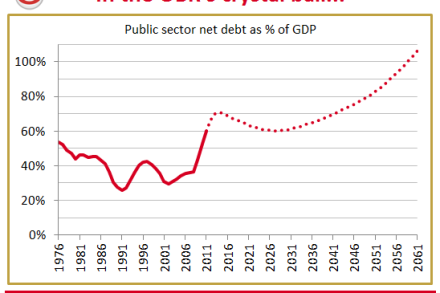
There's an interesting post by Éoin Clarke on debt interest doing the rounds. It originally appeared on his blog, but was soon commandeered by LabourList — and little wonder why. Dr Clarke's point is a perceptive and striking one. Debt interest, he says, is lower now than it was under John Major. The implication is that when George Osborne rattles on about the money blown on just "servicing our debt," we should take it with an almighty heap of salt. It's not, perhaps, as bad as all that. Or, rather, that's one way of looking at it. There are other ways, which I would list thus:   1) Going beyond 2011.

Panic over? Perhaps not…

Is the inflation panic over? After rising for five consecutive months, CPI inflation went down by a 0.4 percentage points in March, to 4.0 per cent, taking the City by surprise. RPI inflation also went down, by 0.2 percentage points. The numbercrunchers at the Office for National Statistics put it down, largely, to a fall in food and drink prices. The cost of fruit is 2.7 per cent down on last March. The cost of bread and cereals, 2.6 per cent. Yet we shouldn't get ahead of ourselves. While this will certainly reduce the short-term pressure on the Bank to increase rates — as well as on the nation's pocketbooks — one month does not maketh a trend. The inflation debate in Britain is always carried out in the absence of a key metric: inflation forecasts.

What was Brown’s biggest mistake?

“I have to accept my responsibility.” Who would have thought that Gordon Brown would ever breathe those words, let alone breathe them to a conference in America over the weekend? Our former PM has, it's true, suggested that his regulatory system was inadequate to the financial crash before now. But here he was much more explicit: “We set up the Financial Services Authority believing the problem would come from the failure of an individual institution. That was the big mistake. We didn’t understand just how entangled things were.” And that's event before he got onto the "responsibility" bit. I'll repeat it, just in case it didn't sink in the first time: “I have to accept my responsibility.

The Vickers Review, acceptable to both halves of the coaltion

The Vickers Review into the future of banking appears to have prevented a possible coalition row. The Tories and the Liberal Democrats have had different views on what to do about the banks, with the Lib Dems keener to break up the banks come what may and the Tories more worried about preserving the competitiveness of the City.   At the very start of the coalition there was a rather unseemly turf war between Cable and Osborne about who controlled policy on the banks, and many have expected a row to break out when he review reported. But, as we predicted on Coffee House back in February, the review has come up with a solution acceptable to both sides.

Ferguson’s triumph

The last episode of Niall Ferguson’s documentary series, Civilization, has just been aired — and for those who missed it, it’s time to buy the DVD box set. Or, better still, read the book. Ferguson is, for my money, one of the most compelling, readable and original historians writing today. His books stand out for throwaway lines which can change the way you think about what’s happening now. Understanding of history shapes our politics, whether we admit it or not. And myths about history also fuel political myths. How often do we hear it said that the Great Depression came about because government didn’t borrow in the hard times? A myth — but if enough people believe it, it can justify a government embarking on ruinous debt binge now.

Meanwhile, in America…

We really oughtn't let the weekend pass without some mention of political events across the Atlantic. As you've probably heard, a US government shutdown was avoided on Friday evening, and all thanks to a budget compromise which saw Barack Obama slash a cool $38 billion from his spending plans. Although the debate over who has credited or discredited themselves is still ongoing, it's striking that the Republicans — urged on by the Tea Party corps — achieved around two-thirds of the cuts that they demanded. Yet disaster, or at least the prospect of it, has still not been averted. The Tea Party has already claimed several fiscal scalps along the way — and the next target for their administrations is the impending debate over America's debt ceiling.

The Treasury Select Committee gets prescriptive

Andrew Tyrie promised that the Treasury Select Committee would be an assertive, insistent body under his stewardship — and he hasn't disappointed so far. The committee's recent evidence sessions have been fiery affairs, particularly by the usual standards of these things. And today they have released the result: an extensive and prescriptive report into last month's Budget. Several of the report's observations are worth noting down — not least that advance briefing of the Budget is "corrosive of good government," and that "almost all the evidence received [about the government's Enterprise Zones] is unsure about the extent to which they will contribute to UK growth.

Osborne needs to make his case for growth

The Guardian have an odd story today. “Business chiefs who backed cuts now doubt UK growth,” runs the headline — suggesting that these sinners are now being confronted with the error of their own ideology. Who are the business chiefs? We have Archie Norman, the retired head of Asda, now part-time chairman of ITV. He “said the government's growth targets were too optimistic”. Set aside the fact that the government doesn’t make growth targets now, and has subcontracted that the Office for Budget Responsibility. Where is the connection between growth downgrades and cuts? In the imagination of The Guardian, I suspect.

Doing the splits

When is a split not a split? When it's a subsidiary, of course. We learn this morning that the Vickers Banking Commission will not recommend a complete, Glass-Steagall-style separation of retail and investment activities. But it will advise that banks erect some sort of barrier between the two, to ensure that everyday savers' (and taxpayers') cash isn't risked by the Masters of the Universe. Specifically, it will propose that banks create subsidiaries out of their investment arms. Those subsidiaries could then go bust without, in theory, affecting the retail half of the equation. As Robert Peston explains, there are two ways of implementing these subsidiaries — and the Vickers Commission is expected to hurl them both out into the realm of public debate.

Europe, and the UK, should be much more proactive about Portugal

As Portugal bites the dust – following Ireland and Greece in asking for an EU bail-out – the most important question is still not being asked by EU policy-makers, or by the British government for that matter: will a bail-out actually solve any of Portugal’s problems? The simple answer is, it won’t. Asking the European Central Bank to take on more junk bonds, or piling more taxpayer-backed loans on Portugal’s already heavily indebted economy is not a long term solution. Ireland and Greece have already sought to renegotiate their bail-out terms as they are struggling to grow fast enough to repay their EU/IMF loans (ECB rate increases like the one we saw yesterday are unlikely to help).

A headache made in Lisbon

Developments aplenty on the Portuguese front — the most noteworthy being that Britain is probably in for a €4.8 billion share of the €80 billion tab. Robert Peston explains the numbers here, although it basically comes down to the lending mechanisms that will be deployed. Add up our 13.5 per cent exposure to the European Financial Stabilisation Mechanism (EFSM) with our 4.5 per cent exposure to the IMF's pot, and it comes to €4.8 billion. Or, rather, £4.2 billion. The politics of the situation are precarious for the coalition. Yet I doubt they'll be unduly troubled by Ed Balls's suggestion that "it would be better if this was sorted out by euro area countries themselves given that this is a euro area issue".

Monbiot’s mission

George Monbiot is undergoing an astounding and very public transformation. Last week he overcame the habit of a lifetime and fully endorsed nuclear power as a safe energy source. He went further this week, attacking the anti-nuclear movement for perpetuating lies and ignoring the consensus around scientific facts. He levels special criticism at the allegedly lax scholarship of Dr Helen Caldicott, a decorated primate of the anti-nuclear communion.  He also debunks the myths surrounding the disaster at Chernobyl and laments that campaigners have abused that tragedy by exaggerating its consequences. Monbiot’s tone is neither arch nor righteous. Rather, he’s disappointed and the piece has a dignified poignancy.

Lords: government not championing European single market “strongly”

Tucked away in an old building, where few people knows of its existence, lives one of the most important parliamentary creatures - the House of Lords European Union Committee. Often ignored because it applies analysis to a debate where loudness is the main currency, it has produced a new report on the Single Market. The government would do well to read it. For pushing the Single Market should be what animates the Europe Directorate in the Foreign Office. The Single Market is the main reason for British membership of the EU and the committee implies that successive governments, including the Cameron administration, have dropped the ball in this area. As their report puts it, the UK should 'return to its position of strongly championing the Single Market.

The cost to a nation

When the West looks at Japan, it's strange that so much attention falls on the Japanese nuclear plants when the tsunami – water, mud and debris – was by far the greater killer. The picture of the tsunami damage is becoming clearer all the time. Here, from my vantage point of Singapore, is the latest summary: Deaths: 11,938 people are dead. More than 7,000 of them died in Miyagi prefecture, over 3,000 in Iwate and 1,000 in Fukushima. 15,478 people are missing. The death toll rises daily. Searches are on for orphans. Displacement: 164,200 people have been evacuated due to the tsunami and live in makeshift shelters. Only one-third of these are regularly served warm food, says a Mainichi survey.

BREAKING: Car bomb explodes in Omagh, County Tyrone

Not clear as yet if there have been any casaulties. More to follow. Reports are sketchy, but it seems that the blast took place in a residential road, away from the crowded central shopping areas that were the scene of the bloody atrocity committed 13 years ago.  The bomb was planted underneath the car of a local Catholic PSNI officer .The officer is critically wounded.  This act is very likely to have been perpetrated by extreme Republican dissidents; and it follows a trend of Republican/gang violence against police in the province, a battle for which London and Stormont allocated more than £240 million last month. UPDATE: DUP MP Jeffrey Donaldson reports that the officer has died.

Clearing up after the storm

The recession has made Britain's banks less competitive and they should be broken up, concludes the Treasury Select Committee. As the banking system spiralled towards oblivion in 2008, the market became more concentrated. ‘The financial crisis has resulted in significant consolidation of the UK retail market. Well known firms such as HBOS, Alliance & Leicester and Bradford and Bingley have either exited the market or merged with rival firms. A large number of building societies have merged, undermining the diversity of provision in the sector. Whilst these ‘rescues’ were necessary in order to preserve financial stability, the consequence has been to reduce competition and choice in the market.

At last, Grayling takes on the Ancien Regime

To disguise the radical nature of reform, one need only make it boring. And here Chris Grayling has succeeded spectacularly. Today he has announced further details on the ‘Work Programme’ and the ‘Benefit Migration’, which sound like the type of well-intentioned but doomed reforms that ministers tried over the Labour years. The welfare state has incubated the very ‘giant evils’ it was designed to eradicate. There are, scandalously, 2.6 million on incapacity benefit right now – a category which ensures they don’t count in unemployment figures. Brown didn’t care much, but Grayling is taking this head-on.

Irish banks in a worse state than was thought

Robert Peston called it: the Irish banks are mired. The latest round of stress tests has been conducted and the headline figure is that the Irish banks face a shortfall of 24 billion euros. A major recapitalisation will follow and it’s likely that more institutions will be taken under state control. Ireland is also likely to ask for more cash from the EU. These tests were based on conservative criteria, where the Irish economy contracted by 1.6 percent this year, unemployment peaked at 15.8 percent and there was a cumulative collapse in property prices of 62 percent. It’s grim in Ireland, but not that grim: most forecasters are predicting GNP growth of around 1 percent in 2011.

Ed Balls ties himself in knots

The Most Annoying Figure in British Politics™ is spread absolutely everywhere today: in the newspapers, on Twitter and, most notably, in interview with the New Statesman's Mehdi Hasan. The interview really is worth reading, not least because it pulls out and probes some of Ball's arguments, both for himself and for Labour's fiscal reasoning. Guido has already dwelt on the former — "I'm a very loyal person," quoth the shadow chancellor — but what about the latter? Three things struck me: 1) Oh, yeah, there was a structural deficit. The Big News here is probably Balls's admission that Labour did run up a structural deficit (i.e. a deficit that remains even when the economy is functioning as well as it should) after all.