Economy

What happens when AI surpasses humans?

From our US edition

I recently sat down to dinner with some very smart economists. I am the chief executive of an artificial intelligence company and so the conversation swiftly turned to the value of AI for the economy. The economists had many interesting things to say, both about the advantages of AI adoption and about the displacement effects on jobs. But about halfway through the dinner, another AI chief executive offered an opinion that struck me. He said: “I can’t quite articulate it, but I have a sense that what you are measuring with your GDP analysis is not what I care about. You treat this like an economic question. But it’s more like a geopolitical question.”  At a gut level, I knew exactly what he meant – but I also couldn’t clearly state the distinction.

AI

The great big, beautiful risk

From our US edition

The electoral risk to politicians involved in passing a dog's breakfast of a "big, beautiful bill" – and there have been too many of this century to count – is often overstated. Once bills this large and unwieldy are passed there are a litany of problems that emerge as Americans, dulled into frustration by the same old swamp, discover only too late which specific policies negatively affect their lives and businesses. But then there are also things they like about it too, and even measures that are initially unpopular find purchase. And I do mean purchase in both senses, as in literally bribing voters with their own money, as Barack Obama's Medicaid expansion did.

Bill

Mark Carney, the mischief-making pin-up

Well, would you look at Mark Carney. Just three months ago I described the incoming prime minister of Canada and former governor of the Bank of England as ‘a fish-out-of-water technocrat’ who made little public impact over here and was swiftly forgotten after he left in 2020. When I once came across him hunched and dark-suited in the Pret queue at King’s Cross, midway through his Bank tenure, I actually felt sorry for him. But here he is, beer-swigging in an Ottawa bar with Sir Keir Starmer; cutting Donald Trump short in a press call before the G7 meeting; shedding his eco-credentials to champion Canadian oil and gas; and generally looking the statesman at ease with his people. What happened?

The Sizewell delusion

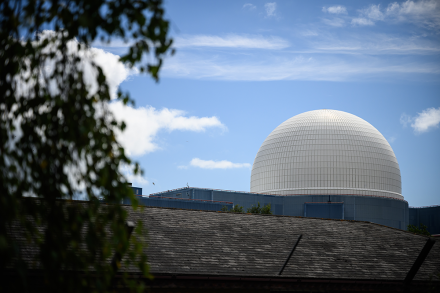
The Chancellor’s promise of £14 billion for the Sizewell C nuclear power station in Suffolk is hardly news. The project has been talked about for 15 years while the existing UK nuclear estate has gradually been shut down and the only other new station, Hinkley Point in Somerset, has stumbled to a decade-long delay and £28 billion of budget overruns. Quite some optimism – verging on Milibandian delusion – is required to embrace the idea that Sizewell will come quicker and cheaper because it will replicate Hinkley Point while avoiding its mistakes. And since Chinese money has been ruled out, it’s still a mystery as to who else will pay for the project beside HMG and the French utility company EDF.

Britain needs reform

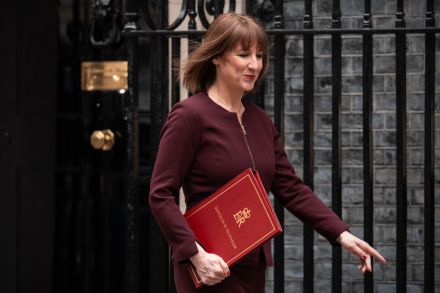
This week’s spending review confirms that where there should be conviction, there is only confusion; where there should be vision, only a vacuum. The country is on the road to higher taxes, poorer services and a decaying public realm, with the bandits of the bond market lying in wait to extract their growing take from our declining share of global wealth. When every warning light is flashing red, the government is driving further and faster towards danger The Chancellor approached this spending review with her credibility already undermined. Promises not to raise taxes on working people translated into a tax on work itself which has driven up unemployment.

What will save the Tories? The economy, or Robert Jenrick?

16 min listen

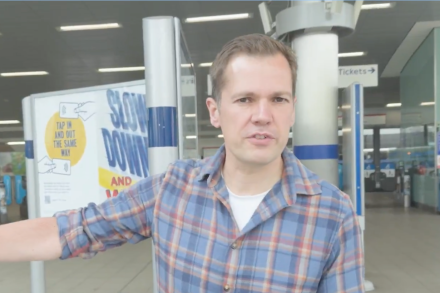
Lots to discuss today: Robert Jenrick takes on TfL, a Nazi jibe from the attorney general and allegations of shoplifting made against our own Michael Simmons. But we start with Keir Starmer’s big speech yesterday, where the theme was ‘get Nigel’, after polling from More in Common showed that framing the election as a two-horse race could be beneficial to Labour. They are attempting to cut the Tories out altogether but, in response, the Conservatives plan to use fiscal credibility as the battleground to crawl back up the polls. Will the economy save the Tories? Elsewhere, Robert Jenrick is the star of the week after a video of him reprimanding fare-dodgers on the Tube went viral, racking up more than ten million views on X.

Deals, deals, deals vs China, China, China

From our US edition

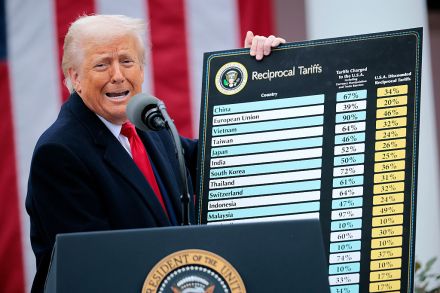
How was your Liberation Month? It’s been almost 30 days since Donald Trump stood in the Rose Garden of the White House and announced a shocking set of massive tariffs on the world. The event caused huge convulsions in the economic universe: trillions were wiped off the stock market and, under huge pressure, Trump did agree to a 90-day pause on reciprocal tariffs. After that he exempted electrical goods, though his standard 10 percent remains, and the heads of most financial analysts are still spinning trying to figure out what it all means. Yet for all the angst and the apoplexy, yesterday the S&P 500 index closed just 1 percent down from where it was at the beginning of the month.

Mission creep has infected the IMF and the World Bank

From our US edition

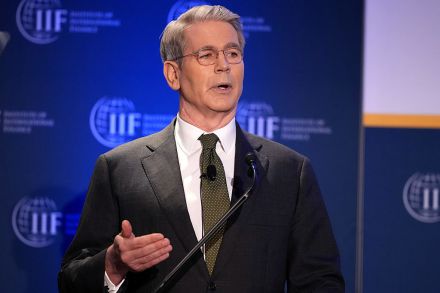
The following is a transcript of a speech delivered yesterday by the Treasury Secretary Scott Bessent. In the final months of World War Two, Western leaders convened the greatest economic minds of their generation. Their task? To build a new financial system.  At a quiet resort high up in the mountains of New Hampshire, they laid the foundation for Pax Americana.  The architects of Bretton Woods recognized that a global economy required global coordination. To encourage that coordination, they created the IMF and the World Bank.   These twin institutions were born after a period of intense geopolitical and economic volatility.

IMF

Save London’s black cabs!

Donald Trump’s Soprano-like threat that the ‘termination’ of Federal Reserve chairman Jerome Powell ‘cannot come fast enough’ has been headlined as one of his wildest thrusts to date, but is actually one of his most conventional. Prickly politicians always resent unelected central bankers, though they also see them as useful scapegoats for economic trouble. Liz Truss longed to fire Andrew Bailey from the Bank of England; Gordon Brown gave Eddie George’s Bank its ‘independence’ but took away so much of its power that George nearly resigned; Margaret Thatcher never accepted the most potent modern governor, Gordon Richardson, as ‘one of us’.

Which pope has served the longest?

Papal reign The mostly elderly runners and riders to be the next pope are unlikely to challenge the record for the longest papal reign – still held by the very first pope, St Peter, who served for 34 years in the 1st century. The second-longest reign was the 31 years and 7 months served by Pius IX between 1846-78, while third was Pope John Paul II (1978-2005). John Paul II was preceded by one of the shortest papal reigns in history, that of Pope John Paul I, who died just 33 days after being chosen in August 1978. Nine have lasted less than a month: Urban VII lived for just 13 days in 1590.  Power play Ed Miliband claimed that Britain has such high electricity prices because of our reliance on gas. Is that true?

How America can develop its own rare earth elements industry… safely

From our US edition

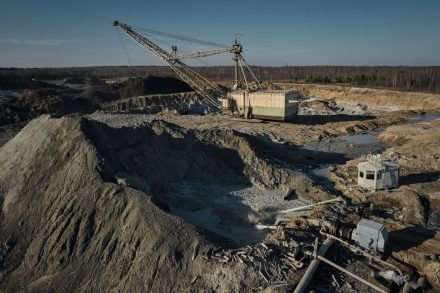
Give a country rare earth elements and it’ll have fighter jets, missiles and warships for a day. Force a country to extract and process its own rare earth elements and it’ll be safe from relying on countries run by unstable dictators forever.  Such is President Trump’s sensible line of thinking as he keeps up America's trade war with China. As China imposed export licensing restrictions on seven rare earth elements, or REEs, last week, Trump signed an Executive Order “launching an investigation into the national security risks posed by US reliance on imported processed critical minerals and their derivative products.” The administration is now pursuing a deal to procure REEs from Ukraine.

rare earth elements

The economy is growing!

11 min listen

Finally, some good news for your Friday: the economy is growing! Just when everyone seems to be revising down expectations of growth, the Office for National Statistics (ONS) estimates that GDP grew by 0.5 per cent in February. It also revised January’s figures upwards to give growth for the last quarter of 0.6 per cent, and annual growth of 1.4 per cent. It looks – for now – that the Reeves recession has been put on hold and that Labour's growth agenda could be working. That said, Labour cannot afford to celebrate just yet. There is reason to believe the figures could be overstated, and there are some trust issues with the ONS – the government last week announced a review of its ‘performance and culture’.

Trump loves chaos. What happens when he loses control?

From our US edition

“Don’t be a PANICAN,” the President shared on his Truth Social account this morning, as the Dow was dropping 900 points. This is Donald Trump’s new word for his tariff critics, who he has grouped together as the “new party based on Weak and Stupid people!” There is another way, the President insists: “Be Strong, Courageous, and Patient, and GREATNESS will be the result!” It’s another post in a long line of all-caps messages shared by the President over the weekend. “ONLY THE WEAK WILL FAIL!” was Friday’s update. “WE WILL WIN. HANG TOUGH,” was Saturday’s inspirational message.

control chaos

Give Trump’s tariffs a shot

From our US edition

So the big question is: will it work? Will Trump’s protectionist policies, announced with some fanfare at a Rose Garden event at the White House yesterday, increase American prosperity? Or will they harm the economy?  Opinion on that matter is sharply divided. In one corner we have the free traders. They are wringing their hands and warning about higher prices, disruption of international trade and a trade war no one can win.  In the other corner are – what to call them? Most are not “anti-free traders” or “economic protectionists” (though some are).  Let’s call them “fair traders.” They like the idea of free trade – in theory. What they don’t like is the ethic of “free trade for thee but not for me.

Welcome to Terrible Tuesday

14 min listen

Britain’s real economic pain starts today. Overnight, the cost of living has jumped once again: energy, water, broadband, public transport, TV licences – all up. So too are council tax bills, capital gains, and vehicle taxes. And that’s before we even get to the slow stealth march of fiscal drag and the impact of World Tariff Day which could wipe out Rachel Reeve's newly restored headroom. Jonathan Reynolds was the unlucky minister on the broadcast round this morning trying to defend this increasingly bleak picture, is there any good news?  James Heale speaks to Katy Balls and Michael Simmons.  Produced by Oscar Edmondson.

‘Austerity is back’: Inside Labour’s emergency budget 

Dominic Cummings may have left Whitehall but his spirit lives on. Pat McFadden, the Chancellor of the Duchy of Lancaster, has repurposed Cummings’s call for ‘weirdos and misfits’ as a plea for ‘innovators and disruptors’. Downing Street this month launched an ‘AI Ideas’ competition in pursuit of bright sparks. A hackathon will follow. In No. 10 and 11, aides channel Cummings’s language as they talk of acting as an ‘insurgent’ government. ‘We’re all Dom now,’ says one government figure. In one area, Cummings’s influence on the new government is most apparent: the diagnosis of a failing state. Keir Starmer’s chief aide Morgan McSweeney has never met Cummings, but these days they share an analysis of what has gone wrong in Britain.

Recession? What recession?

From our US edition

The stock market, traditionally a leading indicator, entered correction territory last week. But does that indicate that a recession is coming? Well, it’s an old saying on Wall Street that the market has predicted ten of the last three recessions. Markets hate uncertainty, and no one knows how President Trump’s efforts to use American tariffs to force our trading partners to lower theirs will turn out. But foreign trade is increasingly important to all countries, so it’s likely that, after some political Sturm und Drang, deals will be struck and international trade will continue the strongly upward path it has been on since the end of World War Two. By definition, a recession is two consecutive quarters of contraction.

shares

Where have all the new businesses gone?

The Chancellor’s appeal to regulators last month for suggestions to boost growth was mocked as evidence that the government itself is hopelessly bereft of ideas. Might as well ask traffic wardens to devise urban regeneration schemes, we scoffed, or food safety inspectors to plan state banquets. But it made sense to the extent that smarter regulation really should have the potential to boost economic activity – and there are signs the message has got through. Bank of England governor Andrew Bailey speaks of using Brexit freedoms to shield smaller UK banks from ‘Basel rules’ that would require them to hold larger reserves.

Donald Trump kicks off the tariff wars

He did it, Joe! Following on from the $79 billion worth of tariffs he implemented in his first term – which went largely untouched by Joe Biden’s Administration –  last night Donald Trump made good on his election promise to opt for another round of tariffs: this time, a 25 per cent tax on imports from Canada and Mexico, with China facing an additional 10 per cent levy on its goods. Despite whispers that the President might water down his plans in the last hours, he carved out very few exceptions for his new tax orders, which include Canadian oil and energy supply. It is now expected that America will be in a trade war with all three of its largest trading partners It’s a staggering tax, the cost of which experts have been desperately trying to calculate overnight.

Would it be worth Trump buying Greenland?

London’s capital market needs a kick in the pants, as I write every week, and ‘activist investors’ are no bad thing if they provoke sharper corporate performance. The assault by the New York hedge funder Boaz Weinstein on seven UK investment trusts – demanding shareholder votes to replace directors with his own people and take the management of the trusts into his own firm, Saba Capital – looks like the kind of intervention that might bring positive change to the UK’s historic investment trust sector, which accounts for a third of FTSE 250 companies but according to critics offers lacklustre returns, with share prices too often stuck at discounts to the underlying value of trusts’ asset portfolios (NAV).