Economy

The truth about Kate Garraway and me

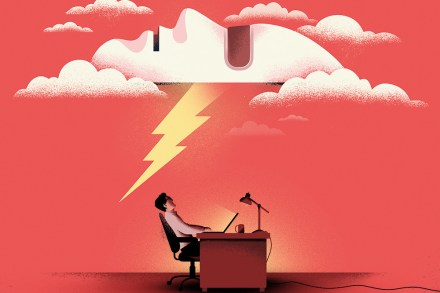
Since Victorian times, sandwich-board men proclaiming doom have been part of our urban street life, particularly in London. I’ve felt like a sandwich-board man lately, having warned endlessly in my weekly Telegraph column that Britain is heading for fiscal meltdown. In June 2024, just before Labour took office, I signalled that a government led by Keir Starmer ‘could soon face borrowing difficulties’. Six months later, I cautioned ‘we face a return to 1976 unless Labour changes course’ – recalling that 50 years ago, Britain was forced to declare itself insolvent and go to the International Monetary Fund for a bailout. It brings me no pleasure that many of the outcomes I warned of, to such derision, now dominate the news.

The impoverished aristocrat’s guide to the cost-of-living crisis

According to a YouGov survey earlier this year, the cost of living tops the list of public concerns at 54 per cent before immigration and asylum (49 per cent), health and the NHS (43 per cent) and the economy (33 per cent). According to the Independent, half of Britons have under £25 left at the end of the week and 79 per cent say the cost-of-living crisis has negatively affected their wellbeing. But here – at long last – is where the impoverished aristocrat comes out on top. Often found lurking in the depths of rural England, the impoverished aristocrat is more than used to weathering bad economic climes. Both they and their ancestors have dealt with a fair few cost-of-living crises in the past.

How Gen Z became indebted to ‘doom spending’

Man on the television says you’ll never pay off your student loan. Lady on social media says the UK has the worst unemployment crisis since 1932. Politician says you’re off to war. Sally from HR says the company is ‘restructuring’ and fires you over a Microsoft Teams meeting. Science guy on Instagram says there’s a new disease in India. Ex-girlfriend says you’ve let yourself go and your body looks like dropped yoghurt.  In short, you’ve got a lot going on. So, what can you do about it? Well, according to some, the answer is simple: spend. Spend what you don’t have. Spend on what you don’t need. Spend until your overdraft is gasping for air, and then spend some more.

The two faces of modern Japan

Japanophiles, look away now. A country renowned for inspiring fascination, warm feelings and not a little envy in its rapidly rising numbers of visitors – from crime-free streets to clean and plentiful public toilets – is in the grip of problems deeper and darker than you might imagine. The classic Japan itinerary reveals little of those problems. You’ll enjoy hyper-modern Tokyo with its fabulous restaurants, flawless transport and non-stop shopping and entertainment. You’ll jostle tourists and schoolchildren for the perfect view of the Golden Temple in Kyoto without losing your enthusiasm for Japan’s ‘eternal city’. Then you’ll fly home with pretty much only good things to say about Japan and the Japanese.

Let’s bring back elevenses

Join me, if you will, for a short stroll down the Charing Cross Road, back in the days when it was festooned with bookshops and Morris Oxfords. At Cambridge Circus, there was a large catering equipment shop owned by my great-uncle, Bill Farnsworth. He made it big when he sold water coolers to the American military. Above the enormous ground-floor showroom was his counting house, where men in tailored suits laboured over ledgers on high sloping desks, dipping their nibs into ink pots. This would have been about 1960. Were you to have a meeting with Bill in his office, say in the late morning, he would invariably turn to his walnut drinks cabinet and offer you a glass of something reviving and strong; a sherry, port or brandy, perhaps. Armagnac? It’s very good.

The Boring Twenties: good British fun is being strangled

A century ago, Britain had reason to despair. A generation had been lost to war, influenza was killing those who survived and revolution was sweeping across Europe. A strange new movement called the Blackshirts was marching on Rome just as Russia’s civil war was ending in Soviet victory. Yet Britons were out having fun. The original Bright Young People cavorted across the country, holding scandalous parties. ‘Please wear a bathing suit and bring a bath towel and a bottle,’ read one invitation. The Metropolitan Police filled Bow Street’s cells with hundreds of nightclub revellers, mainly girls in fancy dress. Dancing, according to one clergyman, was a ‘very grave disease which is infecting the country’.

Who’s up to the challenge of restoring Britain’s prosperity?

In 1956, Malta held a referendum on joining the United Kingdom. Since the islands were economically reliant on the Royal Navy, it was unsurprising that three-quarters of those voting believed their future lay in integrating with their colonial masters. But after a lukewarm response from the British government, the referendum result was never implemented and Malta instead hastened towards independence. Seven decades on, it seems the Maltese had a lucky escape. The Centre for Economics and Business Research (CEBR) has declared that Malta’s living standards will overtake Britain’s by 2035. It cites Malta’s low taxes and pro-enterprise culture, which are especially attractive for the wealthy Britons fleeing a country that lacks both.

Is Britain depressed?

Something very strange is happening in Britain at the moment. Look at the economy. Things aren’t really too bad: for a start it’s actually growing, if only a little. At the same time, inflation is falling. Real incomes are on the rise too – with earnings going up 4.4 per cent in the year to October, while inflation was 3.6 per cent. Meanwhile unemployment is at 5.1 per cent, which isn’t terrible. The government is raking in the sorts of taxes that would make the Sheriff of Nottingham weep with joy; and yet our taxes as a percentage of GDP are still only a hair above the OECD average – so, in other words, we are plainly a pretty well-off country with plenty of money left to splash on railways and hospitals and frigates.

Labour’s plan to unite the left

It is easy to criticise the Budget. The process was a chaotic mess. For many on the right, Rachel Reeves’s £26 billion tax raid to placate Labour MPs was a form of madness as well as badness. But good politics means understanding your opponents. One former No. 10 Tory thinks there was method in the madness: ‘It totally makes sense for Labour to move to the left.’ Nearly half of those who voted Labour last year would not vote for the party today. The number of voters fleeing Labour to the right – to Reform or the Tories – has remained steady since January at between 13 and 16 per cent, or one in seven of their 2024 voter base. Two-thirds of those votes have been lost to Reform.

What’s Trump got to do with the price of turkey?

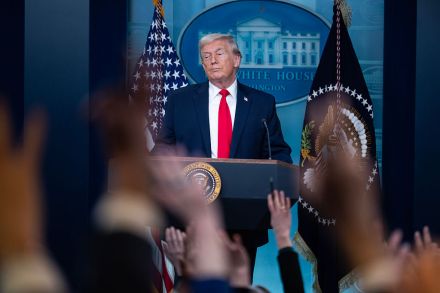
During last week’s excruciating Oval Office make-nice between an insultingly buddy-buddy American President and a fraudulently obsequious New York City mayor-elect, the contest was over which pol was the more patronising. At one point Trump graciously granted his petitioner permission to call him a ‘fascist’ while clearly implying the guy’s OTT campaign rhetoric had been embarrassing. Donald Trump sat regally on his throne, patting Zohran Mamdani’s arm while commending ‘Attaboy!’ as if petting a golden retriever that had fetched a ball. For his part, Mamdani stood mutely by the Resolute desk with cartoonish humility, hands over crotch. This cowed performance of beta-male submission was meant to disguise who’d got a leg over whom.

Is Brexit to blame for Britain’s economic doom loop?

22 min listen

Rachel Reeves is preparing for her first major Budget – but is Brexit really to blame for Britain’s black hole? Host Michael Simmons speaks to independent economist Julian Jessop about the OBR’s productivity downgrade, Labour’s tax plans, and whether Reeves is right to point the finger at Brexit.

Farage: trust me with the economy

15 min listen

With Reform leading in the polls, Nigel Farage is determined to ensure that nothing can impede its growth. This morning he sought to bolster his credibility on an area that the Tories think could be his Achilles heel: the economy. Reform’s £90 billion programme of tax cuts promised at the last election has been constantly used as a stick with which to beat its leader. So today, Farage took to the stage in the City, to – once again – formally bury ‘Our Contract with You’ – the platform on which he was elected in July last year. This morning’s speech was all about Reform claiming the mantle of fiscal conservatism and claiming that the party can be trusted with the nation’s savings. Who will win the battle to be the party of fiscal credibility?

Who will ‘take back control’ of the economy?

14 min listen

Kemi Badenoch continues to look more confident at PMQs – although there are always going to be some easy goals when you lead on the economy. Today she pressed the Prime Minister on Labour’s manifesto pledge not to raise income tax, VAT or national insurance – which he dodged – as well as repeating her offer to work with Labour towards a cross-party solution to the welfare problem. What do we know about the Budget at the end of next month? And are we any closer to understanding what a ‘working person’ actually is?  Lucy Dunn speaks to Tim Shipman and Michael Simmons. Produced by Oscar Edmondson.

Reeves’s fiscal play-off

In a week where political attention was on espionage and anti-Semitism, the cri de coeur from one Treasury official was notable. Recalling how Budgets were made during the years of Gordon Brown, before the 2010 coalition created the Office for Budget Responsibility (OBR), the number-cruncher complained: ‘All they had to do was fiddle their own figures. That was a dream compared with this.’ Earlier this month, Rachel Reeves received the OBR’s first estimate of the state of the public finances, showing the depth of the ‘black hole’. She will shortly get another OBR report on how falling productivity is damaging growth. For every 0.

The AI crash is coming

Who knows what Rachel Reeves reads in bed. Perhaps she dips into her own debut book, The Women Who Made Modern Economics (2023), and dreams of those carefree pre-government days when serious people, Mark Carney for one, thought she might make a decent Chancellor. But if she’s also burning midnight oil over drafts of her Autumn Statement, I hope her boxes are packed with granular data on the state of the UK job market. September normally sees a recruitment surge, but not this year. A summary of recent stats in IFA Magazine shows vacancies down by 119,000 from a year ago and entry-level graduate jobs down by as much as a third, as diminished hiring focuses on ‘skills-based’ selection rather than useless degrees.

Letters: Why shouldn’t we eat swan?

Zero chance Sir: In Tim Shipman’s wide-ranging article on Kemi Badenoch (‘I have a lot of self-belief’, 4 October), she claims that net zero has become just a slogan and that we can’t tackle climate change alone. In that she is right, but she fails to recognise that unless we can be seen to be world leaders in reducing emissions, then we will never be in a place to lecture other countries – many of whom just want what we have already had. By being the ‘goody-two-shoes’ in the fight against climate change, we will have the very best chance of bringing the rest of the world with us, without exposing ourselves to neo-colonialist aspersions.

The Pret plunge isn’t quite what it seems

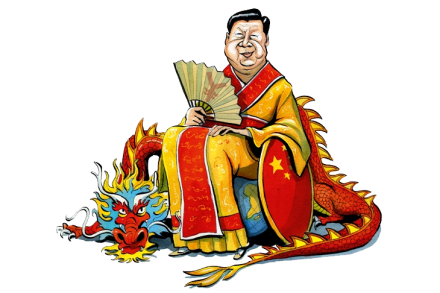
Gold goes on up: having risen by an unprecedented 40 per cent in a year to pass $3,600 (or £2,675) per ounce by the beginning of this week, even its most ardent devotees are wondering how long the surge can last. Much of the rise clearly represents a stampede towards the most traditional of safe havens, in anticipation of market storms ahead as well as fears over inflation and Donald Trump’s threat to the independence of the US Federal Reserve. But it also has to do with a secular shift in the economic world: de-dollarisation, as favoured by the busload of US-hating heads of states who partied with Xi Jinping and Vladimir Putin in Beijing a couple of weeks ago.

Letters: I’ve earned my final salary pension

Waning interest Sir: Michael Simmons correctly points out that the Treasury’s large-scale issuance of inflation-linked debt is adding heavily to the government’s interest bill at a time of relatively high inflation (‘Borrowed time’, 30 August). What he may not know is how complacent the Treasury has been about this matter. On the day Vladimir Putin invaded Ukraine in February 2022, I was interviewed for the role of chairman of the Debt Management Office. I suggested that a post-Covid inflation surge had started and that additionally oil prices might increase significantly because of the invasion leading to a need for higher interest rates.

Is Angela Rayner pushing up house prices?

By George There is a popular movement to fly St George’s flags from lampposts. The St George Cross was used as an emblem of Henry II of England and Philip II of France during the Third Crusade in 1189. From 1218 it was used as the flag of Genoa, and in 1348 became a flag used by the English royal family. Some others using it today: — Georgia: national flag incorporates a large St George’s Cross with a smaller one in each quadrant; Sardinia: St George’s cross with a Moor’s head in each quadrant; Barcelona: St George’s crosses in two quadrants, with stripes in the other; naval flags of Bahamas, Jamaica and St Kitts and Nevis; autonomous Caucasian regions of Abkhazia and Adjara; Swedish freemasons.