Economics

How the Bank broke Britain, Zelensky’s choice & the joys of mudlarking

49 min listen

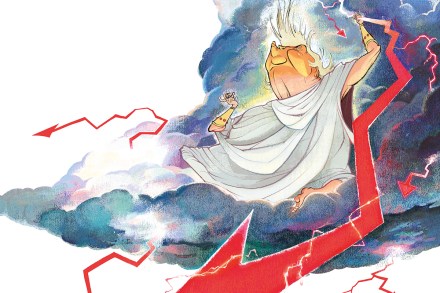
First up: how the Bank of England wrecked the economy Britain’s economy is teetering on the brink of a deep fiscal hole, created by billions of pounds of unfunded spending – never-ending health promises, a spiralling welfare bill and a triple lock on the state pension, which will cost three times as much as originally estimated. Although politicians ‘deserve much of the blame for the economic state we’re in’, it’s Andrew Bailey – Michael Simmons argues in the magazine this week – who ‘has enabled their recklessness’. He joined the podcast to discuss who really broke Britain with Kate Andrews, Deputy Editor of The Spectator’s world edition and former Economics Editor. (01:15) Next: has Ukraine lost faith in Zelensky?
The rich are fleeing – what next?

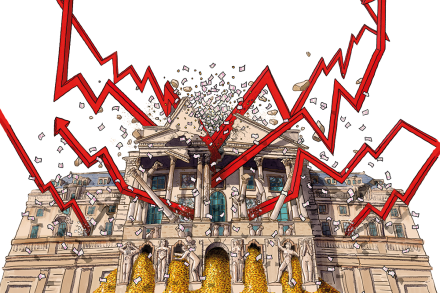
Keir Starmer is worried about who’s coming into the country. This week, he launched a white paper with the aim of cutting migration. Britain risks becoming an ‘island of strangers’, he said. However, it’s not just arrivals that should give him sleepless nights. It’s the number of people in the departures lounge too. London’s private members’ clubs, top schools, luxury car dealerships and estate agents are all grappling with the same problem: their customers are fleeing the country. Since 2016, almost 30,000 millionaires have left Britain – an outflow unmatched in the developed world. They are either returning home or moving abroad. The reason is a slew of tax changes that have made it much less attractive to be rich in Britain.

Mission creep has infected the IMF and the World Bank

From our US edition

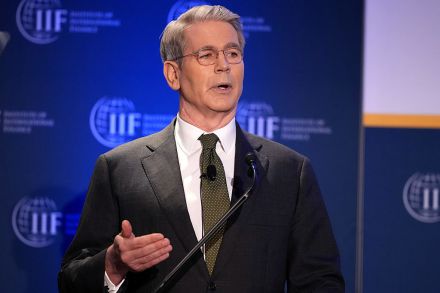
The following is a transcript of a speech delivered yesterday by the Treasury Secretary Scott Bessent. In the final months of World War Two, Western leaders convened the greatest economic minds of their generation. Their task? To build a new financial system.  At a quiet resort high up in the mountains of New Hampshire, they laid the foundation for Pax Americana.  The architects of Bretton Woods recognized that a global economy required global coordination. To encourage that coordination, they created the IMF and the World Bank.   These twin institutions were born after a period of intense geopolitical and economic volatility.

IMF

Trump shock, cousin marriage & would you steal from a restaurant?

39 min listen

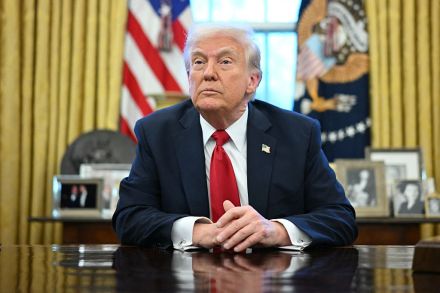
This week: Trump’s tariffs – madness or mastermind?‘Shock tactics’ is the headline of our cover article this week, as deputy editor Freddy Gray reflects on a week that has seen the US President upend the global economic order, with back and forth announcements on reciprocal and retaliatory tariffs. At the time of writing, a baseline 10% on imports stands – with higher tariffs remaining for China, Mexico and Canada. The initial announcement last week had led to the biggest global market decline since the start of the pandemic, and left countries scrambling to react, whether through negotiation or retaliation.

Impeccable history of the free market – and from the BBC too

The launch of Radio 4’s Invisible Hands series has been both blessed and cursed by timing. It tells the story of Britain’s ‘free market revolution’, just as President Donald Trump overhauls the free trade consensus of the past 40 years and world leaders grapple with how to respond. The problem is the hypotheticals posed at the start of the first episode – that free market capitalism ‘might be in crisis’; that ‘the global free market might be under threat’ – are already out of date. It’s settled. Free trade is out, tariffs are in. Welcome to the trade wars. The world could do worse than look to the ‘Invisible Hands’ for a solution to the crisis.

The grandeur of Trump’s tariffs

From our US edition

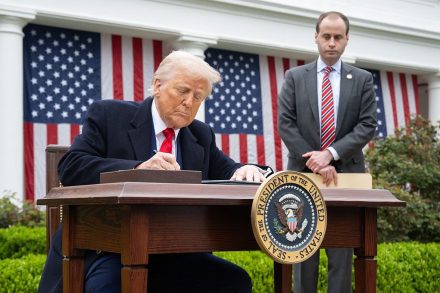
The first thing revealed by the high and wide-ranging new tariffs President Trump announced on “Liberation Day” is just how limited other recent American presidents have been in their thinking. Their ambition was to get elected and re-elected, then retire comfortably into a tranquil post-presidency. They would finish their days lending their names to charities and writing their memoirs (or rather, commissioning ghostwriters to fulfill their publishing contracts).   The idea of destroying and remaking the global economic order never crossed their minds. But Trump is thinking bigger. He doesn’t want to go to his grave as just another has-been ex-president.

tariffs grandeur

Tariffs make sense in a world of predatory mercantilism

From our US edition

The classical defense of free trade, the one found in Econ 101 textbooks and Ricardo’s comparative advantage model, goes something like this: countries should specialize in what they can produce most efficiently, export the surplus and import the rest. Trade allows global output to increase, everyone gets richer and any government interference – like tariffs or subsidies – just gums up the works. But that’s not the world we live in. David Ricardo, the early 19th-century British economist who developed the theory of comparative advantage, illustrated it with a now-famous example: even though Portugal could produce both wine and cloth more efficiently than England, both countries would benefit if Portugal specialized in wine and England in cloth, then traded.

tariffs

Can Trump fix eggflation?

From our US edition

"You can’t make an omelette without breaking eggs" is a maxim attributed to leaders on both sides of the French Revolution. "Move fast and break things" is today’s equivalent, emanating from Silicon Valley and amply demonstrated by Donald Trump and Elon Musk in their approach to government and geopolitics. "You can’t make omelettes at all if you can’t afford eggs" might be the next variant: inflation and scarcity afflicting America’s favorite breakfast have become a major political issue. In brief, a dozen US eggs used to cost $2 or less but by January this year the supermarket price was $5 and rising – in some places $9 was reported, rationing had to be introduced and Mexican suppliers were spotted smuggling truckloads across the border.

eggs

The Europe of American imaginations no longer exists

From our US edition

Since the United Kingdom left the European Union five years ago, the pair have been in battle to prove who has performed better. But the real story of the past five years is not a stagnant UK falling behind a buoyant EU, but of Britain and Europe being trapped in the same cycle of relative decline. It’s America that has quietly raced ahead of Europe this century. Following the pandemic it has become impossible to ignore the gulf in economic vitality between the US and Europe, the former growing by 16.3 percent per capita since 2008. There are very good reasons for America’s success, or rather, Europe’s decline. The EU and the UK increasingly treat their industries as pieces of heritage which must be preserved against disruptors and foreign competition.

Europe

Reversing our economic decline is not easy, but it is simple

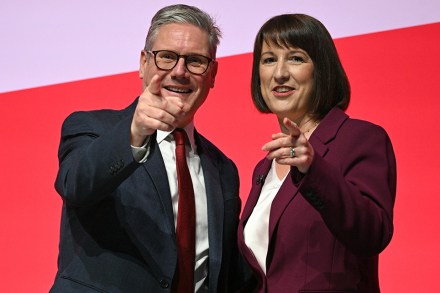
Our immiseration came swiftly and stealthily. At the start of the 21st century, Britain was a prosperous country. Ambitious people fought to come here. We trusted that, over time, we would become wealthier – an expectation that had been accurate for most of the previous two centuries. Since the millennium, Britain and western Europe have pretty much stopped growing – especially if we ignore the impact of immigration and calculate GDP per head. Reversing this slowdown should be the top issue at every election, but it is surprisingly under-discussed. In theory, almost all our politicians want growth. Keir Starmer and Rachel Reeves keep describing it, nasally and tautologically, as their ‘number one priority’.

Is it worth it for Trump to buy Greenland?

From our US edition

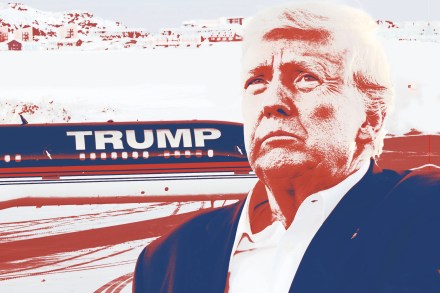
"The art of the deal" is President Trump’s much-vaunted modus operandi as well as the title of his 1987 bestseller. But how smart would he be to make an offer for Greenland to the Danish government? Leaving aside issues of military sites and future unfrozen shipping routes, would the currently still-frozen north Atlantic island be worth a rich price for its mineral deposits alone? I consulted an intrepid investor who spent six years there prospecting for tantalum, a "transition metal" used in capacitors for mobile phones. His answer was not encouraging. There’s no disputing the potential to find everything from gold and uranium to rare earth elements such as neodymium and dysprosium, in demand for advanced electronics. But the operating difficulties are truly formidable.

Greenland

Reeves’s worst week so far?

16 min listen

It's been a tricky week for Rachel Reeves: an onslaught of criticism for the levels of borrowing costs, GDP at 0.1 per cent, and stagflation still gripping the UK economy. Remarkably she has come out of it looking stronger – politically at least. But can she afford to celebrate? The Spectator's Kate Andrews and data editor Michael Simmons join the podcast to discuss the economy, and go through some of the most striking graphs from The Spectator'sdata hub this week. Produced by Natasha Feroze.

The North American fruit tree that provides a model for economics

Life on Earth is not a zero-sum affair. Most plants only exist thanks to partnerships with fungal filaments in the soil which mobilise essential nutrients for them and receive sugars made from sunlight in exchange. Without those partnerships, humans and most other land animals which depend on plants either directly or at one or two removes would not exist. Cooperation gives rise to a living world that is vastly more complex, productive and beautiful than the sum of its parts. An understanding of this reality is one of the key insights of an ecological worldview; and, argues Robin Wall Kimmerer in this short and charming book, it is of vital relevance when thinking about how human societies and individuals might organise, and think differently and more expansively about the future.

The West faces a new type of housing crisis

From our US edition

Throughout the West, particularly the Anglosphere, housing costs are ravaging the middle class. Homeownership, long the key to social mobility, is on the decline, particularly among younger generations and minorities. According to the Organization for Economic Cooperation and Development, house prices in high-income countries have been rising “three times faster than household median income over the last two decades,” causing the standard of living “to stagnate or decline.” Unlike previous housing crises, this one is not primarily caused by mass displacements due to wars or natural disasters or population growth.

housing

The Mad Men theory of drunk decision-making

In electing this government, we seem to have picked the worst of both worlds: higher taxation combined with austerity in the public finances. The one bonus I had hoped to see from a left-wing regime was a healthily indulgent approach to spending. Instead we get a Chancellor of the Exchequer who is a former Bank of England economist. Voting Labour and getting a neo-liberal Chancellor is like going on a Club 18-30 holiday and bringing your parents along. It defeats the purpose of the exercise.

Is now the most exciting point in human history?

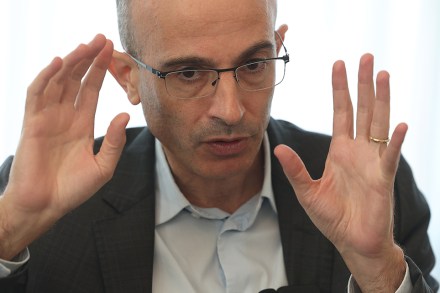
Yuval Noah Harari has sold more than 45 million books in 65 languages. He is a professor with a PhD from the University of Oxford, has spoken at TED and the World Economic Forum in Davos, and his latest book, Nexus, is considered ‘erudite, provocative and entertaining’ by Rory Stewart and ‘thought-provoking and so very well reasoned’ by Stephen Fry. This is the story the book’s cover tells us about its contents, and Nexus itself argues that it is stories which are fundamental to shaping the world. It posits that the strength of humanity comes from building large networks in which we work together co-operatively, but that our weakness is that once we have amassed power this way, we use it unwisely.

The academic legacy of Donald J. Harris

From our US edition

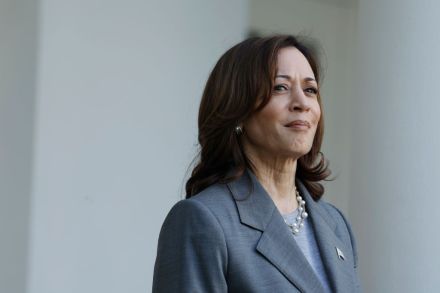
Kamala Harris is a master shapeshifter — whether through codeswitching, pandering or just being phony. One moment she’s rolling up masala dosa with Mindy Kaling on live TV; the next she’s FaceTiming the BET Awards, declaring, “Girl, I’m out here in these streets.” Donald Trump’s bumbling attempts to highlight her cultural inconsistencies briefly shifted the election focus to Harris’s race and ethnicity — and away from far more important qualities. Perhaps it’s because her actual policy ideas have been so scant and vague that attacking them directly has proven difficult. Perhaps her chameleonic history has made anything beyond a surface-level attack difficult.

harris

Kamala unleashes radical economic agenda

From our US edition

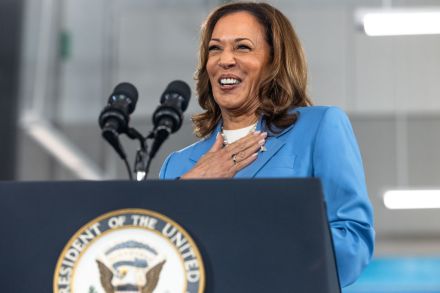
The long wait for Vice President Kamala Harris’s policy platform is over... well, at least on the economic front. Harris released her economic plan on Friday after weeks of running at the top of the ticket for the Democratic Party. The rollout, however, was less than stellar, as Harris proposed a mix of Soviet-style price controls with more popular policies pilfered from former president Donald Trump’s speeches and policy platforms.Harris said in the past week that she would end taxes on tips for service workers, which Trump promised back in June to do. The plan also runs counter to policies the Biden-Harris administration implemented that empowered the IRS to go after serviceworkers’ tips. Today, reports said Harris also intended to increase the child tax credit to $6,000.

Why China’s nostalgia industry is booming

Nostalgia is a thriving industry in China. I first noticed this while walking around Nanjing last summer. There were shops with names like ‘Finding Childhood’ or ‘Childhood Memories’, selling sweets and toys that had long been discontinued. There were posters of TV shows and celebrities from the 1980s and 1990s. The customers were like me – misty-eyed millennials, often women, looking for their lost childhoods. ‘Oh my god, remember that!’ We relished every moment. The shops have sprung up suddenly in the past two years, mostly catering to my generation, who spend more on high-street tat than our elders. But older Chinese have been seeking nostalgia too. They get their hit from remembering a more rural way of life.

Does bitcoin fit the definition of good money?

Three philosophers walk into a crypto-currency. Resistance Money: A Philosophical Case for Bitcoin, I’d argue, is a slightly inaccurate title. Messrs Bailey, Rettler and Warmke have composed a book that is a meticulous and unphilosophically lucid examination of the origins and properties of bitcoin. No Hegel, no Husserl, no fuss. ‘We don’t prophesy,’ they state. ‘We don’t preach.’ They plead a Socratic humility. ‘We’d forgive you for thinking that three philosophers aren’t up to the task.’ They describe themselves as ‘epistemic trespassers’ in matters of economics and cryptography. Access to bitcoin has changed from a muddy country path to a six-lane highway The editorial sessions for Resistance Money must have been hell.