Eastern europe

How Eastern Europe is leaving Western Europe behind

From our US edition

I'm in the tiny riverside town of Virpazar, in the little Balkan country of Montenegro; and under the white geisha face of a late summer moon I am warily ordering the celebrated local delicacy. It is carp — caught from the nearby, slivovitz-clear waters of Lake Skadar (biggest lake in the Balkans!). But what makes me wary is the preparation. The carp is apparently marinated, and served cold, with boiled potatoes and greens. Cold slimy fish with hot spuds and spinach? It sounds like some nightmare culinary “specialty” from the old communist bloc (of which Montenegro was once a part, within Yugoslavia). I’m veteran enough to remember a few of these. “Famous” flatbreads that came with rancid lard.


Eastern

The pleasure of reliving foreign travel through food

The idea of the kitchen as a space for transformation and transportation is not a new one. Many writers have explored the room’s ability to offer both domesticity and alchemy at the same time – how it allows cooks to travel vicariously through the food they make. This is the subject of Cold Kitchen, Caroline Eden’s memoir of her time spent in her kitchen in Scotland and of her travels to Eastern European and Central Asian cities – and somehow she makes it fresh and compelling. She is an author and critic who has written extensively about the food and culture of the countries of the former Soviet Union. Black Sea, in which she explored Odessa, Istanbul and Trabzon, received a clutch of prizes, and Red Sands, about Central Asia, won the prestigious André Simon food book award.

Resisting the escalation in Ukraine

From our US edition

The drums of war are reverberating across Eastern Europe. Every geopolitical decision made by global powers carries immense weight. Amid the fear of growing conflict, one figure has emerged, wielding a sharp tongue and a pointed finger, challenging hesitant American lawmakers to bolster Ukraine’s defense against Russian aggression. Polish foreign minister Radek Sikorski has embarked on a media offensive, chastising Republicans for their reluctance to green-light the Biden administration’s proposed $60 billion military aid package for Ukraine. Despite his purported noble objectives, Sikorski’s appeal deserves closer examination.

ukraine

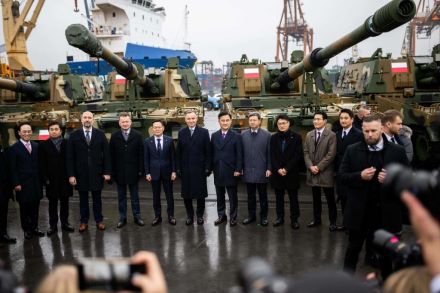
Poland is Europe’s next great military power

From our US edition

As Russia’s war in Ukraine rages into its eleventh month, there is one country that can truly be said to have learned its lesson: Poland. By the mid-2030s, when the majority of its equipment purchases have been delivered, Warsaw will command one of the most modern, well-equipped armies in Europe. It’s not cheap, but Poland is taking decisive action to be able to face the threats of tomorrow. Poland's $20.5 billion 2023 defense budget is a huge increase over the previous year, and is over 3 percent of gross domestic product (well above the NATO-suggested 2 percent). Aside from equipment, this money will be used to help expand the manpower that Poland can bring to bear, upping its active-duty forces from 140,000 to 300,000 troops.

The West should follow Eastern Europe’s lead on foreign policy

From our US edition

Few countries know Russia’s brutal imperialism better than Poland and the Baltic states. These nations are among a handful in the West to have responded to Putin’s invasion of Ukraine with the decisiveness and clarity of vision that the security environment demands. This is why the United States, as it faces a dual threat of China and Russia, should look to Eastern Europe for inspiration. Poland has undergone the most dramatic transformation of the bunch, increasing its defense budget and boosting the size of its military, in addition to supplying Ukraine with a vast array of materiel. Warsaw has pledged to raise defense spending to 3 percent of gross domestic product (GDP) within a year, up from 2.2 percent, which will be nearly on par with the United States.

Europe is more bark than bite on Ukraine

From our US edition

Last Friday, President Biden signed a spending bill that will keep the government’s lights on until December 16, when lawmakers will have to cobble together a funding resolution to avert a shutdown. Tucked into that law was another tranche of security and economic assistance to Ukraine, to the tune of $12.3 billion. The signing came two days after the Defense Department announced the release of an additional $1.1 billion military package for Kyiv, which will include 18 more HIMARS systems, 150 armored vehicles, and ammunition of various calibers. The Biden administration has provided the Ukrainians with over $16 billion in security assistance since Russia’s invasion in February. Washington’s hands have been cramping up from writing so many checks.

macron europe blame

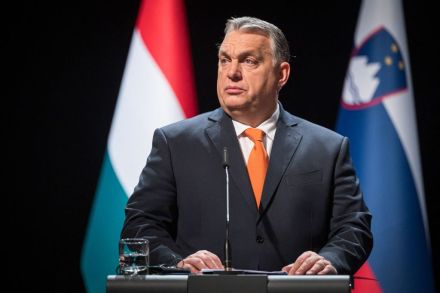
Even Hungary has soured on Vladimir Putin

From our US edition

As Russian tanks rolled across the Ukrainian border, the front page of the Hungarian tabloid Pesti Hírlap revived an old rallying cry to capture the national mood. “Ruszkik haza!” (“Russians go home!”) was the headline, with Budapest 1956, Prague 1968, and Kyiv 2022 listed below the fold. The line was borrowed from graffiti scrawled on Budapest street corners during the 1956 anti-Soviet uprising, a heroic but doomed effort that has since entered into Hungarian national lore. Is it 1956 all over again? Despite some eerie parallels, the political geography of Europe has changed considerably since the bad old days of the Cold War. Budapest is two hours from Vienna by train and Prague is actually further West than the Austrian capital.

Why America needs a grand bargain with Russia

From our US edition

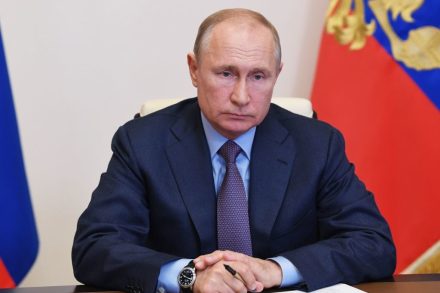
Russian is losing influence in a region it once dominated: Eastern Europe. Highlighting this newfound weakness are Ukraine and Belarus, two states that were once solidly in Russia’s sphere of influence and are now on the verge of completely falling away. In 2018, Ukraine enshrined in its constitution the goal of NATO membership and last year Belarus experienced massive pro-democracy protests; both of these events are in Russia’s eyes akin to westernization. The American foreign policy establishment acts as if Russia will ultimately accept being surrounded by Western-allied states. Instead, history shows that losing influence will cause Russia to lash out. If Ukraine moves toward NATO membership, it will incur a Russian invasion.

vladimir

The EU is failing to stand up for eastern Europe

Will the EU stand up for eastern Europe? This question is now being asked by Ukraine following the announcement of a deal between Germany and the USA which paves the way for the completion of the controversial Nord Stream 2 gas pipeline between Russia and western Europe. The deal reached by Merkel and Biden may have placated critics in Washington, but it has failed to allay eastern European concerns over the security implications of the project. The state most affected by Nord Stream 2, Ukraine, has now requested urgent consultations with the European Commission and the German government, adding an air of legal weight to its complaints by invoking provisions of its ‘Association Agreement’ with the EU.

Beijing is quietly challenging Brussels

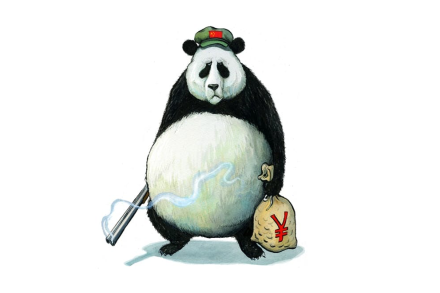
The new agreement between China and the US on climate change, announced this week, contained the usual worthy overtures. Both nations reasserted their commitment to fighting the ‘climate crisis’ by ‘co-operating with each other and with other countries.’ But can the West really take the Chinese Communist party at its word? Judging by Beijing's activity in the Western Balkans, the answer is a resounding no. In Bosnia and Herzegovina, Chinese state-owned energy companies have built four coal power plants since 2010, with a further four planned – made possible by the Chinese Development Bank.