Drones

We should fear drones, not invasion

From our UK edition

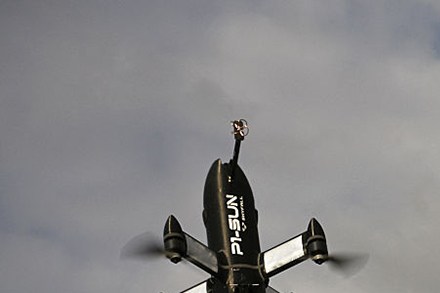
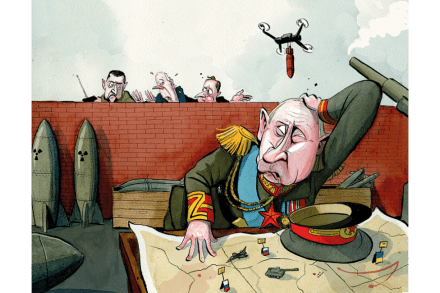
A stray thought of my own while watching Iranian drones tracing fiery paths over the Gulf, a stray quote from Ukraine and the background rumble of uncertainty about Britain’s Defence Investment Plan, have set my mind racing. My conclusion is at the same time obvious yet unnerving. As a European power, we have been watching the Ukraine war from almost the front row, but it has seemed a world away. Nightly on television we’ve seen Russian and Ukrainian attack drones streaking through the sky, half-reminiscent of a grisly firework display. From our armchairs we’ve read about how this conflict is turning into a competition between drone capabilities.

Can the Kremlin afford to fix Russia’s oil crisis?

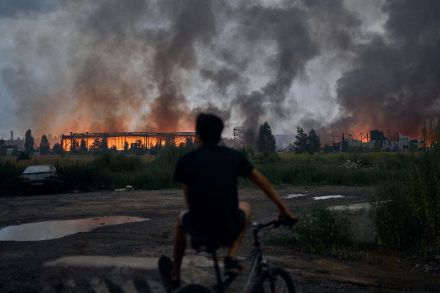
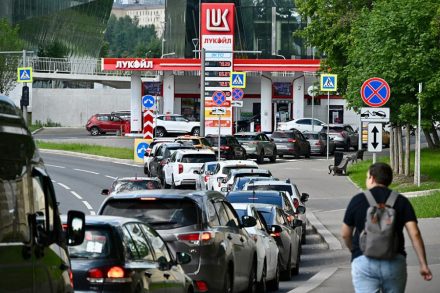
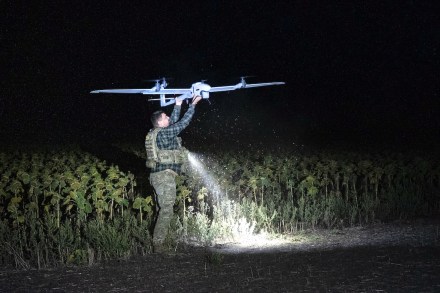
For a country that pumps roughly nine million barrels of oil a day – the third highest of any country in the world – Russia has managed to achieve something genuinely remarkable: it cannot keep its own gas stations stocked. More than half of its regions are now reporting shortages, the consequence of a Ukrainian drone campaign that has struck with increasing frequency and precision at the refinery infrastructure on which the country's civilian economy depends. The sometimes hours-long lines that have appeared – even in Moscow, for what may be the first time in the war – carry a symbolic weight that no amount of official reassurance from the Kremlin has managed to dispel. How this has come about is obvious enough.

oil

‘We’re only months away from the first political assassination by drone’

From our UK edition

51 min listen

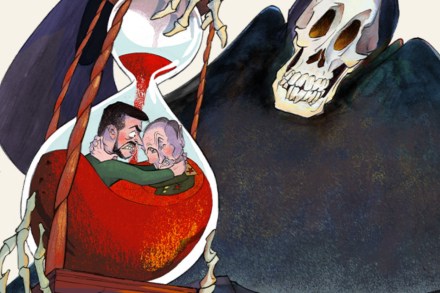
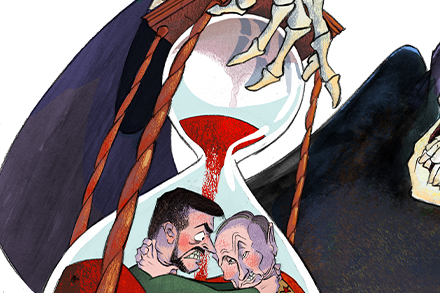
For this week’s Edition, William Moore is joined by the Spectator's commissioning editor Lara Brown, the columnist for the Wall Street Journal’s Free Expression newsletter Louise Perry and the Telegraph journalist and presenter of Ukraine: The Latest Francis Dearnley. This week: Russia’s full-scale invasion of Ukraine has now gone on longer than the first world war and it shares much of the horrors of that war, from attrition warfare to substantial losses on both sides. So, with over half a million Russians estimated to be killed, could Putin and Zelensky be brought to an exhausted peace?

War in Ukraine: 'we're only months away from the first political assassination by drone'

Forever war: will Zelensky and Putin be brought to an exhausted peace?

Volodymyr Zelensky stood proudly on the steps of 10 Downing Street earlier this month, flanked by Sir Keir Starmer and the leaders of France and Germany, ready to discuss Europe’s latest package of support for Ukraine’s ongoing war effort. Though the conflict has now lasted longer than World War One, Zelensky is in some ways in the most heroic period of his presidency. Ukraine not only continues to stand firm against intense Russian assaults but also seems to be regaining a strategic advantage with its long-range drone strikes. Europe has stepped up to replace US funding and diplomacy and the fall of Hungary’s Viktor Orbán has unlocked a €90 billion loan package. Yet it is also the most sordid period of Zelensky’s presidency.

war

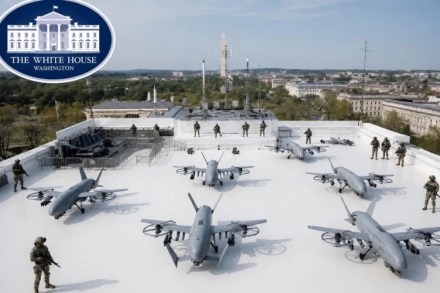
Trump’s ballroom drone port is no joke

When Donald Trump unveiled plans for a counter-drone installation on the roof of the new White House ballroom, critics called it theater. They may be right about the installation. But they are wrong about the threat.  I have watched the character of warfare change faster in the past four years than in the previous forty. In Ukraine, a one-way attack drone that costs a few hundred dollars routinely destroys Russian armored vehicles worth millions. Both sides now field these systems by the hundreds of thousands. Entire stretches of the front are governed not by artillery or air superiority in the traditional sense, but by small, expendable aircraft that soldiers can carry in rucksacks and launch from tree lines.

The new battle over American airspace

Last month, a mysterious drone swarm led to a lockdown at Barksdale Air Force Base in Louisiana. Nothing was damaged and none of the 40 B-52 bombers or their cruise missiles were hit. At least not this time. But modern war no longer starts with an open attack. Instead we see hybrid actions: cyberattacks, information and psychological operations, GPS disruptions, damage to undersea communication cables and, increasingly, drone incursions into military sites and critical infrastructure. There is rarely a formal declaration. Russia’s invasion of Ukraine, the largest war in Europe since the Second World War, was labelled a “special military operation.

The age of the aircraft carrier is over

Ever since World War Two, America’s aircraft carrier fleets have served as imposing instruments of imperial power, roaming the oceans to cow recalcitrant nations into obedience. Favored by the Trump administration for this purpose, current experience indicates their day is done thanks to the proliferation of anti-ship missiles and the increasing ubiquity of drones. In America’s last Middle Eastern war but two, against the Yemeni Houthis in 2025, the carrier USS Harry S.Truman, complete with its attendant escorts, was driven into retreat, leaving antagonists in control of the Red Sea. On one occasion, the carrier’s desperate maneuver to avoid a Houthi drone caused an $80 million Hornet jet fighter to slide off the deck and topple into the sea.

The German army’s drones disaster

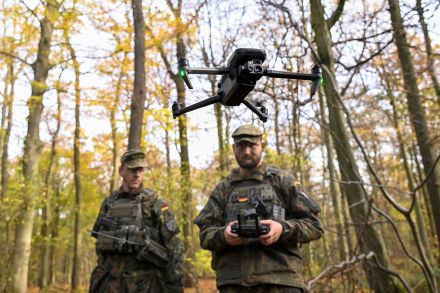
German politicians like to talk about Zeitenwende – the country’s great turning point in its defense policy since the invasion of Ukraine. And it has certainly turned: toward spending billions of taxpayer euros on drones that cannot fly in frontline situations, seemingly cannot hit their targets, and whose largest investors sit not in Berlin or Brussels, but in Silicon Valley boardrooms with direct lines to the White House and CIA. If this is European defense sovereignty, one could wonder what this dependency actually looks like. And if Europe really is serious about this change.

Cartel drones vs Texas lasers

Yesterday, El Paso, Texas, was placed under severe restrictions from the Federal Aviation Administration. For unspecified reasons of national security, no aircraft would be allowed in or out for ten days. Washington sources soon confirmed what many suspected: the cause was hostile drone activity from Mexico. Then there was an about turn. Within a few hours, the flight ban was lifted. What actually happened? We know that the Department of War has been working on an anti-drone system for some time, using lasers to shoot down craft. One of these laser systems was actually deployed near El Paso and officials claim a drone was indeed shot down. The FAA, concerned with possible threats to civil aviation, then imposed the ten-day flight ban.

What Ukraine’s ‘Amazon-for-war’ website can teach the US

Donald Trump calls Dan Driscoll the “drone guy.” The 39-year-old Secretary of the Army – also a “total killer” with a “nice, beautiful face,” according to Trump – is on a mission to modernize the US military and firmly believes that drones are “the future of warfare.” The former Army Ranger, Yale Law School student and venture capitalist, announced last month that the Army was going to buy 1 million drones. Catch-up will be hard. Currently, the US military acquires around 50,000 a year – while Russia makes 4 million and China 8 million. In his race against time, Driscoll’s north star is Ukraine, the country he calls the “Silicon Valley of warfare,” where cheap, often garage-made drones have effectively killed tank warfare and redefined the modern battlefield.

dial a drone

Will Putin help Trump’s Iran deal?

Spectacular. Stunning. Game-changing. These are just three of the adjectives news reporters have used to describe Ukraine’s attack deep within Russia last weekend. There’s no doubt that the “Spiderweb” operation was technologically ingenious, well-concealed and brilliantly executed. Ukraine claimed its 117 drones destroyed or damaged some 41 strategic Russian bombers and caused $7 billion worth of damage to the Russian armed forces. But can an attack really be game-changing if the game doesn’t change? US officials have suggested the strikes hit only 20 Russian aircraft and, while Spiderweb must have shocked Russia’s leadership, the Kremlin is still more than willing and able to continue bombing Ukraine with relative impunity.

Trump

DoGE issues return-to-office order

Elon Musk’s influence on the federal government has reached new heights, with a memo going out to millions of federal employees with a simple message: get on board or take a permanent, (and expensive!) paid vacation.The Trump administration just sent a DoGE-infused ultimatum to much of the federal workforce: opt in to working in your office or take our buyout. According to the White House, “We’re five years past Covid and just 6 percent of federal employees work full-time in office.” President Donald Trump and Musk have made it clear that a return to in-person work is nonnegotiable. The ultimatum, described in a post as “a fork in the road,” would bring the federal government in-line with where the private sector has been moving in recent months and years: back to the office.

Trump wins big in ABC defamation settlement

ABC News will pay Donald Trump $15 million to settle a defamation case the president-elect filed against the media outlet after one of its star anchors made false statements about him. This past March, anchor George Stephanopoulos repeatedly stated on air that Trump was “found liable for rape” in the E. Jean Carroll civil case during an interview with Representative Nancy Mace. Stephanopoulos said, “judges and two separate juries have found him liable for rape” when asking Mace, a sexual assault survivor, if she had misgivings about Trump’s alleged abuse of women. A jury in the E. Jean Carroll case explicitly rejected the woman’s claims that Trump had raped her, instead reaching the conclusion that he had sexually abused her.

ABC

What’s flying over New Jersey?

The nightly news is replicating Orson Welles’s 1938 broadcast of War of the Worlds, which scared Americans by describing an invasion of space aliens. Listeners who tuned into the broadcast a little late didn’t hear the disclaimer that it was fiction. Now, they are tuning in on time and hearing real broadcasts about mysterious objects flying over our skies. And people are asking the same questions they asked long ago, “What are those things?” They have heard the government’s disclaimers, but they are not sure whether to believe them.  The public is frightened, and bland reassurances from Washington aren’t helping.

john kirby drones new jersey

What should we believe about New Jersey’s drones?

The past few weeks’ frenzy around alleged sightings of mysterious drones flying above my home state of New Jersey reminds me of one of my grandfather Jack McCarthy’s favorite stories. He was a teenager on October 30, 1938 — the day that Orson Welles’s famous War of the Worlds Halloween broadcast claimed that Martians had landed in a rural Garden State hamlet called Grovers Mill, which happened to be one town over from where my grandfather lived.  According to Jack’s frequent retellings of the story during family holidays, he and his friends hadn’t actually heard the broadcast themselves. They were loitering around Princeton when someone they knew drove by in a car and asked if they wanted to hop in and drive to Grovers Mill to see the Martians.

drones

What Iran’s attack on Israel means for the Jewish state, America and the region 

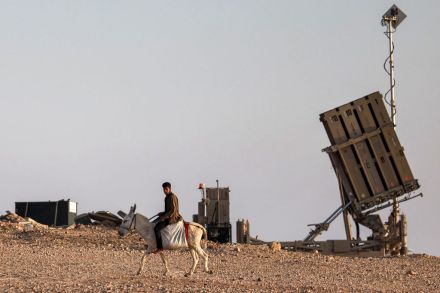
Iran’s unprecedented attack on Israel Saturday night represents a dangerous escalation for three reasons. The first is its scale, some 300 drones and missiles. Second, it marks the first time the Islamic Regime has launched a lethal attack on Israeli territory from Iran itself, rather than through proxies. Most important of all is the combination of the first two: a major attack launched against Israel from Iranian territory. Although Israel, the US, the UK and, surprisingly, Jordan managed to shoot down nearly all the incoming drones and missiles, it was the thought that counts. And it was a very dangerous thought. Within hours, the Iranian attack changed the region’s strategic landscape.

israel iran

Will Biden support Ukraine’s attacks on Russia?

From our UK edition

46 min listen

This week: will Biden support Ukraine’s attacks on Russia? Owen Matthews writes the cover piece in light of the Zelensky drone offensive. Ukraine’s most successful strategy to date has been its ingenious use of homemade, long-range drones, which it has used to strike military targets as well as oil refineries and petrol storage facilities in Russia. The strikes are working but have alienated the US, who draw a red line when it comes to attacks on Russian soil. Owen joins the podcast alongside Svitlana Morenets, author of The Spectator’s Ukraine in Focus newsletter to debate what comes next.

Kamikaze drones are the future of warfare

From our UK edition

The West is struggling to confront the modern military technologies of Russia, Iran and China. A year and a half of the war in Ukraine has proved it. Iran has exported cheap Shahed-136 kamikaze drones to Russia, and they have been used to terrorise Ukrainians. Putin appears ready to invest further in procuring thousands more. Sir Tony Radakin, chief of the defence staff, said this week that, in response, the British Army wants to create regiments of kamikaze drone pilots. He's right to do so. Iran’s drones are cheap to make, estimates say around £15,000 each, but the air defences needed to shoot them down are far more expensive.

Renewed hope on Ukraine’s Independence Day 

Kyiv Because I was born on the same day as Ukrainian Independence, there were always fireworks on my birthday. Until I was eight, I thought these rockets were in my honor. I even asked my mother to bring a bag so that I could catch a “firework” and it would keep shining for me all night long.  In addition to fireworks, there were concerts and cotton candy, and the fountain on the main square would be transformed from ordinary to multi-colored. It was like the Fourth of July in America, only on August 24 in Ukraine. But my childhood is over, I’ve become an adult and this year after eighteen months of Russia’s full-scale war, I’m not expecting fireworks. I’m hoping there won’t be Russian rockets or Iranian drones either. War forces us to adjust.

independence

Portrait of the Week: Trump’s indictment, Costa’s PR fail and Niger’s new leader

From our UK edition

Home Rishi Sunak, the Prime Minister, announced the granting of 100 new North Sea oil and gas licences. In Aberdeen he confirmed funding for two new carbon capture projects. Thangam Debbonaire, the shadow leader of the House, said: ‘We are not going to grant any more. It is not OK. The world is on fire.’ Sir Bob Neill, the chairman of the Commons justice committee, called for a change in rules that deduct the cost of board and lodging in jail from compensation of those unjustly imprisoned. He was responding to the case of Andrew Malkinson, 57, cleared after 17 years in prison of a rape he did not commit.