Drones

The new battle over American airspace

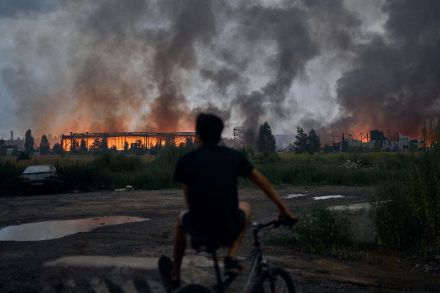
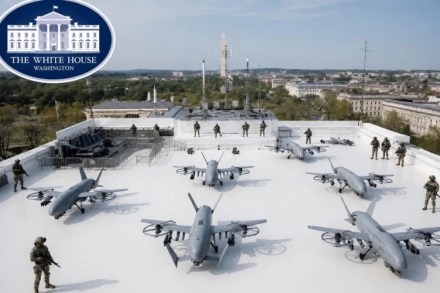
Last month, a mysterious drone swarm led to a lockdown at Barksdale Air Force Base in Louisiana. Nothing was damaged and none of the 40 B-52 bombers or their cruise missiles were hit. At least not this time. But modern war no longer starts with an open attack. Instead we see hybrid actions: cyberattacks, information and psychological operations, GPS disruptions, damage to undersea communication cables and, increasingly, drone incursions into military sites and critical infrastructure. There is rarely a formal declaration. Russia’s invasion of Ukraine, the largest war in Europe since the Second World War, was labelled a “special military operation.

The age of the aircraft carrier is over

Ever since World War Two, America’s aircraft carrier fleets have served as imposing instruments of imperial power, roaming the oceans to cow recalcitrant nations into obedience. Favored by the Trump administration for this purpose, current experience indicates their day is done thanks to the proliferation of anti-ship missiles and the increasing ubiquity of drones. In America’s last Middle Eastern war but two, against the Yemeni Houthis in 2025, the carrier USS Harry S.Truman, complete with its attendant escorts, was driven into retreat, leaving antagonists in control of the Red Sea. On one occasion, the carrier’s desperate maneuver to avoid a Houthi drone caused an $80 million Hornet jet fighter to slide off the deck and topple into the sea.

The German army’s drones disaster

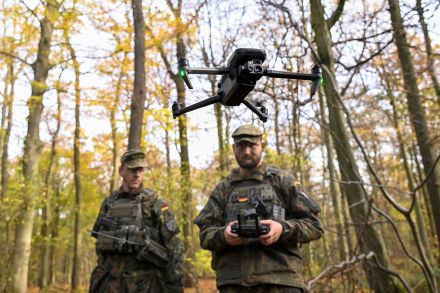
German politicians like to talk about Zeitenwende – the country’s great turning point in its defense policy since the invasion of Ukraine. And it has certainly turned: toward spending billions of taxpayer euros on drones that cannot fly in frontline situations, seemingly cannot hit their targets, and whose largest investors sit not in Berlin or Brussels, but in Silicon Valley boardrooms with direct lines to the White House and CIA. If this is European defense sovereignty, one could wonder what this dependency actually looks like. And if Europe really is serious about this change.

Cartel drones vs Texas lasers

Yesterday, El Paso, Texas, was placed under severe restrictions from the Federal Aviation Administration. For unspecified reasons of national security, no aircraft would be allowed in or out for ten days. Washington sources soon confirmed what many suspected: the cause was hostile drone activity from Mexico. Then there was an about turn. Within a few hours, the flight ban was lifted. What actually happened? We know that the Department of War has been working on an anti-drone system for some time, using lasers to shoot down craft. One of these laser systems was actually deployed near El Paso and officials claim a drone was indeed shot down. The FAA, concerned with possible threats to civil aviation, then imposed the ten-day flight ban.

What Ukraine’s ‘Amazon-for-war’ website can teach the US

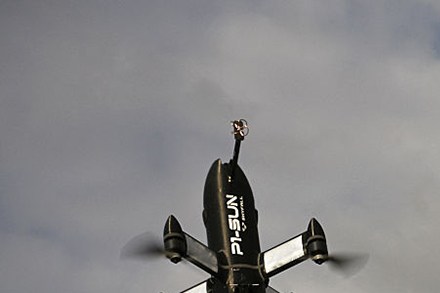
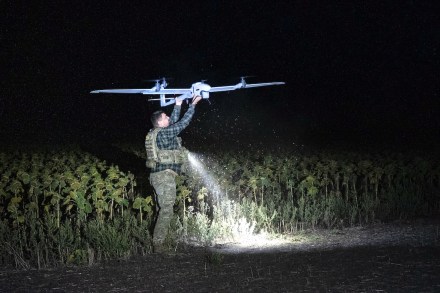
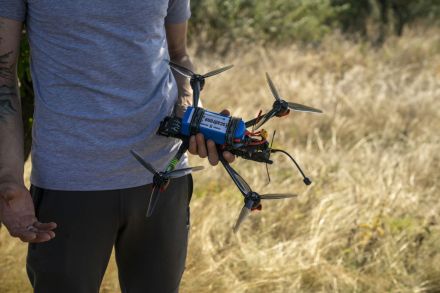
Donald Trump calls Dan Driscoll the “drone guy.” The 39-year-old Secretary of the Army – also a “total killer” with a “nice, beautiful face,” according to Trump – is on a mission to modernize the US military and firmly believes that drones are “the future of warfare.” The former Army Ranger, Yale Law School student and venture capitalist, announced last month that the Army was going to buy 1 million drones. Catch-up will be hard. Currently, the US military acquires around 50,000 a year – while Russia makes 4 million and China 8 million. In his race against time, Driscoll’s north star is Ukraine, the country he calls the “Silicon Valley of warfare,” where cheap, often garage-made drones have effectively killed tank warfare and redefined the modern battlefield.

dial a drone

Will Putin help Trump’s Iran deal?

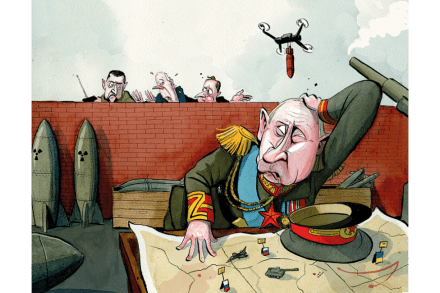
Spectacular. Stunning. Game-changing. These are just three of the adjectives news reporters have used to describe Ukraine’s attack deep within Russia last weekend. There’s no doubt that the “Spiderweb” operation was technologically ingenious, well-concealed and brilliantly executed. Ukraine claimed its 117 drones destroyed or damaged some 41 strategic Russian bombers and caused $7 billion worth of damage to the Russian armed forces. But can an attack really be game-changing if the game doesn’t change? US officials have suggested the strikes hit only 20 Russian aircraft and, while Spiderweb must have shocked Russia’s leadership, the Kremlin is still more than willing and able to continue bombing Ukraine with relative impunity.

Trump

DoGE issues return-to-office order

Elon Musk’s influence on the federal government has reached new heights, with a memo going out to millions of federal employees with a simple message: get on board or take a permanent, (and expensive!) paid vacation.The Trump administration just sent a DoGE-infused ultimatum to much of the federal workforce: opt in to working in your office or take our buyout. According to the White House, “We’re five years past Covid and just 6 percent of federal employees work full-time in office.” President Donald Trump and Musk have made it clear that a return to in-person work is nonnegotiable. The ultimatum, described in a post as “a fork in the road,” would bring the federal government in-line with where the private sector has been moving in recent months and years: back to the office.

Trump wins big in ABC defamation settlement

ABC News will pay Donald Trump $15 million to settle a defamation case the president-elect filed against the media outlet after one of its star anchors made false statements about him. This past March, anchor George Stephanopoulos repeatedly stated on air that Trump was “found liable for rape” in the E. Jean Carroll civil case during an interview with Representative Nancy Mace. Stephanopoulos said, “judges and two separate juries have found him liable for rape” when asking Mace, a sexual assault survivor, if she had misgivings about Trump’s alleged abuse of women. A jury in the E. Jean Carroll case explicitly rejected the woman’s claims that Trump had raped her, instead reaching the conclusion that he had sexually abused her.

ABC

What’s flying over New Jersey?

The nightly news is replicating Orson Welles’s 1938 broadcast of War of the Worlds, which scared Americans by describing an invasion of space aliens. Listeners who tuned into the broadcast a little late didn’t hear the disclaimer that it was fiction. Now, they are tuning in on time and hearing real broadcasts about mysterious objects flying over our skies. And people are asking the same questions they asked long ago, “What are those things?” They have heard the government’s disclaimers, but they are not sure whether to believe them.  The public is frightened, and bland reassurances from Washington aren’t helping.

john kirby drones new jersey

What should we believe about New Jersey’s drones?

The past few weeks’ frenzy around alleged sightings of mysterious drones flying above my home state of New Jersey reminds me of one of my grandfather Jack McCarthy’s favorite stories. He was a teenager on October 30, 1938 — the day that Orson Welles’s famous War of the Worlds Halloween broadcast claimed that Martians had landed in a rural Garden State hamlet called Grovers Mill, which happened to be one town over from where my grandfather lived.  According to Jack’s frequent retellings of the story during family holidays, he and his friends hadn’t actually heard the broadcast themselves. They were loitering around Princeton when someone they knew drove by in a car and asked if they wanted to hop in and drive to Grovers Mill to see the Martians.

drones

What Iran’s attack on Israel means for the Jewish state, America and the region 

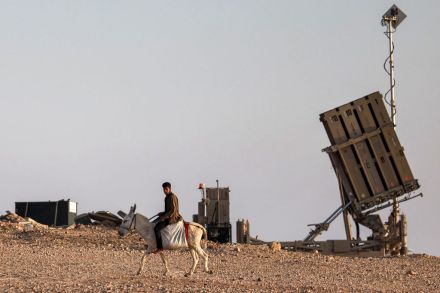
Iran’s unprecedented attack on Israel Saturday night represents a dangerous escalation for three reasons. The first is its scale, some 300 drones and missiles. Second, it marks the first time the Islamic Regime has launched a lethal attack on Israeli territory from Iran itself, rather than through proxies. Most important of all is the combination of the first two: a major attack launched against Israel from Iranian territory. Although Israel, the US, the UK and, surprisingly, Jordan managed to shoot down nearly all the incoming drones and missiles, it was the thought that counts. And it was a very dangerous thought. Within hours, the Iranian attack changed the region’s strategic landscape.

israel iran

Renewed hope on Ukraine’s Independence Day 

Kyiv Because I was born on the same day as Ukrainian Independence, there were always fireworks on my birthday. Until I was eight, I thought these rockets were in my honor. I even asked my mother to bring a bag so that I could catch a “firework” and it would keep shining for me all night long.  In addition to fireworks, there were concerts and cotton candy, and the fountain on the main square would be transformed from ordinary to multi-colored. It was like the Fourth of July in America, only on August 24 in Ukraine. But my childhood is over, I’ve become an adult and this year after eighteen months of Russia’s full-scale war, I’m not expecting fireworks. I’m hoping there won’t be Russian rockets or Iranian drones either. War forces us to adjust.

independence

There’s no excuse for Russia’s downing of a US drone

A US MQ-9 Reaper drone’s propeller was hit by a Russian Su-27 fighter jet over the Black Sea on Tuesday, causing the drone to lose control and crash. Before the fighter made contact with the drone, it and its wingman released fuel in what was likely an attempt to impair the American aircraft. The drone was in international airspace — which Russia seems to acknowledge — leaving no justification under international law for Moscow’s aggressive actions. Whether or not the physical contact was premeditated remains unknown. The Kremlin claims the drone’s “sharp maneuvers” caused it to crash and that its jet did not hit it.

vladimir putin army

Why Israel won’t give lethal aid to Ukraine

Israeli defense minister Benny Gantz announced this week that Israel would maintain its policy of not supplying weapons to Ukraine. This drew criticism, including charges that Israel has a moral obligation to help Ukraine and is instead foolishly prizing its relations with Russia. Critics also note that Israel’s archenemy Iran is providing weapons and advisors to Russia. They further point out that Israel’s Ukraine arms embargo puts it out of step with Israel’s most important partners in the West, especially the United States. Yet aiding Kyiv is a far riskier bet for Jerusalem than for most Western capitals. This is no easy call, and the one Israel made is probably the right one.

The Russia-Iran axis that’s menacing Ukraine

Russia’s brutal war in Ukraine is coming up on its eighth month, and the costs to the Kremlin’s military have been immense. Increasingly isolated on the world stage, Vladimir Putin has joined the world’s club of pariah states, the only group willing to give him support. Chief among his allies is the Islamic Republic of Iran, a state with similarly imperialistic designs and global isolation. This axis has been brewing for some time — the two nations worked together extensively in Syria, for example — but the relationship has reached new heights as the Russian armed forces buckle under the strain of war. Perhaps the most potent symbols of this relationship are the hundreds of Iranian drones flooding into Ukraine to fill a gap in Russia’s weapons inventory.

The decline of drone killings

On the very same day that Joe Biden was inaugurated, he imposed an order on the national security bureaucracy that received little attention at the time: drone strikes in Yemen and Somalia were to be curtailed until further notice. If American commanders wanted to strike a target in those countries, they would have to bring the request directly to the White House for debate. The new, temporary guidelines would be in place until the Biden administration completed its inter-agency review on America's policy of targeted killings. That review is still in the process of being finalized. And while we don’t necessarily know what the Biden administration’s new rules and procedures will be, we do know that the White House is ramping down the pace of drone strikes.

Paying the price for Obama’s drone war

It was nearly six years ago on October 3 that the Médecins Sans Frontières hospital near Kunduz, Afghanistan, was hit by US airstrikes. The bombings occurred 'repeatedly and precisely' and for more than 30 minutes afterwards, hospital officials frantically called Afghan and American military officials. In the end, the hospital — which was caring for Afghans wounded in the ongoing war — was partially destroyed and 22 civilians and medical workers lay dead. The timeline afterward went something like this: the Pentagon acknowledged there may have been collateral damage to a nearby medical facility during a fight with Taliban insurgents. A day later, officials said the US had fired on insurgents who were engaging with Afghan military in 'the vicinity' of the hospital.

price obama drone war

Automation and the future of modern warfare

There is an epic moment in the latest Gerard Butler movie Angel Has Fallen where he gets to save the life of the US president (again). The bad guys launch a swarm of dozens of micro drones able to detect and kill dozens of Secret Service agents, destroying anything and anyone that might get in the way of their mission to kill the president.It’s a chilling moment in the movie that clearly demonstrates just how powerless mere mortals will be in the face of superior technology that can operate independently of any direct human control.As with so much in Hollywood these days, movie truth is remarkably close to a reality that has been prefaced since 1984 when the first Terminator movie appeared and suggested the idea of autonomous robots as terrifying killing machines.

drones automation

How drones are dramatically changing warfare

The attack on Saudi Arabia’s oil facilities by Houthi rebels using a fleet of 10 drones loaded with explosives has caused serious damage and will result in a global production cut of around five percent. The Houthi strike was the second aimed at Saudis oil facilities after a previous effort last month resulted in minimal damage. The Houthi drones were likely supplied by Iran, which has a large drone fleet and has been arming the rebel group in Yemen for years. Saudi Arabia is likely to launch retaliatory strikes against both the Houthis and Iran. Drones have become a new frontier in warfare allowing activist groups and nations access to a potent weapon that can be used for surveillance or as a remotely piloted bomb.

drones oil saudi arabia