Donald trump

How Trump loses friends and alienates people

It is a long haul until the midterm elections in November. Many threats and deadlines will have been issued to Iran in that time, many cycles of optimism and pessimism will have been completed. The war may be over, or Donald Trump may be bogged down in an intractable conflict which he privately wishes he had never started. Regardless, his administration must start preparing for what looks to be an increasing certainty: that the Republicans will suffer a heavy electoral reversal. That was looking likely even before Iran and its effect on oil prices. The President’s tariff wars have protected some, but the overall effect on blue- collar jobs has been negative. Moreover, at 3.3 percent, consumer inflation is back at the sort of levels which helped stop Kamala Harris from winning.

trump
liz truss matt schlapp

Can Liz Truss and CPAC Make England Great Again?

“We have an elite who have been in power for at least the last 40 years, who fundamentally don’t like western civilization and they wanna destroy it,” said Liz Truss, who was prime minister for 49 days in 2022, as she spoke to a half-full room at the Conservative Political Action Conference in Texas. It was her third such speech. The Liz Truss who addresses American audiences bears little resemblance to the awkward, growth-obsessed economics nerd who somehow ascended the greasy pole of British politics, only to slide back down at staggering speed. She’s changed her vocabulary – and her talking points. The few attendees of her panel, snappily titled “Europestan: Can Europe Survive?” could hear Truss lambasting “grooming gangs” and “transgender ideology.

Trump’s goals in Iran have always been clear

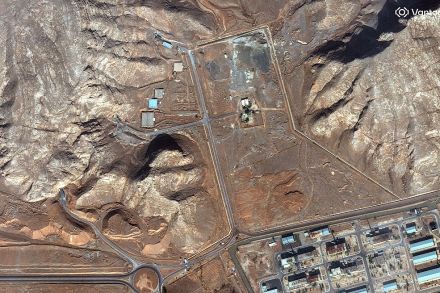
The bombing of the Revolutionary government in Iran is drawing comparisons with the war in Iraq. But the comparisons are with the wrong war. In 1981 there was an attack on Iraq which much more closely resembles what Donald Trump is trying to achieve in Iran. The story goes back to 1976, when the government of Jacques Chirac in France sold a nuclear reactor to the Iraqis – a deal for which the French have always managed to avoid much criticism. The French charged the Iraqi government twice the going rate. But as one of the Iraqi nuclear team later recalled: ‘We were happy to pay. After all, who else was going to sell us a nuclear reactor?’ Who indeed.

Why Donald Trump won’t embarrass the royals

Elizabeth II was never particularly enthusiastic about birthdays. They were a good excuse for a parade or an honours list, but not a patch on a major wedding anniversary, let alone a jubilee. Those were a celebration of true dedication, not of mere longevity. Even so, were she still with us, the late Queen would have acknowledged that her centenary on Tuesday is a big deal. It would also have created a delightful conundrum for the Buckingham Palace anniversaries office, the department that sends out 100th-birthday congratulations from the sovereign. At the start of her reign, she was sending 385 of those each year across all her realms (by telegram). By the end, it was over 16,000 (by card).

Portrait of the week: Trump attacks the Pope, Trump praises the King and Melania goes public

From our UK edition

Home Lord Robertson of Port Ellen, the former secretary general of Nato, said: ‘We are under attack. We are not safe... Britain’s national security and safety is in peril.’ The government ran out of time to pass legislation to give the Chagos Islands to Mauritius before the end of the current session of parliament. Sir Keir Starmer, the Prime Minister, visited Saudi Arabia, the UAE, Bahrain and Qatar. He said in the Guardian that renewable energy would give Britain resilience in an unstable world. The IMF forecast that the Iran war would hit Britain’s economy the hardest, among G7 countries, reducing its estimate for growth this year to 0.8 per cent, from the 1.3 per cent predicted in January.

What’s Britain’s place in the post-Iran world order?

From our UK edition

Midway through James Joyce’s Ulysses, the character J.J. O’Molloytips his hat to ‘Our watchful friend, the Skibbereen Eagle’, a playful reference to an obscure provincial newspaper in the west of Ireland. Under an ambitious new editor, the Skibbereen Eagle had risen fleetingly to prominence in 1898 for its robust response to Tsar Nicholas II’s attempts to gain a warm-water port for the Russian navy by encroaching on China’s Yellow Sea. As its editorial warned in a chiding tone, the Eagle would ‘keep its eye on the Emperor of Russia and all such despotic enemies – whether at home or abroad – of human progression and man’s natural rights’.

Mary Vought exits as Heritage comms chief… for $500k payout: source

Another high-profile departure at the Heritage Foundation: Mary Vought, who served as the think tank’s VP of strategic communications, bids adieu this week. “I’m grateful to @KevinRobertsTX for entrusting me with this position. It’s been an honor to work alongside some of the nation’s foremost policy minds while leading Heritage’s talented communications team – a group I am deeply proud of,” Vought tweeted. “I am returning full-time to my company, Leverage PR.” “Thank you, @MaryVought, for your great work,” Heritage Foundation president Kevin D. Roberts wrote in response. “It’s been a pleasure to work with you for nearly a decade – both @TPPF and @Heritage – so I look forward to collaborating with you in the future. Best wishes on the next step!

wall street journal

If Trump hates the Wall Street Journal, why is its editorial board dictating Iran policy?

For the better part of a decade, Donald Trump has been an avid, if irascible, reader of the Wall Street Journal – particularly the columns overseen by its long-time editor Paul Gigot. Because the Journal is among the few American conservative outlets willing to criticize Trump – on everything from tariffs to temperament – he has developed a habit of denouncing it in public while devouring it in private. The Journal, Trump recently declared on Truth Social, is "one of the worst and most inaccurate editorial boards in the world." The ritual extends to annotated hard copies – margins filled with indignant scrawl – before the offending pages are FedExed back to News Corp headquarters in Midtown Manhattan.

What Trump gets wrong about NATO

The idea that the United States has been swindled by its NATO allies is not new. Robert Gates, in his valedictory address as secretary of defense in June 2011, warned bluntly that future American leaders might not consider the return on defense investment in Europe worthwhile. He spoke of a "two-tiered alliance… Between those willing and able to pay the price and bear the burdens of alliance commitments, and those who enjoy the benefits of NATO membership… but don’t want to share the risks and the costs." Gates was no populist. He was a career intelligence officer and establishment Republican, and his warning carried real weight precisely because it came from inside the institutional consensus rather than against it.

NATO

Get ready for Epic Fury Part II

It could be the shortest negotiation in history. The United States and Iran, with their respective peace plans, are so far apart that it’s difficult to see how their differences can ever be squared.  A two-week ceasefire, which has already been broken, brought relief after five weeks of war and steadied the oil and stock markets. But the agreed ceasefire is looking fragile, as US Vice President J.D. Vance admitted. There had been “legitimate misunderstanding,” he said yesterday, over whether the ceasefire extended to Israeli action in Lebanon.

Trump’s fantasy of victory

Among the many gifts the Watergate scandal gave us was Nixon’s White House press secretary declaring: "This is the operative statement. The others are inoperative." That was after months of sticking to increasingly threadbare denials. In Donald Trump’s White House, operative statements become inoperative from one day to the next. That’s especially true of Iran. In 24 hours, from Tuesday to Wednesday this week, Trump went from "a whole civilization will die tonight" to "this could be the Golden Age of the Middle East!!!" TACO: Trump Always Chickens Out, as the meme has it.  The two-week ceasefire agreed this week with Iran is a lesson that you can win every battle but lose the war. (This is the lesson the United States learned in Iraq and Afghanistan, only to forget it again.

The only ‘civilisation’ Trump will destroy is his own

If, as Donald Trump had threatened, ‘a whole civilisation’ had died on Tuesday night, the whole civilisation concerned would have been that of the United States, not of Iran. If an American president had deliberately ordered the death of a civilisation – whether or not such a thing is achievable – America’s claim to world leadership would have collapsed. Like, I suspect, many, however, I did not go to bed that night thinking that Trump would carry out his threat. I remember my parents telling me that, during the Cuban missile crisis, people truly believed there might be nuclear conflagration at any moment. It did not feel like that this time.

Trump: the boy who cried war

From our UK edition

Did Donald Trump ever intend to obliterate Iranian civilisation?  Some will see the past week as one in which the world pulled back from the brink, when an unhinged US president experienced a rare moment of lucidity at the last crucial minute. Trump’s oscillation is, his defenders argue, the ‘madman theory’ in operation. This was the name given to the approach employed by Richard Nixon in Vietnam, when he tried to persuade the North Vietnamese that he had become so unstable he was capable of just about anything – nuclear annihilation included. Nixon believed his foe would have no option but to come to the negotiating table. Trump has succeeded in convincing many western commentators that he is genuinely on the point of lunacy – heedless of slaughter.

Why Trump is tempting 25th Amendment talk

During his remarks in Budapest, Vice President J.D. Vance, who is trying prop up Hungarian Prime Minister Viktor Orbán as he runs for reelection, appeared to think the unthinkable. Vance, who has been a hero for MAGA anti-interventionists, went all-in on attacking Iran. He indicated that America might resort to “tools” in its arsenal that “we so far haven’t decided to use.” Now the White House is denying that it plans to deploy nuclear weapons against Iran, after frenzied social media speculation that it might. Negotiations with Tehran are ongoing – and Trump told Fox's Bret Baier that "if negotiations move forward today, and there is something concrete" that tonight's 8 p.m. deadline "could change.

25th amendment

Why Pakistan is brokering peace in Iran

Pakistan, the world’s only Muslim nuclear power, has traditionally been an international sideshow. No longer. The country has reportedly been passing messages between Washington and Tehran in efforts to bring an end to the Iran war. It is has a five-point plan aimed at restoring “peace and stability” across the region. How have the Pakistanis pulled off this remarkable diplomatic makeover? The answer starts with some critical decisions the Pakistanis took last year. After the four-day armed conflict between Pakistan and India in May 2025, both sides claimed “victory”. But crucially Islamabad publicly acknowledged Washington’s role in achieving a ceasefire (something India refused to do). Pakistan later nominated President Donald Trump for the Nobel Peace Prize.

Pakistan

This is what Trump means by ‘victory’ in Iran

President Trump has now told us something very important about the war with Iran. Ponder his address to the nation this week and you discover how he defines victory. Nothing that happens from here on out will change that. As Trump sees it, he is the winner, having achieved all his goals. He has accomplished regime change in Iran by eliminating the men who led the regime when the war started. America has so damaged the country’s military infrastructure that it will not be able to produce or deliver a nuclear weapon for at least a decade, by which time it will be up to a future American president to take the needed action. So, no need to cart away or destroy Iran’s enriched uranium.

iran
propaganda war trump iran

Ignore the propaganda war

Prediction: by the time you read this, the joint US-Israeli operation in Iran will be all but over. In fact, it had mostly ended by the start of April. The Kool-Aid-dispensing press has been telling us since the conflict began that Iran was winning. They wanted it so badly to be true. Being adept at magical thinking, they also believe that what they wanted to be the case would suddenly, hey presto, become the case. A cover story in the Economist declared “Advantage Iran.” “A month of bombing Iran,” that once-sober publication announced, “has achieved nothing... For now, at least, the advantage lies with the Islamic Republic.” Not to be outdone, the Financial Times weighed in with “Iran could emerge from the war stronger and more dangerous.” Right. Iran’s navy? Sunk.

Trump’s rambling Iran address was full of wishful thinking

In his nationwide address on Wednesday, Donald Trump could not have been clearer about the course of the Iran war. It’s not ending any time soon and there will be no deescalation of military force. Instead, channeling his inner General Curtis LeMay, Trump announced, “We are going to hit them extremely hard over the next two to three weeks. We’re going to bring them back to the stone ages where they belong.”  No, they don’t. It was a jarring reference to an ancient and proud Persian civilization that has been commandeered by a gang of thugs.

iran

Trump’s presence won’t sway the Supreme Court

For the first time in memory – and perhaps in history – an American president has attended a Supreme Court argument in person. I recall attorney general Robert Kennedy attending an argument back when I was a law clerk in the early 1960s. But I have seen no record of presidential attendance. Not that there is anything wrong with that, even if it was intended to convey the president’s strong belief in his side of the argument. Any fear that President Trump’s presence would influence the justices was immediately belied by the nature of the justices’ questions – which suggested some hostility to the Solicitor General’s argument limiting birthright citizenship.

Supreme Court

Russia has its eyes on Svalbard

From our UK edition

Svalbard The quiet hillside by Longyearbyen’s church gives visitors to the capital of Norway’s Svalbard archipelago an austere but beautiful panorama of the bay that cradles the town. Tall, sharply steep mountains, blanketed with snow, collide with the blue-grey waters of the Arctic below. From that hillside, I watched the quiet bustle of Longyearbyen. Since Donald Trump threatened Nato with the biggest crisis in the alliance’s history by stating his desire to take control of Greenland in the name of US ‘national security’, Svalbard’s residents have been uneasily looking westward. The US President has repeatedly claimed that only he can prevent the island, which is just 185 miles from Svalbard, being used as a staging post for an attack on the West by Russia or China.