One of my earliest memories – I was not quite three and a half – is of being with my mother in a tea shop one Saturday morning. She had run into a friend, who used a word I had never heard before, and being a tiresome child I asked what it meant. The word was “assassination.” John F. Kennedy had been shot the previous day, and the talk, even in the English provinces, was of little else.
In the 1960s one was assailed by American culture, but it was a form of imperialism that few found objectionable. America’s music bawled from radios. Its programs larded the schedules of our three television channels. Its films filled cinemas. Some of its usages were creeping into our language. This hegemony had begun before World War Two but had accelerated since 1942, when millions of American servicemen started arriving in Britain. That war had, in most perceptions, established America as our closest ally, building what would come to be called the “special relationship.” Thus, when Kennedy was assassinated, it was to many Britons as though our best friend had been killed, and we reacted accordingly.
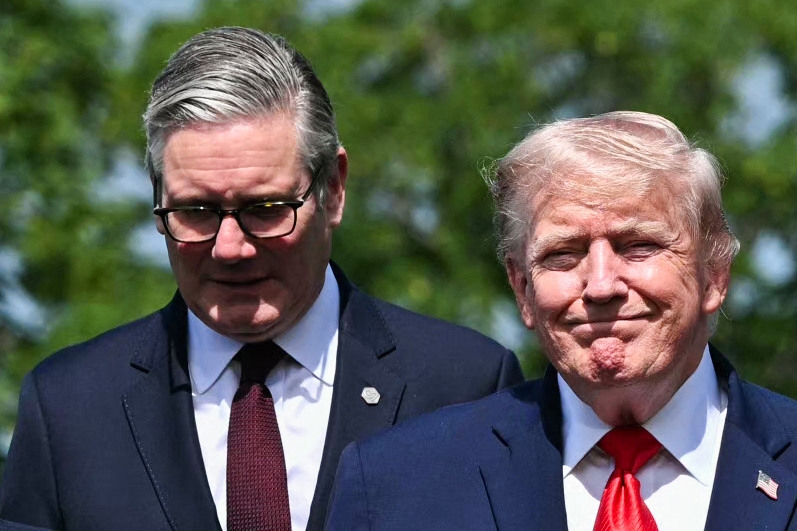
There have been several assassination attempts on Donald Trump, and one dreads to think what our reaction would be were one to succeed. He is a figure of contempt and loathing even among many on the right, where he claims to stand. Daily we witness his repellent behavior – exaggerating, boasting, lying, goading, mocking, often in the context of the disastrous war he started with Iran, from which he can extricate himself only with personal and national humiliation. Given his almost oriental concept of “face,” he will find that unbearable. Knowing him, he will create a distraction: maybe “liberating” Cuba. Anything could happen.
We also read of the financial corruption enriching Trump and his family, and hear of his plans to advance his seemingly psychopathic narcissism and self-regard: his White House ballroom, his gold statue, his comparisons of himself with Jesus Christ and the great address he is planning to his people on July 4, the 250th anniversary of the declaration of America’s independence. Nero comes to mind; we are not used to such “leadership” in our civilization.
But never mind what all this causes us to think of Trump: the more significant issue is what, at its semiquincentennial, it makes us think of America. We two have had rough passages before, of course. Roosevelt marginalized Churchill at Yalta while propitiating Stalin. Eisenhower humiliated Eden at Suez, not least to remind Britain that America was now top dog. Even that most intimate iteration of the special relationship – between Ronald Reagan and Margaret Thatcher – was strained when Reagan sent troops into Grenada without forewarning her. And history has yet properly to relate what passed between George W. Bush and Tony Blair over the Second Iraq War. Yet after each misunderstanding, tiff or insult, the relationship returned to normal.
Americans mostly looked, and almost sounded, like us. We knew from films and television shows that they had bigger houses, bigger cars and bigger fridges than we did, but the fundamental bond between Britons and Americans was our shared values. America might be a republic, and we a monarchy, but we were both democracies, both believed in the rule of law and our societies were broadly Christian, at least culturally.
Above all, when our leaders met, they played by the same rules. Britain and America had a corresponding definition of statesmanship. When we agreed, it was presented as a natural meeting of minds, not a reason for triumphalism or self-congratulation. When we disagreed, we did so behind closed doors, as civilized families do. We did not intervene in each other’s domestic politics, as America does all too frequently now, in a way that seems meddlesome, arrogant, hectoring and bullying. And it is hard to imagine the late Queen questioning a state visit by an American president, as the King is reported to have done when told that Trump was -coming last year.
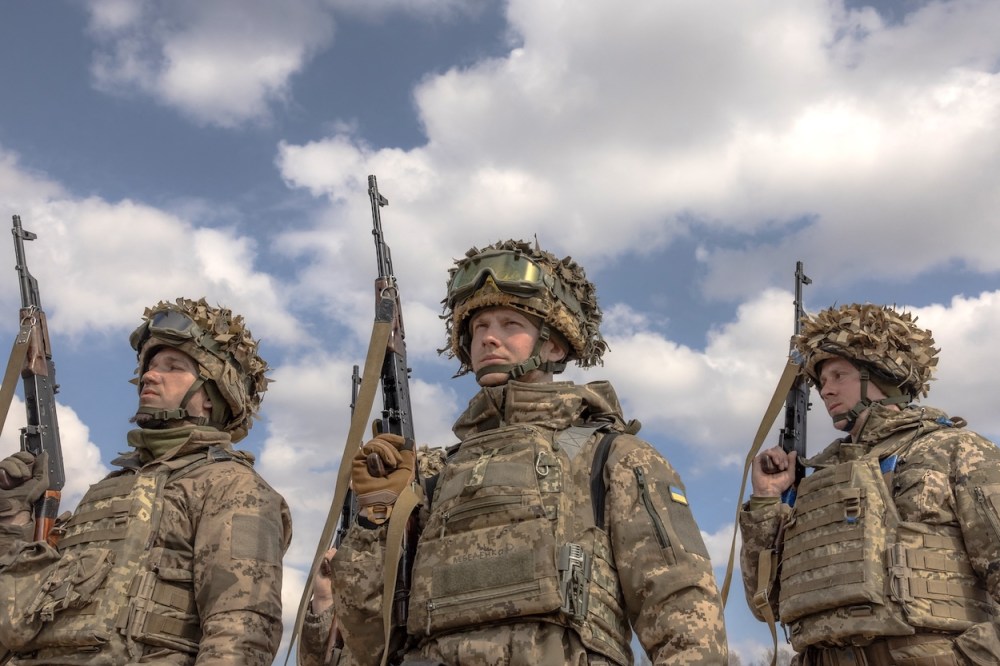
The King’s dismay at this visit was, it is also reported, caused by the disgusting scene in the Oval Office in February last year when Trump, egged on by his gurning halfwit of a Vice President, decided to insult, berate and humiliate Volodymyr Zelensky, the Ukrainian President, who was visiting. It was a bravura display by the Americans of what might best be called anti-statesmanship. For many Britons, it was a seismic moment of revelation that America is no longer what we had, in living memory, believed it was.
As the grotesque behavior of Trump and his toadies persists, perceptions will continue to change and all America will be tarred with his brush. We see events nightly on news bulletins, or read about them in the press and online, that shock us because of how they violate our own standards and expectations. The Zelensky horror was a graphic example, but so too were the gratuitous killings last winter of innocent American citizens by ICE agents; the countless stories of wrongful arrests of other citizens because of the mistaken belief that they are illegal immigrants; the ludicrous demands by Trump that he should have the Nobel Peace Prize; and his desire to annex Canada and Greenland.
For Britain, it is as if a long-standing friend has suddenly developed a personality disorder
He is out of control. For Britain, it is as if a long-standing friend has suddenly acquired a hideous personality disorder and cannot be reasoned with. To most Britons, this change of perception is shocking; there has probably been nothing like it for over a century, when France, our traditional enemy, was admitted to formal friendship at the time of the Entente Cordiale in 1904, and when in 1914 Germany, the home of our own royal family and whose Kaiser was the King’s first cousin, suddenly became a foe.
Whatever lunacies Trump may choose to engage in next – he may not have finished his appeasement of Vladimir Putin – he is unlikely to turn America into Britain’s enemy (it would make access to his golf courses difficult, for a start). But he is well advanced in diminishing America in British esteem and transforming his superpower into a country for which the thinking Briton has only suspicion and increasing dislike. His State Department should be telling him this, but of course it is not, because those who tell him the truth are shown the exit immediately.
For many in Britain, it would be a relief to pretend that Trump hadn’t happened, or at least that he had remained a tacky television personality. But he has, and therefore all we can do is grit our teeth, wait for him to go away and hope that one day America is, again, a bosom friend whom we can love and respect.





Comments