Democracy

The urgent case for voting reform

From our US edition

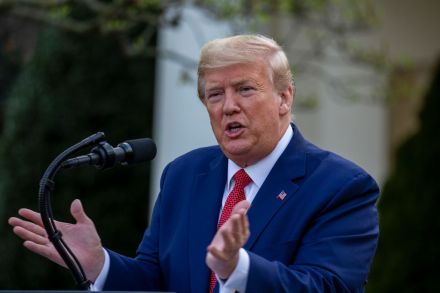
By now, The Spectator knows better than to say that Donald Trump has been definitively beaten. The President’s final defeat has been proudly proclaimed and then undermined so many times that the wisest course is to assume he will always rise again. Nevertheless, while Trump has not officially given up, he seems to have failed in his quest to win a second term. But the President did not fail in the hearts of his supporters. Most will agree: they did not lose this race — it was stolen from them. In the late hours of November 3, the President’s lead seemed insurmountable, his victory inevitable. Defying the polls, he romped to easy wins in Florida, Texas, Iowa and Ohio. The New York Times needle showed him on track to win Georgia by four points.

trust

The demise of America has been greatly exaggerated

From our US edition

One of my favorite quotes about America — mainly because it annoys so many people — comes from the historian Robert Wiebe. In his book Self-Rule, he writes: ‘Telling Americans to improve democracy by sinking comfortably into community, by losing themselves in a collective life, is calling into the wind. There has never been an American democracy without its powerful strand of individualism, and nothing suggests there will ever be.’ Cue the yelping from nationalists, socialists, Burkeans, take your pick. Yet Wiebe was less making a political argument than he was observing what was right in front of his nose.

america

How democracy can subvert itself: Bunga Bunga reviewed

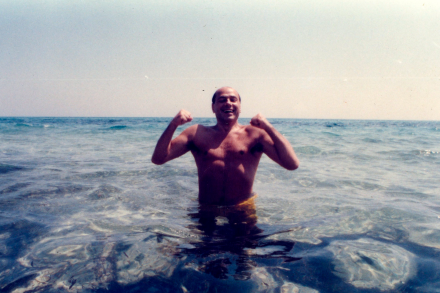
Italy has long captivated romantics from rainy, dreary, orderly northern Europe. Goethe, Stendhal, Keats and Shelley all flocked to Italy in search of the ideal society. There they found what they thought was a utopia. ‘There is,’ Byron marvelled in a letter home from Ravenna, ‘no law or government at all, and it is wonderful how well things go on without them.’ Well, Silvio Berlusconi has made some of Europe’s wisest men sound like chumps. If the notorious career — chronicled in the podcast Bunga Bunga — of the longest-serving prime minister of Italy since Mussolini and its sometime richest man has done one good thing, it’s to have dispelled for good our quixotic fantasies about his troubled nation.

What on earth has happened to Simon Schama: The Romantics and Us reviewed

‘You may think our modern world was born yesterday,’ said Simon Schama at the beginning of The Romantics and Us. If you do, though, I can only imagine that you’ve never seen any history documentaries on television — where, as a rule, the modern world is born in whatever period the documentary happens to be about, from Ancient Rome to the 1980s. After all, how can the past possibly be interesting if we can’t see ourselves reflected in it? As the title indicates, Schama’s choice, this time, of an era important enough to lead to us was the romantic movement.

We are living in an age of cultural climate change

From our US edition

A free society is a moral achievement. Over the past 50 years in the West this truth has been forgotten, ignored or denied. That is why today liberal democracy is at risk. Societal freedom cannot be sustained by market economics and liberal democratic politics alone. It needs a third element: morality, a concern for the welfare of others, an active commitment to justice and compassion, a willingness to ask not just what is good for me but what is good for ‘all of us together’. It is about ‘Us’, not ‘Me’; about ‘We’, not I’.

climate

Why I won’t vote

From our US edition

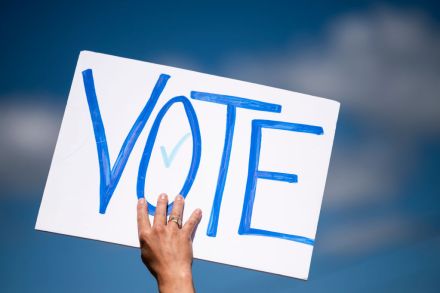
Almost exactly a year ago, I wrote a piece titled ‘The battle cry of the politically homeless’ in which I lamented the toxic tribalism that’s infecting our politics and pitting neighbor against neighbor, sister against brother, parent against child. ‘Democracy doesn’t die in the darkness; it dies when politics become team sports, in full view of a bloodthirsty, cheering electorate.’ At the end I wondered, ‘We will return to the Dark Ages or we will evolve. Is that likely? I dunno. Have we evolved that much from the Roman Colosseum? Barreling into 2020 — it doesn’t seem like it.’ In the last year, the globe has been ravaged by a pandemic that put the ineptitude of American institutions and leaders on display for the world.

vote

How the Athenians would have handled the Lords

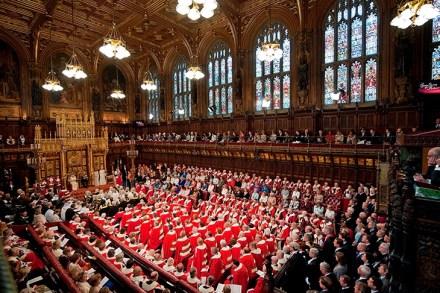
Arguments about the purpose or indeed very existence of anything resembling the House of Lords would have struck classical democratic Athenians as bizarre. But its Areopagus might prompt thought. This body had been in existence long before Cleisthenes invented radical democracy in 508 bc. It was made up of the wealthy aristocratic elite from whom alone the main state officials (archons) could be drawn. Their term of office completed, they joined the Areopagus for life. This body was the state’s legal guardian. The democratic reformer Solon (594 bc) slightly broadened its membership, and removed some of its political powers.

Covid-19 shows us that virtue trumps freedom

Look at it this way: we’re all doing Desert Island Discs nowadays, and unless you’ve got the bug, it’s a damn good thing, too. I did the desert island bit around 30 years ago, when Sue Lawley was the presenter, and we got along fine, even after I commented on air that she had nice legs. I suspect it would have been a different story today, but another good thing about the virus is that it has knocked #MeToo off the front pages. For good, I hope, but I doubt it. Among my desert island picks was a version of ‘Lili Marlene’ sung by an army choir that I first heard as a four-year-old in an Athens street sung by a group of marching German soldiers.

The next American revolution will be televised

From our US edition

Is America becoming a developing country? We’re seeing increasing evidence of reverse convergence. We used to think that the developing world would in time become like America, but it now seems that the United States has developed an emulation complex of its own. What has not been explained are the reasons. In some fundamental areas America does resemble a traditional society, with its belief in transcendence and its quaint ways of enforcing justice and delivering public goods. The US executes prisoners on a scale matched only by China, Iran and Saudi Arabia. Guns are more readily available than in Pakistan and more than half of Americans pray every single day. No other state spends so much money on health care, yet Americans’ life expectancy keeps falling.

trump television

The director of Persepolis talks about her biopic of Marie Curie: Marjane Satrapi interviewed

The problem with making an accurate film about science is that science is rarely exciting to watch, explains director Marjane Satrapi. Movie convention tends to insist on the climax of the eureka moment and the fiction of the solitary male genius, who doggedly closes in on his discovery in the same way that a detective might doggedly close in on a killer. ‘It doesn’t happen this way,’ says Satrapi. ‘It’s a result of lots and lots of work, which most of the time is repetitive and most of the time you know you don’t know where you’re going, and it’s lots of collaboration.’ Satrapi studied mathematics in her birthplace of Iran, and has a scientist’s intolerance for dramatic licence.

Election recounts are a sign of a healthy democracy

From our US edition

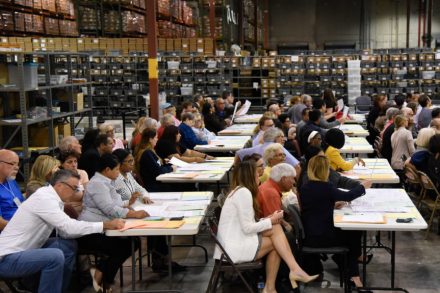
All over America, election recounts are in progress. Is it a sign that democracy just doesn’t work as well as it used to? On the contrary, it’s a sign that Americans are more earnest now than ever before about getting the results right. Despite sharp polarization, nearly everyone believes that the candidate with the most votes should in fact take office. Thousands of men and women are working to make sure the count is accurate. They know that, all over the world, democracies fail when the losers refused to accept the verdict of the electorate, or when the winner abolishes the system that brought him to power. From their earliest schooldays they’ve had drummed into them the idea that fair elections are sacrosanct, their nation’s bedrock.

election recounts