Dementia

Is my plumber right about Armageddon?

The plumber was shouting hysterically at me down the phone because I had asked him to install a heated towel rail. ‘Towel rail? Towel rail! Armageddon is coming! Did you fill your oil tank up? It’s tripling in price by Christmas! I’ve got 40 jobs piled up! Forty jobs!’ ‘So are you saying I can’t have a heated towel rail?’ I said. I know the plumber only too well. Many a time he has sat at my kitchen table chain-smoking while rambling about the devil, and how the world is coming to an end. If that is his default setting, you can imagine how he reacts to things going very badly on a global scale. He lives on his nerves at the best of times. Major world events are apt to put him in a particularly nihilistic mood.


How far would I go for oil?

The oil delivery man had way too much swagger and, as he waved his nozzle about, I realised that he might be expecting a little something. Oh dear, I thought, as he pushed the nozzle into my oil tank, pressed the button on his lorry and spent less than ten seconds giving me the amount of oil I could afford. Oh dear, what if the oil crisis is now at such fever pitch that desperate housewives in remote places are offering a little something on the side to get more oil? Ten seconds’ worth of oil did feel like the end of the world. Usually, I can afford to let the lorry fill the entire tank and it comes to about a grand.

I’m stuck in a house of madness

‘I want to learn Iranian,’ said my father, resolutely, as he watched the bombing on the television. ‘Farsi,’ I said, thinking I would talk to him about that very happily on the basis it was better than helping him contact the Ukrainian government so he can fight the Russians. ‘What’s that?’ he said. ‘Farsi,’ I repeated. ‘Parcel?’ he said. But it was pointless trying to explain, for he was up and looking out of the window and telling me to look in the parcel box. We were waiting for the special food I had ordered for the new cat someone irresponsibly rehomed to my parents and which already has a stress condition from living with two dementia sufferers.

Being kind to my parents means saying no to them

After a week in Coventry dealing with two parents with dementia, it would have felt like a nice spa break to go to Guantanamo Bay. The smallest cell at Gitmo and a pair of sensory deprivation earmuffs would have been sheer bliss. I got back from not picking up my father’s car from the garage and my mother was standing in the doorway crying. In the time it had taken me to drive three times the distance to the MOT test centre in a circle of unfathomable six-lane 30mph Midlands bypasses, because that was the way my father wanted to go, the garage had shut and his car was locked up on the street outside. I was rocking backwards and forwards slightly in the car seat making a humming sound as my father stood arguing with the closed shutters.

Has my father’s BBC addiction peaked?

‘I want the stairlift to go faster!’ said my mother, as the machine she was sitting on whirred furiously while she moaned to me about it on the phone. ‘How fast do you want it to go?’ I asked, imagining it doing 60mph down the short run of stairs in their little house in Coventry, coming to an abrupt halt at the bottom, then catapulting her across the living-room floor because she never does the seatbelt up. ‘It’s too slow!’ she declared, and I could hear her slapping various bits of it and banging the switches on the arm. ‘When the man comes to service it I’m going to tell him to make it go faster. Come on! Come on!

Cooking up a storm of memories – Bee Wilson’s kitchenalia

When Bee Wilson’s husband abruptly called time on their 23-year marriage, she was left with a house full of memories embedded in the everyday objects around her. Two months after his departure, the heart-shaped tin of the title – in which she’d baked their wedding cake – clattered to the floor for no apparent reason. Symbolic or what? That leap inspired another, sending Wilson on a quest to explore our relationship to objects, specifically kitchenalia. After years of use, all possessions hold symbolic memories and actual DNA, and kitchen tools are handled more than most household items, from wooden spoons and cooking pans to salt shakers and china.

How is Arnold Wesker’s Roots, which resembles an Archers episode, considered a classic?

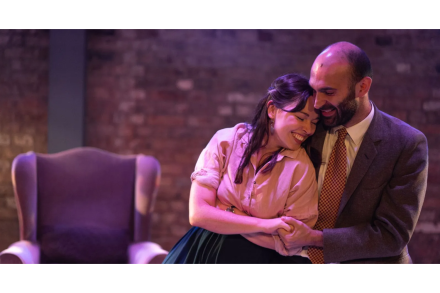
The Almeida wants to examine the ‘Angry Young Man’ phenomenon of the 1950s but the term ‘man’ seems to create difficulties so the phrase ‘Angry and Young’ is being used instead. It’s strange to encounter a theatre that’s scared of words. The opening play, Roots, by Arnold Wesker, looks at the conflict between town and country in 1950s Norfolk. Beatie, in her early twenties, returns from London and announces to her warm-hearted but unsophisticated family that her boyfriend, Comrade Ronnie, wants to meet them. He’s a pastry chef who supports a Marxist revolution and Beatie is eager to fight for everything he believes in.

Ageing well: becoming a world leader in tackling dementia and Alzheimer’s

46 min listen

With cases of neurodegenerative conditions rising in the UK, it's crucial to re-examine how we tackle these diseases. The Spectator's assistant editor Isabel Hardman speaks to Debbie Abrahams MP (co-chair of the Dementia APPG), Dr Emily Pegg (associate vice president at Eli Lilly), Dr Susan Kohlhaas (executive director at Alzheimer's Research), and Professor Giovanna Mallucci (principal investigator at the Cambridge Institute of Science).

Watch three irascible women screaming at each other: Anthropology, at Hampstead Theatre, reviewed

Anthropology is a drama about artificial intelligence that starts as an ultra-gloomy soap opera. A suicidal lesbian, Merril, speaks on the phone to her kid sister, Angie, and they discuss Merril’s beautiful ex-girlfriend. After ten minutes, we learn that Angie’s voice belongs to a robot, Digital Angie, created by Merril to replicate the real Angie who vanished a year earlier in unexplained circumstances. Then another surprise. Digital Angie becomes self-aware and turns into a detective who offers to help Merril investigate Angie’s disappearance and to find out if she’s still alive. Angie then turns into a third character who tries to interfere with Merril’s social life.

What my father’s Alzheimer’s taught me

When I tell friends, ‘You never hear people talking about the upside of Alzheimer’s’, they look at me like I’ve said something about Hitler being nice to animals. In general, a mention of dementia will ruin any conversation. People freeze up at the thought. It’s true that having a relative with dementia is hard and the bad far outweighs the good, but that is no reason to ignore the positives completely. In fact, the tiny benefits can help you deal with all the downsides.  I’ve had a lot of time to look for the positives. Growing up, my grandparents had Alzheimer’s so I was aware of the condition, but I hadn’t thought that it could happen to my parents.

Tucci and Firth are like Eric and Ernie but sexier: Supernova reviewed

At the time Supernova went into production one headline read: ‘What did we do to deserve a love story starring Colin Firth and Stanley Tucci?’ Something right, I suppose. This is an intense, intimate, spare film about love, grief and dementia, and the two leads, who play a gay couple, are superb. There is now the argument that gay roles should be played solely by gay actors but, my heavens, you can’t deny this pair look irresistibly adorable tucked up in bed together. Like Eric and Ernie, but with a sexier vibe. Tucci, Firth, a lovely dog and top-class jumpers? We must have done something stupendously right Tucci and Firth play Tusker and Sam, a couple who have been together for 20 years and possess excellent knitwear.

Godot Is a Woman will have you laughing all evening and arguing all night

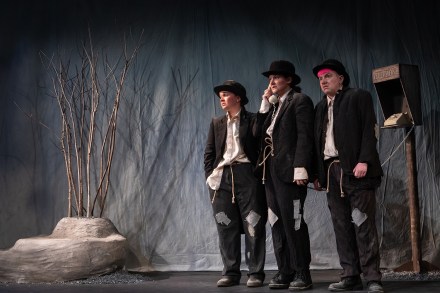
Godot Is a Woman opens with three tramps standing on a bare stage beneath a solitary upright. This isn’t Samuel Beckett’s famous drama about a pair of vagrants, Vladimir and Estragon, who wait in vain for a mysterious visitor. This is a spoof in which a trio of actors (two female, one non-binary) seek a licence to perform the script that Beckett insisted must be played by male actors only. The upright prop is a telephone box and the thesps are trying to get through to the Beckett estate. They’re answered by a robotic female voice. ‘You are 9,124th in the call queue.’ A burst of inane lift music fills the air and the actors pass the time by performing a comic dance routine that lasts 15 minutes.

Anthony Hopkins’s portrayal of dementia will undo you: The Father reviewed

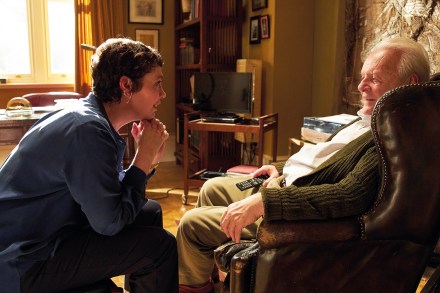
The Father is an immensely powerful film about dementia starring Sir Anthony Hopkins, who was asleep in his bed in Wales when his Best Actor Oscar was announced, so we’ll never know if his outfit would have been a hit or a miss. Shall we give him the benefit of the doubt and say ‘hit’? Either way, he is absolutely remarkable here. I read the screenplay, available online, out of curiosity, and what he brings to the words on the page is beyond and beyond and beyond. Hopkins has played King Lear (twice) but this is his real King Lear. What Hopkins brings to the words on the page is beyond and beyond and beyond Adapting it from his own play (with help from Christopher Hampton), Florian Zeller has also directed the film.

The myriad signatures of a canine pissoir

Sally (la Sal, the Salster) is part whippet, part Labrador and part dormouse. She is 16 years old, stone deaf, three-quarters blind and has dementia. She sleeps like the dead all day but loves her evening walk. We’ve decided that for as long as she enjoys her walks and remains continent indoors we’ll delay taking her to the vet and asking him to put her light out. ‘We’re talking about you,’ I shout at her after we’ve had a review because the dementia has become more obvious. No response. Deaf as a post. ‘You’re on borrowed time, sweetheart,’ I say, lifting her ear to speak into her head. No response. Strange it must be for a dog to live in silence.

The truth about rugby is hard to admit for fans like me

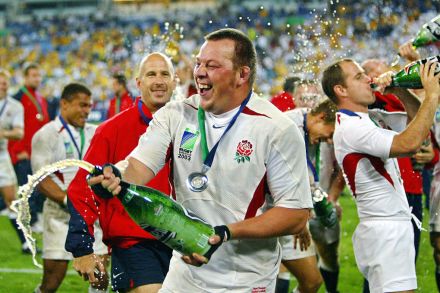
The Six Nations begins today, bringing joy into the hearts of millions of rugby fans. It will, as ever, be a predictably unpredictable tournament – there are always upsets – which will showcase great athletic skill, close teamwork and raw physical courage; and like the first snowdrops, it is one of those reliable harbingers of spring guaranteed to lighten the gloom of cheerless February days. But this year, hovering in the background, is a spectre at the feast; the fast-accumulating evidence that rugby is a danger to the players’ health and well-being. The truth is that many rugby spectators, who love the game, end up feeling guilty.

Looking for love: Ghosts, by Dolly Alderton

Of all the successful modern female writers documenting their search for love, none has been as endearing as Dolly Alderton. Candace Bushnell’s alter ego Carrie Bradshaw in Sex and the City was too brash, perma-groomed and designer-clad. Liz Jones is vulnerable and self-effacingly funny, but her low self esteem and anorexia ring my ‘needs therapy’ alarm, and she too seems bizarrely materialistic. Alderton, though, is the kind of woman every woman wants as a friend. Not only was her first book, the memoir Everything I Know About Love, unfiltered in its honesty about heartache, it was also a warm paean to friendship, with its eternal goldmine of emotional intelligence, conversations about everything, unconditional love and astute advice on tap.

My mother — as I remember her best

Nine cups of milky Nescafé Gold Blend a day; a low-tar cigarette smouldering; a hot-water-bottle always on her lap; the Times crossword almost completed at the Formica table; knitting on the go; and novels — she always read the last page first. She was one of that generation of women who didn’t go to university but were incredibly well-read and knew poems by heart. This was Kathleen, the mother of Nicholas Royle, novelist and professor of English at Sussex University. In a remarkable and moving memoir he has captured and preserved a loving, kind, impatient woman — and perhaps, with her, all of our mothers in the sweet predictability of their sayings and habits.

Jan Morris, at 93, meditates on what it means to be old

‘I’m getting rather tired of me,’ begins Jan Morris in one of the diary entries in Thinking Again, almost certainly the writer and journalist’s last book. She is only half kidding. This collection of essays and whimsical daily musings — a sequel to 2018’s In My Mind’s Eye — is both a deep dive into the charming and erudite mind of Morris, now 93, and also a moving meditation on just what it means to be old. Morris was launched to fame in 1953 when, as James Morris, she was the first journalist to report on Edmund Hillary and Tenzing Norgay reaching the summit of Mount Everest. She experienced a different type of fame altogether when in 1972 she had gender reassignment surgery in Morocco.

Letters: Should conservatives be worried that high-spending Boris has a majority?

My father’s imprisonment Sir: Harald Maass’s piece on the plight of Uyghurs in China (‘A cultural genocide’, December 14) captures the grim reality of what has been happening. Articles like this draw vital attention to the crisis. I am an ethnic Uyghur and live in Belgium with my wife and children. My father, a 58-year-old secondary school teacher from Xinjiang, was jailed in China in April 2018. No reason was provided by the authorities as to why, and there was no trial or any other legal procedure. He was obviously imprisoned just because he is a Uyghur. After 18 months in prison, he was finally released recently and is at home in Xinjiang. Even so, we have only been in touch once — he and all my family members in China are too afraid to be open with me.

Wisdom of the ages: we must keep listening to the elderly

My beloved grandmother died at 90, and my mother at 89, after having Alzheimer’s for 11 years. So I am not rattled by the old; I find their memory lapses challenging rather than frightening. (If I were the full-time carer of an elderly husband, it might be another matter. One woman described it as being strangled slowly by a python.) I recently visited 96-year-old Sir Peregrine Worsthorne, former columnist, journalist and editor of the Sunday Telegraph, at his house in Bucks. In May, his wife (writer Lucinda Lambton) and a kind Croatian carer were present. This time, the two of us were alone for three hours. Perhaps this made it easier for Perry, and me, to focus. I brought up key figures from his past.