David cameron

Lansley’s original reforms are off the table

Nick Clegg’s speech on the NHS this morning was not as bad as many feared it would be. It recognised that there is a role for competition in the NHS, something that the Lib Dems were questioning last weekend, and that the NHS needs to be opened up to any qualified provider. But, on the other hand, the idea that any willing provider should be able to deliver NHS services — an idea which was in the manifesto of all three parties — will now only be introduced at a glacial pace. There’ll also be a two-tier NHS for the foreseeable future with some areas having GP-led commissioning, while NHS managers continue to do it in other parts of the country. And Monitor will not be able to enforce competition.
Grading Obama’s visit

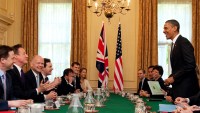
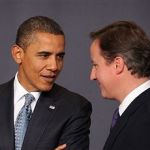
It was a good state visit. Actually, it has been an excellent visit. Much better than George W Bush's and even Barack Obama's 2009 trip to London. The US president got his photo with Wills 'n' Kate. The Prime Minister got his presidential high-fives. There were some odd points. The personal chemistry between David Cameron and Barack Obama made the ping-pong match better than it would naturally have been. For, let's be honest, table tennis is not a natural US-UK sport. There were policy differences between the two leaders too, for example on Libya and deficit reduction. In the end, though, the way to judge visits is not to think about Evening Standard covers or how much of the Today programme was devoted to the US president, but to look at strategic issues.

Obama re-affirms the special relationship

The speech was not a classic but Barack Obama's address to both Houses of Parliament covered the bases today. He started with a winning line, remarking that the previous three speakers in Westminster Hall had been the Pope, the Queen and Nelson Mandela which is either "a very high bar or the beginning of a very funny joke."   As is traditional in these kinds of speeches, Obama paid tribute to the special relationship, lauding it as the embodiment of the values and beliefs of the English-speaking tradition. He went on to say that both the British and the Americans knew that the "longing for human dignity is universal." Indeed, at times Obama sounded remarkably like the last president as he proclaimed his own freedom agenda.

Cameron and Obama’s mutual appreciation has its limits

And the Word of the Day is "we". Both David Cameron and Barack Obama deployed it liberally in their joint press conference just now, as they ran through all the mutual pleasantries and backslapping that attends these events. "We have discussed the two things we care about the most," flushed Cameron, "getting our people jobs, and keeping our people safe." From there on in it was first name terms — "thank you, David" — and claims about the strength of our two countries' special, essential, unique relationship, etc. With the sun blazing down on the garden of Lancaster House, I'm sure the photos will turn out nice. Cameron appeared to be the more eager of the two men, however.

A good day for Cameron

Today is one of those days when David Cameron gets full political benefit from being Prime Minister. He is basking in the president of the United States’ reflected glory. The papers this morning are full of him playing table tennis with Barack Obama and tonight’s news bulletins will lead on their joint press conference at lunchtime. As Cameron stands next to Obama, he’ll look both a statesman and a centrist. It’ll be hard for Labour to attack Cameron as an extremist on deficit reduction when he keeps stressing how he and Obama agree on a sensible level and pace to get their budgets heading back into balance. There are, obviously, substantive foreign policy issues for the two men to discuss. Both Libya and Afghanistan are in need of urgent attention.

The Tory divide over European bail-outs

As Obama and Cameron played table tennis yesterday, a considerably more furious game was being waged between the government and Tory backbenchers. It related to a Parliamentary motion tabled by Mark Reckless – and described here – that sought to stem UK involvement in any future bailouts for eurozone countries. All well and good, you'd think, until a rival amendment percolated down from on high to dilute Reckless's proposals. This new amendment would only go so far as to "urge the Government to raise the issue of the [bailout mechanism] at the next meeting of the Council of Ministers of the European Council". The green benches were set for a violent back-and-forth 'tween one side and the other. The outcome of all this was revealed yesterday evening.

A good time to go

Today is, as the saying has it, a good day to bury bad news. With President Obama on the ground and an ash cloud in the air, not much else is going to get a look in on the news’ bulletins. But it is worth noting that Nat Wei, the government’s big society advisor, has quit his role today having scaled back his involvement in February. Wei has been pretty detached from Downing Street for the last few months, his role rather usurped by Cameron’s big society ambassadors, Shaun Bailey and Charlotte Leslie. So his departure won’t make much difference to the government. But it is still rather embarrassing as it gives the press another chance to dredge up all the political problems with the whole Big Society agenda.

An especially businesslike relationship

The ash cloud nearly claimed its first victim last night: Barack Obama had to leave Ireland early in order to fly to Britain. The Palace’s insistence on protocol has been upset and the President's entourage has been advised not to risk the tap water; other than that, all is well. However, the visit has set sceptical tongues wagging. Some diplomats wonder why the President is here. Afghanistan, the Middle East, joint national security and the world economy are on the agenda, but there is no unifying theme to discussions. Some ideologues fear that the eternal bond between Britain and America is relaxing into a union of convenience.

The austerity hasn’t started yet

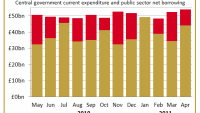
Another month, and another all-time record for state spending in Britain. The government splurged £1.8 billion a day in April — of which £332 million a day was borrowed. Up goes the national debt. All of which leaves us with the question: where is this austerity that George Osborne keeps talking about? He's been in No.11 a year now, and each month state spending has been — on average — 4.9 per cent higher than the same month under Gordon Brown. He seems to be taking the St Augustine approach to fiscal conservatism: Lord, give me spending restraint. But not yet. The below graph shows state spending, per month. The amount in red is how much the government had to bum from the City: This does not look so much different to Labour's plans.

Stop Gordon Brown

Gordon Brown's friends have launched a shameless effort to compel the government into nominating him for the IMF post. The government would be mad if they did. Mad. This is not about petty score-settling, as yesterday's Evening Standard would have it. This is about qualifications to lead, and the former Prime Minister, despite his intellect, does not have those skills. He led the country to ruin and remains in denial about it: he saved the world, don't cha know. The UK should be smarter about using talent from across the House, but there are limits. And it is a bit rich for the ex-PM's friends to argue that David Cameron should back him. This is the man who gave lukewarm support to Paddy Ashdown's candidacy to run the UN in Kabul back in 2008.

Cutting through the BS

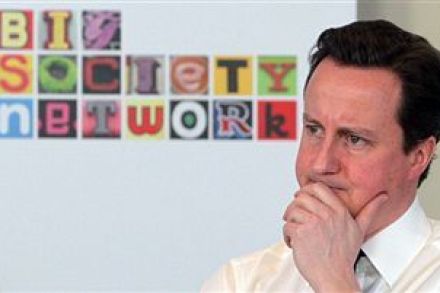
If the Big Society were a horse, it would be shot. The wounds are too deep, the contamination too great, its legs are broken. And, worse, the Big Society is giving a good idea a bad name. David Cameron tried manfully today, but we only ever hear about the BS (as most Tory MPs call it) when he’s trying to relaunch it. No agenda can be sustained with such thin support. It has become hopelessly confused as an issue. Myths have crept in that volunteering relies on heavy state spending, so Cameron is talking out of his hat. It ain’t so — Jonathan Jones did the digging — but people still believe it. Cameron gives multiple definitions of the BS, confusing the issue further. Does it mean families? Diversity of public service providers? More volunteering?

What the attorney general needs to do

I’m sure that all CoffeeHousers know who the footballer is with the super injunction preventing newspapers from publishing anything about his affair with the Big Brother contestant Imogen Thomas. But if you didn’t, the papers would have made pretty odd reading over the past few days because the press keeps making little in jokes that are only funny if you know the player’s identity. David Cameron this morning announced that he knew the identity of the player.  This highlights one of many ironies of the situation, which is that far more people are now aware of who the errant footballer is than would have been if the news had just come out and been a two day tabloid story.

Going big on the Big Society

You certainly can't fault David Cameron for his perseverance. Six years after pushing the thinking behind the Big Society in his pitch for the Tory leadership, and three relaunches of the idea later, he is still at it in a speech today. He will, apparently, stress that the Big Society is not some nebulous nothingness — but, rather, "as gritty and as important as it gets". And as if to underline the point, the PM will announce some solid new measures to bolster his grand projet, such as £40 million of extra funding for volunteering. Cameron is, I suspect, making this case for two main reasons: to counter criticism of his Big Idea and to present a sunny flipside to the cuts, cuts, cuts. But an accident of timing adds to the resonance of this speech.

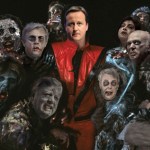
More thoughts on Cameron’s Cabinet of the undead

CoffeeHousers raised some very good points about my post on Cameron’s undead ministers. I thought I’d reply in a post, rather than the comments thread. 1. About the ‘undead’. Cameron leads a radical government of surprisingly competent people: the ambitious tasks of welfare and school reform are testimony to how far he is moving. Cameron’s policy is to delay a reshuffle for as long as he can. While Blair did reshuffle a lot, he tried his best not to do so to satisfy the media headlines. This is when the concept of undead ministers first arose. You’d have people like Geoff Hoon in defence and Stephen Byers in transport, who obviously had to go — but Blair would wait until the media stopped saying so.

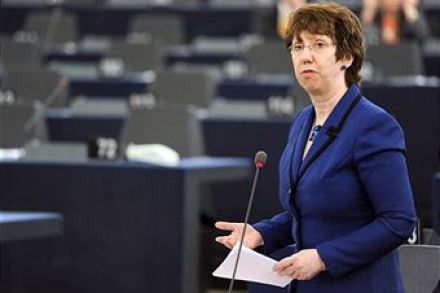
Cathy Ashton beats UK ministers to Bengazi

EU foreign policy Tsar Catherine Ashton has come under a lot of criticism, much of it unfair and/or put forward by those who want the EU to supplant the member-states. In this piece, I have tried to defend her. I argue that her realistic take on the EU’s role is in the UK’s interest: the last thing London needs is someone who ignores member-states to build an independent foreign policy. And she has managed to get Europe’s SAHEL policy in a better shape, worked closely with William Hague and Guido Westerwelle to coax Serbia into negotiations with Kosovo and helped to solve, at least for the moment, a crisis in Bosnia. For these reasons, she retains the support of David Cameron and William Hague.

A special relationship | 22 May 2011

The visit of President Obama on Tuesday has not yet inspired rapid British soul searching about the ‘special relationship’, not by comparison to David Cameron’s trip to America last July at any rate. After an awkward beginning, the Obama administration has been at pains to stress that America’s alliance with Britain is inviolable even in a changing world. The administration’s deputy national security adviser, Ben Rhodes, said “there’s no closer ally for the US than the UK” last week. But like all close alliances, the two parties have their differences.

Cameron should cleanse his Cabinet of the undead

Chris Huhne "cannot be sure" whether he might, after all, have been driving his car that fateful night. Ken Clarke cannot be sure why he spoke about rape in that way. Andrew Lansley cannot be sure. All this we learn from the Sunday newspapers: three ministers are for the chop — it's just a matter of time. They will sit in the Cabinet death row alongside Caroline Spelman, unforgiven for her handling of the forests fiasco, and Vince Cable, caught on tape boasting about his “nuclear option” of resignation. This makes no fewer than five dead men walking — and that's before you think about the party chairmanship. As I say in the News of the World today, Cameron needs a clearout.

Brown hasn’t contacted Cameron or Osborne about IMF job

‘Brown makes pitch for IMF job with plea to rich nations to meet education pledges’ reads the headline on page 3 of The Guardian today. This is all part of a growing body of evidence that Gordon Brown really does think he is in with a chance of succeeding Dominique Strauss-Kahn. Certainly, the usual suspects are out and about talking up his chances. Realistically, Brown is not going to get the job. But if Brown really does want to have a go, it is bizarre that he’s not tried to contact either David Cameron or George Osborne to reassure them about how he’d behave if he got the job; Danny Finkelstein gave a typically well informed take (£) about Cameron and Osborne’s worries about how Brown would use this bully-pulpit on Wednesday.