Crime

The devastating cost of cashless bail

From our US edition

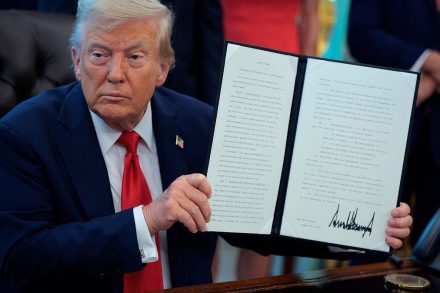
The President taking such decisive action to save lives this past week is bittersweet beyond words. For years, we begged and pleaded for help to stop the insanity that has spilled blood across our streets. We went to the media. We testified before Congress. We sat across from lawmakers, poured out our stories and prayed someone would care enough to act. But time and time again, our cries fell on deaf ears. Now, finally, something is being done. For those who have never stood in our shoes, it’s hard to explain what it feels like to bury someone you loved unnecessarily – to hold a folded flag or a photo instead of a spouse, child, sibling, or parent. We as victims went through the worst nightmare imaginable.
Donald Trump

Can Trump really send troops to Chicago and New York?

From our US edition

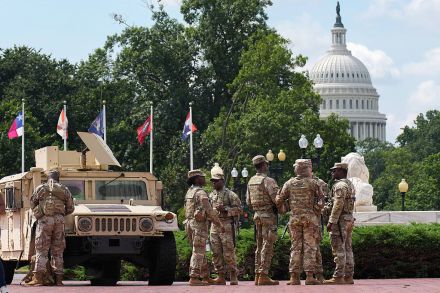
President Trump has once again identified a critical national need: this time, it is the desperate plea for backup from overwhelmed local police, particularly in large metropolitan areas.  Under the Home Rule Act, the President possesses clear statutory authority to exercise at least temporary law enforcement authority over the nation’s capital city by federalizing the Washington D.C. police force and deploying 800 National Guard troops. The city’s own crime statistics depict a municipality raging out of control. Homicide rates have doubled in the last ten years. Washington, D.C. is one of the fifty most dangerous cities in the world and the fourth most dangerous city in the nation.

National Guard

The curious allure of ‘cosy crime’

Just a glance at the cast list tells you everything you need to know. Netflix’s adaptation of Richard Osman’s cosy crime sensation The Thursday Murder Club stars Dame Helen Mirren, former James Bond Pierce Brosnan (as well as a former Bond villain Sir Jonathan Pryce), the Oscar-winning Sir Ben Kingsley and the gold-plated national treasure Celia Imrie, alongside a supporting line-up which includes David Tennant and Richard E. Grant. Released today in selected cinemas before landing on the streaming service on Thursday, the film has an awful lot of talent for what appears at first glance to be a mash-up of One Foot in the Grave and Hetty Wainthropp Investigates.

My shoplifting shame

On reflection, a tradition of shelving many desirable goods within ready reach is extraordinary – especially because the premises in which these wares are invitingly presented provide unfettered access to every passerby. By and large, it’s dead easy to pick up one of these desirable objects – or dozens, should forethought ensure the possession of a bag – and walk out. What would possess anyone to organise such elaborate, unprotected arrays of stuff – altruism? Idiocy? A nationwide honour system, that’s what. Urbanites are astonished by unmanned farm stands that leave cartons of eggs for the taking beside a little sign and a jar. Yet offline retail is also dependent on a little sign (the price on the shelf) and a jar (the checkout counter).

Of course shoplifters are scumbags

A familiar cliché, which in history has been disproved time and again, is that a police force cannot operate without the consent of the people. Tell that to the residents of what was once East Berlin. But that old canard raises a different problem. Which people are giving the consent? The ones who abide by the law, or the ones who are disposed to breaking it? I wondered about this when I read two stories over the weekend, both of which suggested to me that the police have long since lost the support of that first group of people, that more numerous community, the people who don’t habitually break the law.

Is Trump DC’s Batman?

From our US edition

What is Washington to make of the President’s efforts to “make DC safe again?” If you’re only capable of measuring Trump’s actions by how authoritarian they appear, then, sure, his declaration of a state of emergency, seizure of control of the Metropolitan Police Department and mobilization of the National Guard must seem scary. Cockburn empathizes with the small number of DC residents – and larger cohort in other cities and around the world – who see Trump’s use of the powers granted him by the Home Rule Act as concerning. On his Monday evening constitutional around Northwest DC, Cockburn saw a number of arrests taking place, more MPD cars on the street than usual and heard a chorus of sirens cascading into the night.

Trump as Batman (Grok)

Why Trump is right to take over DC

From our US edition

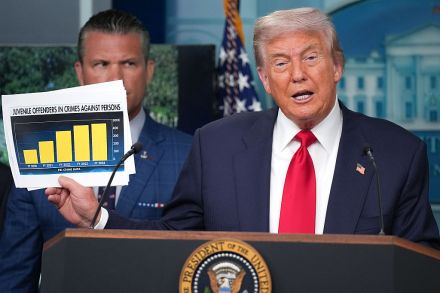
Donald Trump's press conference announcing a federal takeover of Washington, DC's police force was packed to the gills with White House reporters – many of whom live in DC and the surrounding area, and are more than familiar with the degradation of law and order in the region. But just because they know it's bad doesn't mean they want to give Trump any credit for trying to clean up the city – in fact, they're likely to attack the move from both sides. The ramifications of Trump's takeover, under Section 740's emergency rule, will have undetermined ripple effects in the capital city, but the initial reaction to it illustrates the difficult position in which it puts the president's critics.

Donald Trump on DC crime (Getty)

Congress should seize control of DC

From our US edition

The world judges a country by its capital. Paris, London and Rome are showcases of national ambition and a source of pride. How might one judge the United States after visiting Washington, DC? Corrupt, lawless and increasingly unsafe after dark? In a city meant to project strength and stability, one finds instead great domes and marble colonnades sharing the streets with open-air crime scenes. This July, a 21-year-old congressional intern, Eric Tarpinian-Jachym, was shot to death after being caught in an ongoing dispute between two rival groups. In 2023, Phillip Todd, a staffer for Senator Rand Paul took a knife to the chest.

Washington DC (Getty)

Trump’s shrewd move in DC will resonate across the US

From our US edition

President Trump’s initiative to restore law and order to the streets of the nation’s capital is a smart political move. All Americans consider Washington “our city,” and we want it safe. We can see on the nightly news that it is not, and we’re not happy about it. If Trump can turn that around, he will get well-deserved credit, not from the legacy media but from the public.Trump and his party will reap a second major benefit, as well. If he can lessen the muggings, car jackings and armed robberies, if he can move the homeless off downtown streets, he will highlight the difference between his approach and the painful failures in Chicago, New York, Los Angles and other major cities, all of them governed by Democrats. That’s a huge political benefit, if he can secure it.

Donald Trump

The decline and fall of TfL

Don’t get me wrong: London’s transport system is still one of the best in the world. I’d sooner have a backstreet dentist with jittery hands pry my right molar out with a rusty wrench than wait for a bus in Naples or attempt to understand the New York subway map. But that doesn’t mean Transport for London is without fault. The mere thought of the Central line during rush hour is enough to turn the sanest of commuters into a babbling, dribbling, catatonic mess.  TfL customers are dissatisfied: staff are nowhere to be seen; criminals use the Tube network like a labyrinthian tunnel system, evading prosecution at every turn; and strikes and service disruptions have driven a wedge between commuters and transport workers. But it’s not just the Tube.

The lies of the land

You can gauge the fragility of an ideology by the blind fury with which it reacts to questioning. So it is with neo-liberalism. Teacher Simon Pearson, for example, was sacked for suggesting that the jailing of Lucy Connolly – who said very nasty things about asylum seekers – was an example of two-tier justice and that, while her words were indefensible, she should not have been sent to prison. One could counter that opinion, but only at the risk of coming into collision with hard facts concerning sentencing – hence the sacking. Best to get shot of your political opponents, especially when he or she is demonstrably correct. Only by doing that can the ideology cling on.

Is Bukele a tyrant or a triumph?

From our US edition

El Salvador’s young and telegenic president, Nayib Bukele, has rewritten the rules. Term limits? Scrapped. Presidential terms? Extended. Runoff elections? Abolished. If all goes according to the script – penned and passed by his party in the legislature – Bukele will remain in power well into the 2030s, if not beyond. A decade ago, such a move might have sparked bipartisan alarm in Washington. Today, reactions are mixed – with many in the growing MAGA wing cheering El Salvador’s constitutional shake-up as a win of their own. This shift is a window into a deeper realignment in conservative foreign policy: one that moves closer to the unapologetic defense of national interest and drifts further from the spread-democracy-everywhere consensus.

Nayib Bukele (Getty)

Vance & Farage’s budding bromance

16 min listen

Nigel Farage hosted a press conference today as part of Reform's summer crime campaign 'Britain is lawless'. He unveiled the latest Tory defector: Leicestershire's Police & Crime Commissioner Rupert Matthews. Amidst all the noise of whether crime in the UK is falling or not, plus the impact of migration on crime, is Reform's messaging cutting through? Would US Vice President agree with Farage's message that Britain is lawless? Vance is in the UK, staying in the Cotswolds, as part of his summer holiday. Tim Shipman and Lucy Dunn are joined by James Orr, associate professor at Cambridge University, and a friend of Vance's to talk us through the dynamics between Trump, Vance, Starmer, Lammy and Farage. Does Farage have Vance's ear?

Why can’t we agree on data?

12 min listen

John O’Neill and Sam McPhail, the Spectator’s research and data team, join economics editor Michael Simmons to re-introduce listeners to the Spectator’s data hub. They take us through the process between the data hub and how their work feeds into the weekly magazine. From crime to migration, which statistics are the most controversial? Why can’t we agree on data? Plus – whose data is presented better, the Americans or the French? For more from the Spectator’s data hub – which may, or may not look like the thumbnail photo – go to: data.spectator.co.uk Produced by Patrick Gibbons and Megan McElroy.

The ballad of broken Britain

In my corner of Bristol, alongside drug dealers, shoplifters and street drinkers, we now have our very own pyromaniac. They started small – an abandoned office chair, a clothing bank and an old telephone box – before moving on to bigger things. Half a dozen cars have been torched over the past few months, including two on my road, and, most recently, a derelict pub. The other Saturday, hearing a commotion outside, my wife jumped out of bed and flung open the curtains. The scene that greeted us was apocalyptic. In daylight, on a narrow suburban street, the arsonist had set fire to three motorbikes parked in a row, which in turn had set alight a car and a hedge. It was pandemonium.

Can Clarksdale find its mojo again?

From our US edition

When Bubba O’Keefe announced he was running for mayor of Clarksdale this spring, there was a mixed response. This dirt-poor, crumbling Mississippi Delta city is more than 80 percent African American – and Bubba is white. But so poorly had the current mayor, who is African American, been performing that Bubba’s supporters thought he’d be a shoo-in, and that the residents would buy into the mantra that he was Clarksdale’s last hope, white or black. Locals describe Mississippi as the crime state. And Clarksdale is the worst city in Mississippi. There are 20 times more murders per capita in Clarksdale than in New York. As Bubba says: “We only have a population of 13,000 and there are 19 or 20 murders a year.

California

California is doomed

From our US edition

Why is anyone even remotely interested in regime-changing a nasty, far-away foreign country that hates America when there is a nasty country much, much closer that hates us, too? OK, technically California is not a country, but it’s about the same size as Japan and Sweden. Its GDP – $4.1 trillion – is the fourth-highest in the world, behind the other 49 combined United States, China and Germany. It has as many residents as Canada. More people live here than in Spain or Saudi Arabia (and more than in our 22 smallest states combined). California is a monster in every way. That used to be a good thing: its powerful allure and economic might attracted the best and brightest from all over. Einstein taught in Pasadena, at Caltech.

Diddy is finished

From our US edition

In the end, the verdict in the most talked-about trial of the year, perhaps the decade, came in far quicker than most commentators had expected. Judge Arun Subramanian had wisely suggested that he wanted a unanimous verdict on the charges that Diddy had been arraigned on and that he wanted this verdict to come in before the 4th of July holiday. Many had assumed, given the sheer weight of evidence against Diddy (real name, as we were informed many times, Sean Combs), that it would take at least a week to sort through the often sordid and distressing material that the jury were presented with over the course of the seven-week trial. In the end, however, it took just over a day of deliberations.

Diddy

Why is the MoJ making life so hard for prison charities?

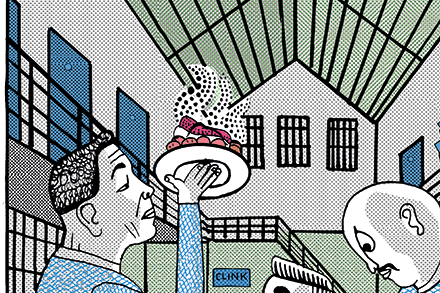
For 15 years The Clink charity has run commercial restaurants in prisons, training inmates to cook and teaching them front-of-house service. It is a vital way of giving offenders a second chance. But many of its operations have been forced to close due to the folly of the Ministry of Justice (MoJ). At Styal women’s prison in Wilmslow, Cheshire, The Clink restaurant, which has been running for ten years, cannot continue to operate. Despite plenty of interest from inmates, recent changes to the eligibility criteria have drastically reduced the number of women permitted to work there. ‘Sometimes we are trying to run it with five, possibly only three, women,’ explains the manager. ‘It’s just not possible.

Have I unmasked Cambridge’s bike bandit?

The Cambridge bike bandit emerged. I watched the rough, smiling face of the old man who came slowly from his bungalow and urged me to join him around the back; he didn’t look like a thief. We entered his grassless yard filled with bikes, tyres and tools. ‘This Raleigh, £80,’ he said, withdrawing a creaky frame from the pile. ‘I just changed the tyre. You see? Not heavy. Made in England. Nottingham. You can try a little bit. Try it for ten minutes. I don’t mind.’ A source had told me about the bandit, a man who openly shifted stolen bikes from a suburban Cambridge home, so bad and unpoliced has bike theft become in the city. I had got the outlaw’s phone number and arranged to meet him under the guise of making a purchase.