Cricket

International cricket must return to Pakistan (and my team went first)

In a tiny courtyard just off the teeming alleys of Lahore’s old town, a young Pakistani boy in a gleaming white shalwar kameez picks up his Adidas cricket bat and proceeds to clout to all corners the plastic ball his pal is chucking down. Behind him on the wall the outline of three stumps is drawn, and the word Out! chalked there, more in hope you feel. In the corner a little schoolroom has emptied out and excited young boys and girls, books in hand, look on, giggling happily. Is this the new Imran? Almost certainly not, but we are in one of the holy places of Pakistan cricket, and in this troubled but vibrant country, only cricket comes close to Islam as a unifying passion.

Test cricket and the Archers are both in deep trouble

Lions and weasels The Archers and Test cricket: words you rarely find in the same sentence and more’s the pity as there’s not much else that can give greater innocent pleasure. But could these magnificent institutions be in the midst of some existential crisis? On peaceful old radio, the writers seem devoted to purging The Archers of the Archers: David, Ruth and Jill could be junking Brookfield for Northumberland, Tom Archer hasn’t been seen in Ambridge since that unfortunate incident in the vestry; Elizabeth should be hounded out soon for sexual witchcraft; and then there’ll be just Shula and Kenton. Pretty much like international cricket, which is being stripped of some of its performers. Remember the West Indies?

The secret kinship of good wine and good cricket

A high proportion of wine-lovers also enjoy cricket, and vice versa. This might seem natural. Anyone with an aesthetic temperament will surely find his way to two of life’s greatest pleasures. But there may also be a parallel. Wine is made of decomposed grapes. Vignerons conjure sublime flavours out of long-decayed fruit. As you sniff a good red Burgundy, there will always be a scent of the farmyard. Those who make the great pudding wines extract transcendent sweetness from grapes which are already rotting before they are picked. Cricket is a beautiful and gracious game. I still have a mental picture of a cover drive by Barry Richards. He hardly appeared to move. A gentle half pace forward, a mere flick of the wrists, and the ball was rocketing to the boundary.

Pietersen’s unlikely Passage to India

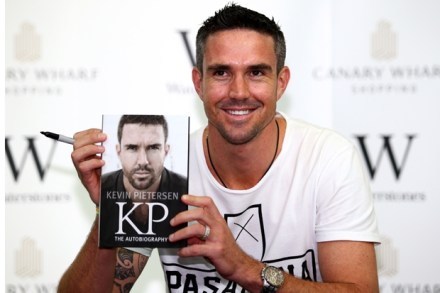
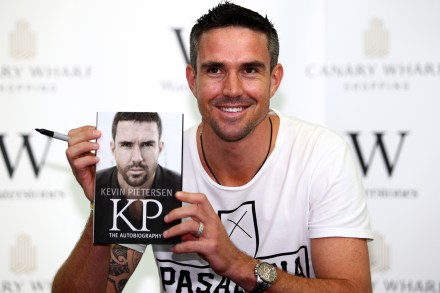
A typical Merchant-Ivory film, their biography informs me, features ‘genteel characters’ whose lives are blighted by ‘disillusionment and tragic entanglements’. No surprise then that Kevin Pietersen is proudly revealed as one of their biggest admirers. In an unusual choice of images in his, er, thoughtful new autobiography, ghosted by the redoubtable David Walsh, KP says comparing English cricket with the Indian Premier League is like comparing Merchant-Ivory with the latest Bruce Willis. It’s a fair point, but hard to imagine the teenage Kevin trawling the arthouse cinemas of Pietermaritzburg in the 1990s for the latest offering from the wistful duo. Few people of course know more about disillusionment and tragic entanglements than KP: Room with a View, anyone?

The sad but inevitable downfall of Kevin Pietersen. A tragedy in two innings.

Kevin Pietersen's autobiography is the saddest book of its type I've ever read. By its end you begin to think that KP and the ECB deserved each other and realise that, a) no-one deserves that and, b) there's no way this marriage of convenience - for such it was - could ever have ended happily or with each side fondly wishing the other all the best in their future endeavours. And it was a contractual arrangement from the very start. Pietersen's book is clear about that: KP "tried too hard" to fit in with England and Englishness. He now realises South Africa is his "real home" and he should never have pretended to be anything other than "a South African with English heritage".

Why are sports biographies treated differently to other works?

Agatha Christie’s The Mousetrap has been running in London theatres for 62 years straight - a period that spans more than 25,000 performances. As is traditional in the genre, it ends with the suspects gathered together for a shocking denouement, during which the detective unmasks the murderer, to general horror. Despite the number of times this has happened, the identity of the killer is apparently 'the best-kept secret in show business'; at no point has any reviewer felt the need to reveal that the butler did it. On the other hand, the publication last week of two autobiographies - one by Kevin Pietersen and one by Roy Keane - were treated quite differently.

The unbearable vanity of Kevin Pietersen

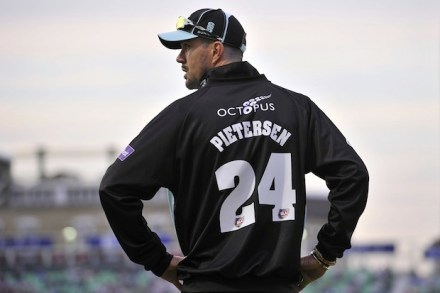
Seven years ago Kevin Pietersen produced his first attempt at autobiography, Crossing the Boundary: The Early Years in My Cricketing Life. Atrociously written, it demonstrated no awareness of the world outside himself. This time round Mr Pietersen has taken the precaution of hiring an excellent ghost writer, David Walsh of the Sunday Times. It is hard to overpraise Mr Walsh’s vivid prose. The book is a brilliant portrayal of Pietersen as a misunderstood genius continually brought down by lesser men: a Mozart beset by a sequence of Salieris. Three of his England teammates fare especially badly: Stuart Broad, Graeme Swann and Matt Prior. He describes their behaviour as egotistical, bullying and treacherous.

The unbearable ingratitude of Kevin Pietersen

Seven years ago Kevin Pietersen produced his first attempt at autobiography, Crossing the Boundary: The Early Years in My Cricketing Life. Atrociously written, it demonstrated no awareness of the world outside himself. This time round Mr Pietersen has taken the precaution of hiring an excellent ghost writer, David Walsh of the Sunday Times. It is hard to overpraise Mr Walsh’s vivid prose. The book is a brilliant portrayal of Pietersen as a misunderstood genius continually brought down by lesser men: a Mozart beset by a sequence of Salieris. Three of his England teammates fare especially badly: Stuart Broad, Graeme Swann and Matt Prior. He describes their behaviour as egotistical, bullying and treacherous.

Geoffrey Boycott’s new book would be of more use to English cricketers than a regiment of shrinks

After 13 barren years Yorkshire is back at the top of county cricket, where Geoffrey Boycott believes it has a place almost of right. We took the County Championship this year, beating Nottinghamshire at Trent Bridge by an innings and 152 runs. Ryan Sidebottom finished off the home side to post a splendid match performance of 9-65. He doesn’t get a mention in this book, though his father Arnie does. In a part of the world where cricket is almost a religion, this is seen as a restoration of the natural order of things. It used to be said that when the county was low in the rankings, men read the Yorkshire Post upside down out of shame. Boycott played for Yorkshire for 24 years from 1962, and captained the side from 1971 to 1978.

Brian Lara: Why I’m helping build a cricket stadium in Rwanda

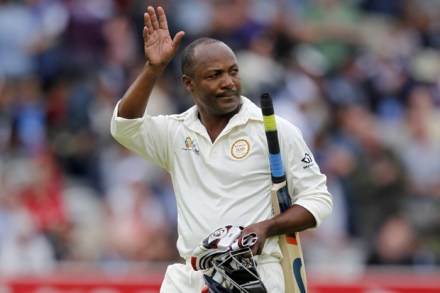
Twenty years ago, in 1994, I had a golden summer. I scored 375 against England in Antigua, a Test record that stood for nine years, and two months later I posted 501 against Durham, which remains today the world record in first-class cricket, as my team Warwickshire achieved an unprecedented domestic treble. I was in my mid-twenties, and of course I was very happy, but I was also very aware that in another part of the world, a great tragedy was unfolding. Every evening when I turned on the TV there were images of the genocide in Rwanda, and the contrast with my own feelings of euphoria haunted me.

What does Duncan Fletcher actually do?

Some years ago, when the last Conservative government was limping towards defeat, someone published a book called 101 Uses for a John Major. It was cruel and fairly funny, the premise being that since he couldn’t run his party, there must be some other way he could be employed. Perhaps an Indian publisher is considering a new version after the country wilted in the Test series this summer: 101 Uses for a Duncan Fletcher. What does the India coach actually do? He called his memoirs Behind the Shades, a vain and self-regarding title, but quite what has been going on behind those shades this summer has been a bit of a mystery.

Moeen Ali reminds us that sometimes sport is the only place for politics

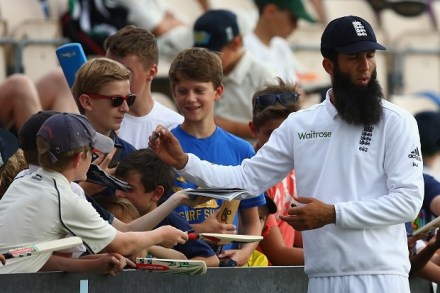
Moeen Ali, the England cricketer, faces a possible reprimand after the International Cricket Council (ICC), the game’s governing body, censured him for wearing two wristbands, one saying ‘Save Gaza’, the other ‘Free Palestine’. International cricketers are, you see, prohibited from making political statements on the field. The English Cricket Board, which is not above making political statements (as its various boycotts of Robert Mugabe’s Zimbabwe suggest), dissents from the ICC’s view, and says that Moeen’s stance is ‘humanitarian not political’. What, then, of ‘Save Gaza’ and ‘Free Palestine’? There is politics here. And, yes, it is partial.

Simon Barnes: The England cricket team is playing out Don Giovanni

Simon Barnes has written the diary in this week’s issue of The Spectator. Here are his opening two paragraphs: ‘Sport is like love: it can only really hurt you if you care. Or for that matter, bring joy. You can’t explain sport, any more than you can explain the Goldberg Variations: you either get it or you don’t. So it can be hard to justify a life spent among bats and balls and leaping horses. I spent 32 years writing about sport for the Times, the last 12 as chief sportswriter, all of which comes to an close at the end of this month when I become News International’s latest economy, doomed to wander Fleet Street (is it still there?) wearing a luggage label that reads ‘Please look after this bear’. What shall I write about in my last week?

Simon Barnes’s diary: A sportswriter is never without a big subject (unless it’s golf)

Sport is like love: it can only really hurt you if you care. Or for that matter, bring joy. You can’t explain sport, any more than you can explain the Goldberg Variations: you either get it or you don’t. So it can be hard to justify a life spent among bats and balls and leaping horses. I spent 32 years writing about sport for the Times, the last 12 as chief sportswriter, all of which comes to an close at the end of this month when I become News International’s latest economy, doomed to wander Fleet Street (is it still there?) wearing a luggage label that reads ‘Please look after this bear’. What shall I write about in my last week?

Alastair Cook is world class. Steven Gerrard isn’t

This time last year, England’s cricketers were 2-0 up against Australia, two thirds of the way towards their third consecutive series victory in sport’s longest-established international contest. Not quite top of the world, they were nevertheless a good team in the prime of life. The winter before, they had beaten India on their dusty pitches, quite an achievement. What a falling-off there has been. Since the turn of the year, England have lost Graeme Swann, Jonathan Trott and Kevin Pietersen, three senior players, to retirement, mental fragility and banishment. They have also lost seven of their last nine Test matches, the latest against India at Lord’s by 95 runs after they had won an important toss.

What Germans are worst at

What Germans do worst Some things Germans aren't very good at: — Making reliable car engines. According to a survey by Warranty Direct last year, Audi came bottom, BMW seventh from bottom and Volkswagen ninth from bottom out of 36 manufacturers for engine failures. — Making love. According to a spurious website survey of 15,000 women in 2009, German men were the world's worst lovers, the main complaint being that they were 'smelly'. (Englishmen were second worst.) — Cricket. But they are not the worst. Germany lies between Ghana and Japan in division 8 of the ICC World Cricket League. This makes them the 42nd best team in the world, above France.

What Germans do worst

Yes, alright. It turns out that Germans are pretty good at football. But they aren't quite so good at everything, as our Barometer column this week points out. Here are some things Germans aren’t very good at: Making reliable car engines. According to a survey by Warranty Direct last year, Audi came bottom, BMW seventh from bottom and Volkswagen ninth from bottom out of 36 manufacturers for engine failures. Making love. According to a spurious website survey of 15,000 women in 2009, German men were the world’s worst lovers, the main complaint being that they were ‘smelly’. (Englishmen were second worst.) Cricket. But they are not the worst.

The Spectator’s notes: Diana’s bed, Boris’s dirty trick and Prince Philip’s mystery tie

On Friday night, I went to Althorp, childhood home of Diana, Princess of Wales, to speak at its literary festival. My first duty was to appear on the panel of the BBC’s Any Questions? in a tent there. It was 30 years to the month that I had first been on the programme. Then it was at Uppingham School, presented by David Jacobs, and the panel included Roy Hattersley and Esther Rantzen. This time, it was presented by Jonathan Dimbleby, and the panel was George Galloway, Nigel Evans (the Tory MP who did not rape any men), and a beautiful woman called Rushanara Ali, the Labour MP for Bethnal Green and Bow. She was nine years old when I put in my first appearance. In all that time, the show has changed very little.

When the English cricket team toured Nazi Germany – and got smashed

Why have the Germans never been any good at cricket? This entertaining account of the MCC’s 1937 tour to the Fatherland gives some clues. Any country po-faced enough to have a ‘Society for the Encouragement of Playing Ball’ will struggle from the start. Certainly the Germans back then seemed to understand neither cricket’s equipment (‘why so much luggage?’ asked one reporter of the tourists) nor its terminology — later, during the war, letters home from British PoWs about games at their camp were censored because ‘OMWR&A’ was thought to be code. It actually stood for ‘overs, maidens, wickets, runs and average’.

Mortar fire, weddings, camels, the French revolution: all kind of things get in the way of cricket

It isn’t just the elk, either. Also bringing proceedings to a halt in this wonderful anthology are camels (Bahrain), cows and donkeys (Botswana), unexploded landmines (Rwanda, silly mid-on), people learning to drive (East Timor), punch-ups (Bermuda), low cloud (Christmas Island, 300 metres above sea-level), mortars (Iraq, though not during the game held by coalition forces in the ballroom-sized anteroom of Saddam’s abandoned North Palace) and weddings (the ground on Ascension Island has a church inside its boundary). For the record, the elk (Finland) was twice the size of a horse. Even when play is possible, life can still be tricky.