Covid

Full list: the Tory tier rebels

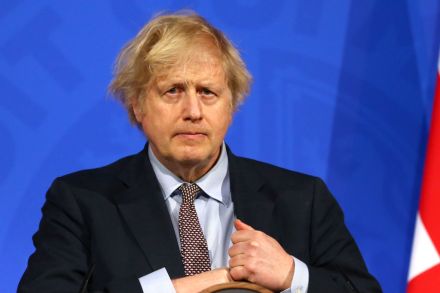
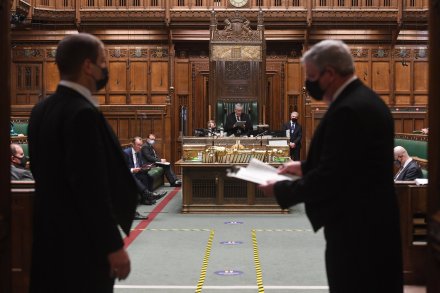
This evening, the House of Commons voted to enact the new tiered system, which will come into force when the national lockdown ends this week. Boris Johnson did not emerge unscathed though, with 78 MPs voting against his proposals, including 55 MPs from his own party. Labour leader Keir Starmer instructed his MPs to abstain on the vote, but 15 decided to vote against the government's plans.

Why I can no longer police the coronavirus restrictions

Earlier this month I resigned as a Special Constable, after serving for ten years as a volunteer officer in three different police forces. Policing has been an important part of my life for a long time, and I will miss serving my community and working with extremely dedicated, brave, and caring officers. But I have long been disturbed by decisions made by the government during the coronavirus crisis, and have decided that I can no longer in good conscience play any part in enforcing the restrictions. I have had concerns about the government’s coronavirus policies since the first lockdown. While I have volunteered as a Special Constable, my full-time job is as a scientific researcher, and I have long felt that lockdowns may cause more global harm than the virus.

If tiers don’t work, expect a third wave in the new year

‘The difficulty is that we’re coming out of the tough autumn measures, out of the lockdown… with the incidence of the disease still pretty high,’ Boris Johnson explained on Friday. It is against this backdrop that he finds himself trying to sell tougher Covid rules as England emerges from the November lockdown. It is an especially difficult sell, of course, when an area has been placed in a higher tier than before the lockdown – even if, as in many instances, cases are now lower than when the tier system was first introduced. It understandably appears incoherent and arbitrary. The Prime Minister’s case is that he hates lockdowns too, but observing the Tier system properly is the quickest way to normality.

Full list: Boris Johnson’s new tiers

The government has revealed today which areas will be moved into different tiers at the end of the national lockdown on 2 December. And as expected, Boris Johnson has decided to take a hard-line approach to the new restrictions, before the regulations are relaxed over the Christmas period. Only three areas in England have been kept in the lowest Tier 1, two of which are not on the mainland. Only the Isle of Wight, the Isles of Scilly and Cornwall have been spared tighter restrictions. The vast majority of the country will be kept in Tier 2 at the beginning of December, which means that mixing between household bubbles will be banned indoors, and hospitality venues that do not serve a ‘substantial meal’ will be closed.

Macron’s Covid war goes from bad to worse

Politicians whom the Gods wish to destroy, they first make ridiculous. On Tuesday evening, as the deaths attributed to Covid-19 reached 50,000, Emmanuel Macron, president of the Republic, again commandeered French television channels to announce his latest strategy to end the national lockdown. He claimed to be making himself perfectly clear as his timetable for ending lockdown was conditioned by the subjunctive. The big give was that from Saturday, we are to be allowed to spend three hours daily outside, and to venture 20km (no more) from our front doors. (This will be a relief to a friend in the Dordogne who was 'verbalisé' by the flics last week when she was discovered 1.2km from her house, 200m more than permitted.

Was Covid beginning to peak before the second lockdown?

‘I don’t think that word means what you think it means,’ says the Spaniard Inigo Montoya in the film The Princess Bride, when Vizzini keeps saying it is ‘inconceivable’ that the Dread Pirate Roberts is still on their tail. I muttered those words to myself during a parliamentary debate just before the start of the latest lockdown, when the minister twice said that the wave of infections was increasing ‘exponentially’. Far from increasing, let alone exponentially, the data showed that the wave was faltering if not cresting already. The lockdown came in on a Thursday.

What we don’t yet know about the Oxford vaccine

We have become used to Mondays bringing good news on the vaccine front. But the publication of interim results from the Astra Zeneca/Oxford University vaccine – AZD1222 – will certainly please the UK government. Not merely because this is the home-grown option and we have already ordered 100m shots, but because, shot for shot, it is considerably cheaper to buy and administer than the other vaccine candidates. The vaccine itself is less than a fifth of the price of the Pfizer vaccine. Moreover, it does not need storing and transporting at minus 70 Celsius – it can be kept at ordinary fridge temperatures (2 to 8 Celsius), greatly facilitating any roll-out.

Eight key questions on the Danish facemask study

The ‘Danmask-19 trial' sought to test whether face masks are effective in preventing infection with SARS-CoV-2 (the virus that causes Covid-19) for the wearer. It found that the recommendation to wear surgical masks to supplement other public health measures 'did not reduce the SARS-CoV-2 infection rate among wearers by more than half in a community'. So does this mean wearing masks is a waste of time? There are several reasons that drawing such a conclusion from this study might be unwise. A randomised controlled trial (RCT) is often – though not always – the best way of testing whether a treatment works, because RCTs guard against the biases inherent in many other research designs.

Oxford’s vaccine success could mean a return to normal by April

One consequence of the positive Oxford vaccine news this morning is that the UK will shift to a strategy of attempting to vaccinate as much of the adult population as possible. We know from NHS documents obtained by the Health Service Journal that the aim is to have 75 per cent of the population vaccinated by April. If this was the case, all social distancing measures could be ended that month, with even nightclubs open as before. The Oxford vaccine is particularly well suited to a mass vaccination programme. Unlike the Pfizer one, it can be stored at fridge temperature making distribution of it far easier. Rolling this vaccine out will, obviously, be a logistical challenge.

What will the new tiered system look like?

Anyone who was hoping that things would go back to normal when the national lockdown ends next month will be sorely disappointed today. This afternoon, Boris Johnson is expected to outline in Parliament a new tougher tiered system, which will come into force on 3 December, when the national lockdown ends. The Prime Minister is then expected to reveal which areas will be in each tier on Thursday, after consulting the latest coronavirus infection data. Most areas are expected to be moved into Tiers 2 and 3. So what will the new tiers actually involve? The papers report this morning that the rules on socialising will stay roughly the same in the new tiered system, with the ‘rule of six’ in place in Tier 1.

It will be a three-family, five-day Christmas

Nothing will be decided in a formal sense until all four nations of the United Kingdom are as one. And the decision is slightly harder because Northern Ireland's leadership wants a Christmas consensus with Dublin. But it is looking highly probable that all four UK governments’ special Christmas exemption from coronavirus restrictions will allow us to socialise with people from two households in addition to our own household over five days beginning on 23rd of December and ending on 27th December. Or to put it another way, for those five days, a typical family will be able to enjoy festive meals indoors with both sets of grandparents, or two groups of friends, or whomever is most special to them.

My neighbour’s dinner party was a near-death experience

At dawn, starving, I drove to a commercial laboratory in the town centre where five phials of blood were taken from my arm. I was then handed a plastic jar and a refreshing wipe and directed to the nearest unisex lavatory to give a urine sample (mid-stream). Then a nurse stuck a long cotton bud up my nose as far as it would go and twiddled it this way and that. Blood, urine and Covid tests were preparatory to a hospital admission for a procedure involving a general anaesthetic. Then I drove home and ate a kipper for breakfast. While I was eating, Catriona stuck a hypodermic needle in my upper arm and injected me with a flu jab she’d bought at the village pharmacy — the last one in the shop.

Landmark Danish study finds no significant effect for facemask wearers

Do face masks work? Earlier this year, the UK government decided that masks could play a significant role in stopping Covid-19 and made masks mandatory in a number of public places. But are these policies backed by the scientific evidence? Yesterday marked the publication of a long-delayed trial in Denmark which hopes to answer that very question. The ‘Danmask-19 trial’ was conducted in the spring with over 6,000 participants, when the public were not being told to wear masks but other public health measures were in place. Unlike other studies looking at masks, the Danmask study was a randomised controlled trial – making it the highest quality scientific evidence.

Is the Liverpool mass-testing scheme a gimmick?

The revelation that both Pfizer and Modena have created seemingly effective and safe Covid vaccines that could be here by December is surely the first bit of good news 2020 has brought us. But we are, of course, nowhere near yet out of the woods. Even if a vaccine gets regulatory approval by early December, all our resources and logistics will have to be focused on procuring, delivering, and then monitoring its roll-out. Boris Johnson himself has urged caution about the Pfizer vaccine, saying ‘there is a long way before we have got this thing beat’. But while the PM is displaying a healthy degree of realism about the challenges of deploying a vaccine, is the government still in a make-believe world when it comes to mass-testing gimmicks?

The Beeb could turn this script into TV gold: Howerd’s End reviewed

It’s touch and go whether the theatre will survive this latest assault. Some venues have pushed back their entire programme by four weeks, which is chaotic but manageable. Theatres mounting a panto are in a trickier position because they can’t trust Gove and Johnson not to extend the curfew into the festive season. November is the month when companies start to book venues for the Brighton Festival in May. What to do? Take the plunge or wait it out for another year? And the big decision about Edinburgh 2021 will have to be faced before the winter is over. The lockdown in spring was a financial and professional calamity but this new onslaught adds a spiritual element — despair.

Dear Mary: Why is my brother making me pay £400 for a drawing of my cat?

Q. I would welcome your advice on a tricky family matter. For my 70th birthday earlier this year my brother gave me a voucher for £100. This could be used as credit towards a drawing of my cat to be commissioned from an artist friend of his. I duly provided photos, only to learn that the £100 would represent just 20 per cent of the list price, and the balance to be paid by me would be £400. I am wondering whether my brother is doing his friend a favour at my expense — indeed in my most churlish moments I doubt whether my brother even paid £100 to his friend, and instead just negotiated a 20 per cent discount.

Finally a lockdown drama that will endure: James Graham’s Bubble reviewed

Theatres can open if they want to. That’s the current position. The only factor keeping a playhouse dark is a lack of guts or imagination on the part of its leadership. A small pub in Vauxhall, The Eagle, is mounting new plays in its garden space to raise everyone’s morale. Punters must wear masks and sit in bubbles. ‘We’re adhering to the government guidelines,’ announced the artistic director before the start, ‘which are changing all the time.’ The show is a feelgood musical about drifters and dreamers in their twenties trying to make it in New York. Waverley wants to be an actress but her plans are blown off course by a tempting job offer from a law firm. What to do?

Will Spain’s nation of rogues comply with the curfew?

A few years ago, when I was in the queue to catch a plane, a Spanish lady caught me watching her as she surreptitiously removed a sticker from her hand luggage, which meant it would have been stored in the hold. ‘Los españoles somos muy pícaros’ (we Spaniards are real rogues) she told me with a smile of complicity and a rueful shake of the head. Spaniards sometimes point out with a touch of pride that it was their country which pioneered the picaresque novel – a literary genre which tells the story of an ingenious rascal who lives by his wits, sometimes on the wrong side of the law. My own experience is that Spaniards are no more rascally than other nationalities – but some of them like to think they are.

Portrait of the week: A Manchester stand-off, a Presidential showdown and a Brexit culture clash

Home After ten days spent trying to persuade Andy Burnham, the Mayor of Greater Manchester, to accede to the city entering Tier 3 (which entails the closing of pubs and betting shops), Boris Johnson, the Prime Minister, announced that it would happen anyway, from 23 October. ‘I am deeply sorry,’ he said. Manchester had wanted £65 million in support first. Liverpool complained that it was not allowed to keep gyms open when Lancashire was. The nine million people of London languished in Tier 2, forbidden to meet anyone at home or in a pub, except if they pretended it was a business meeting. Scotland hatched plans for its own tiers.