Covid

Lockdown learning is no match for the joys of the classroom

Schools in January are usually full of life, but not this year. At the start of my day, I walk alone down silent corridors to an empty classroom. There are no children lined up outside; the bustle of school life is gone and the only voice I hear is my own. Welcome to lock down learning where my pupils are miles away at the far end of fibre optic cables. Teachers like me are doing our best to make it work but, although we are not teaching blind, our vision is so restricted that we might as well be looking at our classes down long cardboard tubes. We never did have

Matt Hancock’s tests for lifting lockdown

As the government comes under pressure from Tory MPs to provide a timeline for pupils returning to school, the Health Secretary remained tight-lipped in the Monday government press conference on when lockdown will be eased. Asked whether any guidance could be offered on the issue, Matt Hancock cited the number of people admitted to hospital – twice as many as in the first peak – and on ventilators to show there is a long road ahead. The Health Secretary said that the majority of people understand why it is difficult to put a timeline on ending lockdown. He did though point to the factors that would decide when it could

Is this the key to understanding Covid immunity?

Just how strong an immunity do Covid patients develop after they have acquired the infection and how long does it last? The question is vital to the likely future passage of the pandemic, and to how well vaccines will protect us in the long term. Several studies have suggested there is a sharp decline in antibodies to SARS-CoV-2 over time – a paper from Imperial College’s React study in October, for example, revealed that the proportion of the population showing antibodies to the virus declined from 6 per cent in June to 4.4 per cent in September. The researchers were at pains to emphasise that the presence of antibodies does

‘That’s insulting’: Therese Coffey walks out of Piers Morgan interview

It wasn’t long ago that the government was staging a boycott of Piers Morgan’s breakfast show. Now, Tory ministers are back on the show. But it’s safe to say there is still no love lost between those speaking on behalf of the government and Morgan. This morning, it was Therese Coffey’s turn to appear on Good Morning Britain.  Morgan quizzed Coffey on why Britain had one of the highest Covid death rates in the world. Coffey responded by saying there were plenty of reasons, including, possibly, the age of our population and Britain’s obesity problem. Morgan then asked Coffey whether she was blaming Brits for our country’s Covid crisis.  ‘I think

The tragedy behind every Covid death

On a grey January morning, at a small, sparsely attended ceremony in a chapel in North London, we said goodbye to my granddad, one more statistic in this vile pandemic. Jack Brown grew up in poverty in Ipswich and performed heroically in the Navy during world war two; twice-sunk, once by an enemy torpedo, once by a collision with an Allied boat (the family joke is that Uncle Albert from Only Fools was based on his experiences). He went on to father six children, and had a 40-year career as a station-master. As granddad’s coffin was wheeled in, draped in a Navy flag, it was hard to dismiss the thought

‘Feathers have been ruffled’: Life after Cummings at No.10

Boris Johnson used today’s press conference to issue sobering news: warning that the new Covid strain may be more deadly. The better news? The vaccines that have been approved are likely to be as effective against the new strain as the original. There were also figures to suggest things are slowly improving: the R number has fallen to a rate of between 0.8 and 1. And 5.4 million people, around one in ten of the adult population, have now received their first dose of the vaccine. Yet despite the good news on the vaccine rollout, there is little in the way of optimism in 10 Downing Street this week. Instead, advisers and

Boris Johnson warns that new Covid variant could be more deadly

Those in the lookout for good Covid news will found precious little of it in Boris Johnson’s latest Covid press conference. Although the Prime Minister had cause for optimism in the form of the vaccine rollout – over 5.4 million people have now received their first dose of the vaccine, one in ten adults, – the overall message was of difficult times ahead. Johnson said there was evidence to suggest that the ‘Kent variant’ not only spreads faster but is deadly. The PM pointed to data assessed by scientists on the New and Emerging Respiratory Virus Threats Advisory Group which, he said, suggested the variant could be up to 30 per cent more deadly than the original.  Chief Scientific

Has Covid killed the EU’s dream of open borders?

‘All non-essential travel should be strongly discouraged both within the country and of course across borders,’ Ursula von der Leyen, head of the European Commission, has said. As a result of the Covid crisis, the dream of open borders across the continent of Europe has never seemed so imperilled. Meanwhile, a post-Brexit Britain has the ability to flex its borders as much as it chooses. To some Brexiteers, this alone makes Brexit worth it. The Schengen agreement was signed in 1985 and became pan-EU in 1999, meaning that, from then on, any country without an opt-out needed to allow free movement of people from any other signatory country (almost all

Has the current wave peaked?

Yesterday, the news was dominated by Imperial College’s React study which suggested – in contrast to the fall in recorded new infections – that the prevalence of Covid-19 in the general population was either static during the first ten days of lockdown (between 6 and 15 January), or could even have risen slightly. This morning, however, we have a second opinion in the form of the ONS infection survey, which like React is based on testing a randomised sample of the population. It suggests that the prevalence of Covid-19 did indeed fall in the first half of January – but not by all that much. Between 9 and 16 January,

British opera companies and orchestras must start investing in native talent

Early in 1946, two men boarded a train at Euston and went trawling for talent. Audition notices were posted at town halls up and down the land: singers wanted, no experience required. Two thousand applied. One town after another, they lined up for Karl Rankl, Covent Garden’s music director, and David Webster, its general manager. Those who sang in tune were hired, £8 a week for chorus, £40 for soloists. An organist in a Harrogate church was appointed chorusmaster. ‘At Carmen rehearsals,’ recalled Constance Shacklock, a farm girl from Nottinghamshire and future star, ‘none of us had ever seen a Carmen before, let alone sung one.’ By mid-year, Covent Garden

Pleasant, cheerful and a little exhausting: Graham Norton on Virgin Radio reviewed

In my parents’ house, the radio is always tuned to one of two stations: Magic FM and LBC. When Magic is playing, it wafts through the kitchen like an over-scented camomile candle. LBC, by contrast, hits you like a strong gust of Novichok: it is undiluted poison, carefully synthesised from the DNA of hysterical US shock jocks. At times, they feel like the two paths for modern radio: a draught of herbal tea or a fit of apoplexy; James O’Brien having kittens or ‘Broken Strings’ playing constantly, for ever. Where does that leave the chatty host, the one who natters cheerfully while you potter aimlessly, who rabbits on while you

Actors will be in trouble if the Bridge Theatre’s latest experiment catches on

Flight has been hailed as a new form of dramatic presentation — prefab theatre. It’s great to look at. A set of model boxes containing stick figures and colourful landscapes slides past the seated viewer while a voiceover reads the narrative. No thesps are required, which may be a relief to producers and directors but the acting profession will be in trouble if this experiment catches on. The story, adapted from Hinterland by Caroline Brothers, follows two Afghan teenagers, Kabir and Aryan, who decide to walk to Europe in search of a better life. All they have is $2,000 in cash and a spare pair of trainers each. Along the

Sturgeon advisor: independent Scotland would have handled Covid better

Scottish nationalists put a lot of stock in the mystical powers of independence, but this is a new one to Mr S: independence would apparently have improved Scotland’s response to Covid-19. At least according to Devi Sridhar, professor of global public health at Edinburgh University and member of the Scottish government’s Covid-19 advisory group. Interviewed on Holyrood magazine’s podcast, she was asked whether a separate Scotland would have made different decisions on the pandemic. ‘Yes, definitely,’ she reportedly replied. According to Holyrood, the academic added that ‘we could have hopefully been more like a Norway or a Denmark’ and said ‘if you look at the charts and the devolved nations,

Covid-19 and the problem with ‘happiness’ research

Today is supposedly Blue Monday. Sixteen years ago, a travel agency published a press release claiming that the third Monday in January is the most depressing day of the year. The idea is superficially plausible. It’s mid-January. It’s cold. You’re skint after Christmas. You’re back at work after the weekend. There are worse candidates for the most miserable day of the year. But as a scientific claim, it was swiftly debunked and the academic responsible for it has since disowned it. It lives on as a way of filling space in newspapers and is probably most famous for being untrue. If it weren’t for the ‘I think you’ll find it’s

The three-day Covid travel loophole

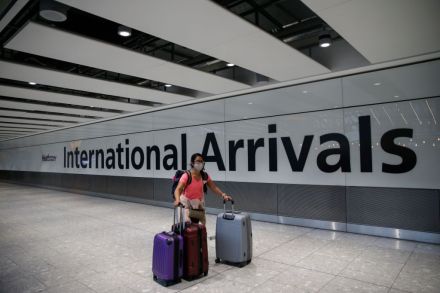
The government has finally attempted to crack down on the problem of people bringing Covid back into the UK, a mere 11 months after the pandemic began. The transport minister Grant Shapps has announced that from Monday, for the first time, travellers will be required to present a negative Covid test at the border, to ensure new variants aren’t brought into the country. The rules will apply equally to British and foreign nationals, which means holidaymakers will be forced to seek out a Covid test abroad before they return to the UK. But has Shapps missed a trick when it comes to the new testing regime? According to the rules,

Steve Baker’s warning for No. 10 points to the next Tory battle

As government ministers avoid putting a date on an easing of restrictions, let alone an end to them, scientific advisers have stepped in to fill the silence. Deputy Chief Medical Officer Jonathan Van-Tam has suggested the lockdown could remain in place well into spring while Professor Neil Ferguson – who briefly stood down from his role last year for breaking lockdown rules – has suggested measures could be in place until the autumn. This, however, is not going down well with the Tory MPs who make up the lockdown-sceptic Covid Recovery Group. As the Sun reports, Steve Baker has issued a rallying call to his fellow members over the situation. He suggests that opposition

What we know about the Brazilian Covid variant

The World Health Organisation’s appeal to stop naming variants of Covid-19 after geographical locations evidently cut no ice with the Prime Minister, who warned MPs yesterday about a new Brazilian mutation of the Sars-Cov2-virus. Chief scientific adviser Sir Patrick Vallance later suggested to ITV News that the changes identified in the new variant ‘might make a change to the way the immune system recognises it but we don’t know. Those experiments are underway.’ According to Pfizer last week, its vaccine still offers protection against the newly-identified Kent and South African variants of the Sars-CoV-2 virus. But should we now be worrying that the Brazilian variant will creep through our defences?

Patient ‘safety’ checks are causing deadly vaccination delays

I have now observed a Covid-19 vaccination hub from both sides. As a patient waiting outside in a three-hour queue, much of it in the rain, I wondered why everything was moving so slowly. As a volunteer doctor working on the inside, I saw numerous good-hearted colleagues trying their hardest, bursting a gut to make the system work. Why the difference? I have concluded that the NHS approach to patient safety is a very significant contributor to vaccination delays. There has been national publicity around the mandatory training for potential volunteers before they can start work, which has included ‘diversity’ and ‘counter-extremism’ training. A friend who is a recently retired

Ministers can no longer ignore the problems Covid has exposed

Tuesday’s cabinet meeting discussed the usual topics of Covid and the Brexit transition period, but at the end, Boris Johnson told ministers he had asked Sir Michael Barber to conduct a rapid review of government delivery ‘to ensure it remains focused, effective and efficient’. Downing Street’s readout of the meeting said the Prime Minister told his colleagues that ‘it remains important to ensure that work continues to ensure that we build back better from the pandemic’. Barber, currently chair of the Office for Students, set up the first ‘delivery unit’ in Downing Street in 2001, and has even written a book on How to Run a Government. He will be

Can Gavin Williamson limit the impact of school closures?

It is much harder being an embattled minister in the socially distanced Commons than in normal times. There is no group of supportive MPs to arrange behind you, no ability to organise sympathetic noises from the backbenches as you give your statement explaining why you’ve taken a last-minute decision to close all schools when you said you wouldn’t and had been threatening councils who were trying to do so just before Christmas with legal action, and why you’ve spent the past few weeks insisting that exams would go ahead in the summer, only to cancel them this week too. On this charge sheet, Gavin Williamson would have struggled in any