Covid

How working from home threatens authoritarian regimes

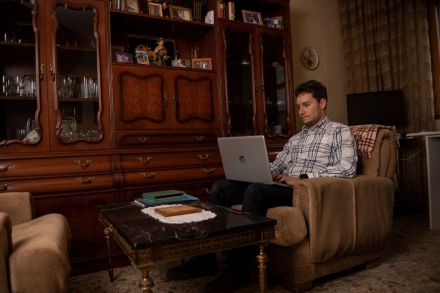
One of the few good things to come out of the pandemic has been the option to work from home (WFH). According to a Stanford University study of 17,000 employees, 50 percent of respondents who stayed at their jobs without commuting wanted to keep working from home at least part-time after Covid. And a September 2021 survey by OwlLabs, a video conferencing platform, found that one in three people who have worked remotely since the outbreak would likely quit if they could not continue to do so. While undoubtedly pressured by the current worker shortage to accept WFH as an employment benefit, companies have come to appreciate how decentralized staffing can improve productivity and substantially lower overhead.

Sage ‘scenarios’ vs actual: an update

From our UK edition

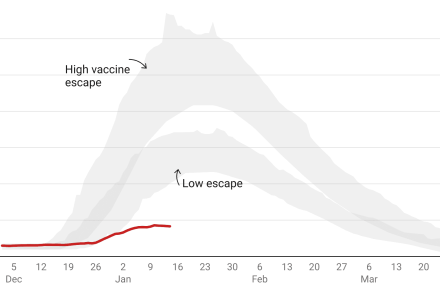
Given that lockdown was very nearly ordered on the advice of Sage last month, it’s worth keeping an eye on the ‘scenarios’ it published, and how they compare to the situation today. Another week of data offers more food for thought. This week was the period when deaths were supposed to be peaking – so given that no extra restrictions were ordered, it’s interesting to compare the peak the models predicted for this week with what actually happened. Deaths were said by Sage to peak at anything from 600 to 6,000 a day (the latter figure, predictably, hogged the headlines).

We must never abandon children during lockdown again

From our UK edition

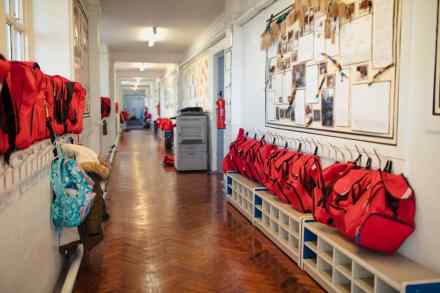
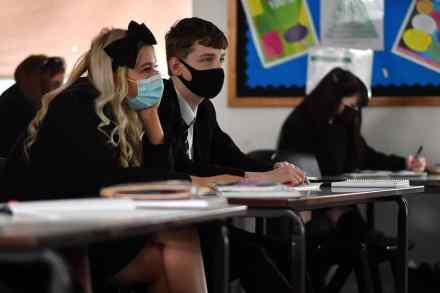
Schools are far more than mere exam factories. Across the UK, teachers in 32,000 schools and colleges care for children on over half the days in any given year. Or we did until the lockdown in March 2020. Since then, children have missed the best part of two full terms. And while they were out of our sight, some were at risk. Six year-old Arthur Labinjo-Hughes, for example, may have been rescued from the terrible abuse he suffered had his teachers been able to see him every day. But while most children have returned to class now that Covid restrictions are ending, some are still absent. News of anecdotal cases circulate within the profession. A colleague tells me that two sisters in her school never returned.

Reading during a pandemic

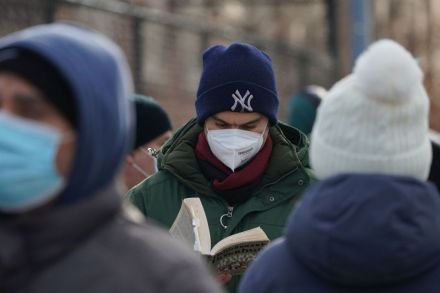
The experience of having Covid is, by now, well-documented. You spend seven to ten days in your room or house feeling ill and sorry for yourself. The world outside becomes a distant dream, and one of the few pleasures of spending twenty-four hours a day in bed is the time to read. This winter, the Omicron bell tolled for me — as it seemed to do for half of the global population. I was very lucky with the virus: after two days of unbelievable complaining and texting everyone I knew to tell them I was either like Beth in Little Women or a fevered Marianne in Sense and Sensibility, I recovered from my gothic heroine-like swoon and set about ploughing through novels. At the outset, there were endless articles and tweets about what one should read during a pandemic.

Omicron is on its way out

From our UK edition

Omicron peaked in England in early January, according to figures just released by the ONS. The estimates from the weekly infection survey show that cases in the UK peaked at around four million before falling. In the week ending 15 January, 1 in 20 had Covid in England, Scotland and Northern Ireland, and 1 in 25 in Wales. We shouldn't be surprised by this We shouldn't be surprised by this — this is how Omicron seems to go world over. As in Gauteng, as in South Africa, as in Lambeth, as in London and now in the UK: it falls almost as fast as it rises. Quite simply, the variant is so infectious that it quickly reaches levels of prevalence that are unsustainable because so many people have been vaccinated, infected and become immune.

The media blackout on Fauci’s damning emails

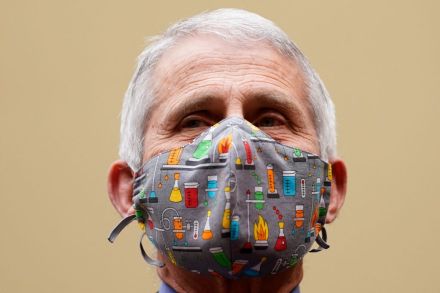
Last week saw another batch of emails drop from Anthony Fauci, and another media blackout as to their contents. The strategy by the press in cases like this has been pretty straightforward: ignore the story, wait for right-leaning media or Republicans to pick it up, then frame any attacks on the subject as tainted by partisanship. Last week, when confronted once again by Senator Rand Paul of Kentucky, Fauci responded with more hyperbole and ad hominem. The media, meanwhile, framed the exchanges as “Rand Paul Attacks!” and “Anthony Fauci defends!” They refused to look at the information in the emails that Paul was asking about, refused to ask questions about them, refused to even report on them. They are interested in the bloodsport, not the truth.

anthony fauci health
zoom

The evidence is in: remote learning doesn’t work

As the omicron wave crests and public schools face teacher sickouts, strikes, and a rash of student absences, it is worth reviewing some basic facts about the pandemic and public education. The results of last year's experiment in remote learning have confirmed what any minimally competent teacher could have told you from the outset: instructing students online yields disastrous consequences. Indeed, the results are so bad that defenders of a maximally cautious approach can only argue about terminology (please don’t say “learning loss!”) while proposing that we shouldn’t actually measure how far students fell behind under lockdown. Meanwhile, the psychological costs of the pandemic era continue to mount.

Sage scenarios vs actual: an update

From our UK edition

‘Deaths could hit 6,000 a day,’ reported the newspapers on 17 December. A day later documents for the 99th meeting of Sage were released which said that, without restrictions over and above ‘Plan B’, deaths would range from 600 to 6,000 a day. A summary of Sage advice, prepared for the Cabinet, gave three models of what could happen next: Do nothing (ie, stick with 'Plan B') and face "a minimum peak" of 3,000 hospitalisations a day and 600 to 6,000 deaths a dayImplement ‘Stage 2’ restrictions (household bubbles, etc) and cut daily deaths to a lower range: 500 to 3,000.

The Netherlands is growing tired of lockdown restrictions

From our UK edition

On Wednesday at De Kleine Komedie, the oldest theatre in Amsterdam, the sound of comics on stage will be interspersed with the snips of scissors. Unable to open as a theatre due to the coronavirus restrictions, the comic actor Diederik Ebbinge is defiantly converting the venue into a hairdressers for the day with customers able to watch live acts while they get their hair cut. Fellow comedian Sanne Wallis De Vries is asking theatres up and down the country to sign up and join their haircut theatre scheme on the same day. In the latest phase of the Dutch lockdown, announced at a press conference on Friday night, from today gyms, shops and contact professions such as hairdressers are allowed to reopen until 5pm each day.

Democrats defeated by their own pandemic promises

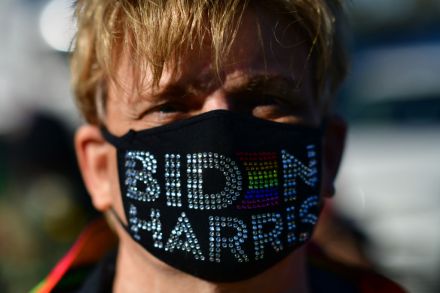
“It’s time for us to do what we have been doing and that time is every day" was the much ridiculed answer from Vice President Kamala Harris in an interview with NBC News on Thursday. It has been lampooned in almost every corner of the media and memed all over the internet, and rightly so. Harris has been plagued her entire electoral career by a sense that she isn't prepared. This time the test is the pandemic, which is a major problem for her and Joe Biden almost a year into their administration. It's a term they were elected to almost exclusively on the promise of “shutting down the virus.” But viruses are a non-political problem, despite Biden's politicizing it during the 2020 election.

Boris’s curious Covid rules approach

From our UK edition

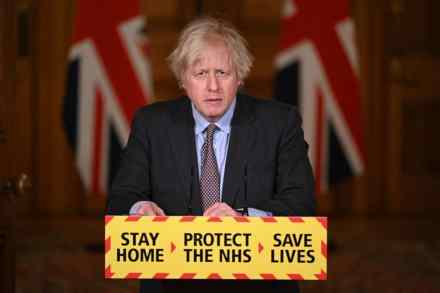
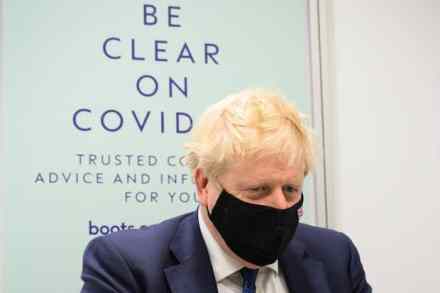
It seems that Boris Johnson has adopted something of a curious approach to Covid regulations. No, not the Downing Street parties, but rather his attitude towards self-isolation. For the PM's official spokesman revealed yesterday that one of Johnson's relatives — either his wife Carrie or one of the children he has living at Downing Street — has tested positive for Covid, meaning that he will not be making any appearances until next week. The embattled Tory leader will instead remain in No. 10 as he fights to save his crumbling premiership, conducting mainly virtual meetings until next Wednesday. His spokesperson told lobby hacks that: In line with the guidance, he’s reducing contacts, he’ll be working from No.

Boris Johnson owes the country a proper apology

From our UK edition

On 20 May 2020, the Metropolitan Police issued a statement on social media which summed up the conditions in the country. ‘Have you been enjoying the hottest day of the year so far?’ it asked. ‘You can relax, have a picnic, exercise or play sport, as long as you are: on your own, with people you live with or just you and one other person.’ To do otherwise, it didn’t have to say, would be a criminal offence. https://twitter.com/metpoliceuk/status/1263108555961442304?ref_src=twsrc%5Etfw In 10 Downing Street, however, Boris Johnson’s principal private secretary sent out a very different message to more than 100 staff members.

It’s getting worse for Boris

From our UK edition

Talking to Tory MPs this morning, it is clear that the mood today is even worse than yesterday. Even one of those MPs closest to Boris Johnson thinks that it is now 50/50 whether enough letters go in to force a no confidence vote. Ironically, the improving Covid numbers are changing the calculus for some Tory MPs about a contest. A few weeks ago, even the most ardent Boris critics didn’t think you could have a no confidence vote, given the situation with the soaring Omicron variant. But now it is somewhat in retreat, and that restrictions are likely to go on 26 January giving hostile MPs the chance to do so. PMQs today is, obviously, an important moment. Lots of Tory MPs are holding off on replying to angry constituents until after it.

Boris Johnson is running out of road

From our UK edition

There has been no good news for Boris Johnson today. After an email leaked on Monday evening showing that the Prime Minister's Principal Private Secretary Martin Reynolds invited over 100 staff to a drinks party in the No. 10 garden in May 2020, the Prime Minister has come under fire from his own side. Downing Street has refused to deny reports that both Boris Johnson and his wife Carrie were present at the event. Instead, all No. 10 will say is that Sue Gray's inquiry into alleged Covid rule breaking at various Downing Street parties is ongoing.  The atmosphere in the Commons has been notably muted. The Tory benches were rather quiet when Michael Ellis — Paymaster General — was sent to field an Urgent Question on the issue.

Remote learning has failed our kids

With omicron cases rising, many school districts are returning to remote learning for the first few weeks of January. That, of course, could be extended, as we have seen happen so many times during the pandemic. As a school social worker, I can attest that remote learning has been an absolute disaster. Far from the “abundance of caution” approach, school closures have devastated our youth, with many still struggling to function. It boggles my mind that many large cities are repeating this mistake. While nearly all students suffer amid virtual schooling, our most vulnerable suffer the most. The following three hypothetical students exist in every school, as I have witnessed over the past 15 years working with New York City teenagers.

rochelle walensky mask

The media suddenly notices the CDC is clueless

For over a year, the national news media has held up the CDC and its director, Rochelle Walensky, as paragons of public health. It's no coincidence they've now suddenly had a moment of clarity as it pertains to the CDC adjusting its pandemic protocols. This epiphany is happening primarily at CNN, with ratio king Chris Cillizza coming around to reality on Twitter and declaring that blue staters, journalists, and Democratic politicians catching Covid isn’t a moral failing and shouldn’t be shamed (the Washington Post made a similar statement). This past Sunday, CNN hall monitors Brian Stelter and Oliver Darcy actually went after the CDC, saying it appears the agency has become “a punchline.” That segment also featured Dr.

New No. 10 party leak puts Johnson under pressure

From our UK edition

How much trouble is Boris Johnson in over partygate? Since allegations first emerged last year of a number of parties and gatherings in 10 Downing Street when the rest of the country was living under strict Covid restrictions, the Prime Minister has had to launch an investigation (now led by civil servant Sue Gray after cabinet secretary Simon Case had to step down over his own prior knowledge of said gatherings) and seen his approval ratings plummet. Just as Downing Street aides had begun to hope the saga was nearing an end, new evidence has emerged which appears to put Johnson in the firing line. ITV News has published an email sent by the Prime Minister's Principal Private Secretary Martin Reynolds inviting over 100 staff to a drinks party in the No.

Masks in schools: how convincing is the government’s evidence?

From our UK edition

Why has the government changed its mind and asked children to wear masks in school? When Plan B was announced last month, there was no requirement. But that has changed. Nadhim Zahawi, the Education Secretary, was asked why on Monday. He replied that ‘we conducted a small observational study with 123 schools who had followed mask-wearing in classrooms before and saw that they made a difference'. He suggested it was quite a significant study. 'If you just think it through, with a respiratory disease that is aerosol-transmitted, if you are asymptomatic but wearing a mask, you're much, much less likely to infect other people.' The government has now published an ‘Evidence Summary' for the use of face coverings in education settings.

Watch: Sajid Javid confronted by unjabbed NHS doctor

From our UK edition

Since becoming Health Secretary there has been one big question Sajid Javid cannot answer: how can he justify firing a worker who has recovered from Covid, has antibodies and doesn’t want the vaccine? Javid first did this with unjabbed care home workers and now plans to fire unjabbed NHS doctors. Today he met one of them — and it didn’t go well. https://www.youtube.com/watch?v=hOlEYcd1nyI Javid’s answer? He didn’t have one During a visit to King’s College Hospital in south London, Javid was on camera talking to NHS staff asking them what they thought about his plans for compulsory vaccination. He presumably expected them to agree.

Get ready to start paying the cost of Covid

From our UK edition

Forget the desirability (or lack thereof) of tax hikes: can Britain survive them? That’s the economic question that kicked off the new year in cabinet this week when Jacob Rees-Mogg was reported to have encouraged the Prime Minister and his colleagues to roll back plans to bring in the new National Insurance levy this April. A recap on the proposals: the 1.25 per cent National Insurance hike will be paid by both employers and employees, and will eventually be funnelled into social care, we're told. But for the first few years, most of the tax revenue it raises (roughly £12 billion) will go to addressing the NHS backlog and the millions of people on waiting lists.