Covid

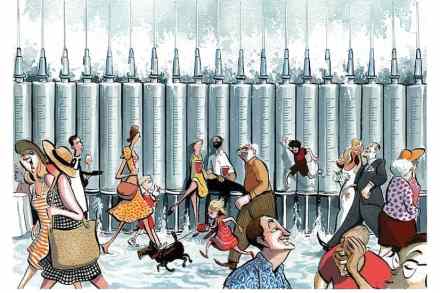
How government overreach bred Covid skepticism

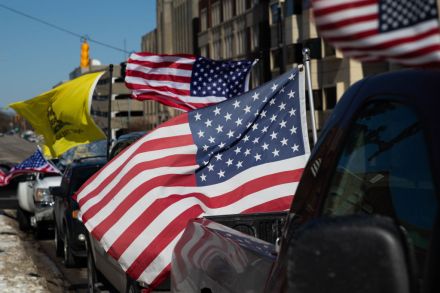
I did not intend for this to read like a cautionary editorial. When the Spectator World asked me to do a piece on the BA.2 Omicron subvariant, I thought I would simply be updating readers on the progress of the latest Covid mutation. And while the BA.2 is fast spreading, it appears to be no more life threatening than earlier versions of the coronavirus. Virus-related hospitalizations in New York state and the rest of the Northeast, where the new variant is especially prevalent, have gone up slightly in recent weeks, but are nowhere near where they have been in previous Covid surges. And according to the data, those who contract BA.2 are not at a higher risk of serious illness. There is no indication that BA.

mask

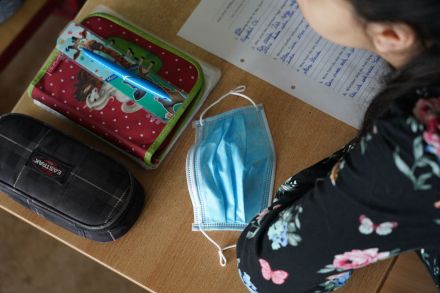
Masks on, masks off in Philadelphia

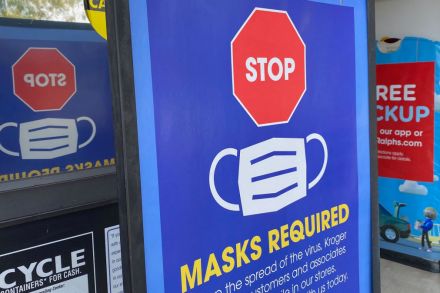
That was fast: the now-you-see-me, now-you-don’t, now-you-do masquerade in Philadelphia. Let’s review. On March 2, Philly, recovering from Covid hysteria, rescinded its indoor-mask mandate — masks off. On April 18, the city, alone among large American municipalities, rescinded its rescission — masks on (unless everyone working on-site and coming through the door was fully vaxxed). On April 21, the city rescinded its rescission of its rescission — masks off, for now. This latest experiment in masking left Cheryl Bettigole, the city’s health commissioner, explaining that Philly was only trying to “follow the data.

downtown philadelphia

The night the masks came off

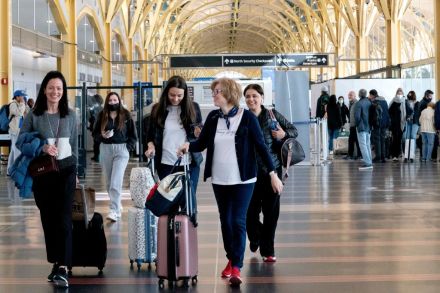
My wife and seven-year-old son were halfway to Boston to catch a connecting flight to Ireland on Monday when the news came down. Or, as it were, went up, as Judge Kathryn Kimball Mizelle voided the Biden administration’s widely reviled but recently extended mask mandate on public transportation. After receiving instructions from the ground, the pilot on their plane emerged from the cockpit and announced that masks were no longer required. He then invited the passengers to “go ahead and throw them in the trash.” There was a swell of cheers as the passengers and crew were overcome by a euphoria of deliverance from the tyranny of overzealous Washington.

The march of the ‘experts’

Historically Americans have had little, if any, respect for college and university professors, for whom they felt a mild though distant and tolerant contempt. As more and more members of the professoriat have been recognized as “experts” in their respective fields, or at least at the edges of them, since World War Two, they have naturally presented themselves to the public under the guise of “specialist,” a vast improvement over their previous reputation as absent-minded eggheads barely able to afford the Ford Motor Company’s cheapest product and a shabby house on the wrong side of the railroad tracks.

experts
spring breakers

Beach for America

I don’t know how I first came across Harmony Korine’s Gummo (1997), but in this cult film about the foibles and joys of small-town life, I found a director who understood the cinematic merits of American seediness. Gummo, which features amateur actors in debauched scenes, hosts a collection of freaks unsurpassed in modern cinema, including skinhead brothers, a boy dressed in a bunny suit (he goes by “Bunny Boy”), and a gay dwarf. Though mostly repulsive, Gummo has a transgressive charm that makes it impossible to turn away. Like Korine’s Mister Lonely (2007) and Trash Humpers (2009), Gummo is less about plot and theme than feeling and sensibility. It is an aesthetic experience that stylizes grime to capture the essence of characters one hopes not to encounter in real life.

Could we be heading for a second Covid recession?

From our UK edition

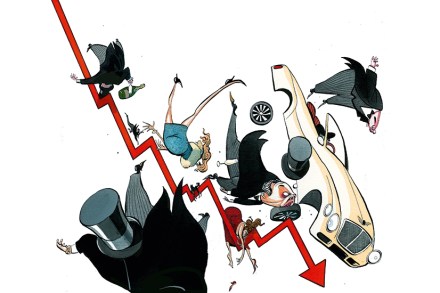
The political story for the moment is the cost of living crisis. But by the end of the year could we be talking about a recession instead? We shouldn’t read too much into one year’s economic growth figures, especially given how often they are revised upwards or downwards. But February’s figures, published this morning, have caught many people unawares. They show that the economy just about ratcheted upwards in February, growing by 0.1 per cent. That’s compared with healthy growth of 0.8 per cent in January, as the country emerged from the Omicron scare. Notably, in two areas the economy contracted: construction fell by 0.1 per cent and production by 0.6 per cent. It was only the services sector, where growth was 0.

Democrat gets bitten by fox — and hypes the CDC

Authorities have finally done something about the aggressive, rabid critters that lurk around our nation’s capital and slink from their dens on the Hill to assault honest people for no good reason. Cockburn has encountered all sorts of such creatures on various Capitol Hill pub crawls, but the type the police just decided to address was neither a blundering elephant nor an indignant jackass. Neither was it a Blue Dog, one of those endangered porcupines that rarely appear in the Swamp, nor even a squawking chicken hawk. It was a red fox. A cute little lady fox with a majestically bushy tail, black-tipped ears and feet, white markings on her chest and muzzle, and shining black eyes. People first started posting images of the fox on Monday.

Has the past decade blunted our sense of the duty of care?

From our UK edition

Modern British history can be divided into two parts: before Covid and after. That is the central pillar of this at times arid but ultimately compelling account of British social policy since 1945. We recovered in the aftermath of the second world war. Can we do it again, post-pandemic? Peter Hennessy, a crossbench peer, starts with the observation that government has a duty of care to the people, a conviction that emerged in the aftermath of the war and underpinned the creation of the welfare state. At the centre of it all was William Beveridge – ‘dry, prickly and difficult, but a genius when it came to the social arithmetic of welfare’. His aim was to attack the five great social evils of the time: want, disease, ignorance, idleness and squalor.

How science fiction novels read the future

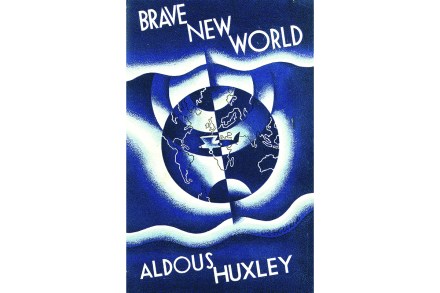
The pandemic is not quite over, but we are getting used to its inconveniences. What disaster will be next? An antibiotic-resistant strain of the bubonic plague? Climate collapse? Coronal mass ejection? Will the next catastrophe be natural — perhaps a massive volcanic eruption, the likes of which we have not seen for more than two centuries, since Tambora in 1815? Or will it be a manmade calamity — nuclear war or a cyberattack? And might we inadvertently descend into a new form of AI-enabled totalitarianism in our efforts to ward off such calamities? To all these potential disasters it is impossible to attach more than made-up probabilities. So what can we do about them? The best answer would be that we should strive to imagine them.

science fiction
covid

I’m done being a crazy Covid lady

I was seven months pregnant in March, 2020. I had miscarried before, and it had taken a little while to conceive, so even before the world became anxious about reports of a novel coronavirus, I was a nervous wreck. When the pandemic came in earnest, I was utterly overcome. I had been working on a live news show. Every day in late February, and even at the very beginning of March, we were telling Americans to wash their hands, but that everything would be okay. Local politicians and medical experts came on the show to tell people it was all going to be fine. This was The Before. One day, I came into the studio during a commercial.

Should we worry about the BA.2 Omicron variant?

From our UK edition

When the Omicron variant (now categorised as BA.1) swept across the world at the end of last year it was seen by optimists as the final chapter in the Covid story – it was so contagious it would infect essentially anyone, but would be far less likely to cause serious illness. Now a new wave of Omicron – the BA.2 variant – is becoming dominant in many parts of the world. In the UK, cases are again on the rise. Genomic surveys show that BA.2 made up 76 per cent of new cases in England as of 5 March. The below is from the Sanger Institute: So what's going on? Firstly, both the BA.1 and BA.2 variants do not have an intrinsically much higher growth rate than any previous variant. Instead, they have spread globally for two main reasons.

I stink at virtue signalling

From our UK edition

The lodger looked at me blankly and pronounced wearily, as though intoning something he was tired of parroting, that I was putting vulnerable people at risk by not having the vaccine. I stifled a yawn. Can anyone really still think this? A half-hearted argument of sorts ensued while I was washing up and he was heating his microwave dinner in which neither of us could really be bothered. I tried to politely point out that it was a good job an irresponsible person like me was so foolhardy and fearless about Covid or he would not have found a room in the middle of lockdown, especially since he works at a hospital. And he put a stop to the discussion by saying: ‘Well, I’m trying to get my head around Ukraine now.

Is China’s zero Covid game up?

From our UK edition

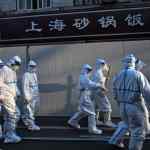
Omicron has broken through China’s Covid wall. On Tuesday, the country saw a record-high of more than 5,000 cases, the highest number since the original Wuhan outbreak. To Brits (and most people around the world), that might sound like a laughably small number – but, as you might expect, China’s zero Covid machine has jumped into action, leading to a disproportionate, severe response. In the most afflicted areas like Shenzhen and Changchun, public transport has been suspended, non-essential businesses closed, residential compounds locked down.

Will Nicola Sturgeon’s mask restrictions have any effect?

From our UK edition

As England axes the last of its Covid regulations, Nicola Sturgeon is extending Scotland’s – saying that mask wearing in shops, on buses, trains and taxis will be continued ‘for a further short period’. You can see why. Cases are surging and Scottish hospitals have more Covid patients than at any point during the winter. Weekly Covid-related deaths are 14 per cent higher than in England. But given that England didn’t bring in any additional Christmas restrictions and ended mask wearing at the end of January – and now has lower Covid cases than Scotland – it seems fair to ask: will Sturgeon’s measures actually help?

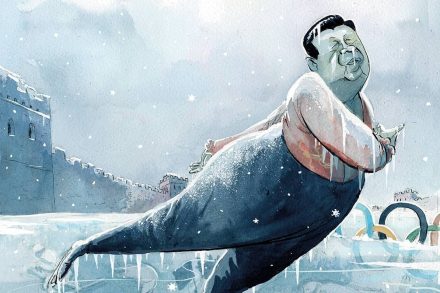
China’s zero Covid strategy is a threat to the global economy

From our UK edition

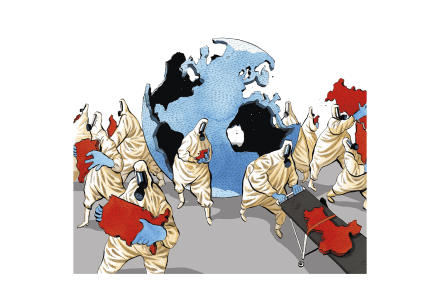
Aside from deterring a few tourists, and people filming fantasy epics, closing down New Zealand during the Covid pandemic didn’t make much difference to the global economy. Neither, come to think of it, did Mark Drakeford’s determination to keep Wales free from Covid-19, and even Australia’s dedication to closing itself down didn’t matter that much as long as the mines stayed open. For most of the last two years ‘zero Covid’ policies have mainly affected the people unfortunate enough to live under them and those trapped from returning home. But China? That is something different. And right now Beijing’s almost certainly doomed attempt to crush the virus is as much of a threat to the global economy as the war in Ukraine.

Covid is rising again. Should we worry?

From our UK edition

For some time now, Covid has been rising in Scotland - there are now more Scots in hospital with Covid than at any time throughout the winter. A freak, or a sign of what’s to come nationally? The ONS survey answers that question today, confirming that Covid cases are rising nationally: some 4 per cent of England’s population, it says, would test positive. In Northern Ireland it’s closer to 8 per cent and in Scotland 5.7 per cent. Have waning vaccines created space for another wave - and do we need to worry? Just as Gauteng and South Africa then Lambeth and London were the early warning signs for Omicron’s rise and speedy peak, so seems to be Scotland now. The ONS survey have shown cases rising there for weeks and it’s been puzzling scientists.

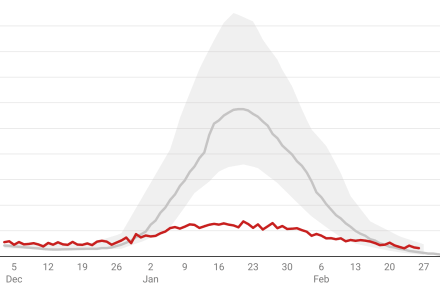
Sage admits its models were ‘at variance to reality’. But why?

From our UK edition

The Sage committee was set up as a pool of experts on tap to advise government. During the pandemic, it mutated into something different: a group whose advice ended up advocating long lockdowns. Its regular meetings have now been discontinued, with questions being asked in No. 10 about whether it’s time to disband Sage and set up a new structure – in the same way that Public Health England was reformed and became the UK Health Security Agency. There will be plenty of lessons to learn. But we might not have much time to learn them: a new variant or (given the growth of genomic sequencing) a new pathogen could come along at any time. This matters.

The truckers are coming to Washington!

The Canadian truckers might have been driven out of Ottawa, but a copycat protest is brewing in the United States. Cockburn hears that police are preparing for demonstrations that could gridlock the DC area, and they could start as soon as Wednesday. Honk honk! The truckers are coming to Washington — just in time for President Biden's State of the Union address next week. Cockburn has been a fan of truckers ever since he decided to see whether he could hitchhike across America using only Jim Beam trucks (he could, as it turns out). But in this case, the big riggers may be in need of a friendly correction.

Why a post-Covid world might not be so bad

No one need ask why the strict public health regime to manage Covid — masks, mandates, quarantines, and required inoculations — has begun to collapse. Between angry truckers, unfavorable polling for continued lockdowns, the perception of a Wuhan coverup, changing reports of vaccine effectiveness, and declining hospitalizations, even President Biden and blue state governors realize they have but two options: pretend to be leading a return to normalcy or face an unpredictable grassroots rebellion. The interesting question for Americans is not why the sudden prospect of a return to normalcy but what “returning to normalcy” really means.

mask

Democracy and economic freedom are in decline

The first report cards on democracy and economic freedom for 2021 are out and the results are not good. Economic Intelligence Unit, the sister company of The Economist magazine, found that last year’s Democracy Index had fallen by almost a tenth of a percent. That’s the biggest drop in the index’s 15-year history. The Heritage Foundation’s Index of Economic Freedom, meanwhile, saw a similar albeit larger decline of 1.6 points out of 100. Heritage looked at economic policies and conditions in 177 countries while the Democracy Index looked at 167 countries. Both reports blame government-enforced COVID restrictions for the declines.