Covid

In praise of understudies

From our UK edition

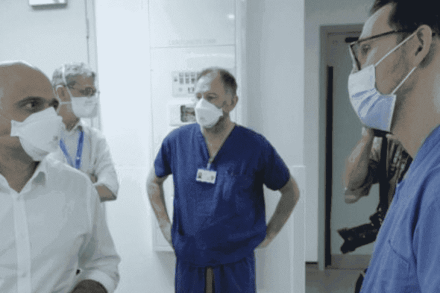
The actor Ronald Fraser was famous for two things: his comic timing and his liking for a drink. On one occasion in the 1960s, he was happily sitting three sheets to the wind in a local hostelry, when he remembered that he was supposed to be on stage at a matinee. After walking unsteadily to the theatre, he stood in the wings and heard someone else in his role: the understudy, holding the audience in the palm of his hand. His name was Donald Sutherland, and he was revealing the quality that took him from bit parts on the London stage to worldwide stardom. The importance of understudies and covers has been elevated to new heights by the Covid pandemic. Leading men and ladies are dropping out the world over.

Biden wants to forget all about North Korea

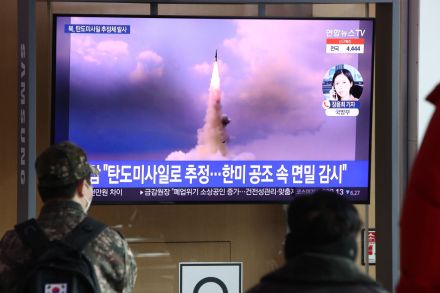
If you don’t follow North Korea for a living as I do, you likely have forgotten all about the so-called hermit kingdom and its portly pariah of a leader, Kim Jong-un. Sure, there are the occasional headlines. Kim has lost a whole bunch of weight. The country is locked down as it has no way to combat Covid-19 and would never let in the international community to distribute vaccines. And, of course, there was last night's missile test. But even then the media does not seem to care much when it comes to North Korea. The reasons are quite obvious: with the Omicron variant sweeping the world, even a regime such as North Korea's has trouble breaking into the news cycle.

Ms. Work-to-Rule and our fading school standards

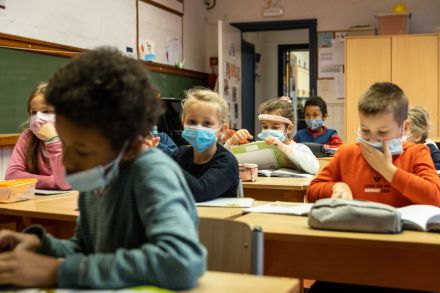
Ms. Work-to-Rule, chair of the local teacher’s union, smiles icily at the bezel. The weekly Zoom conference with the district superintendent and his many assistants is not going in the direction she would like. As schools across the country prepare to resume in-person classes, Covid purists insist on strict testing, vaccine proofs and other protections. If draconian demands are not met, a few big-city locals threaten teacher strikes. Some states require masks for students and teachers regardless of vaccination status. Others prohibit districts from requiring students to wear masks at all. School board meetings might be battlegrounds. The mild but highly contagious variant, Omicron, puts everyone — administrators, teachers, parents, and students — on edge.

Boris Johnson rejects lockdown (again)

From our UK edition

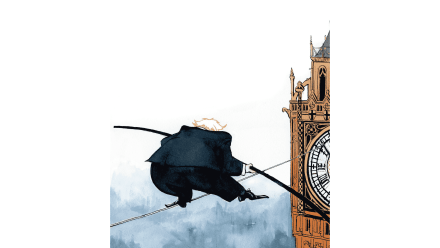
Boris Johnson latest Covid press conference was slightly confusing. The Prime Minister spent nearly an hour saying nothing particularly new. He warned that there was ‘considerable pressure’ on the NHS at the moment and unveiled daily priority lateral flow testing for 100,000 essential workers so that key services, including healthcare, don’t seize up due to staff absences. But while he accepted that hospitals were feeling the heat, he also insisted that there was no data suggesting that a lockdown was necessary or helpful. Indeed, he argued:  ‘We have a chance to ride out this Omicron wave without shutting down our country once again. We can keep our schools and our businesses open, and we can find a way to live with this virus.

Boris’s plan to test key workers daily

From our UK edition

The Prime Minister is attempting to lessen the threat posed by Omicron to essential services by requiring around 100,000 workers in specified industries to take daily Covid tests. In order to keep the lights on, maintain the supply of food and keep aeroplanes flying, these workers will have to test five days a week —  so that infections are caught as early as possible, to minimise spread of the virus to colleagues. A government source said the requirement to test daily would apply to those in civil, nuclear and other power generation, air traffic control, meat processing and food supply chains.

The problem with ‘vaccine equity’

From our UK edition

'A stain on our soul'. That was how Gordon Brown, in his latest missive on the subject, described the failure of the west to ensure that the whole world is vaccinated. In a previous attack on western policy — at the end of November, just as Omicron was emerging — he wrote of “hoarding” and 'vaccine nationalism'. Take Africa: it is certainly true that vaccination rates in many countries are very low. While the UK has managed to deliver 195 doses per 100 people, Nigeria has only managed seven, Ethiopia and Somalia nine, and Chad and South Sudan two. Can all this be blamed on the failure of western nations to donate vaccines?

omicron

It’s the Dawn of Omicron

It’s 4 a.m. and instead of sleep, powerlessness is on my mind. It’s a concept I’m quite familiar with, being that I’m in recovery: it’s the idea one must embrace to “take the first step.” The idea is, by admitting your powerlessness over whatever behavior or substance you are abusing, you begin on the journey of liberating yourself from the bondage of addiction. It’s a paradox I had a hard time reconciling in my early days of sobering up. A great line about step one in some of the Alcoholics Anonymous literature plays on a loop as I stare at the ceiling. “Who cares to admit complete defeat. Practically no one, of course. Every natural instinct cries out against the idea of personal powerlessness.” However, the list of things I’m powerless over has grown long.

dining

How to survive eating out

Tennis — as the New England poet Robert Frost remarked in defense of formal verse — is more fun with a net. Creativity does indeed flourish within constraints. Soviet censorship brought about samizdat. Prohibition brought about bathtub gin and any number of fabulous cocktails designed to mask its unsubtle notes of paint thinner. The greatest human spirits would view the new era of show-your-papers dining not as a hardship, but as an opportunity. In our brave new world, some don’t mind handing over papers in exchange for a mess of restaurant-prepped pottage. And yet there are ancien régime sticklers for propriety who think that the use of QR codes to gain access to food indoors is not quite comme il faut (if you’ll pardon their French).

New York

Bring back New York

New York is back. It’s so back. It’s extra back. It’s better than ever. It’s really not. I’ve been a New York supremacist my entire life. I’ve been to your city. Your city is fine. Your city is not New York City. Your city has the one deli, the one restaurant, the one street. My city has them all. But in the time of “equity,” the best city is being brought down to size. My teen years were spent in the bad old New York. Drinking on Ludlow Street when it had one bar, going to Limelight on Wednesday nights, hanging out with squatters in Tompkins Square. New York was in peril and as I smoked weed in front of police officers on St Mark’s Place, I knew it. Everyone carried a weapon and looked out for deranged people who might push you on the tracks. That was life.

Does Warwick’s Omicron modelling make restrictions more likely?

From our UK edition

Two weeks ago, the London School of Hygiene and Tropical Medicine (LSHTM) and Imperial College both published modelling showing frightening scenarios if the government did not react to the Omicron variant by imposing immediate restrictions on our day to day lives. The former suggested that hospitalisations could peak at 7,190 a day in January in its most pessimistic scenario; the latter was reported as suggesting that deaths might peak at 5,000 a day in January. Both figures, however, were made on the assumption that Omicron was every bit as virulent as the Delta variant. Since then, several UK studies have suggested that this is not the case, with data showing it is between 20 per cent and two thirds less likely to land us in hospital.

Covid is surging. So why is intensive care bed usage falling?

From our UK edition

Omicron is sending Covid case numbers surging ( a new high of 189,000 cases reported yesterday) and hospital admissions along with it. But another important piece of data, intensive care admissions, shows a significant fall. This is early data, but worth noting as it may be part of an important trend. And it adds context to comments by Chris Hopson, Chief executive of NHS Providers, that the system may be better prepared than case numbers suggest. First let’s look at London; the Omicron epicentre. Hospital figures are rising fast - in part due to patients who are being primarily treated for something else (blue, below - that is now true for a third of Covid hospital patients in England). But look at critical care beds.

Farewell to 2021, 2020’s dull hangover

The thing about an annus horribilis is that eventually it's supposed to end. Yet this has not been the case with 2020, which incidentally, according to the Chinese calendar, was a Year of the Rat, proving that the universe can be just a bit too literal sometimes. Dashed were the hopes that 2021 would be a fresh start, that the endless problems of 2020 would dissolve into the ether like so much smoke at a mostly peaceful protest. Instead this year began like it was going to be even more 2020 than 2020 was. Six days into 2021 and we'd already suffered an event so jarring that it's now denoted by just a date.

Working out length of hospital stay for Covid patients: a technical note

From our UK edition

Length of hospital stay is a crucial metric, but hard to do with much accuracy unless each patient is certified Omicron or Delta. The closest proxy we have right now is information on patient stay and there are graphs for two cohorts: those admitted from 1 May (third wave) and from 1 December. The graphs were published in the CO-CIN study dated 22nd Dec (Fig 8). The younger age groups are at the top. Those who were discharged on the left, those who died on the right. The line drawn on each chart shows 14 days on, and indicates what percent of patients were discharged or had died by that point. First, those from 1 May… And the December ones are below. From simply looking at the charts, there seems to be a shift towards lower values.

Will Trump’s pro-vaccine stance prove his undoing?

From our UK edition

Donald Trump famously boasted that he could 'stand in the middle of Fifth Avenue and shoot somebody’ and still not lose voters. That was back in 2016 and the following years proved his point. We are now in the winter of 2021, however, and the 45th president may at last have stumbled across a way to alienate his fan base — by endorsing vaccines. Covid is today the most hostile frontline in America’s all-consuming culture war. Resistance to the national vaccination drive has become the stickiest point. You are either pro-freedom or in bed with the Great Globo Pharma Conspiracy. Trump has adopted a more middle-ground position: encouraging people to take the vaccines while supporting the right of people to choose not to be jabbed.

Remember panic-buying? Here’s what will happen next time

From our UK edition

It’s post-Christmas, and there are already murmurs about supermarkets with empty shelves. Just as with the petrol shortage in September and shortages of loo paper at the beginning of the first lockdown, these things can rapidly develop into major crises, purely as a result of panic-buying. Tesco, whose store on the Isle of Wight is reportedly especially empty post-Christmas, denies it has any problem with its supply chain — which had been threatened with disruption thanks to an industrial dispute involving the company’s lorry drivers in early December. People may, on the other hand, have stocked up more than usual in response to fears of a post-Christmas lockdown — a fear which appears for the moment to have gone away.

The moment of truth for masks in schools

“Wearing a cloth mask to keep safe from a virus is like installing a chain link fence to keep mosquitoes out of your backyard.” That’s what a doctor friend joked to me in the early days of the pandemic. On 60 Minutes on March 8, 2020, Dr. Anthony Fauci said, “There’s no reason to be walking around with a mask. When you’re in the middle of an outbreak, wearing a mask might make people feel a little bit better and it might even block a droplet, but it’s not providing the perfect protection that people think that it is. And often there are unintended consequences — people keep fiddling with the mask and they keep touching their face.” Just a month later, the CDC guidance changed.

The churches must stay open

From our UK edition

Hooray for Cardinal Vincent Nichols, who used the one day of the year when his pronouncements are amplified by the season to 'sincerely appeal that [the government] do not again consider closing churches and places of worship.' He said in a BBC interview he believed it had been demonstrated that the airiness of churches meant they are 'not places where we spread the virus'. Mind you, Catholic churches weren’t as bad as the Church of England This is, of course, entirely sensible. It was nuts for churches to close at the start of lockdown, at least as spaces for prayer if not for communal worship. Pretty well any church is 'Covid-safe', in that there’s lots of room for people to spread themselves out.

The misery of Macron’s Covid clampdown

From our UK edition

My daughter’s Christmas won’t quite be the same this year. She and I are in England but her French mother has been prevented from making the trip by her president. It’s a funny world when hundreds of people can quite easily cross illegally from France to England in small boats – 1,200 in four days last week – but a mother isn’t allowed to take a train to be with her daughter at Christmas. But that is France for you in what Macron’s opponents call his ‘Covid Dictatorship’. Even so his authoritarian measures are doing him and his country a fat lot of good. Yesterday France recorded 91,000 new cases of Covid, around the same as England, this contaminated little island that Macron so hates.

Will Omicron overwhelm the NHS? The crucial missing data

From our UK edition

If you catch Omicron your risk of ending up in hospital is between 50 to 70 per cent less likely than if you’d had Delta. That’s according to a new analysis released this evening by the UK Health Security Agency. It’s another blow to the case for lockdown. That case for lockdown goes like this: Omicron is growing exponentially and its casualties will overwhelm the NHS unless action is taken to slow the growth. The cautious course of action is to wait until we know more about crucial unanswered questions, such as: What is the limit to Omicron’s growth?How much milder than Delta is it?Is Imperial’s figure of 45 per cent fewer hospitalisations robust? And independently verified?