Covid-19

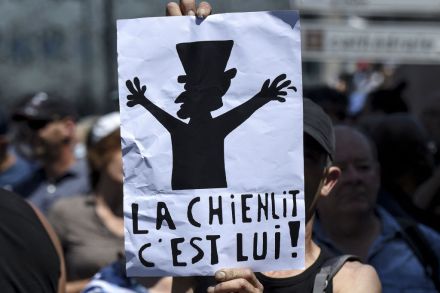
The French are rebelling against Macron’s Covid Passports

From our UK edition

A manager of an attraction park in France was reportedly assaulted on Sunday after he denied entry to a customer. It's alleged the man lost his rag when he was turned back because he didn't have a valid Covid passport. It is unlikely to be the last such incident. In the space of a fortnight, the atmosphere in France has turned toxic. A hospital in Saint-Étienne was invaded on Monday by 60 demonstrators, mainly medical professionals, opposed to the measure that will force them to vaccinate or be suspended without pay. That is also a strike at a Lyon hospital that will start tomorrow. Elsewhere cinemas, theme parks and fitness centres have been labelled 'collaborators' for their participation in the government's Covid Passport scheme.

No vax, no vote? Macron’s vaccine passport plan sparks fury

From our UK edition

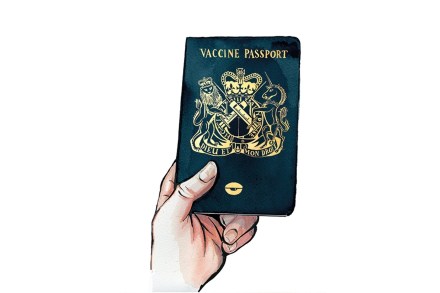
Will it be necessary to produce a passe sanitaire (vaccination passport) to be allowed to vote in France? With 221 days until the first round of the next presidential election, the mere rumour of such a sinister measure is provoking near hysteria. ‘Fake news’ shrieked the media aligned with president Emmanuel Macron (frankly, most of it) tonight. Perhaps. It’s true that the government’s vaccination passport law currently being rushed through the National Assembly does not specifically mandate proof of vaccination to vote. More than 175 demonstrations against the passe sanitaire are scheduled this weekend But neither does it specifically exclude it.

Boris could easily curb the ‘pingdemic’, so why won’t he act?

From our UK edition

Was there ever a national crisis which was so easy to solve? There are reports of supermarket shelves emptying, petrol stations running out of fuel and panic-buying. This in not unprecedented. Yet on this occasion the government doesn’t have to deal with a bolshie trade union, enter difficult negotiations with an EU which is determined to punish us for Brexit or even handle the early, unknown stages of a pandemic. All the Prime Minister has to do is to announce that the changes to the Test and Trace system already earmarked for 16 August – when fully-vaccinated people will no longer be forced to self-isolate for ten days but could be advised to get tested instead – be enacted immediately. The panic would immediately be over.

When will Boris get serious about balancing the budget?

From our UK edition

Should we be pleased that net government borrowing for June came in below expectations, at £22.8 billion – £5.5 billion less than June 2020? Should we see it as a sign that the economy is recovering a little faster than had been hoped? That is the spin being put on the public borrowing figures released this morning. An alternative, and less rosy, view might come from examining two figures in particular. Firstly, while borrowing is down compared with June 2020, public spending is actually up. Over the month the government spent £84.1 billion of our money, £2.5 billion more than in the same month a year earlier. Balancing the budget seems to have become a deeply unfashionable debate in UK politics That is extraordinary.

Boris should follow New York’s example and ditch vaccine passports

From our UK edition

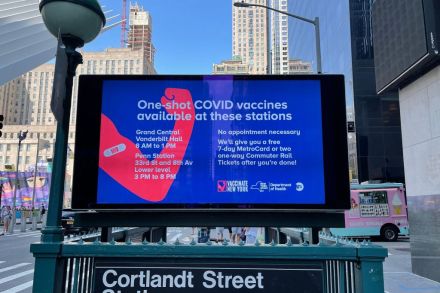
Is making young people show vaccine passports to get into nightclubs a good idea? Boris Johnson's motivation in doing so appears to be that this is a good way to entice under 30s to get their jabs. In reality, the policy is illiberal, shows no gratitude for the sacrifices young people have already made during this pandemic, and should go against all of our British sensibilities. There's also a better alternative: one demonstrated in New York.  I’ve been based in the United States for the past six months and Boris could learn a thing or two from the freedom-loving Yankees. Here, proof of vaccination is not required for entry into nightclubs, as I experienced first hand last Saturday night.

Can Boris and his ministers agree on the point of the Covid app?

From our UK edition

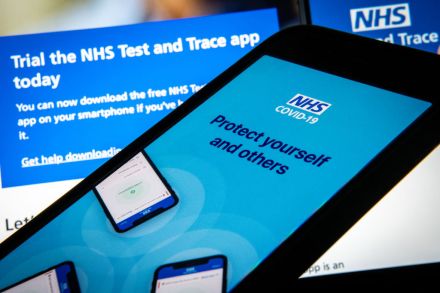
What is the point of the Covid-19 app? Ministers seem to be as in the dark about the answer to this question as the rest of us, with the government tying itself in knots over whether it means anything at all to get 'pinged' and told to self-isolate. Downing Street has contradicted Business Minister Paul Scully, who said this morning that there was no need to self-isolate if it was just the app that alerted you. He told Times Radio:  It seems that there is a genuine schism in Whitehall 'The app is there to give...to allow you to make informed decisions. And I think by backing out of mandating a lot of things, we're encouraging people to really get the data in their own hands to be able to make decisions on what's best for them, whether they're an employer or an employee.

Is Boris brave enough to confront the truth about the NHS?

From our UK edition

If a government does not wish to break a manifesto promise it should punt fewer such 'promises' into its manifesto. The modern mania for throwing everything possible into a manifesto – the better to proof it against interference from the House of Lords – renders manifestoes nothing more than a job lot of largely spurious pledges. The vision thing is notable for its absence and the vision thing is more important – and more revealing – than a grocery list of promises. Still, if you must break a promise it is no bad thing to start with a large and stupid one.

Boris Johnson’s sombre ‘freedom day’ press conference

From our UK edition

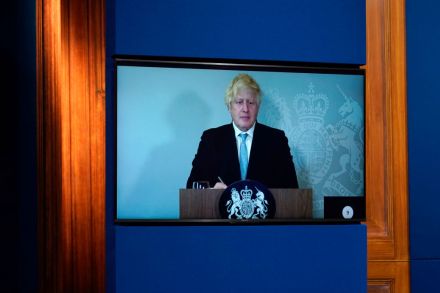
On the day that nearly all legal Covid restrictions go, one could be forgiven for presuming ministers would be in the mood for celebration. Instead the press conference Boris Johnson led this afternoon to mark so-called freedom day proved a sombre affair. The Prime Minister was forced to dial in remotely after having to self isolate as a result of coming into close contact with the Health Secretary last week, who has since tested positive for Covid. From his self isolation, Johnson went on to unveil plans for vaccine passports for nightclubs and contingency plans to keep the country moving as millions face self isolation in the coming weeks.

The thrill of going clubbing again

From our UK edition

Over the past 16 months, many things in our society have changed: we stayed at home, we baked, we zoomed, we tutted at people enjoying green spaces, we seamlessly slid ‘lockdown’, ‘pandemic’ and ‘social distancing’ into our vocabularies. But one thing that has stayed absolutely, stubbornly, admirably the same is the British public’s dedication to a Big Night Out. Forget Shakespeare, Constable, the Beatles, our true culture is best embodied by our seemingly primal urge to drink to excess, scream the lyrics to cheesy 80s music and generally make a tit of ourselves on the dancefloor. So, doing my patriotic duty, I found myself queueing to get into a bar at 12.

The art of selling vaccines

From our UK edition

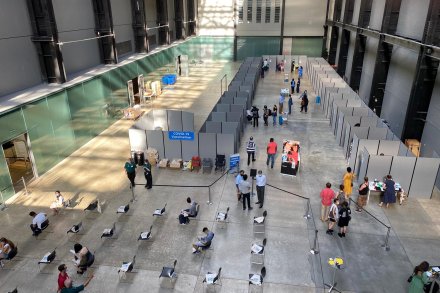
I was bemused when I first saw the photograph of spaced-out chairs and vaccination booths in the Turbine Hall of the Tate Modern. Was this an art installation designed to probe the relationship between personhood and state? Were we supposed to question the transformational power of medicine, in a live enactment of biomedical transubstantiation in the cathedral-like space? Alas, this was not art, à la Kara Walker, Olafur Eliasson or Carsten Holler. This was an NHS pop-up vaccination clinic, replete with a DJ ‘spinning tunes’. Presumably some clever behavioural psychologists have had a stab at what ‘groovy’ looks like, in an attempt to induce London’s trendy youngsters to be vaccinated.

Whitty’s lockdown warning will trouble Boris

From our UK edition

In a Science Museum webinar yesterday, Chris Whitty, the chief medical officer, warned about the increasing number of people in hospital and said that, if in the next five to eight weeks 'things are not topping out, we do have to look again and see where we think things are going.'  He added that 'we've still got 2,000 people in hospital and that number is increasing. If we double from 2,000 to 4,000 from 4,000 to 8,000...and so on, it doesn't take many doubling times until you're in very, very large numbers indeed.'  If new restrictions are imposed as schools go back, the government will find itself in the worst political position it has been in yet during this pandemic The implication of these statements is that some restrictions could come back.

Has Boris got cold feet over ‘freedom day’?

From our UK edition

A very strange ‘freedom day’ greets us on Monday. Legally, almost all restrictions will be lifted. But practically, ministers are deeply worried by the surge of the Indian variant and the rise of hospitalisations to around 600 a day — a figure that will probably double according to the Bristol University PCCF project (which we at The Spectator find to be the most reliable). Hence this massive fudge: the government abolishing the mask mandate but saying it ‘expects’ people to wear them in shops and crowded spaces nonetheless. The NHS will continue to mandate them in hospitals. Then perhaps the biggest surprise: the vaccine passport U-turn whereby companies are told it’s their social duty to ask people for proof of immunity or a negative test.

A ‘Zoom parliament’ is bad for democracy

From our UK edition

Is the new normal here to stay? For the sake of our parliamentary democracy, let's hope not.  There is little doubt that holding the Government to account has been made harder by the imposition of restrictions during the pandemic. During the Covid crisis, politicians have been too keen to treat parliament as a normal workplace; the truth is that it isn't and never will be.  If ever there was a good excuse for an 'us versus them' rule exemption, surely it would have been to honour the public by ensuring scrutiny and pushback against the Government removing people’s liberties so easily. Instead, parliamentary proceedings have taken the hybrid form of in-person and Zoom proceedings. This is an unhappy compromise for which we are all worse off.

Macron’s Covid crackdown is a risky bet

From our UK edition

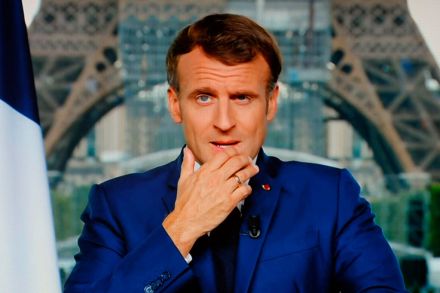
Will the French accept compulsory vaccination against Covid? Health passports to get on a plane or train? Children of 12 jabbed, whether their parents wish it or not? As fears are stoked of yet another wave of infection, we may be about to find out. In recent days, France has seemed rather normal with restaurants open, summer holidays in full swing, tourists returning, shops open. But we’re told that none of this will last. ‘We must vaccinate all of France,’ president Macron announced last night in his fifth Covid television address so far. It was a striking elocution. Macron ditched his habitual black undertaker outfit for a smart blue suit, and his office in the Elysée for the dome of the Grand Palais, framing the Eiffel Tower.

Johnson urges caution ahead of final easing

From our UK edition

How different will life be after 19 July? Not very, if the Prime Minister’s press conference this evening was anything to go by. As with Sajid Javid’s statement in the Commons earlier confirming the final step of the road map, Boris Johnson’s emphasis seemed muted. He said he expected people to continue wearing masks, working from home and generally not making the full use of the freedoms they are being given next week. Johnson warned that ‘this is not the end of Covid’, that he didn’t want the public to be ‘demob happy’ and that we ‘must be cautious’ as we take the next step out of the restrictions.

North Korea’s cryptic crisis

From our UK edition

For years, the West has tried to cajole the North Korean regime using sanctions, much to the frustration of Kim Jong-un. But now in the era of Covid, Pyongyang has been forced to inflict greater economic harm on itself, entrenching its international isolation and the suffering of its people. The hermit kingdom was one of the first countries to close itself off. The border with South Korea is already one of the most fortified in the world, while the northern Chinese perimeter, a vital point of trade, was sealed in January 2020 before many in the West had even heard of Covid.

Don’t blame young people for plummeting vaccination rates

From our UK edition

There is a myth in football that you are always most susceptible to letting in a goal after you have just scored one. It’s probably not true but the idea is attractive. At the peak of our achievement we are vulnerable to complacency. Is a similar thing happening with the vaccine programme? The current prevailing narrative is that the declining rates of vaccination are the fault of the under 30s. Government scientists accept that the country is 'close to maximum take-up', with many young people still hesitant about vaccination, the Times reported this week. But is that right? There is probably some truth to the less-than-urgent demand amongst this lower-risk group. But focusing on uptake among young people alone obscures a more obvious issue.

Follow the science – it’s time to unlock

From our UK edition

Shortly before Boris Johnson and Keir Starmer were slugging it out in PMQs — debating whether the mass-lifting of restrictions on 19 July is indeed a good idea — the Office for National Statistics released their latest antibody survey, the details of which support the Prime Minister’s argument for reopening. It is now estimated that roughly nine in ten adults in England, Wales and Northern Ireland had antibodies in the week beginning 14 June (eight out of ten in Scotland). Moreover, antibody prevalence is on the rise in younger age groups. The percentage of adults testing positive for antibodies aged 35 and older ranges between 94 per cent and 99 per cent — with the most antibody protection detected for the elderly.

The new mask regime: a legal guide

From our UK edition

Mask wearing has been compelled by law. Very soon the government has said that compulsion will end (in England at least). There is little in life more terrifying than being British and put in a new social situation without clear rules. So while we contemplate the dread of inevitably offending someone no matter what we do, it might be helpful to clarify what this means from the point of view of the law. The first and most important point is that just because the government stops making mask wearing a legal requirement, that doesn’t mean that mask wearing stops being a legal requirement. Why? Because our legal system gives lots of powers to people other than government. Most of the rules or obligations you follow in any given day won’t flow directly from government.

What is the purpose of test and trace?

From our UK edition

At yesterday’s press conference, Boris Johnson announced that his government was shelving plans for domestic ‘Covid certificates’ (i.e. vaccine passports), at least for the time being, although this won’t stop private businesses or venues from deciding to use them.  We also learned today that it won’t stop the creation of a two-tier system (as Lara Prendergast warned months ago) for the ‘jabs and jab nots’. New policies have been confirmed that will allow for the double-jabbed to skip quarantine if they’ve been in contact with someone who tests positive for Covid-19 (with exemptions granted to under-18s as well).